What Happens If You Touch a Lash Egg? A Clear, Honest Answer

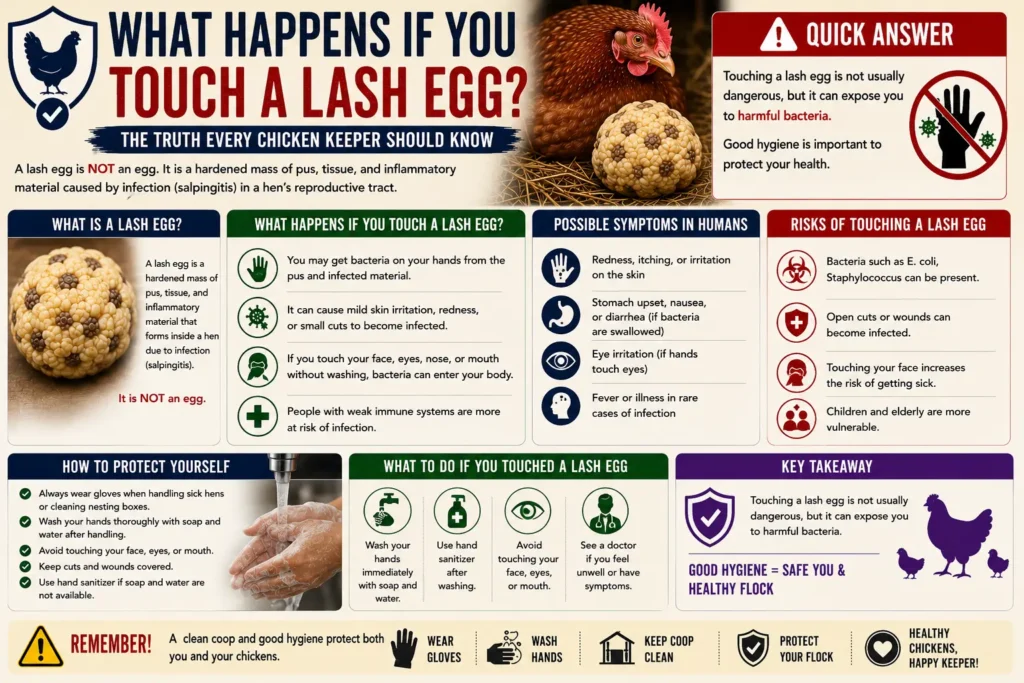
If you just picked up a strange, rubbery mass from the nesting box and your hands are still on it, you want a straight answer fast. What happens if you touch a lash egg? In most cases, nothing dangerous happens right away, but the mass can carry bacteria on its surface, so proper hygiene afterward matters more than panic.
A lash egg is not a real egg. It is a hardened clump of pus and inflammatory material that a hen expels when her oviduct is infected. It looks unsettling, and that is exactly why so many keepers hesitate before touching one.
This guide covers the real risk of skin contact, what bacteria might be present, and the exact steps for handling lash eggs safely.
Table of Contents
Why Lash Eggs Look and Feel So Alarming
A lash egg forms during a condition called salpingitis, an infection of the hen’s egg-laying tract. Instead of a smooth shell, the body pushes out layered pus, sometimes mixed with yolk, egg white, or blood clots.
The texture is often rubbery or cheese-like, and the smell can be strong and unpleasant. Merck Veterinary Manual and MSD Veterinary Manual both describe this material as caseous exudate, a thick, solid form of pus common in birds.
What Happens If You Touch a Lash Egg With Bare Hands?
Touching a lash egg with bare skin will not cause immediate illness for most healthy adults. Your skin is a strong barrier against most bacteria. The real concern is what happens after contact, not the moment of touching itself.
The risk comes from transferring bacteria from your hands to your mouth, your eyes, food surfaces, or other birds before you wash up. This is a hygiene issue, not a guaranteed infection.
Read More: https://lashegg.com/is-lash-egg-contagious-to-other-chickens/
Table: Handling Lash Eggs Safely vs. Handling Them Incorrectly
| Action | Safe Practice | Risky Practice |
| Picking it up | Use gloves or a bag over your hand | Bare hands with no follow-up washing |
| Disposal | Double-bag and throw away | Leave it in the coop or yard |
| After contact | Wash hands with soap for 20 seconds | Touch your face or food right after |
| Surfaces | Disinfect where it was placed | Set it directly on kitchen counters |
| Kids and pets | Keep them away entirely | Let curious pets sniff or lick it |
Handling lash eggs safely mainly comes down to basic hygiene, not special equipment.
Quick Answer
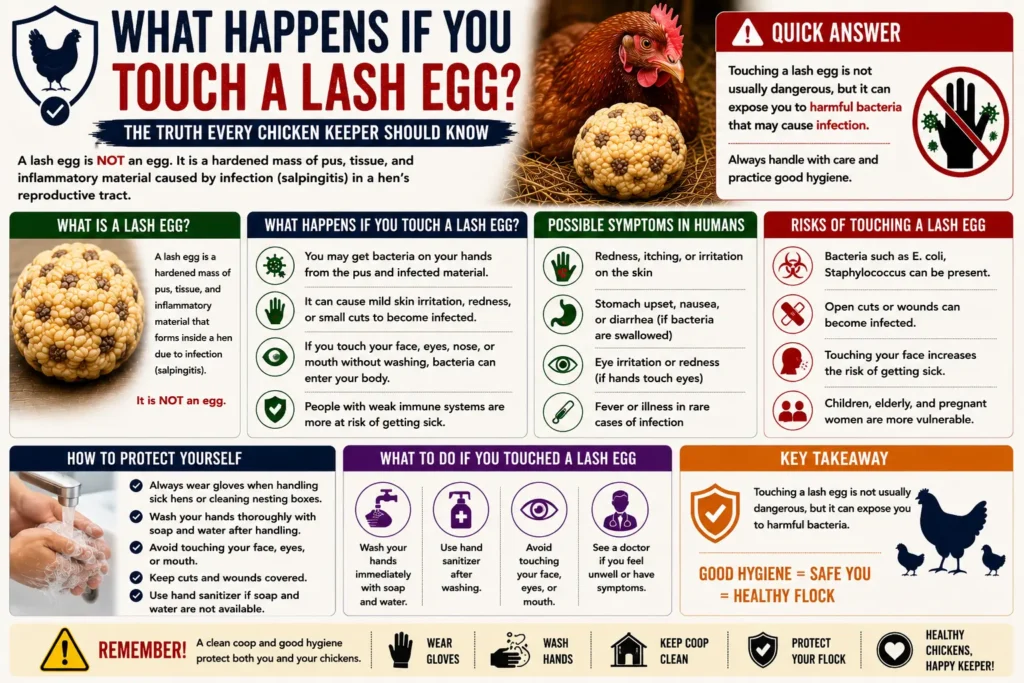
Touching a lash egg is not an emergency. Wash your hands thoroughly with soap, avoid touching your face until you do, and disinfect any surface the mass touched.
What Bacteria Might Be on a Lash Egg?
The exact organism depends on what caused the hen’s infection. Common culprits include:
- E. coli, often from a dirty coop environment
- Salmonella species, linked to feces or contaminated feed
- Mycoplasma gallisepticum, a respiratory pathogen that can also affect the reproductive tract
- Pasteurella multocida, another bacterial cause of poultry infections
None of these automatically infect a human through simple skin contact, but they can cause illness if they reach your mouth, an open cut, or your eyes.
Step-by-Step: How to Handle a Lash Egg Safely
- Put on disposable gloves, or use a plastic bag as a hand covering.
- Pick up the lash egg without squeezing or breaking it open.
- Place it directly into a sealed bag or container.
- Dispose of it in an outdoor trash bin, away from pets and children.
- Remove gloves and turn them inside out as you take them off.
- Wash your hands with soap and warm water for at least 20 seconds.
- Disinfect the nesting box, gloves-free surfaces, and any tools used.
Expert Tip
Keep a small bag of disposable gloves near your coop supplies. Having them ready means you will actually use them instead of grabbing a lash egg bare-handed out of habit.
Could Touching a Lash Egg Make You Sick?
For a healthy adult with intact skin and good hand hygiene, illness from simply touching a lash egg is unlikely. Risk increases in specific situations:
- You have an open cut or scrape on your hand
- You touch your mouth, nose, or eyes before washing
- You are immunocompromised or pregnant
- Young children or elderly family members handle it directly
- You do not wash the surfaces it contacted afterward
Warning
Never let children handle a lash egg without adult supervision and gloves. Their hand-to-mouth habits raise the risk of accidental bacterial exposure far more than in adults.
Does Touching a Lash Egg Put Other Chickens at Risk?
Handling the mass itself will not infect your flock, but your hands can act as a carrier if you touch other birds, feeders, or nesting boxes right after. This is one of the most overlooked parts of handling lash eggs safely.
Always wash your hands or change gloves between handling a lash egg and touching healthy hens or their food and water sources.
Table: Lash Egg Contact Risk by Person Type
| Person | Risk Level | Extra Precaution Needed |
| Healthy adult, no cuts | Low | Standard handwashing |
| Adult with open wound | Moderate | Gloves and wound covering |
| Pregnant person | Moderate | Gloves, avoid direct contact if possible |
| Young child | Higher | Adult handles it instead |
| Immunocompromised person | Higher | Avoid direct handling entirely |
Common Mistakes People Make When They Find a Lash Egg
- Picking it up with bare hands out of curiosity
- Poking or squeezing it to see what is inside
- Leaving it on a counter or porch before disposal
- Forgetting to wash hands before returning to the coop
- Letting a dog or cat investigate it first
Did You Know?
A lash egg can sit inside the oviduct for days before the hen expels it, which is why it often appears suddenly with no obvious warning signs beforehand.
When to Call a Vet
Contact a poultry veterinarian if any of the following apply:
- The same hen produces more than one lash egg
- Other hens show respiratory symptoms or reduced egg laying
- The hen appears lethargic, hunched, or stops eating
- You want confirmation of the underlying bacterial cause before deciding on treatment
A veterinarian can run cultures or PCR testing to identify the exact organism, which guides safer handling recommendations for your specific flock.
People Also Ask
Can a lash egg make a human sick? It is uncommon for a healthy adult to get sick from brief contact, but bacteria on the surface can cause illness if it reaches your mouth or an open wound.
Do you need gloves to touch a lash egg? Gloves are recommended, especially if you have cuts on your hands or plan to handle the mass more than briefly.
Can dogs or cats get sick from a lash egg? Pets that sniff, lick, or eat a lash egg can potentially pick up bacteria like Salmonella or E. coli, so keeping pets away is the safer choice.
Should you wash your hands after touching chicken eggs in general? Yes, standard hand hygiene after handling any chicken eggs, healthy or not, is a widely recommended practice by extension services and food safety guidelines.
FAQ
What happens if you touch a lash egg? Nothing serious usually happens immediately, but the mass can carry bacteria, so washing your hands right after and avoiding contact with your face until you do is the safest approach.
Is it safe to touch a lash egg without gloves? It is not ideal. Handling lash eggs safely means using gloves or a bag when possible, then thoroughly washing your hands afterward if bare-handed contact happens.
What happens if you touch a lash egg and then touch other chickens? You could transfer bacteria from the lash egg to healthy birds, so washing your hands or changing gloves before touching other hens is important.
Can touching a lash egg cause an infection on your skin? This is rare in people with intact, healthy skin, but an open cut exposed to bacteria from the mass could become infected without proper cleaning.
Do you need to disinfect the area after touching a lash egg? Yes, disinfecting the nesting box and any surface the lash egg touched is a key part of handling lash eggs safely and preventing bacteria from lingering.