Is Lash Egg Contagious to Other Chickens? What Every Keeper Needs to Know

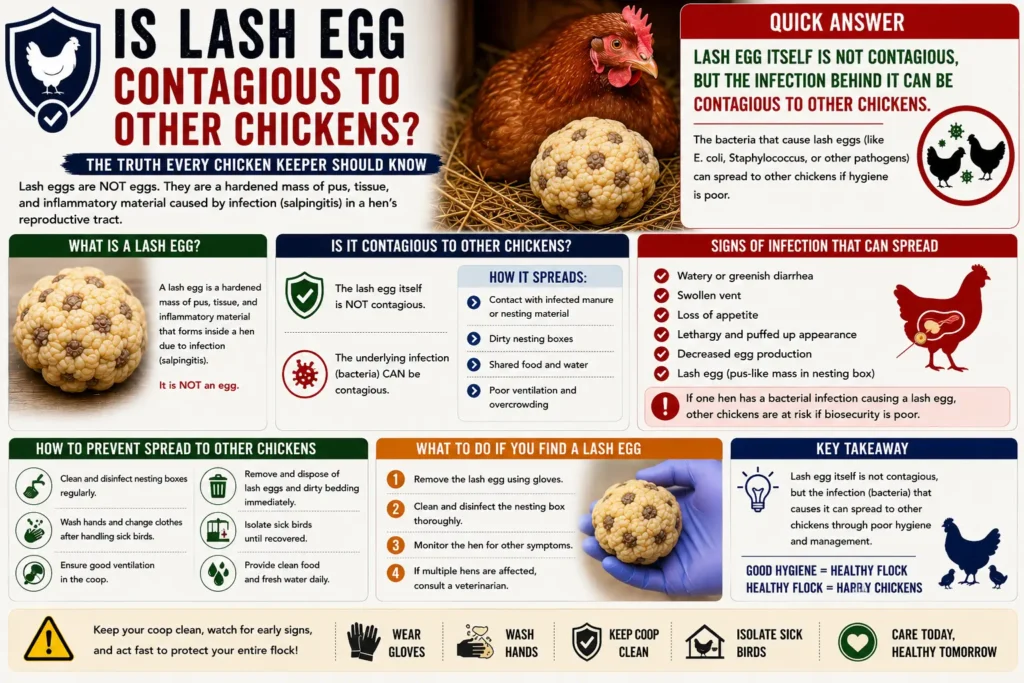
If you found a strange, rubbery, sausage-shaped mass in your nesting box, you are probably asking one urgent question: is lash egg contagious to other chickens? The short answer is that the lash egg itself cannot spread from bird to bird, but the infection behind it sometimes can. That distinction matters, and it changes how you manage your flock.
A lash egg is not a real egg. It is a solid clump of pus, dead tissue, and egg material that forms inside a hen’s oviduct during an infection called salpingitis. Because it looks alarming, many keepers panic and assume flock infection is guaranteed. This guide breaks down the science so you can respond calmly and correctly.
Table of Contents
What Exactly Is a Lash Egg?
A lash egg forms when bacteria infect the oviduct, the tube that carries a developing egg toward the vent. The hen’s immune system responds by producing caseous pus, a cheese-like material that hardens into layers.
Instead of a shell, the hen expels this pus mass, sometimes mixed with yolk, egg white, or blood. It can look yellow, white, or greenish, and it often has a strong odor.
Vets typically call this condition salpingitis, or occasionally egg yolk peritonitis when yolk leaks into the abdomen. Merck Veterinary Manual and MSD Veterinary Manual both classify it as a reproductive tract disorder rather than a standalone disease.
Read More: https://lashegg.com/is-lash-egg-contagious-to-humans/
Is Lash Egg Contagious to Other Chickens Through Direct Contact?
The lash egg mass itself is not an infectious agent. Other hens cannot catch anything from touching it, pecking at it, or sharing a nesting box where it was found. It is dead tissue and inflammatory debris, not a living pathogen that spreads on contact.
What matters instead is why the lash egg formed. If the underlying bacteria came from a contagious source, other birds sharing the same environment could already be exposed.
Why the Underlying Infection Matters More Than the Lash Egg
Salpingitis usually starts with bacteria that are already common in a flock’s environment, such as E. coli, Mycoplasma, Salmonella, or Pasteurella. These organisms often live in soil, droppings, or dirty bedding.
Some of these bacteria spread easily between birds through shared water, contaminated feces, or respiratory droplets. Others mainly affect a hen because of her own body, such as stress, poor egg-laying anatomy, or a prior respiratory infection that traveled to the reproductive tract.
This is why a single hen with a lash egg does not automatically mean flock infection is coming. It depends on the specific pathogen involved.
Table: Common Causes of Lash Egg and Their Contagion Risk
| Cause | How It Spreads | Flock Infection Risk |
| E. coli | Contaminated water, feces, dirty bedding | Moderate — opportunistic, spreads in dirty conditions |
| Mycoplasma gallisepticum | Respiratory droplets, direct contact | High — classic contagious flock pathogen |
| Salmonella species | Feces, contaminated feed, rodents | Moderate to high |
| Infectious Bronchitis Virus (IBV) | Airborne, respiratory secretions | High — highly contagious virus |
| Stress-related salpingitis | Not infectious | Low — individual bird issue |
| Reverse peristalsis / anatomy issue | Not infectious | Low — individual bird issue |
This table is a general educational reference. A veterinarian should confirm the actual cause in your flock.
Signs Your Flock Might Be at Risk of Flock Infection
Watch for these warning signs in other birds, not just the hen who produced the lash egg:
- Labored or open-mouth breathing
- Nasal discharge or swollen sinuses
- Sudden drop in egg production across multiple hens
- Watery or discolored droppings
- Lethargy or fluffed feathers in more than one bird
- Multiple hens laying soft-shelled or misshapen eggs
If several of these symptoms appear together, the cause is more likely a contagious pathogen, and you should isolate affected birds right away.
Quick Answer
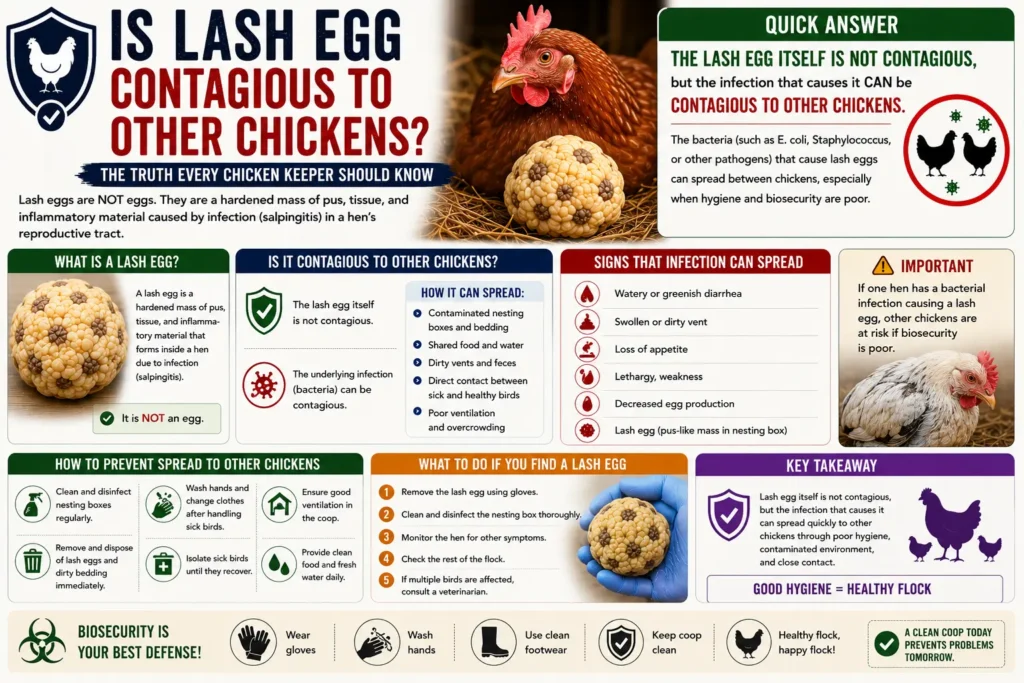
A lash egg cannot infect another chicken on its own. The bacteria that caused it might spread, depending on the specific germ involved and how clean the coop environment is.
How Contagious Pathogens Actually Spread in a Coop
Understanding transmission routes helps you judge your real flock infection risk.
- Shared water sources — bacteria from droppings contaminate drinking water quickly.
- Respiratory droplets — coughing or sneezing birds release bacteria or viruses into the air.
- Contaminated bedding — damp, dirty litter holds bacteria for days or weeks.
- Rodents and wild birds — pests can carry Salmonella and other organisms into the coop.
- New bird introductions — unquarantined additions are a leading cause of flock-wide outbreaks.
- Shared nesting boxes — repeated use without cleaning increases bacterial load over time.
Expert Tip
Isolate any hen that produces a lash egg for at least two weeks, and disinfect her nesting area immediately. This step alone prevents most secondary flock infection even when the exact cause is unknown.
Diagnosis: How Vets Determine If It’s Contagious
A veterinarian cannot tell just by looking at the lash egg whether the cause is contagious. Instead, they typically use:
- Physical exam of the hen and flock
- Cloacal or tracheal swabs for bacterial culture
- Blood work to check for systemic infection
- Necropsy in severe or repeated cases
- PCR testing for Mycoplasma or viral pathogens
University extension services and AVMA-affiliated poultry vets generally recommend testing before assuming the worst, since treatment differs depending on the organism found.
Table: Lash Egg vs. Normal Egg vs. Soft-Shelled Egg
| Feature | Lash Egg | Normal Egg | Soft-Shelled Egg |
| Shell present | No | Yes | Thin, rubbery, or absent |
| Texture | Rubbery, cheese-like layers | Hard, smooth | Soft, flexible |
| Cause | Salpingitis / infection | Healthy reproductive cycle | Calcium deficiency, stress, age |
| Contagious concern | Only if underlying cause is | Not applicable | Not applicable |
| Odor | Often foul | Neutral | Neutral |
Treatment Options: Home Care vs. Veterinary Care
What You Can Do at Home
- Isolate the affected hen from the rest of the flock
- Clean and disinfect the coop, feeders, and waterers
- Provide clean bedding daily during recovery
- Offer a balanced layer feed with adequate calcium
- Monitor the rest of the flock closely for two to three weeks
When Home Care Is Not Enough
Home care can support recovery, but it cannot cure a bacterial infection inside the oviduct. Antibiotics, when needed, require a veterinary prescription and proper dosing based on the confirmed pathogen.
When to Call a Vet
Contact a poultry veterinarian if you see any of the following:
- More than one hen produces a lash egg within a few weeks
- Respiratory symptoms alongside the lash egg
- The hen appears severely lethargic or stops eating
- Repeated episodes in the same bird
- Any sign of spreading illness across the flock
Common Mistakes Keepers Make
- Assuming a lash egg always means the whole flock is doomed
- Not isolating the affected hen soon enough
- Skipping coop disinfection because “it’s just one bird”
- Treating with random antibiotics without a confirmed diagnosis
- Ignoring mild respiratory signs in other hens
Warning
Never handle a lash egg with bare hands and then touch other birds, feeders, or nesting material without washing thoroughly. While the mass itself is not infectious, bacteria on its surface can still transfer mechanically.
Did You Know?
Lash egg cases tend to rise during high heat stress, molting season, and periods of poor ventilation, since stressed hens are more vulnerable to reproductive tract infections even without a contagious pathogen present.
Prevention: Reducing Flock Infection Risk Long-Term
- Keep nesting boxes clean and dry
- Provide fresh water daily and clean waterers weekly
- Quarantine new birds for at least 30 days
- Control rodents and wild bird access to feed
- Maintain good coop ventilation to reduce respiratory disease
- Support hens nutritionally during molt and high heat
- Cull or retire hens with chronic, repeated reproductive issues after veterinary guidance
People Also Ask
Can a hen recover fully after a lash egg? Many hens recover, especially with early isolation and supportive care, though some develop chronic salpingitis and stop laying reliably.
Should I eat eggs from a hen near one that had a lash egg? Eggs from healthy-looking hens are generally considered safe, but any egg from a visibly sick or actively infected hen should be discarded.
Does a lash egg mean my hen has cancer? Not usually. Lash eggs are most often linked to bacterial salpingitis, though reproductive tumors can sometimes cause similar symptoms in older hens, which a vet can help rule out.
Can lash eggs happen more than once? Yes, hens that had one episode are more prone to recurring salpingitis, particularly older or heavy-breed layers.
FAQ
Is lash egg contagious to other chickens? The lash egg mass itself is not contagious. However, if a contagious bacteria or virus caused it, other hens sharing the coop could be at risk, which is why monitoring the flock closely afterward matters.
How do I know if lash egg is contagious to other chickens in my specific flock? Only a veterinary test, such as a bacterial culture or PCR panel, can confirm whether the cause is a contagious organism or an individual bird issue.
What is the fastest way to reduce flock infection risk after a lash egg? Isolate the affected hen immediately, disinfect the coop and nesting boxes, and watch the rest of the flock for respiratory or laying changes over the next two to three weeks.
Can lash egg spread through shared nesting boxes? The lash egg material itself does not spread infection through contact, but bacteria on its surface or in the nesting material could theoretically transfer to another hen using the same box before it is cleaned.
Is lash egg contagious to humans? There is no established evidence that lash eggs directly infect humans, but standard hygiene, gloves and handwashing, is still recommended when handling one.