Risk Factors for Salpingitis: What Actually Raises Your Flock’s Risk

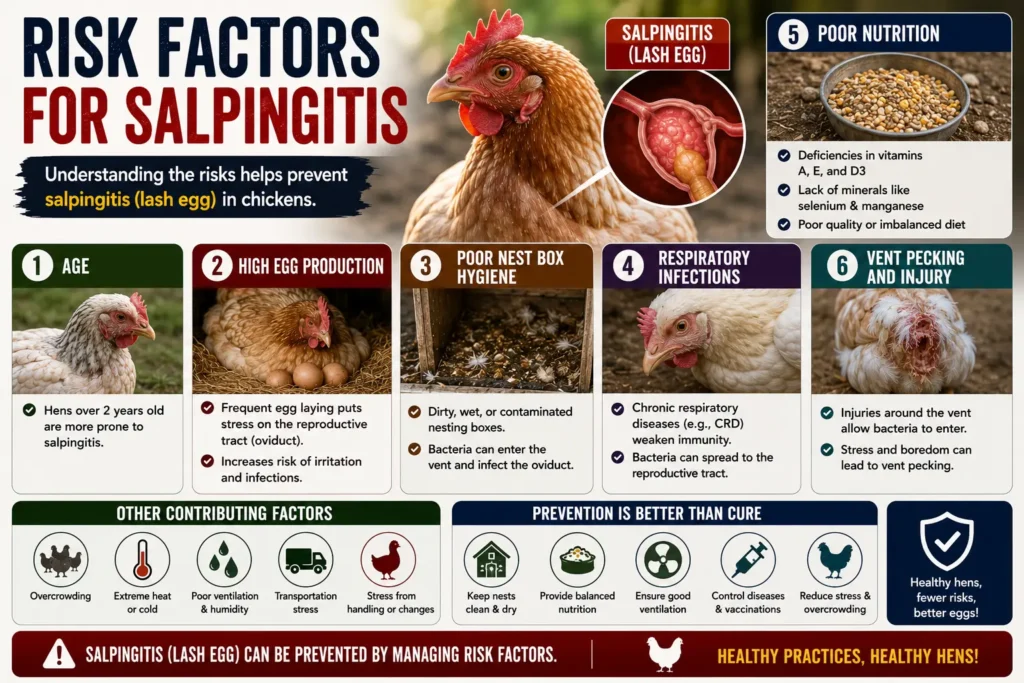
If you keep backyard chickens, understanding the risk factors for salpingitis can help you catch problems early instead of after a hen is already seriously ill. Salpingitis is one of the leading causes of illness and death in laying hens, and it rarely comes from a single cause. It’s almost always a combination of factors working together.
This article pulls those factors together in one place: age, breed, diet, hygiene, stress, and prior health history. Understanding how they interact gives you a much clearer picture than any single-cause explanation.
Quick Answer: The main risk factors for salpingitis include advancing age, high egg production, poor nest box hygiene, chronic stress, calcium or vitamin deficiency, and prior reproductive tract damage. Most cases involve two or more of these factors together.
Older hens face notably higher risk than young pullets, and backyard chickens kept in less controlled environments than commercial operations often face different combinations of exposure. This guide breaks both of those angles down clearly.
Table of Contents
What Is Salpingitis, Briefly
Salpingitis is inflammation or infection of the oviduct, the tube where eggs form and travel before laying. It’s most often caused by bacteria such as E. coli that reach the reproductive tract through the vent or from the intestinal tract. Left untreated, it’s a leading cause of death in laying flocks.
Because the direct cause is almost always bacterial, understanding risk factors is really about understanding what makes bacterial infection more likely to take hold and progress. That’s the lens this entire guide uses.
Read More: https://lashegg.com/dirty-nesting-boxes-and-infections/
The Full List of Risk Factors for Salpingitis
1. Age
Age is one of the most consistent risk factors for salpingitis. Older hens have laid hundreds or even thousands of eggs by the time they reach two to three years old, and that repeated use gradually wears down oviduct tissue.
- Oviduct muscle tone weakens over time, slowing egg transit and giving bacteria more opportunity to ascend.
- Immune function naturally declines with age in most animals, including chickens.
- Older hens are more likely to have experienced a prior reproductive issue, like egg binding, that left lasting tissue damage.
Expert Tip: If you keep older hens as pets rather than primarily for egg production, watch their laying patterns and abdominal shape more closely as they age. Early detection matters even more in birds you plan to keep long-term.
2. High Egg Production and Breed Genetics
Hens bred for maximum egg output, especially commercial hybrid layers, face higher salpingitis risk than heritage breeds that lay less frequently.
- Constant reproductive activity keeps the oviduct under near-continuous strain.
- Overproduction can outpace a hen’s calcium and nutrient reserves if diet isn’t carefully managed.
- Genetic selection for output has, in some lines, come at the cost of long-term reproductive tract durability.
3. Nutritional Deficiency
Poor nutrition, particularly low calcium and vitamin D3, weakens shell formation and oviduct muscle function, both of which increase vulnerability to ascending infection.
| Nutrient Gap | Effect on Oviduct Health |
| Low calcium | Weak shells, slower egg transit |
| Low vitamin D3 | Reduced calcium absorption despite adequate intake |
| Low protein | Slower tissue repair and maintenance |
| Low vitamin A | Reduced resistance in oviduct lining |
4. Poor Nest Box and Coop Hygiene
Dirty nest boxes and unsanitary coop conditions expose the vent to bacteria repeatedly, which is one of the more preventable risk factors for salpingitis.
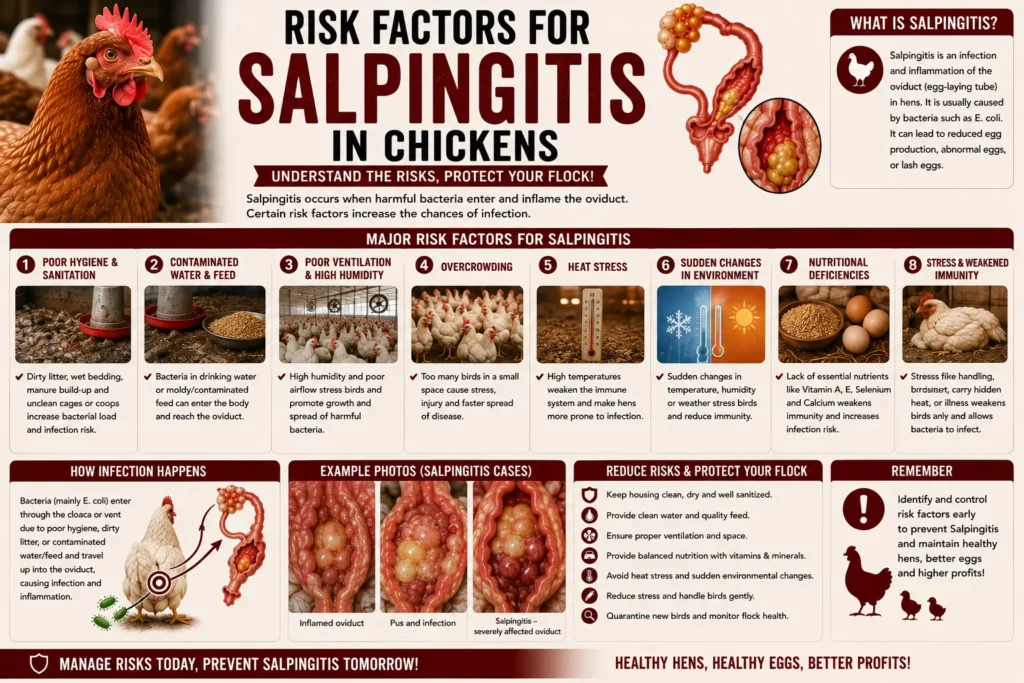
- Bacteria from droppings and broken eggs can travel upward into the oviduct.
- Damp, poorly maintained bedding increases bacterial growth significantly.
- Overcrowded nest boxes force repeated exposure across multiple hens sharing limited space.
5. Chronic Stress
Stress doesn’t cause salpingitis directly, but it’s a well-documented contributing risk factor. Chronic stress raises cortisol, which suppresses immune function and can disrupt normal laying rhythm.
- Heat stress, overcrowding, and predator pressure are common triggers in backyard chickens.
- Social stress from flock introductions or pecking order conflict adds up over time.
- Sudden environmental changes, like moving coops or introducing new birds, can trigger short-term stress spikes.
6. Prior Reproductive Tract Damage
Hens with a history of egg binding, internal laying, or previous mild infections often carry lasting tissue changes that make future infection more likely.
- Scar tissue from a past issue can slow normal oviduct function.
- Recurrent minor infections may not fully clear, leaving low-grade inflammation behind.
- These hens often benefit from closer monitoring than birds with no reproductive history.
7. Underlying Viral Infections
Respiratory viruses, particularly infectious bronchitis virus, can damage the oviduct lining early in a hen’s life. This damage may not cause visible symptoms for months or years, but it raises long-term salpingitis risk.
8. Environmental and Housing Conditions
Poor ventilation, overcrowding, and inconsistent temperatures all contribute indirectly by increasing both stress and bacterial exposure at the same time.
Risk Factors at a Glance
| Risk Factor | Type | How It Raises Risk |
| Older age | Physiological | Weaker tissue, slower transit, declining immunity |
| High production breed | Genetic | Constant reproductive strain |
| Calcium/vitamin deficiency | Nutritional | Weak shells, slower transit |
| Dirty nest boxes | Environmental | Direct bacterial exposure to vent |
| Chronic stress | Physiological | Immune suppression, disrupted laying rhythm |
| Prior reproductive damage | Medical history | Lasting tissue vulnerability |
| Viral infection history | Medical history | Long-term oviduct lining damage |
| Poor housing conditions | Environmental | Combines stress and hygiene risk |
Older Hens: Why Age Changes the Picture
Older hens deserve their own closer look, since age consistently ranks among the top risk factors for salpingitis in veterinary poultry literature.
What Changes as Hens Age
- Egg production naturally slows, but the eggs still laid may show more shell irregularities.
- Oviduct tissue loses some elasticity and strength after years of repeated use.
- Immune resilience gradually declines, similar to aging patterns in other animals.
- Cumulative exposure to stress, minor infections, or nutritional gaps adds up over a longer lifespan.
Did You Know?
Commercial layer hens are often kept for just one to two production cycles specifically because reproductive tract issues, including salpingitis, become significantly more common after that point. Backyard keepers who keep hens well past typical commercial retirement age simply take on more of this risk in exchange for a longer relationship with their birds.
Backyard Chickens vs. Commercial Flocks: Different Risk Patterns
Backyard chickens and commercial flocks don’t face identical risk profiles, even though the underlying biology is the same.
| Factor | Backyard Chickens | Commercial Flocks |
| Age kept | Often kept for years past peak laying | Typically replaced after 1–2 production cycles |
| Hygiene control | Varies widely by owner | Highly standardized protocols |
| Stress exposure | Predators, weather, small-flock dynamics | Controlled environment, but higher density |
| Veterinary access | Sometimes limited or delayed | Often has dedicated poultry health monitoring |
| Diet consistency | Can vary if not using complete feed | Formulated and consistent |
Backyard chickens often face higher risk from age and inconsistent hygiene, while commercial flocks face different pressure from density and production intensity. Neither environment eliminates risk entirely, which is why owner awareness matters so much either way.
Signs and Symptoms to Watch For
- Reduced or stopped egg laying
- Soft-shelled, misshapen, or shell-less eggs
- Swollen, fluid-filled abdomen or an upright “penguin” stance
- Lethargy and reduced appetite
- Foul-smelling vent discharge
- Straining without producing an egg
When to Call a Vet
When to Call a Vet: Reach out to a poultry veterinarian if a hen shows abdominal swelling, stops laying suddenly, strains without producing an egg, or has any discharge from the vent. These signs can point to salpingitis or a related reproductive tract infection that needs prompt treatment.
Recognizing risk factors helps with prevention, but it doesn’t replace veterinary diagnosis once symptoms appear. A vet can confirm whether salpingitis, egg binding, or another condition is responsible.
How Risk Factors Translate Into Diagnosis and Treatment
- History review. Vets often ask about a hen’s age, breed, diet, and housing conditions, since these details point toward likely risk factors.
- Physical exam and palpation. Checks for abdominal swelling or fluid consistent with infection.
- Diagnostic imaging. Ultrasound or radiographs help confirm the extent of the problem.
- Bloodwork. Can reveal signs of active infection.
- Treatment plan. Usually includes antibiotics based on culture results, with surgery reserved for advanced cases.
Home Care vs. Veterinary Treatment
| Aspect | What You Can Manage at Home | What Needs a Vet |
| Reducing risk factors | Diet, hygiene, stress management | N/A |
| Monitoring | Egg quality, behavior, weight | Diagnostic imaging, bloodwork |
| Early irritation | Cleaning, minor care | Persistent symptoms |
| Active infection | Not treatable at home | Antibiotics, possible surgery |
Warning: Managing risk factors lowers the odds of salpingitis but cannot treat an infection that has already developed. Don’t delay veterinary care while trying home remedies once clear symptoms appear.
Common Mistakes Owners Make
- Focusing on just one risk factor, like diet, while ignoring hygiene or stress entirely.
- Assuming younger hens are immune, when in reality young hens can develop salpingitis too, just less frequently.
- Keeping older hens without adjusting monitoring habits, even though their risk profile has changed.
- Overlooking backyard-specific risks, like predator stress or inconsistent nest box cleaning, that commercial operations manage more tightly.
- Waiting for obvious symptoms instead of tracking subtle early changes in egg quality or behavior.
Reducing Risk Factors for Salpingitis: A Practical Approach
For All Hens
- Feed a complete layer ration with adequate calcium and vitamin D3.
- Clean and re-bed nest boxes weekly, with daily spot-checks.
- Reduce environmental and social stress through stable housing and gradual flock introductions.
- Monitor egg quality regularly as an early warning system.
Specifically for Older Hens
- Increase monitoring frequency as hens pass peak laying age.
- Watch more closely for subtle abdominal changes or laying pattern shifts.
- Consider more frequent veterinary checkups if a hen has a history of reproductive issues.
Specifically for Backyard Chickens
- Maintain consistent hygiene routines even without commercial-level infrastructure.
- Address predator and weather-related stress proactively, since backyard flocks often face more variable conditions.
- Keep a simple health log to track laying patterns over time, which makes it easier to notice gradual changes.
Frequently Asked Questions (People Also Ask)
What are the biggest risk factors for salpingitis in chickens? The most significant risk factors for salpingitis include older age, high egg production, poor nest box hygiene, chronic stress, and calcium or vitamin deficiency, often occurring in combination rather than alone.
Are older hens more likely to get salpingitis? Yes. Older hens face higher risk due to cumulative reproductive tract strain, declining immune function, and a greater chance of prior reproductive issues.
Do backyard chickens get salpingitis more often than commercial hens? Not necessarily more often, but backyard chickens often face different risk patterns, including being kept well past typical commercial retirement age and more variable hygiene or stress exposure.
Can young hens develop salpingitis? Yes, though it’s less common. Young hens can develop salpingitis from bacterial infection, viral damage, or significant stress, even without the added risk of advanced age.
Is salpingitis preventable if I manage all the risk factors? Managing risk factors significantly lowers the odds, but no combination of preventive steps guarantees complete prevention, since bacterial exposure can never be fully eliminated.
How do I know if my hen’s age is contributing to her risk? If a hen is past two to three years of consistent laying, age is likely a contributing factor, especially alongside other risks like nutrition or hygiene gaps.
5. FAQ Section (Expanded)
Do all risk factors for salpingitis carry equal weight?
No. Some factors, like nest box hygiene, are highly controllable, while others, like age, are not. Owners generally get the most benefit from focusing effort on the controllable factors.
Can improving hygiene reverse existing risk from age or breed?
Improving hygiene reduces one risk factor but doesn’t reverse others like age or genetic predisposition. It’s most effective as part of a combined prevention approach rather than a standalone fix.
Should I test older hens for salpingitis even without symptoms?
Routine testing isn’t typically necessary without symptoms, but increased observation and periodic veterinary checkups are reasonable for older hens with known risk factors.
Is there a way to know which risk factor caused a specific case of salpingitis?
Often not with certainty. Veterinary diagnosis focuses on confirming and treating the infection itself, while history review helps identify likely contributing factors rather than a single definitive cause.