How to Diagnose Salpingitis in Hens: Signs & Vet Guide

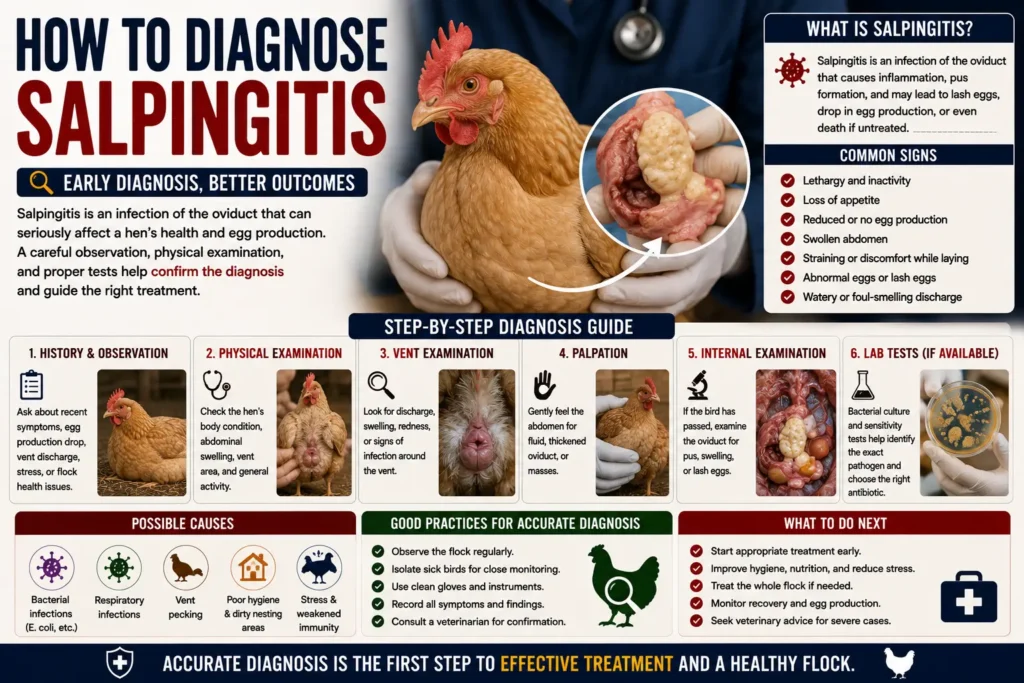
If your hen has stopped laying, looks swollen around the vent, or waddles like a penguin, salpingitis could be the reason. Knowing how to diagnose salpingitis early can mean the difference between a hen that recovers and one that doesn’t. This guide walks you through the exact signs, tests, and vet procedures used to confirm this common reproductive disease in backyard and commercial hens.
Quick Answer: Vets diagnose salpingitis through a physical exam, palpation of the abdomen, X-rays or ultrasound to check for fluid or egg masses, bloodwork to detect infection, and sometimes exploratory surgery or necropsy. At home, watch for a swollen “penguin belly,” lack of egg-laying, and lethargy as early red flags.
Table of Contents
What Is Salpingitis in Hens?
Salpingitis is inflammation or infection of the oviduct, the tube that carries the egg from the ovary to the vent. It’s one of the most common causes of death in laying hens over two years old, according to poultry health researchers and university extension programs.
Read More: https://lashegg.com/abnormal-egg-laying-symptoms/
The oviduct can fill with pus, fluid, or a solid caseous (cheese-like) mass. This buildup presses on other organs, causes fluid to pool in the abdomen, and can lead to sepsis if left untreated. Because the early signs are subtle, many owners don’t realize something is wrong until the disease has progressed.
How to Diagnose Salpingitis: Signs and Symptoms to Watch
Learning how to diagnose salpingitis starts with recognizing behavior and body changes in your flock. Hens are prey animals, so they hide illness well. By the time obvious symptoms appear, the infection has often been building for weeks.
Early Signs of Salpingitis in Hens
- Sudden drop or stop in egg production
- Soft-shelled, misshapen, or fewer eggs than usual
- Mild lethargy or reduced appetite
- Slight change in droppings (watery, discolored, or foul-smelling)
- Reluctance to move around the coop or forage
Advanced or Severe Symptoms
- A visibly swollen, firm, or fluid-filled abdomen (“penguin stance” or waddling walk)
- Pale comb and wattles
- Labored breathing due to abdominal pressure on the air sacs
- Sitting hunched with tail down, feathers puffed
- Discharge or odor around the vent
- Sudden collapse or death in advanced cases
Did You Know? A hen’s abdomen can hold fluid equal to a significant portion of her body weight before any external swelling becomes obvious, which is why salpingitis is often missed until it’s advanced.
Symptom Severity Table
| Stage | Common Symptoms | Egg Laying | Urgency |
| Early | Slight appetite drop, fewer eggs | Reduced | Monitor closely |
| Moderate | Lethargy, soft-shelled eggs, weight loss | Irregular or stopped | Schedule vet visit |
| Advanced | Swollen abdomen, penguin walk, pale comb | Stopped | Vet visit urgent |
| Critical | Labored breathing, collapse, discharge | Stopped | Emergency care |
Causes of Salpingitis in Backyard Chickens
Salpingitis usually develops from a bacterial infection that travels up from the cloaca into the oviduct, or from bacteria that reach the reproductive tract through the bloodstream. Common contributing causes include:
- E. coli infection, the most frequently identified bacteria in salpingitis cases
- Respiratory infections that spread to the reproductive system
- Internal laying, where an egg or yolk drops into the abdomen instead of the oviduct
- Genetic predisposition in certain high-production laying breeds
- Stress from overcrowding, poor ventilation, or sudden diet changes
- Obesity or nutritional imbalances that affect reproductive health
How Veterinarians Diagnose Salpingitis in Hens
Because symptoms overlap with other poultry illnesses, a proper diagnosis in hens usually requires more than a visual check. Avian and poultry veterinarians combine several methods to confirm salpingitis and rule out other causes.
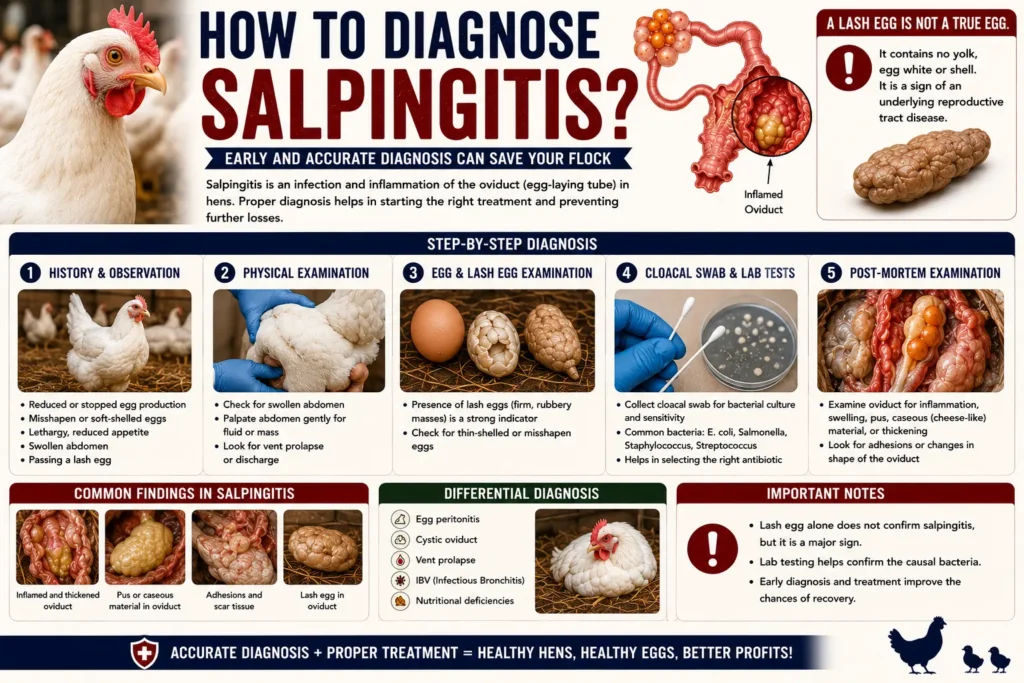
Physical Examination
The vet will feel the abdomen for fluid, firmness, or masses. A healthy hen’s abdomen feels soft and pliable; a hen with salpingitis often feels tight, distended, or has a fluid wave when gently pressed. The vet will also check the vent, comb color, breathing rate, and body condition score.
Imaging: X-Ray and Ultrasound
Radiographs (X-rays) show fluid buildup, an enlarged oviduct, or a mass pressing on internal organs. Ultrasound is especially useful for confirming whether fluid is present and estimating how much. These tools help veterinarians see what can’t be felt during a physical exam alone.
Bloodwork and Lab Tests
A complete blood count can reveal elevated white blood cells, a sign of active infection or inflammation. Some avian vets also run cultures on any discharge or fluid collected during examination to identify the specific bacteria involved, which guides antibiotic choice.
Abdominocentesis (Fluid Sampling)
If fluid is present, the vet may draw a small sample with a needle. Examining this fluid under a microscope helps distinguish infectious salpingitis from other causes of abdominal fluid, such as heart or liver disease.
Necropsy Findings
In hens that don’t survive, a necropsy is the most definitive way to confirm salpingitis. Pathologists look for a thickened, pus-filled, or caseous oviduct, along with peritonitis (inflammation of the abdominal lining). This is often how flock owners and researchers confirm the true scale of a salpingitis outbreak in a group of birds.
Diagnostic Methods Comparison
| Method | What It Shows | Requires Vet Visit |
| Physical exam & palpation | Swelling, fluid, masses | Yes |
| X-ray | Enlarged oviduct, fluid, egg mass | Yes |
| Ultrasound | Fluid volume, soft tissue detail | Yes |
| Bloodwork | Infection markers, white cell count | Yes |
| Abdominocentesis | Fluid type and bacterial culture | Yes |
| Necropsy | Definitive confirmation (post-mortem) | Yes (pathology lab) |
Expert Tip: Bring a record of egg production, diet, and any recent flock illnesses to your vet appointment. This history speeds up how to diagnose salpingitis accurately, since patterns like a sudden egg-laying stop combined with lethargy point strongly toward reproductive disease.
Salpingitis Diagnosis in Hens: What to Expect at the Vet
A typical diagnosis in hens visit for suspected salpingitis follows a predictable pattern:
- The vet takes a full history, including egg production changes, diet, and recent stressors.
- A hands-on exam checks weight, comb color, breathing, and abdominal feel.
- Imaging (X-ray or ultrasound) confirms internal changes.
- Bloodwork or fluid sampling checks for infection markers.
- The vet discusses treatment options based on severity, including antibiotics, supportive care, or in some cases, surgery or humane euthanasia if the disease is advanced.
Warning: Never attempt to drain abdominal fluid at home. Improper technique can introduce infection or cause internal injury. This procedure should only be performed by a licensed veterinarian.
Differential Diagnosis: Salpingitis vs Other Reproductive Issues
Several conditions mimic salpingitis, which is why ruling them out matters just as much as confirming the diagnosis itself.
| Condition | Key Difference from Salpingitis |
| Egg binding | Sudden straining, egg often felt near vent; no chronic swelling |
| Ascites (fluid in belly from heart/liver issues) | Fluid present but no reproductive infection; often breathing distress without egg-laying history |
| Egg yolk peritonitis | Yolk material in abdomen, often follows internal laying; can occur alongside salpingitis |
| Reproductive tumors | Slower onset, firm mass, less fluid; confirmed via imaging or necropsy |
| Marek’s disease (visceral form) | Nerve signs or tumors in multiple organs, not isolated to oviduct |
Common Mistakes: Owners often assume a swollen belly always means egg binding and try to help the hen “pass an egg” that isn’t there. This delays proper diagnosis. If a hen isn’t laying and has a firm or fluid-filled abdomen for more than a day or two, salpingitis should be on the list of possibilities.
Home Observation Checklist Before Calling a Vet
Before your appointment, track the following for 2–3 days if possible:
- Egg count and shell quality each day
- Appetite and water intake
- Droppings consistency and color
- Comb and wattle color changes
- Gait changes (waddling, reluctance to walk)
- Any abdominal swelling, felt gently with clean hands
This record helps the vet understand the timeline, which supports faster and more accurate diagnosis in hens showing reproductive symptoms.
Treatment Options After Diagnosis
Treatment depends on how advanced the disease is at the time of diagnosis.
- Antibiotics: Prescribed based on culture results when infection is confirmed early.
- Supportive care: Fluids, warmth, and a low-stress environment to help the hen recover.
- Fluid drainage: Performed by a vet if abdominal fluid is causing breathing difficulty.
- Surgery: In select cases, removal of the affected oviduct (salpingohysterectomy) may be an option at specialized avian practices.
- Hormonal implants: Some vets use implants to suppress egg-laying and reduce strain on the reproductive tract in chronic cases.
- Humane euthanasia: Considered when the disease is advanced, the hen is suffering, and recovery is unlikely.
Home care alone cannot cure salpingitis. It can only support a hen while she’s under veterinary treatment or help keep her comfortable if the prognosis is poor.
Prevention Tips for Flock Owners
- Provide a balanced layer diet with adequate calcium and protein
- Avoid overfeeding treats that lead to obesity
- Reduce stress through consistent routines and adequate space
- Keep the coop clean and well-ventilated to lower respiratory infection risk
- Monitor egg production trends so drops are caught early
- Cull or retire high-production hens from intensive laying schedules as they age, since older, heavy-laying breeds face higher risk
When to Call a Vet
When to Call a Vet: Contact an avian or poultry veterinarian if your hen stops laying for more than a few days combined with lethargy, if you notice abdominal swelling or a penguin-like walk, if breathing looks labored, or if there’s any discharge from the vent. Early evaluation gives the best chance of a good outcome.
Frequently Asked Questions
How do I know if my chicken has salpingitis? Watch for a stopped or reduced egg count, a swollen or fluid-filled abdomen, a waddling walk, pale comb, and lethargy. These signs together are strong indicators, but only a vet exam, imaging, or bloodwork can confirm it.
Can salpingitis be diagnosed without a vet? You can suspect salpingitis at home based on symptoms, but confirming it requires professional tools like palpation by a trained vet, X-ray, ultrasound, or bloodwork. Learning how to diagnose salpingitis accurately at home isn’t possible without these resources.
Is salpingitis in hens contagious to other birds? Salpingitis itself isn’t typically contagious between birds, since it develops from an individual hen’s internal infection. However, if the underlying cause is a respiratory pathogen, that infection could spread within the flock.
How long can a hen live with salpingitis? This varies widely. Some hens survive for weeks or months with chronic, low-grade cases, while others decline rapidly within days if the infection is severe or fluid buildup affects breathing.
What does salpingitis look like inside a hen? On necropsy, the oviduct appears thickened and may contain pus, fluid, or firm, layered caseous material sometimes described as “lash eggs.” This finding is one of the clearest confirmations used in diagnosis in hens after death.
Can salpingitis be cured? Early cases caught through prompt diagnosis and treated with antibiotics and supportive care can improve. Advanced cases with heavy fluid buildup or organ damage have a much lower recovery rate.
What is a lash egg and is it related to salpingitis? A lash egg is a caseous mass of pus, tissue, and sometimes egg material that a hen may pass through the vent. It’s a classic sign of salpingitis and often prompts owners to seek a vet’s help.
Conclusion
Recognizing how to diagnose salpingitis early gives your hen the best possible chance at recovery. Start by watching for changes in egg production, energy, and abdominal shape, then bring a clear symptom timeline to an avian or poultry veterinarian for physical examination, imaging, and bloodwork. Home observation matters, but only a vet visit can confirm salpingitis and guide the right treatment. If you notice any warning signs, don’t wait; a prompt diagnosis in hens with suspected salpingitis often makes the difference in outcome.