
Abnormal Egg Laying Symptoms: What They Mean and How to Respond

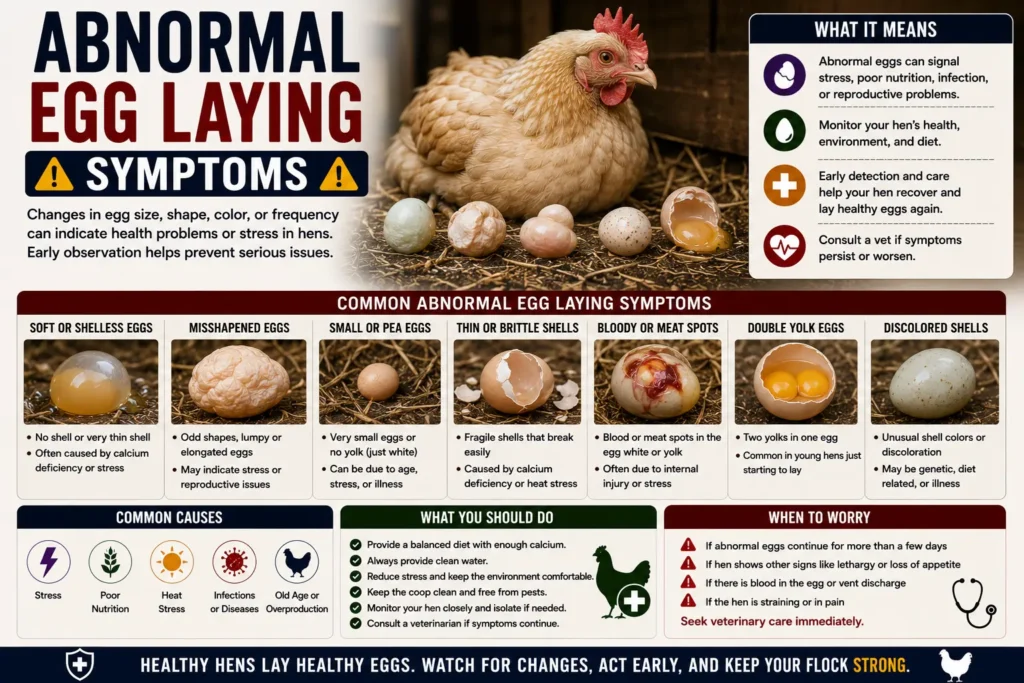
Finding a soft-shelled, oddly shaped, or blood-streaked egg in the nest box is one of the most common ways owners first notice abnormal egg laying symptoms in their flock. Most of the time, it’s a fixable diet or stress issue. Sometimes, it’s an early warning of a more serious reproductive problem. This guide breaks down every type of egg abnormality, what causes it, and when it’s worth worrying about.
Abnormal egg laying symptoms cover a wide range of changes, from a single soft-shelled egg to a sudden, ongoing drop in production. Some causes are simple, like a young pullet’s body still adjusting to laying. Others point to nutritional gaps, stress, age, or reproductive illness. Knowing which category your hen falls into helps you decide whether to adjust her diet or call a vet.
Table of Contents
Recognizing Abnormal Egg Laying Symptoms
Abnormal egg laying symptoms show up in the egg itself, in the hen’s behavior around laying, or in her overall production pattern.
Watch for these changes:
- Soft or shell-less eggs
- Thin, easily cracked shells
- Misshapen, wrinkled, or lumpy eggs
- Unusually small or unusually large eggs
- Blood spots or blood streaks on the shell or yolk
- Double-yolk or yolk-less eggs
- A sudden drop in egg production
- Straining, discomfort, or repeated trips to the nest box without laying
Read More: https://lashegg.com/lethargic-chicken-symptoms/
H3: How to Tell Which Abnormal Egg Laying Symptoms Are Serious
A single odd egg from an otherwise healthy, active hen is rarely a red flag. It’s the pattern that matters. Abnormal egg laying symptoms that repeat over several days, or that show up alongside lethargy, a swollen abdomen, or straining, point toward something that needs a closer look rather than a one-off fluke.
<div class=”callout quick-answer”> <strong>Quick Answer:</strong> Occasional egg abnormalities are usually tied to age, diet, or stress and resolve on their own. Repeated abnormal egg laying symptoms, especially with straining or lethargy, often point to a nutritional deficiency, egg binding, or a reproductive infection like salpingitis. </div>
Common Types of Egg Abnormalities and What They Mean
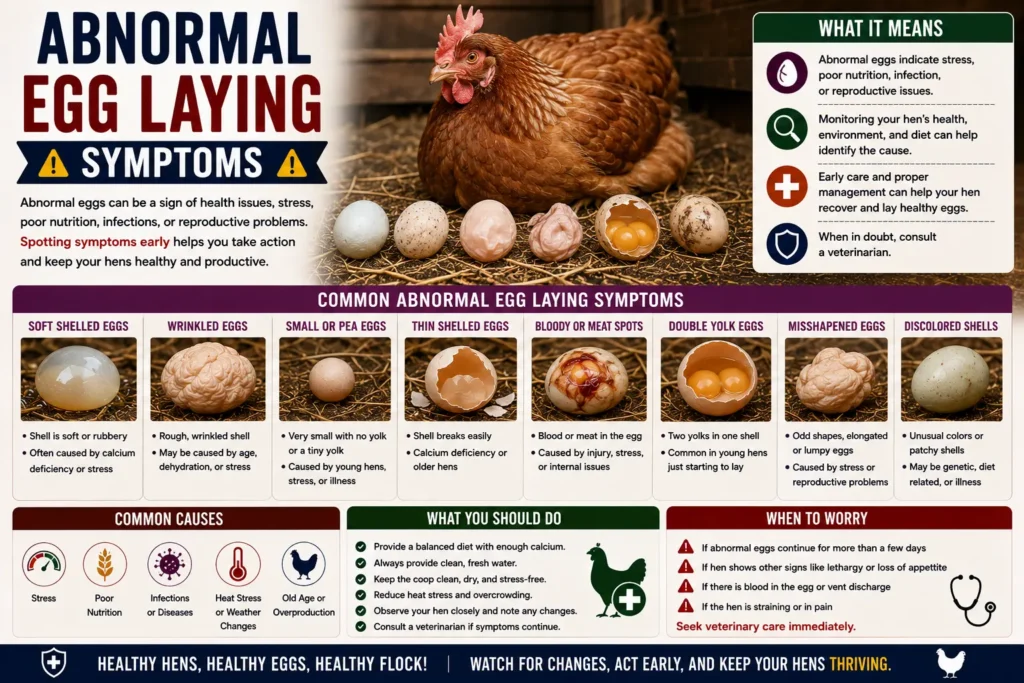
Different egg abnormalities point to different underlying issues. Here’s a breakdown of what each one usually signals.
| Egg Abnormality | Likely Cause |
| Soft or shell-less egg | Calcium deficiency, young pullet still adjusting, heat stress |
| Thin or fragile shell | Low calcium, vitamin D deficiency, age-related decline |
| Wrinkled or lumpy shell | Stress during shell formation, respiratory illness, calcium imbalance |
| Blood spots on yolk | Minor blood vessel rupture during ovulation, usually harmless |
| Blood streaks on shell | Minor tearing during laying, more common in young or overweight hens |
| Double yolk | Two yolks released together, common in young, heavy-laying hens |
| Yolk-less egg (wind egg) | A small piece of tissue mistaken by the oviduct for a yolk |
| Tiny or “fart” eggs | Reproductive tract irritation or a young pullet’s first attempts at laying |
| Giant or misshapen egg | Two eggs merging in the oviduct, more common in older hens |
According to the Merck Veterinary Manual, most one-off egg abnormalities in healthy hens are related to normal variation in the reproductive tract and are not cause for concern on their own.
<div class=”callout did-you-know”> <strong>Did You Know?</strong> Blood spots on an egg yolk happen when a small blood vessel breaks during ovulation, and they’re completely safe to eat. They’re a cosmetic issue, not a sign of illness, in the vast majority of cases. </div>
Nutritional Causes of Abnormal Egg Laying Symptoms
Diet is one of the most common and most fixable causes behind egg abnormalities, especially shell-quality issues.
- Calcium deficiency — leads to soft, thin, or shell-less eggs
- Vitamin D deficiency — impairs calcium absorption, worsening shell quality
- Protein deficiency — can reduce egg size and overall production
- Inconsistent feed access — irregular eating patterns disrupt the laying cycle
- Too many treats or scratch grains — dilutes the balanced nutrition needed for strong eggs
<div class=”callout expert-tip”> <strong>Expert Tip:</strong> Offer free-choice oyster shell alongside a complete layer feed rather than mixing it directly into the feed. This lets each hen take the calcium she personally needs, since laying demands vary bird to bird. </div>
Age, Stress, and Environmental Causes
Beyond diet, several non-illness factors commonly explain abnormal egg laying symptoms.
- Young pullets just starting to lay often produce small, oddly shaped, or shell-less eggs for the first few weeks
- Older hens (typically 3+ years) naturally produce larger, sometimes misshapen eggs as their reproductive system slows down
- Heat stress disrupts calcium metabolism, leading to thinner shells
- Sudden stress, like a predator scare or a new flock member, can cause a temporary drop in quality or production
- Molting naturally pauses egg-laying for several weeks as the hen redirects energy to feather regrowth
H4: Do Abnormal Egg Laying Symptoms Always Mean Illness?
No. Most single-instance abnormalities, like one soft-shelled egg or one blood spot, are a normal part of the laying process and don’t need treatment. Abnormal egg laying symptoms only become concerning when they repeat consistently or appear alongside other signs of illness, like lethargy or abdominal swelling.
When Egg Abnormalities Signal a Reproductive Illness
Some abnormal egg laying symptoms point toward a more serious reproductive issue rather than diet or age.
| Sign | Possible Reproductive Cause |
| Repeated soft-shelled eggs plus lethargy | Salpingitis or other oviduct infection |
| Straining with no egg produced | Egg binding |
| Sudden drop in laying plus swollen abdomen | Internal laying or egg peritonitis |
| Persistent watery, discolored, or foul-smelling eggs | Bacterial infection of the reproductive tract |
| Ongoing tiny or malformed eggs over weeks | Chronic oviduct inflammation |
<div class=”callout warning”> <strong>Warning:</strong> If abnormal egg laying symptoms continue for more than a week, or appear alongside a swollen abdomen, straining, or lethargy, treat it as a sign of possible reproductive illness rather than a diet issue alone. </div>
Diagnosing the Cause of Abnormal Egg Laying Symptoms
A vet, ideally one experienced with poultry, typically uses several approaches to narrow down the cause:
- Diet and feed review — checking calcium, protein, and vitamin D intake
- Physical exam — checking body condition, abdomen, and vent area
- Egg history log — tracking frequency and type of abnormalities over time
- Bloodwork — to rule out infection or nutritional deficiency
- Ultrasound or X-ray — if a reproductive tract problem is suspected
University extension poultry programs recommend keeping a simple egg log noting size, shell quality, and any abnormalities, since patterns over two to three weeks are often more useful than any single egg.
Treatment and Correction Options
| Cause | Typical Fix or Treatment |
| Calcium or vitamin D deficiency | Add free-choice oyster shell, review overall diet balance |
| Heat stress | Provide shade, cool water, and electrolytes |
| Molting | No treatment needed; production resumes after the molt |
| Young pullet adjustment | Usually resolves on its own within a few weeks |
| Salpingitis or infection | Vet-prescribed antibiotics, supportive care, possible surgery |
| Egg binding | Warm baths, calcium support, vet-assisted extraction if needed |
<div class=”callout common-mistakes”> <strong>Common Mistakes:</strong> Assuming every soft-shelled egg means a serious illness, over-supplementing calcium without checking the full diet, and ignoring a pattern of egg abnormalities because “she seems fine otherwise” are common mistakes that either cause unnecessary worry or delay real treatment. </div> <div class=”callout when-to-call-a-vet”> <strong>When to Call a Vet:</strong> Call promptly if abnormal egg laying symptoms are paired with straining, a swollen abdomen, lethargy, or a complete stop in laying that lasts more than a week without a clear cause like molting. </div>
H3: Step-by-Step: What to Do When You Find an Abnormal Egg
- Note which hen laid it, if you can tell, and log the date and abnormality type
- Check her general behavior, appetite, and abdomen for other signs of illness
- Review her diet for calcium, protein, and consistent feed access
- Watch for a repeat over the next several days before assuming it’s a pattern
- If abnormalities continue or other symptoms appear, contact a poultry-experienced vet
Preventing Abnormal Egg Laying Symptoms
Good flock management reduces most preventable causes of egg abnormalities:
- Feed a complete, age-appropriate layer diet with adequate calcium and protein
- Offer free-choice oyster shell or crushed eggshell as a calcium supplement
- Provide consistent access to clean water and feed throughout the day
- Reduce heat stress with shade, ventilation, and cool water in summer
- Minimize sudden changes to the flock’s environment or routine
- Monitor hens over three years old more closely for age-related changes
- Keep a simple egg log to catch patterns early
The USDA and various university poultry extension services point to consistent nutrition and reduced environmental stress as the two most effective, low-cost ways to prevent ongoing egg quality issues.
Recovery and Long-Term Outlook
Most diet-related and stress-related abnormal egg laying symptoms resolve within one to two weeks once the underlying cause, like a calcium gap or heat stress, is corrected. Age-related changes are typically permanent but manageable, since older hens simply lay less often or produce larger, sometimes irregular eggs. When the cause is a reproductive infection, recovery depends on how early treatment starts, and hens caught early tend to return to more normal laying patterns than those treated after the illness has progressed.
Frequently Asked Questions
What are the most common abnormal egg laying symptoms in backyard hens? The most common are soft or thin shells, misshapen eggs, blood spots, and a temporary drop in production. Most of these are tied to diet, age, or stress rather than serious illness.
Are blood spots in eggs a sign of a health problem? No, in most cases blood spots come from a minor blood vessel rupture during normal ovulation and don’t indicate illness. They’re safe to eat and don’t usually require any treatment.
Can stress cause egg abnormalities? Yes. Sudden stress from predators, new flock members, extreme heat, or environmental changes can temporarily affect shell quality and egg size until the hen settles back into her routine.
How long should I wait before worrying about abnormal egg laying symptoms? A single odd egg usually isn’t worth worrying about. If the same abnormality repeats for more than a week, or shows up alongside straining, lethargy, or a swollen abdomen, it’s time to look closer or involve a vet.
Can diet alone fix egg abnormalities? Often, yes, especially for shell-quality issues linked to calcium or vitamin D gaps. Adding free-choice oyster shell and confirming a balanced layer feed resolves many cases of egg abnormalities within one to two weeks.
Do older hens naturally produce more abnormal eggs? Yes. As hens age, typically past three years, their reproductive system slows down and becomes less consistent, which can lead to larger, sometimes misshapen or irregularly timed eggs.
Is a double-yolk egg a sign of a problem? No, double-yolk eggs are usually harmless and common in young hens whose reproductive systems are still regulating the timing of ovulation. They’re generally not a cause for concern.