Salpingitis Treatment in Chickens: What Actually Works

If your hen has stopped laying, has a swollen belly, or passed a strange lumpy “lash egg,” you’re probably searching for salpingitis treatment right now, not a biology lesson. Salpingitis is inflammation or infection of the oviduct, the tube that forms and moves an egg through a hen’s body. The short answer: treatment depends on how far the infection has progressed, and it almost always needs a veterinarian’s help to succeed.
This guide walks through what salpingitis is, how vets diagnose it, which treatments actually help, what you can safely do at home, and when the outlook is poor enough that euthanasia becomes the humane choice. Everything here is written to match how backyard keepers and small flock owners actually experience this disease, not just the textbook version.
Quick Answer: Salpingitis treatment in chickens usually combines veterinarian-prescribed antibiotics, anti-inflammatory medication, supportive care (hydration, warmth, quiet housing), and hormonal management to stop egg production temporarily. Severe cases with abdominal fluid or hardened lash egg masses may need drainage or surgery. Chronic or advanced cases often carry a poor prognosis.
Table of Contents
What Is Salpingitis in Chickens?
Salpingitis is inflammation of the oviduct, most often triggered by a bacterial infection. It’s one of the most common reproductive diseases in laying hens, and it shows up in backyard flocks and commercial operations alike. The oviduct is a long, coiled tube where the yolk picks up albumen, membranes, and shell as it travels toward the vent.
When bacteria get into this tube, the hen’s immune system responds with inflammation, pus, and thickened material called caseous exudate. That material can clump together into layered, cheese-like masses commonly called “lash eggs,” which many owners mistake for a strange egg rather than a sign of infection.
Read More: https://lashegg.com/x-ray-for-salpingitis/
Common Bacterial Causes
The bacteria most often responsible for salpingitis include:
- Escherichia coli (E. coli) — the most frequent culprit
- Salmonella species
- Mycoplasma gallisepticum
- Pasteurella multocida
- Gallibacterium anatis
Bacteria typically travel upward from the cloaca into the reproductive tract, especially during active egg laying, when the vent briefly opens and estrogen activity makes the tissue more susceptible to colonization.
Risk Factors Vets See Most Often
- History of vent trauma or cloacal prolapse
- Dirty or damp nesting material
- Obesity or high egg production breeds under stress
- Concurrent respiratory infections (Mycoplasma, Infectious Bronchitis Virus)
- Poor overall flock biosecurity
Recognizing the Signs Before Treatment Starts
Effective salpingitis treatment depends on catching the disease early. The symptoms below are the ones vets and experienced keepers watch for.
| Symptom | What It Looks Like | Stage It Usually Signals |
| Reduced or stopped egg laying | Hen skips days or stops entirely | Early to moderate |
| Lash egg | Layered, rubbery, cheese-like mass instead of a normal egg | Moderate |
| Swollen, fluid-filled abdomen | Belly feels like a water balloon | Moderate to severe |
| Lethargy, fluffed feathers | Hen sits apart from the flock, less active | Moderate to severe |
| Pale or purple comb | Poor circulation from illness | Severe |
| “Penguin stance” | Upright waddling walk from abdominal pressure | Severe |
| Loss of appetite | Eating less or refusing food | Severe |
| Labored breathing | Fluid pressing on air sacs | Severe |
Warning: A swollen, squishy abdomen combined with lethargy often means the infection has progressed to egg yolk peritonitis, a related and more dangerous condition. This needs urgent veterinary attention, not a wait-and-see approach.
How Vets Diagnose Salpingitis
A vet familiar with poultry will usually combine several diagnostic steps rather than relying on symptoms alone:
- Physical exam — checking abdominal fluid, body condition, and vent health.
- Palpation — feeling for masses or fluid in the coelomic cavity.
- Ultrasound or radiographs — imaging to confirm fluid buildup, masses, or an enlarged oviduct.
- Bloodwork — elevated white blood cells can confirm active infection.
- Fluid analysis or culture — if fluid is drained, it can be cultured to identify the exact bacteria and pick the right antibiotic.
According to Merck Veterinary Manual guidance on poultry reproductive disease, differentiating salpingitis from egg yolk peritonitis and ascites from other causes (like liver disease or heart failure) is a key diagnostic step, since each condition is managed differently.
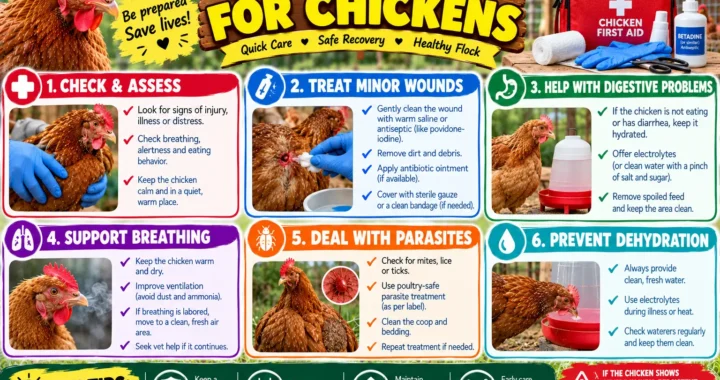
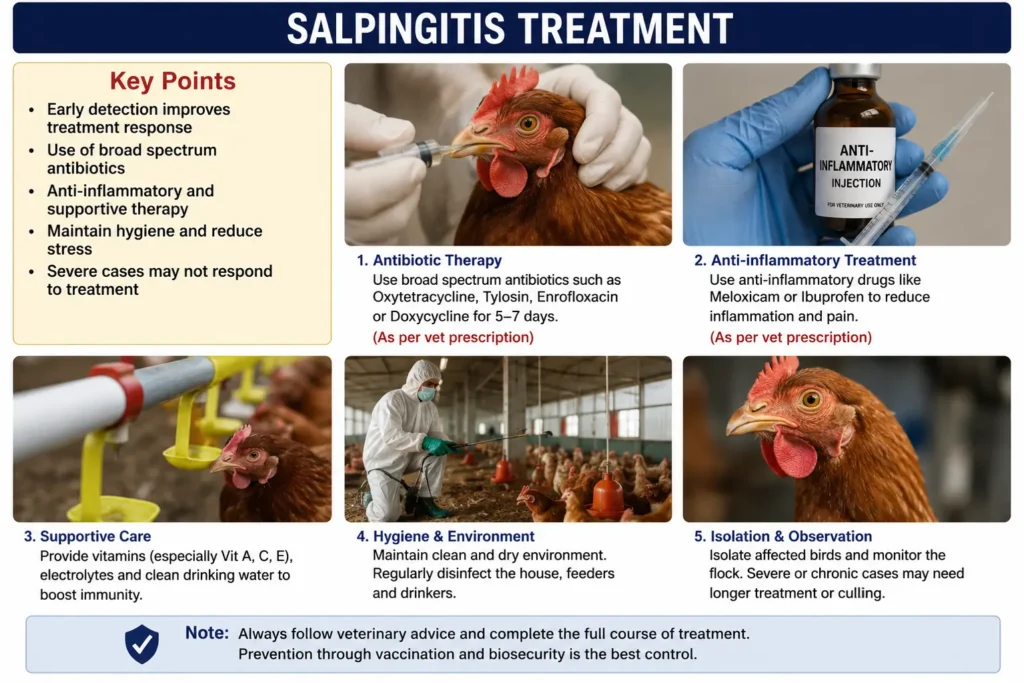
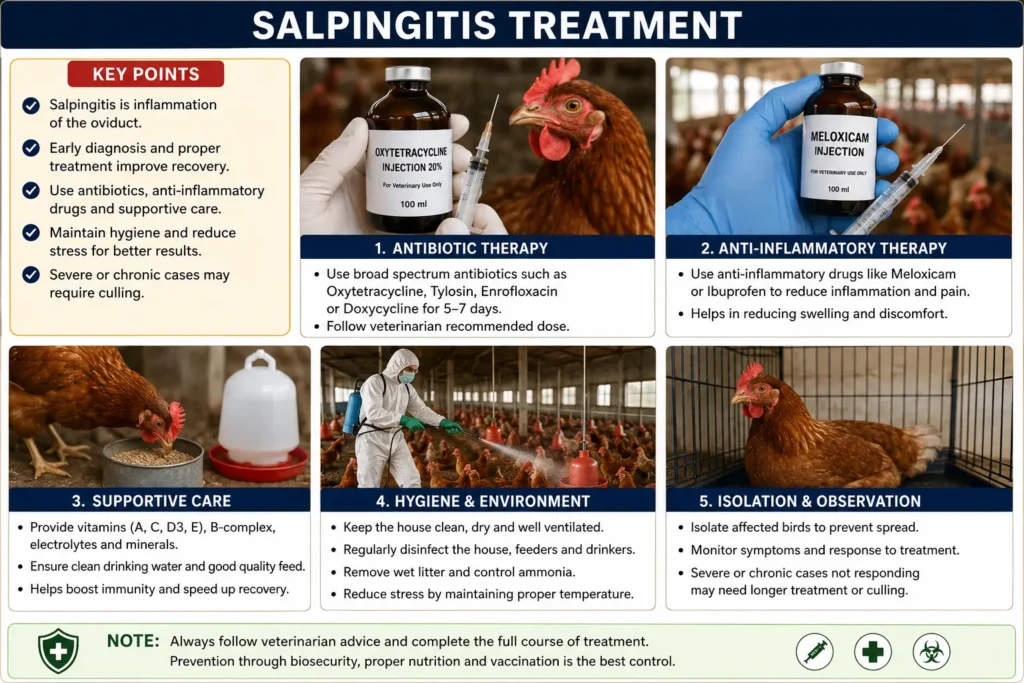
Salpingitis Treatment in Chickens: The Core Options
This is the section most readers are here for. Salpingitis treatment in chickens is not one-size-fits-all — it depends on how early the disease is caught and how the individual hen responds.
1. Veterinary Antibiotics
If a vet catches bacterial salpingitis early, antibiotics are the front-line treatment. Which drug is used depends on the suspected or cultured bacteria, and a licensed veterinarian should always make this decision.
- Tetracycline-class antibiotics are commonly used for general bacterial oviduct infections.
- Broader-spectrum options may be chosen based on culture results, especially for E. coli.
- Some antibiotics used in companion birds, such as fluoroquinolones (including enrofloxacin), are illegal to use in poultry in the United States under FDA rules, even for backyard pet hens. A vet will know which drugs are legally and safely permitted.
Expert Tip: Never dose a chicken with antibiotics based on forum advice or leftover human prescriptions. Improper dosing can fail to clear the infection, contribute to antibiotic resistance, and create food-safety withdrawal issues if the hen’s eggs are later consumed.
2. Anti-Inflammatory Medication
Vets often pair antibiotics with an anti-inflammatory to reduce pain and swelling in the oviduct and abdomen. Dosing for poultry differs significantly from other species, so this should always be prescribed and monitored by a veterinarian rather than estimated at home.
3. Draining Abdominal Fluid
When salpingitis progresses to fluid buildup in the abdomen, a vet may need to drain the fluid so medication can actually reach and treat the infection. If the material has hardened into a solid, cheese-like mass rather than free fluid, drainage may not be possible, and the prognosis becomes more guarded.
4. Hormonal and Husbandry Management
One of the most effective non-drug strategies is temporarily stopping egg production, since each cycle stresses an already-inflamed oviduct. This is done by:
- Reducing daylight hours to under 8 hours
- Switching to a lower-protein “molting” style feed
- Allowing the hen a rest period away from active laying stress
This approach won’t cure an active bacterial infection on its own, but it reduces the mechanical strain that keeps re-triggering inflammation.
5. Surgery
In select cases, especially with a solitary, well-defined mass and a stable patient, a poultry-experienced avian vet may consider surgical removal of affected oviduct tissue. This is a specialized procedure and isn’t offered by every veterinary clinic.
Salpingitis Treatment in Chickens vs. Egg Yolk Peritonitis: Key Differences
Owners often confuse these two conditions because they overlap and frequently occur together.
| Feature | Salpingitis | Egg Yolk Peritonitis |
| Location of problem | Oviduct lining | Abdominal cavity |
| Cause | Bacterial infection of the oviduct | Yolk material released into the coelom, often infected |
| Typical sign | Lash eggs, stopped laying | Swollen, fluid-filled abdomen |
| Treatment overlap | Antibiotics, anti-inflammatories, rest from laying | Same core treatment, often with drainage |
| Prognosis | Better if caught early | More guarded, especially if chronic |
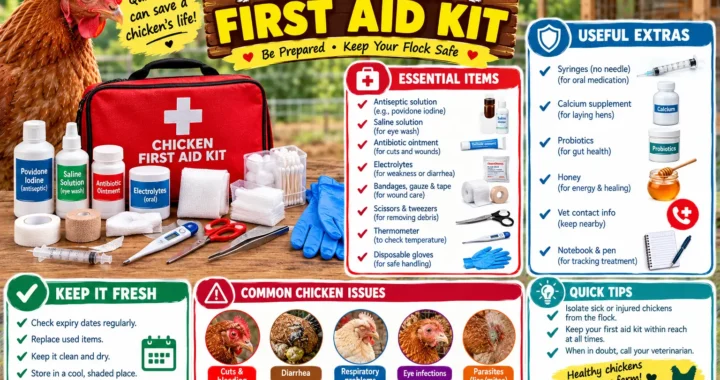
Home Care That Supports (Not Replaces) Veterinary Treatment
Home care matters, but it works alongside professional treatment for salpingitis, not instead of it.
- Hydration: offer fresh water; add electrolytes if the hen is lethargic.
- Comfortable temperature: hens with abdominal swelling struggle to regulate body heat.
- Soft, appealing food: scrambled egg, cooked rice, mashed vegetables, or mealworms can tempt a hen that’s off her feed.
- Quiet, separate space: reduce flock stress and bullying while she recovers.
- Clean bedding and nest boxes: lowers the bacterial load she’s exposed to.
Did You Know? Hens can appear surprisingly normal in early salpingitis, eating and moving around the coop, which is exactly why many cases aren’t caught until the disease has already progressed.
When to Call a Vet
Contact a poultry-experienced veterinarian immediately if you notice:
- A swollen, water-balloon-like abdomen
- A hen passing a lash egg
- Sudden loss of appetite or energy
- Difficulty breathing or an upright “penguin” stance
- Repeated skipped laying days without another clear cause
Early veterinary involvement gives salpingitis treatment in chickens the best chance of success. Waiting until a hen is in obvious distress significantly lowers recovery odds.
Common Mistakes Owners Make
- Treating with random antibiotics bought online without a diagnosis or dosing guidance.
- Assuming a lash egg is “just a weird egg” instead of a warning sign.
- Waiting too long to seek veterinary care once abdominal swelling appears.
- Stopping treatment early once the hen “seems better,” which can let the infection rebound.
- Ignoring withdrawal times for eggs from a hen who has been treated with antibiotics.
Prevention: Reducing the Risk of Salpingitis
While not every case is preventable, these steps lower the risk in a flock:
- Keep nest boxes clean and dry.
- Manage flock body condition; avoid overfeeding high-calorie treats.
- Address vent trauma or prolapse issues quickly.
- Monitor for and manage respiratory disease, since infections like Mycoplasma and Infectious Bronchitis Virus are linked to higher salpingitis rates.
- Practice good general biosecurity: quarantine new birds and control pests that can spread bacteria.
University extension poultry programs and organizations such as the USDA and AVMA consistently emphasize that flock-level hygiene and biosecurity reduce the incidence of reproductive tract infections, including salpingitis.
Recovery and Prognosis
Recovery varies a great deal case by case.
- Caught early, bacterial, and treated promptly: many hens recover and can eventually resume normal laying, though some never lay at full rate again.
- Chronic or advanced cases with hardened masses: prognosis is more guarded, and repeated flare-ups are common.
- Severe egg yolk peritonitis or septicemia: survival odds drop sharply, and quality of life becomes the central question.
Warning: If a hen is in visible pain, unable to eat or drink, or has a hardened abdominal mass that can’t be drained, a veterinarian may recommend humane euthanasia rather than prolonged treatment. This is a difficult but sometimes necessary decision, made with a vet based on exam findings and the bird’s quality of life, not a fixed rule.
FAQ
What is the best treatment for salpingitis in chickens? The best treatment for salpingitis in chickens combines veterinarian-prescribed antibiotics matched to the bacteria involved, anti-inflammatory medication, supportive home care, and temporarily stopping egg production to let the oviduct heal.
Can salpingitis in chickens be cured? Bacterial salpingitis caught early can often be successfully treated, though some hens never return to full laying. Chronic or advanced cases, especially with hardened masses, are harder to cure and may require ongoing management.
Can you treat salpingitis without antibiotics? Supportive care like rest from laying, hydration, and clean housing can help manage symptoms, but active bacterial infection generally needs veterinarian-prescribed antibiotics to fully resolve. Home remedies alone rarely clear the underlying infection.
Is salpingitis in chickens contagious to other hens? Salpingitis itself isn’t typically spread hen-to-hen the way a respiratory virus is, but shared risk factors, like dirty nest boxes or an underlying flock-wide infection such as Mycoplasma, can lead to multiple hens developing it around the same time.
How long does salpingitis treatment take in chickens? Treatment courses are set by a veterinarian and often run for one to several weeks, depending on the antibiotic used, the severity of infection, and how the hen responds. Some hens need extended rest from laying on top of the medication period.
What does a lash egg mean for treatment? A lash egg signals active salpingitis and means veterinary evaluation is needed. It is not a normal egg and should prompt the same treatment and diagnostic steps as any other salpingitis symptom.
Should I stop feeding my hen eggs to my family during treatment? Yes, follow the egg withdrawal period your veterinarian sets based on the specific antibiotic used. This ensures no drug residue ends up in eggs collected during and shortly after treatment.
Final Thoughts
Salpingitis treatment in chickens works best when it starts early, involves a poultry-savvy veterinarian, and combines the right antibiotic with supportive care and a break from egg laying. Keep a close eye on your flock for skipped laying days, unusual eggs, or abdominal swelling, and don’t wait to reach out for professional help if something seems off. Quick action gives your hen the best possible chance at a full recovery.