Antibiotics for Salpingitis in Hens: What Really Works

If you’ve got a hen that’s straining, hunched, or laying strange-looking eggs, you’re probably searching for antibiotics for salpingitis right now because someone online told you it’s the fix. It sometimes is. But salpingitis is one of the trickiest reproductive problems in backyard and commercial flocks, and antibiotics only work in specific situations. This guide walks through when they help, which ones are used, and what else your hen actually needs.
Table of Contents
Can You Use Antibiotics for Salpingitis in Chickens?
Quick Answer: Yes, antibiotics for salpingitis are sometimes prescribed by a veterinarian, especially in early bacterial infections. But salpingitis often involves thick, cheese-like pus (called caseous exudate) that antibiotics cannot penetrate well. Many advanced cases need supportive care, hormone management, or surgery instead of, or alongside, antibiotics.
This is the part most articles skip. Salpingitis isn’t one single disease — it’s inflammation of the oviduct, and the cause matters more than the label. A hen with a fresh bacterial infection may respond well to the right drug. A hen with a long-standing case full of solidified debris usually won’t, no matter how strong the antibiotic is.
That’s why a vet exam, ideally with an X-ray or ultrasound, should come before you start any treatment plan.
Read More: https://lashegg.com/salpingitis-treatment-in-chickens/
What Is Salpingitis in Poultry?
Salpingitis is inflammation or infection of the oviduct, the tube that carries a yolk down to become a finished egg. It’s one of the most common causes of death in laying hens over two years old, according to poultry pathology data cited by university extension programs.
Common Causes of Salpingitis in Hens
- Ascending bacterial infection — bacteria travel from the cloaca or vent into the reproductive tract
- E. coli — the most frequently isolated bacteria in poultry salpingitis cases
- Other bacteria — including Enterococcus, Staphylococcus, and Pasteurella species
- Egg peritonitis complications — when a yolk drops into the abdomen instead of the oviduct
- Reproductive stress — from early lay, obesity, or genetics favoring heavy egg production
- Viral or respiratory disease — infections like infectious bronchitis can damage the oviduct lining first
Symptoms of Salpingitis to Watch For
| Symptom | What It Looks Like |
| Abdominal swelling | “Penguin stance,” wide waddling walk |
| Reduced or stopped laying | Sudden drop in egg output |
| Abnormal eggs | Soft-shelled, misshapen, or lash eggs |
| Lethargy | Fluffed feathers, sitting more than usual |
| Straining | Repeated attempts to lay without producing an egg |
| Vent discharge | Foul-smelling or pus-like material |
| Weight loss | Despite normal or increased appetite early on |
A lash egg — a rubbery, foul-smelling mass that looks nothing like a real egg — is one of the clearest signs of salpingitis. It’s actually solidified pus and tissue debris, not a true egg at all.
Diagnosing Salpingitis Before Choosing Antibiotics
Antibiotics for salpingitis work best when the diagnosis is confirmed, not guessed. A veterinarian typically checks for:
- Palpation of the abdomen to feel for fluid, swelling, or masses
- Radiographs (X-rays) to look for fluid buildup or shell-less eggs
- Ultrasound to assess the oviduct and ovary directly
- Bloodwork to check white blood cell counts and overall organ function
- Culture and sensitivity testing of any discharge, when possible, to identify the exact bacteria and which drug will actually kill it
Skipping this step is the single biggest reason antibiotics fail — the wrong drug is picked for the wrong bacteria.
Antibiotics for Salpingitis: Treatment Options
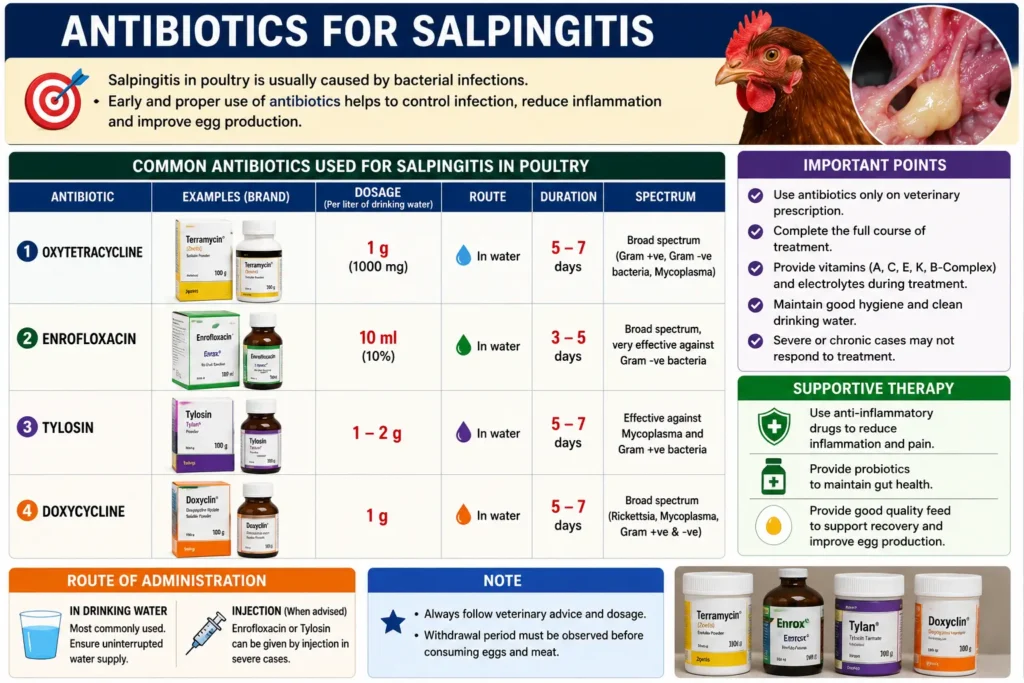
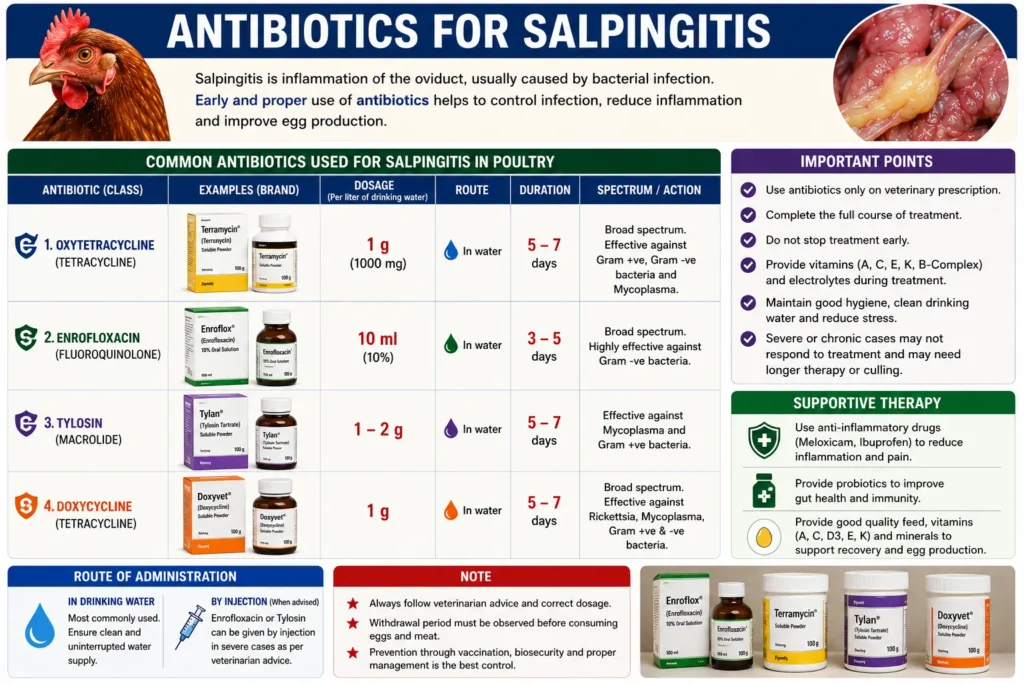
When a vet confirms an early or mild bacterial case, antibiotics for salpingitis may be part of the plan. The choice depends on the suspected bacteria, the hen’s condition, and whether she’s still laying eggs for consumption.
Common Antibiotics for Salpingitis Used in Poultry
| Antibiotic Class | Example Drugs | Typical Use in Salpingitis |
| Fluoroquinolones | Enrofloxacin | Broad-spectrum, used against E. coli; legal status varies by country and species |
| Penicillins | Amoxicillin, Amoxicillin-clavulanate | Common first-line option for mild bacterial infections |
| Tetracyclines | Oxytetracycline, Doxycycline | Used for a range of Gram-negative and Gram-positive bacteria |
| Sulfonamides | Sulfadimethoxine | Sometimes combined with other drugs for broader coverage |
| Cephalosporins | Ceftiofur | Reserved for more resistant or severe cases |
Expert Tip: Culture and sensitivity testing takes a few extra days, but it prevents weeks of guessing. A hen given the wrong antibiotic can still get sicker while you assume the treatment is working.
Warning: Never use human antibiotics, leftover livestock antibiotics, or over-the-counter farm store products without veterinary guidance. Dosing, drug choice, and egg or meat withdrawal periods differ by species, and incorrect use can cause antibiotic resistance or unsafe residues in eggs.
Why Poultry Antibiotics Don’t Always Work for Salpingitis
Salpingitis frequently produces caseous material — a firm, layered mass similar to cottage cheese. Unlike liquid pus, this material has almost no blood supply, so antibiotics circulating in the bloodstream can’t reach the bacteria trapped inside it. This is why a hen can be on the correct poultry antibiotics and still show no improvement.
In these advanced cases, vets sometimes discuss:
- Surgical removal of the affected oviduct (salpingohysterectomy)
- Hormonal implants to suppress egg laying and reduce strain on the reproductive tract
- Euthanasia, when the hen is suffering and treatment options are exhausted or not viable
Poultry Antibiotics: General Use Guidelines
Poultry antibiotics, whether for salpingitis or any other infection, come with rules that matter for flock health and food safety.
- Prescription requirement — Many effective antibiotics for poultry require veterinary authorization, especially under Veterinary Feed Directive rules in the United States
- Egg withdrawal periods — Eggs from treated hens often can’t be eaten or sold for a set number of days after treatment ends
- Dosing accuracy — Underdosing is one of the main drivers of antibiotic resistance in poultry populations
- Full course completion — Stopping early, even if the hen looks better, allows surviving bacteria to rebound
- Isolation during treatment — Sick hens should be separated to reduce stress and prevent spreading infection to flockmates
According to guidance summarized by the Merck Veterinary Manual, oviduct infections in laying hens are managed with a combination of antimicrobial therapy and supportive care, with surgical options considered for chronic or non-responsive cases.
Supportive Care Alongside Antibiotics
Antibiotics for salpingitis rarely work alone. Supportive care gives the hen’s body a better chance to recover.
- Warmth and quiet housing — reduces stress hormones that worsen inflammation
- Hydration support — electrolyte water helps hens that are eating or drinking less
- Nutrient-dense food — supports immune function during recovery
- Pain relief — a vet may prescribe an anti-inflammatory to ease discomfort
- Weight monitoring — daily weigh-ins catch decline early, before it becomes visible
Did You Know?
Hens bred for maximum egg output are more prone to salpingitis because their reproductive systems work at a faster pace with less recovery time between eggs. Reducing laying frequency, sometimes through diet or light changes, can lower the risk in susceptible breeds.
Recovery and Prognosis
| Case Type | Typical Outlook With Treatment |
| Early, mild bacterial infection | Fair to good with antibiotics and rest |
| Moderate infection with some caseous material | Guarded; may need repeated evaluation |
| Chronic or advanced salpingitis | Poor without surgery; antibiotics alone rarely resolve it |
| Salpingitis with egg peritonitis | Poor to grave; often life-threatening |
Recovery timelines vary widely. Mild cases may improve within a week or two of starting antibiotics. Chronic cases can drag on for months, with hens cycling between apparent improvement and relapse.
Preventing Salpingitis in Your Flock
- Keep housing clean and dry to lower bacterial load near the vent
- Manage body weight; overweight hens are at higher risk
- Reduce reproductive stress with balanced light exposure, especially in young pullets
- Provide a calcium-appropriate, well-balanced layer diet
- Watch closely during peak lay periods and after respiratory illness
- Quarantine and monitor new birds before flock introduction
When to Call a Vet
- A hen stops laying suddenly and shows a swollen abdomen
- You find a lash egg in the nest box
- Straining continues for more than a day without an egg produced
- The hen is lethargic, off her food, or losing weight rapidly
- You’re considering starting antibiotics for salpingitis without a confirmed diagnosis
Common Mistakes When Treating Salpingitis With Antibiotics
- Guessing the drug instead of confirming the bacteria first
- Stopping treatment early once symptoms seem to improve
- Ignoring egg withdrawal times, risking antibiotic residue in eggs
- Skipping supportive care, assuming the antibiotic alone will fix everything
- Waiting too long before seeking veterinary input, allowing the infection to become chronic
Final Thoughts
Antibiotics for salpingitis can genuinely help a hen, but only when the case is caught early and matched to the right bacteria. Chronic or advanced salpingitis often needs more than a drug course — sometimes surgery, sometimes hormonal management, sometimes a hard conversation about quality of life. Keep a close eye on your flock’s laying patterns, body condition, and behavior, and loop in a poultry-savvy veterinarian as soon as something looks off. Early action gives antibiotics, and your hen, the best possible chance.