Can an X-Ray for Salpingitis Really Tell You What’s Wrong With Your Hen?

A hen that stops laying, sits puffed up in a corner, and waddles like a penguin is scaring her owner. The first question most people ask their vet is whether an x ray for salpingitis can confirm what’s going on inside her body. The honest answer is: sometimes, but not always on its own. X-rays are a useful piece of the diagnostic puzzle for salpingitis, a common and serious reproductive illness in backyard and commercial hens, but they work best alongside a hands-on exam, history, and often an ultrasound.
This guide walks through what salpingitis actually is, what an x-ray can and can’t show, how it compares to ultrasound, and what happens after diagnosis.
Quick Answer: An x-ray for salpingitis can reveal fluid buildup, an enlarged abdomen, or a mass in the oviduct area, but it usually cannot confirm the exact cause of inflammation. Vets combine x-rays with palpation, ultrasound, and sometimes bloodwork or exploratory surgery for a full diagnosis.
Table of Contents
What Is Salpingitis in Chickens?
Salpingitis is inflammation or infection of the oviduct, the tube that carries a developing egg from the ovary to the vent. In hens, it’s one of the leading causes of sudden death and chronic reproductive illness, especially in high-producing layer breeds.
The condition often develops after bacteria travel up from the vent or spread from another infection site, such as the respiratory tract. Over time, the oviduct can fill with a thick, cheesy material called caseous exudate, which builds up in layers almost like an onion. This mass can grow large enough to press on the lungs and air sacs, making breathing difficult.
read More: https://lashegg.com/necropsy-findings-in-salpingitis/
Early Warning Signs
- Reduced or stopped egg laying
- A swollen, fluid-filled abdomen (“penguin stance”)
- Lethargy and reduced appetite
- Pale comb and wattles
- Straining without producing an egg
Advanced Symptoms
- Labored or open-mouth breathing
- Fluid visibly shifting in the belly when the hen moves
- Sudden collapse or death, particularly if the mass ruptures and causes egg yolk peritonitis
- Weight loss despite a swollen abdomen
What Causes Salpingitis in Chickens?
Bacterial infection is the most common trigger, but several underlying factors make hens more vulnerable.
| Cause Category | Examples | Notes |
| Bacterial infection | E. coli, Salmonella, Pasteurella | Most common root cause; often ascends from the cloaca |
| Respiratory disease | Infectious bronchitis, mycoplasma | Damage to the oviduct lining allows bacteria to invade |
| Reproductive stress | Rapid, early, or double-yolked laying | Increases strain on oviduct tissue |
| Genetics/breed | High-production layer hybrids | More prone due to intense laying cycles |
| Age | Hens over 2 years old | Reproductive tract wear increases risk |
| Nutrition | Calcium or protein imbalance | Weakens shell gland and oviduct tissue |
Diagnosing Salpingitis: Physical Exam, Imaging, and Bloodwork
No single test tells the whole story. A poultry veterinarian typically layers several diagnostic tools together, starting with the least invasive.
Physical Exam and Palpation
The vet gently feels the hen’s abdomen for fluid, swelling, or a firm mass. Combined with a laying history and posture, this alone can point strongly toward salpingitis. However, palpation can’t distinguish salpingitis from other causes of abdominal swelling, like egg yolk peritonitis or ascites.
X-Ray for Salpingitis: How the Procedure Works
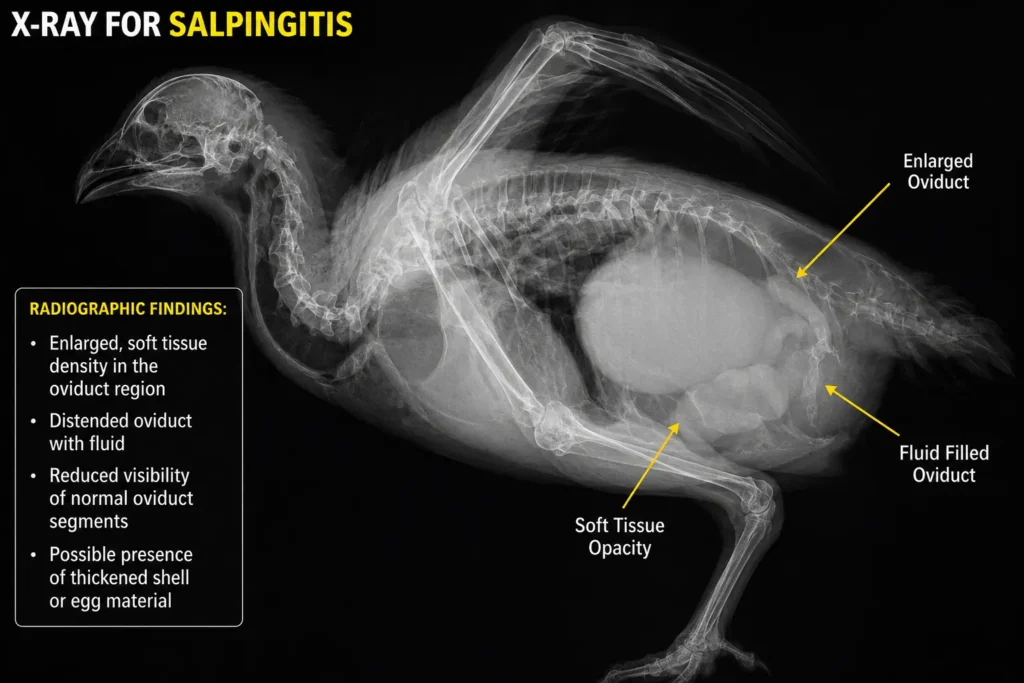
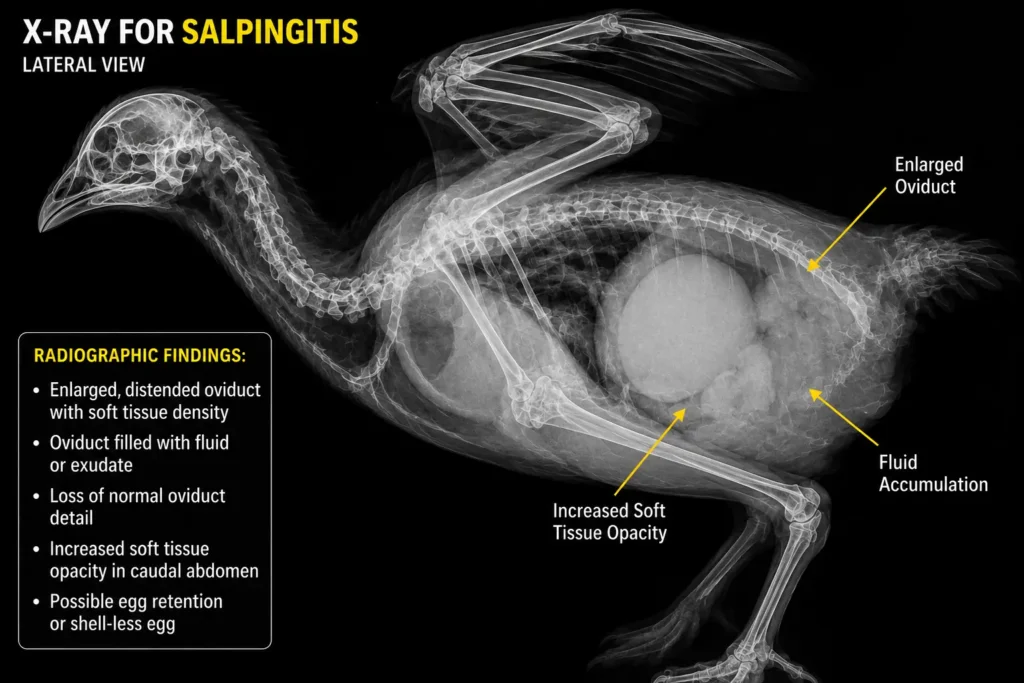
An x ray for salpingitis is usually the next step when palpation raises suspicion. The hen is placed on the imaging table, often briefly restrained or lightly sedated, and two views (side and top-down) are taken of the abdomen and chest.
On the image, a vet looks for:
- Increased soft-tissue density or fluid filling the abdominal cavity
- Loss of normal air sac definition
- Displacement of the intestines or gizzard by a mass
- An enlarged, irregular shape where the oviduct sits
X-rays are fast, widely available, and don’t require sedation in most calm birds, which makes them a practical first imaging step. Their main limitation is that soft tissues like fluid, an egg mass, and a tumor can all look similar on a plain film, so an x-ray for salpingitis often raises suspicion without confirming the exact diagnosis.
Ultrasound for Chickens: An Alternative or Complement
An ultrasound chicken exam is often more informative than an x-ray when fluid is involved, because ultrasound distinguishes fluid from solid tissue far better than a radiograph can. A vet can see whether the abdomen contains free fluid (suggesting egg yolk peritonitis), a solid caseous mass (suggesting chronic salpingitis), or retained eggs.
Ultrasound also allows the vet to guide a needle for fluid sampling, which can then be tested for infection or inflammatory cells. Many avian vets now use ultrasound and x-ray together rather than choosing one over the other.
Bloodwork and Other Diagnostics
- Complete blood count (CBC): Elevated white blood cells suggest infection or inflammation.
- Fecal or cloacal swab: Rules out other causes of straining or discharge.
- Culture and sensitivity: Identifies the specific bacteria and the right antibiotic, if fluid or tissue is available.
- Exploratory surgery: In persistent or unclear cases, this remains the only way to see the oviduct directly and confirm the diagnosis.
What Does an X-Ray Show in a Hen With Salpingitis?
A confirmed or strongly suspected case usually shows one or more of these patterns on radiographs:
- A rounded, soft-tissue density in the lower abdomen
- Fluid layering along the bottom of the coelomic cavity
- Compression of air sacs, sometimes explaining labored breathing
- Displacement of normal organs like the gizzard toward the spine
None of these findings are exclusive to salpingitis. That’s precisely why an x-ray for salpingitis is described as supportive rather than definitive by most poultry vets, and why history and exam findings still carry significant weight.
X-Ray vs Ultrasound for Diagnosing Reproductive Disease in Chickens
| Feature | X-Ray | Ultrasound |
| Best for | Bone, gas patterns, general mass detection | Fluid vs. solid tissue, retained eggs, guided sampling |
| Speed | Very fast | Slightly longer, needs skilled operator |
| Sedation needed | Rarely | Rarely, but stillness helps |
| Availability | Common at most vet clinics | Less common; needs an avian-experienced vet |
| Limitation | Can’t tell fluid from soft mass | Can’t see through gas-filled structures well |
| Cost | Generally lower | Generally higher |
Treatment Options After Diagnosis
Medical Management
Antibiotics chosen based on culture results are the mainstay of treatment for early or mild salpingitis. Anti-inflammatory support and fluid therapy may also be used to stabilize a sick hen before further testing.
Surgical Options
When a large caseous mass is present, or when medical treatment fails, surgical removal of the affected oviduct (salpingohysterectomy) may be recommended by an avian surgeon. Recovery requires close monitoring, and the hen will no longer lay eggs from that side.
Supportive Home Care
- Keep the hen warm, quiet, and separated from the flock
- Offer easy-to-digest food and fresh water
- Monitor droppings, appetite, and breathing daily
- Follow the full course of any prescribed medication
Warning: Never attempt to drain fluid or manipulate a swollen abdomen at home. A ruptured mass can cause fatal peritonitis within hours.
Prognosis and Recovery
Prognosis depends heavily on how early the condition is caught. Hens diagnosed and treated in the early stages, before a large mass forms, often recover well with antibiotics and rest. Advanced cases with extensive caseous material or ruptured masses carry a guarded to poor prognosis, even with surgery.
Can Salpingitis Be Prevented?
- Keep the coop clean and dry to reduce bacterial exposure
- Provide balanced layer feed with adequate calcium and protein
- Vaccinate against respiratory diseases where recommended locally
- Avoid overcrowding, which increases stress and disease spread
- Cull or retire hens with a history of reproductive problems from active breeding
- Schedule a check-up if laying suddenly slows or stops
Expert Tip: A hen that has one confirmed episode of salpingitis is at higher risk of recurrence. Regular weight checks and abdominal palpation every few months can catch problems early.
Did You Know? Salpingitis is sometimes called “lash egg disease” because the caseous material passed can resemble a strange, layered egg-shaped mass.
Common Mistakes: Owners often assume a swollen hen is simply egg bound and try home remedies for hours before seeking help. Salpingitis and egg binding look similar but need different treatment, so a same-day exam is safer than guessing.
When to Call a Vet
When to Call a Vet: Seek veterinary care immediately if a hen shows labored breathing, a rapidly swelling abdomen, sudden collapse, or has stopped laying for more than a week alongside lethargy. Don’t wait for symptoms to worsen before requesting an x-ray for salpingitis or ultrasound evaluation.
5. FAQ
Does an x ray for salpingitis hurt the chicken? No. The procedure itself is painless. Most hens only need to be held still briefly; sedation is uncommon unless the bird is distressed.
Can an x-ray for salpingitis confirm the diagnosis on its own? Not usually. It shows suggestive changes like fluid or a mass, but ultrasound, bloodwork, or surgery is often needed to confirm salpingitis specifically.
Is ultrasound better than x-ray for chicken reproductive problems? An ultrasound chicken exam is generally better at telling fluid apart from solid tissue, which helps distinguish salpingitis from egg yolk peritonitis. X-rays are still useful for an overall picture and are more widely available.
How much does an x-ray for a chicken with suspected salpingitis cost? Costs vary by clinic and region, but avian radiographs are usually less expensive than ultrasound or surgery. Ask your local avian vet for a quote before the visit.
Can salpingitis go away without treatment? Mild, early cases occasionally resolve with rest and immune response, but most cases progress without antibiotics or, in severe cases, surgery. Waiting risks the mass growing larger.
Is salpingitis contagious to other chickens? Salpingitis itself is not directly contagious, but the underlying bacterial or respiratory infections that trigger it can spread through a flock.
Can a hen lay eggs again after salpingitis treatment? It depends on severity. Hens treated early with antibiotics sometimes resume laying. Hens that undergo oviduct removal surgery will not lay eggs from the affected side again.