Supportive Care for Sick Hens: A Complete Recovery Guide

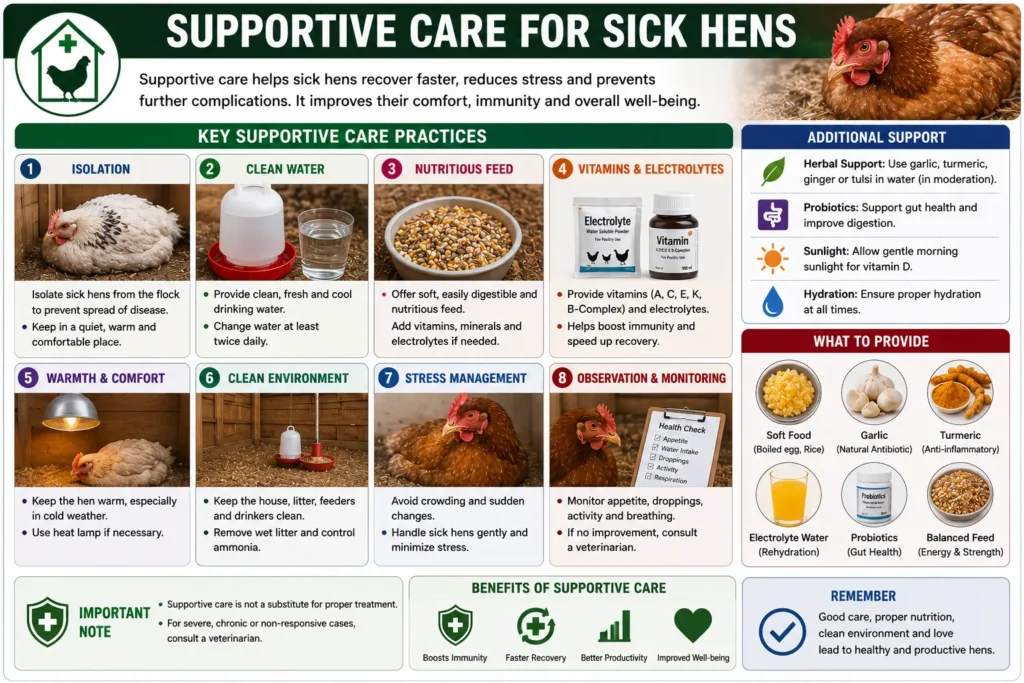
When a hen stops acting like herself, most keepers don’t need a diagnosis first — they need to know what to do right now. Supportive care for sick hens is exactly that: the hydration, warmth, nutrition, and monitoring that keep a bird stable while you figure out what’s wrong or wait for treatment to work. It won’t cure every illness on its own, but it often decides whether a hen makes it through one.
Table of Contents
What Is Supportive Care for Sick Hens?
Quick Answer: Supportive care for sick hens means managing hydration, temperature, nutrition, stress, and comfort so the bird’s body has the best possible conditions to fight illness or recover from treatment. It’s not a substitute for veterinary diagnosis, but it’s often what determines whether a hen survives the wait for one.
Chickens are prey animals. They instinctively hide weakness, because a visibly sick bird is an easy target in the wild. That means by the time you notice something’s off, the problem has usually been building for a day or two already.
This is exactly why supportive care matters so much for chicken recovery. It buys time, reduces suffering, and gives a hen’s immune system room to work, whether she’s fighting an infection, recovering from injury, or bouncing back after veterinary treatment.
Read More: https://lashegg.com/home-treatment-for-salpingitis-in-hens/
Recognizing When a Hen Needs Supportive Care
Common Signs of Illness in Chickens
| Symptom | Possible Meaning |
| Fluffed feathers, hunched posture | General illness or pain |
| Lethargy, reluctance to move | Infection, injury, or systemic illness |
| Pale comb or wattles | Anemia, parasites, or blood loss |
| Reduced or stopped eating | Pain, infection, crop issues |
| Labored breathing | Respiratory infection |
| Diarrhea or abnormal droppings | Digestive upset, parasites, infection |
| Sitting apart from the flock | Illness, injury, or being bullied due to weakness |
| Sudden drop in egg laying | Reproductive issue, stress, or systemic illness |
Any one of these on its own might not mean much. Two or three together, especially lethargy plus reduced eating, are a clear signal that supportive care for sick hens should start immediately, even before you know the exact cause.
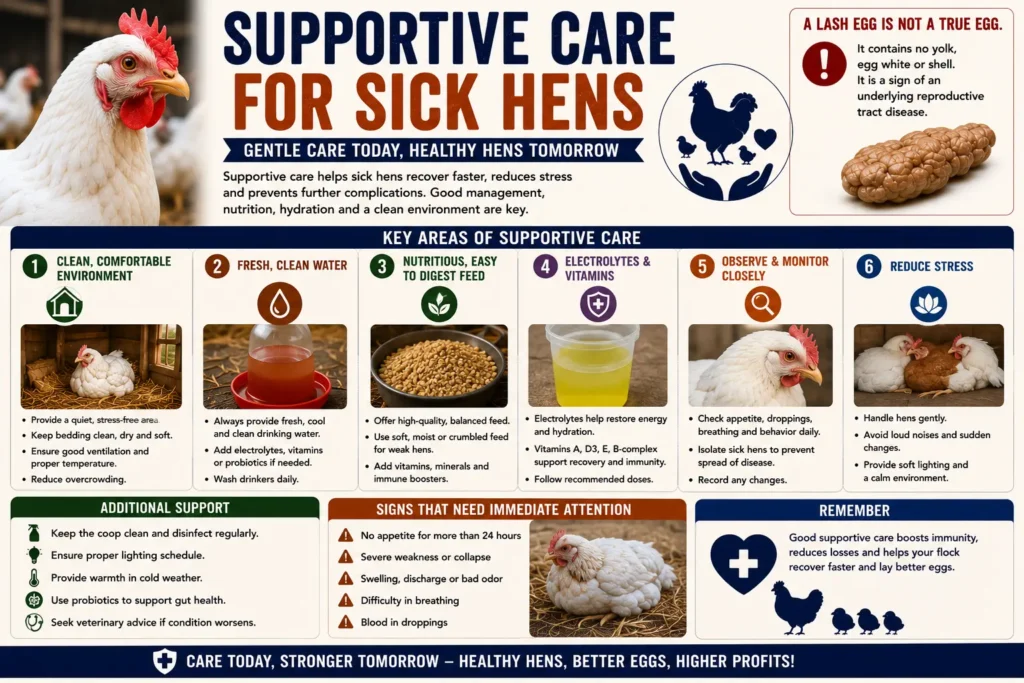
The Core Pillars of Supportive Care for Sick Hens
1. Isolation
Move the sick hen to a separate, quiet space away from the main flock.
- Prevents pecking-order stress and bullying
- Lets you track her food, water, and droppings accurately
- Reduces disease spread if the illness is contagious
- Gives her a calmer environment to rest in
2. Warmth
Sick birds often struggle to regulate their own body temperature.
- Use a heat lamp or heating pad set on low, with room to move away from it
- Aim for a warm, draft-free space, not an overheated one
- Watch for panting, which signals she’s too warm
3. Hydration
A hen that stops drinking declines fast, often faster than one that stops eating.
- Offer clean, fresh water at all times
- Add poultry-safe electrolytes to support recovery
- For hens too weak to drink normally, offer water by dropper in small amounts, carefully, to avoid aspiration
4. Nutrition
Sick hens often lose their appetite right when their bodies need nutrients most.
- Offer soft, easy-to-digest foods like warm mash or scrambled egg
- Try high-value treats like mealworms to tempt eating
- Avoid overloading her system with rich or unfamiliar foods
- Small, frequent offerings work better than one large portion
5. Stress Reduction
Stress hormones suppress immune function, which slows chicken recovery.
- Keep handling brief and calm
- Reduce noise and disruption near her recovery space
- Maintain a consistent light and dark cycle
6. Monitoring
Expert Tip: Weigh your hen daily and keep a simple log of her appetite, droppings, and behavior. Weight change is often the earliest and most objective sign that supportive care for sick hens is working, or that it isn’t enough.
Step-by-Step: Setting Up a Sick Bay
- Choose a quiet, temperature-controlled space away from the main coop
- Line the floor with soft, clean bedding that’s easy to change
- Add a low heat source if she feels cool to the touch
- Provide fresh water with electrolytes and easy-access food
- Add a shallow dish so she doesn’t need to stretch or strain to eat and drink
- Check on her every few hours during the first day or two
- Record weight, appetite, and behavior daily
Did You Know?
A hen’s droppings can tell you almost as much as her behavior. Watery, discolored, or blood-tinged droppings are often one of the first visible signs that something beyond normal stress is going on internally.
Supportive Care vs. Veterinary Treatment
| Supportive Care | Veterinary Treatment | |
| Purpose | Stabilize, comfort, support recovery | Diagnose and directly treat the illness |
| Who provides it | The keeper, at home | A licensed veterinarian |
| Tools used | Warmth, fluids, isolation, nutrition | Bloodwork, imaging, medication, surgery |
| Can it cure illness alone? | Rarely, for anything beyond mild stress | Often yes, when matched to the right diagnosis |
| When it’s enough on its own | Mild, self-limiting issues | Anything infectious, structural, or worsening |
Supportive care and veterinary treatment aren’t competing options. The strongest chicken recovery plans use both together.
Chicken Recovery After Veterinary Treatment
Supportive care matters just as much, sometimes more, once a hen has been diagnosed and treated.
- Continue isolation until she’s eating, drinking, and moving normally
- Keep up hydration and easy-to-digest food during any medication course
- Follow dosing schedules exactly, even after she seems better
- Watch for relapse signs for at least a week after treatment ends
- Reintroduce her to the flock slowly, ideally after dark, to reduce re-integration stress
Warning: Never stop a prescribed medication early just because supportive care has her looking brighter. Symptoms often improve before the underlying infection is fully cleared, and stopping too soon can lead to relapse or resistant bacteria.
Common Mistakes in Supportive Care for Sick Hens
- Skipping isolation, which lets flockmates bully an already weak bird
- Overheating instead of warming, causing panting and added stress
- Forcing food or water, which risks aspiration in a very weak hen
- Assuming improvement means recovery, and stopping care too early
- Waiting too long to involve a vet, especially with labored breathing or no improvement after a day or two
When to Call a Vet
- No improvement after 24–48 hours of consistent supportive care
- Labored or open-mouth breathing
- Complete refusal to eat or drink
- Blood in droppings or vomiting
- Sudden collapse, seizures, or inability to stand
- Visible injury, swelling, or a suspected internal issue like egg binding or salpingitis
Supportive care for sick hens is meant to stabilize a bird while you seek answers, not replace the answers themselves. Waiting too long to call a vet is one of the most common and costly mistakes backyard keepers make.
Nutrition for Chicken Recovery: What to Feed a Sick Hen
| Food | Why It Helps |
| Scrambled egg | High protein, easy to digest |
| Warm, soft mash | Gentle on the digestive system |
| Plain yogurt (small amount) | Probiotics support gut health |
| Mealworms | High-value, tempts appetite |
| Electrolyte water | Supports hydration and mineral balance |
| Poultry vitamin supplement | Supports immune function during stress |
Avoid sudden diet changes, excess treats, or anything high in salt or sugar, since a sick hen’s digestive system is already under strain.
Preventing the Need for Supportive Care
- Keep coops clean, dry, and well-ventilated
- Provide a balanced, age-appropriate diet
- Manage flock density to reduce stress and disease spread
- Quarantine new birds for at least two weeks before introduction
- Watch body weight and behavior regularly, not just when something looks obviously wrong
- Schedule routine parasite checks, especially in older hens