Home Treatment for Salpingitis in Hens: What Helps

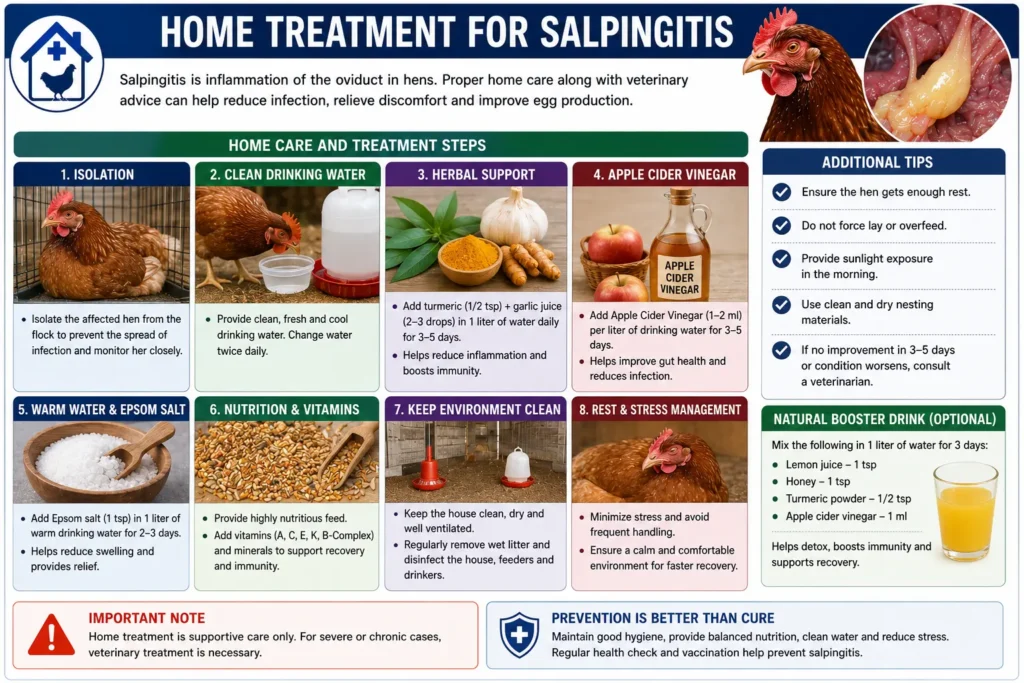
If your hen is straining, hunched over, or laid something that looks nothing like an egg, you’re probably looking for home treatment for salpingitis before you spend money on a vet visit. That’s a reasonable first instinct. But salpingitis is an internal infection of the oviduct, and home care can support a hen through it — it usually can’t cure it on its own. This guide covers what you can safely do at home, and where the line sits between comfort care and something only a vet can fix.
Table of Contents
What Home Treatment for Salpingitis Can Actually Do
Quick Answer: Home treatment for salpingitis can reduce stress, support hydration, and ease mild discomfort. It cannot clear a bacterial infection or dissolve the thick, cheese-like pus (caseous material) that builds up inside the oviduct in most cases. Antibiotics, imaging, or surgery — all vet-only options — are usually needed for a real chance at recovery.
Natural care has a real role here, but it’s a supporting one, not a stand-in for diagnosis. Hens hide illness well, so by the time symptoms show up outside the body, the infection has often been building for a while inside.
That’s the part worth sitting with before trying home treatment alone: comfort care can buy time and reduce suffering, but it rarely reverses the underlying infection.
Read More: https://lashegg.com/antibiotics-for-salpingitis-in-hens/
What Is Salpingitis, and Why Home Care Has Limits
Salpingitis is inflammation or infection of the oviduct — the tube where a yolk is turned into a finished egg. It’s a leading cause of death in laying hens past their second year, based on flock mortality data referenced by university poultry extension programs.
Common Causes
- Ascending bacterial infection, most often E. coli, traveling up from the vent
- Other bacteria, including Enterococcus and Staphylococcus species
- Egg peritonitis, when a yolk misses the oviduct and enters the abdomen
- Reproductive strain, common in hens bred for heavy egg production
- Prior respiratory illness, such as infectious bronchitis, damaging the oviduct lining
Signs You’re Dealing With Salpingitis
| Symptom | What It Looks Like |
| Swollen abdomen | “Penguin stance,” waddling walk |
| Laying stops or slows | Sudden drop in egg count |
| Abnormal eggs | Soft-shelled, misshapen, or a lash egg |
| Straining | Repeated attempts to lay, nothing produced |
| Lethargy | Fluffed feathers, reduced activity |
| Vent discharge | Foul odor, pus-like material |
| Weight loss | Even with normal appetite at first |
A lash egg — a rubbery, foul-smelling mass, not a real egg — is one of the clearest visible signs of salpingitis, and it means the infection is already active inside the oviduct.
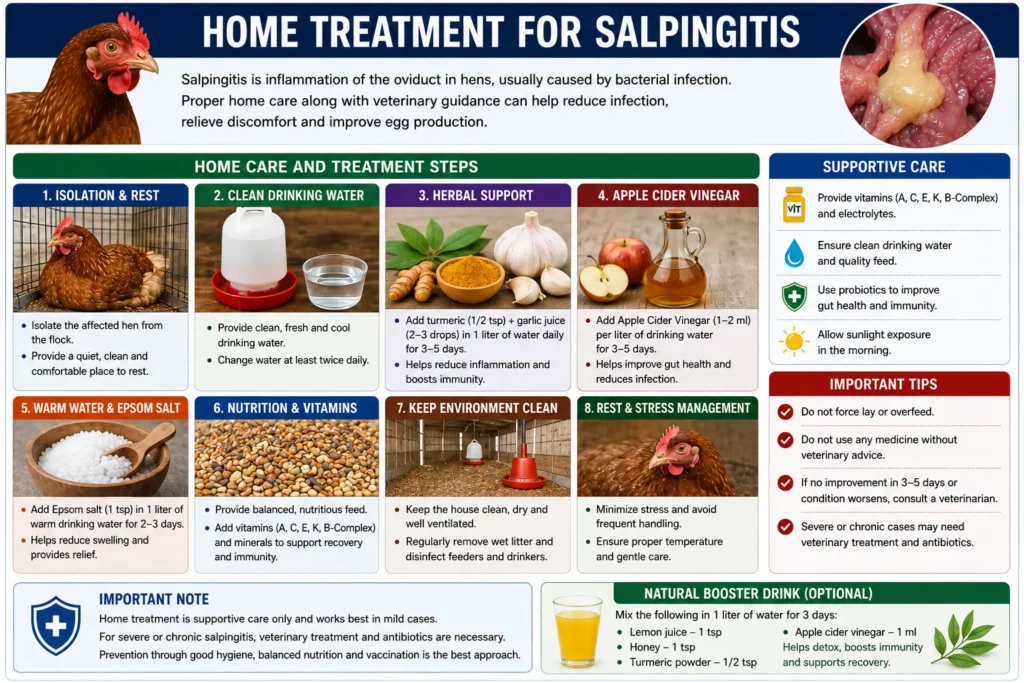
Home Treatment for Salpingitis: What You Can Do
This is the practical core of natural care at home. None of it replaces a vet, but done well, it can meaningfully improve a hen’s comfort and give her body a better shot at fighting the infection.
1. Isolate the Hen
Move her to a quiet, warm space away from the flock. This reduces pecking-order stress and lets you track her food, water, and droppings without guessing which bird they belong to.
2. Support Hydration
Offer clean water with poultry-safe electrolytes. A hen that stops drinking declines fast, so hydration is often the single most useful thing you can manage at home.
3. Offer Easy-to-Digest, Nutrient-Dense Food
- Scrambled egg (yes, from another hen) for protein
- Warm, soft mash instead of dry feed
- Small amounts of probiotic-rich yogurt, if she tolerates dairy
- Avoid excess treats or scratch grains that dilute her nutrient intake
4. Keep Her Warm
Sick hens lose the ability to regulate body temperature well. A warm, draft-free space, without overheating her, helps conserve energy for healing.
5. Reduce Reproductive Strain
Limiting light exposure to 8–10 hours a day can slow egg production temporarily, which reduces strain on an already inflamed oviduct.
6. Monitor Closely
Weigh her daily if possible. Weight loss is often the earliest, most reliable sign that home treatment for salpingitis isn’t enough on its own.
Expert Tip: Keep a simple daily log of weight, appetite, droppings, and behavior. If you do end up at the vet, this timeline is genuinely useful for diagnosis and saves time.
Warning: Home remedies like apple cider vinegar in water, garlic, or herbal supplements are sometimes suggested online as natural care for salpingitis. There’s no solid veterinary research showing these clear an oviduct infection, and relying on them instead of veterinary care can let a treatable early case turn into a chronic one.
Home Treatment vs. Veterinary Treatment
| Home Treatment | Veterinary Treatment | |
| Goal | Comfort, hydration, stress reduction | Diagnosis and direct treatment of infection |
| Tools used | Warmth, fluids, isolation, diet | Antibiotics, imaging, bloodwork, surgery |
| Best for | Supporting recovery, mild discomfort | Confirmed or suspected active infection |
| Limitations | Cannot clear bacteria or caseous material | Requires cost, travel, and an avian-experienced vet |
| Outcome without the other | Risk of infection progressing silently | Better long-term prognosis, especially caught early |
Natural care and veterinary treatment work best together, not as alternatives to each other.
Why Natural Care Alone Rarely Clears Salpingitis
Salpingitis often produces a firm, layered, cheese-like mass inside the oviduct instead of liquid pus. This material has almost no blood supply, which means neither the hen’s own immune system nor anything given at home can easily reach or break it down. That’s a physical barrier, not a dosage or effort problem.
According to guidance summarized in the Merck Veterinary Manual, oviduct infections in laying hens typically require antimicrobial therapy, and chronic or non-responsive cases are often managed with surgery rather than supportive care alone.
When Home Treatment for Salpingitis Isn’t Enough
Did You Know?
Hens bred for high egg output are more prone to salpingitis because their reproductive tract works at a faster pace with less recovery time between eggs. This is one reason prevention through diet and light management matters as much as treatment.
Watch for these signs that home care has reached its limit:
- No improvement after 2–3 days of consistent home care
- Continued straining with no egg produced
- A visibly swollen, fluid-filled abdomen
- A lash egg found in the nest box
- Rapid weight loss despite eating
- Complete loss of appetite or energy
When to Call a Vet
- You’ve tried home treatment for salpingitis for more than a couple of days with no change
- The hen’s abdomen feels tight, swollen, or fluid-filled
- She stops eating or drinking entirely
- You find a lash egg, which confirms active infection
- You’re unsure whether it’s salpingitis, egg binding, or egg peritonitis, since they can look similar
A vet can confirm the diagnosis with palpation, X-rays, or ultrasound, and can prescribe antibiotics or discuss surgical options if the case calls for it. Antibiotics are prescription tools, not home remedies, and should only be used under veterinary guidance.
Supporting Recovery After Veterinary Treatment
Home care doesn’t stop mattering once a vet gets involved — it becomes the recovery support system.
- Continue isolation until the hen is stable and eating normally
- Keep offering hydration and soft, nutrient-dense food
- Follow any medication schedule exactly as prescribed
- Track weight and behavior to catch relapse early
- Reintroduce her to the flock gradually, once cleared
Preventing Salpingitis Before It Starts
- Keep bedding and nest boxes clean and dry
- Maintain a healthy body weight in your hens
- Manage light exposure carefully in young pullets to avoid early, forced lay
- Provide a balanced layer feed with adequate calcium
- Watch closely after any respiratory illness in the flock
- Quarantine new birds before introducing them to reduce disease spread