When Surgery Is Needed for a Hen’s Reproductive Issues

Most keepers try everything else first — supportive care, antibiotics, hormone management — before they ever consider surgery for a hen. That’s the right instinct, but it means many people don’t recognize when surgery is needed until a condition has already become an emergency. This guide covers the specific reproductive issues where surgery becomes the realistic option, what the procedures involve, and how to weigh that decision with your vet.
Table of Contents
When Surgery Is Needed: The Quick Overview
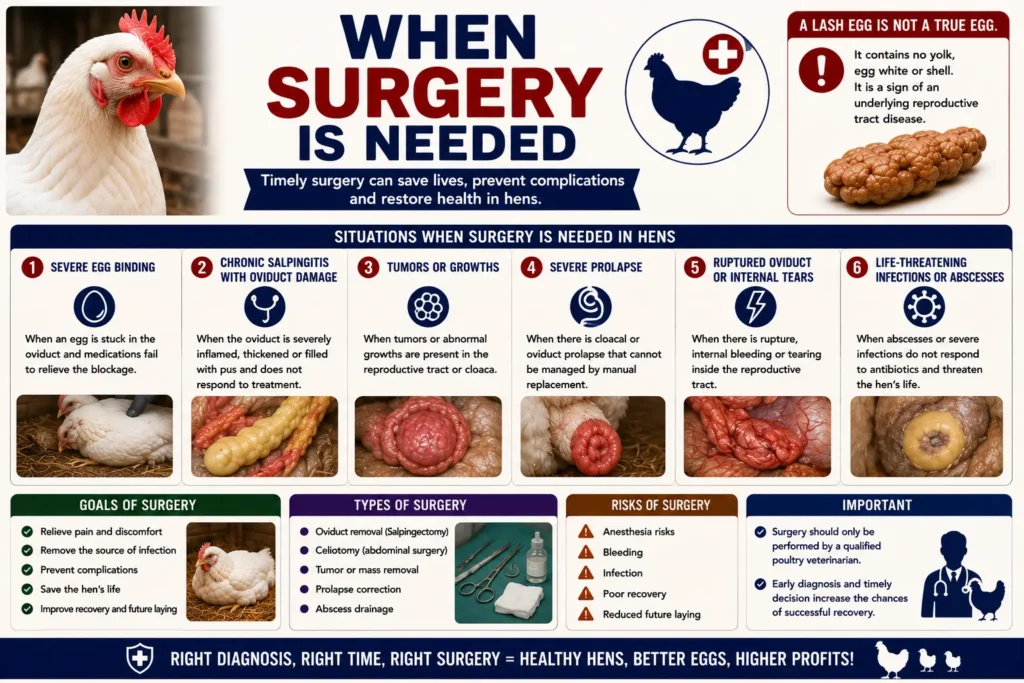
Quick Answer: Surgery is typically needed when a hen has chronic or recurrent salpingitis that isn’t responding to antibiotics, an egg permanently lodged in the oviduct, severe egg yolk peritonitis, a reproductive tumor, or prolapse that keeps recurring despite conservative treatment. Reproductive surgery in hens is a specialized procedure, usually performed only by avian or exotic-animal veterinarians.
Deciding when surgery is needed isn’t just about the diagnosis. It also depends on the hen’s overall health, her age, whether she’s a pet or production bird, and whether a suitable avian surgeon is realistically available to you. All of that factors into the conversation with your vet.
Read More: https://lashegg.com/anti-inflammatory-treatment-for-chickens/
Understanding Reproductive Surgery in Hens
Reproductive surgery in hens most often involves the oviduct or, less commonly, the ovary. Because chickens have a single functional ovary and oviduct on the left side, these procedures are more complex than similar surgeries in mammals with paired reproductive organs.
Common Types of Reproductive Surgery
| Procedure | What It Involves | Typical Use Case |
| Salpingohysterectomy | Removal of the oviduct | Chronic salpingitis, recurrent egg-related illness |
| Ovariectomy | Removal of the ovary (when accessible) | Tumors, hormone-driven reproductive disease |
| Exploratory laparotomy | Abdominal exploration | Diagnosing internal masses, adhesions, or peritonitis |
| Prolapse repair | Correcting and securing prolapsed tissue | Recurrent cloacal or oviduct prolapse |
| Egg removal surgery | Manual extraction of a lodged egg | Severe egg binding unresponsive to other treatment |
Reproductive Conditions That May Require Surgery
1. Chronic or Recurrent Salpingitis
Salpingitis often produces a thick, cheese-like mass called caseous material inside the oviduct. This substance has little to no blood supply, so antibiotics frequently can’t reach or clear it. When a hen has repeated infections, or one infection that won’t resolve with antimicrobial treatment, that’s often when surgery is needed.
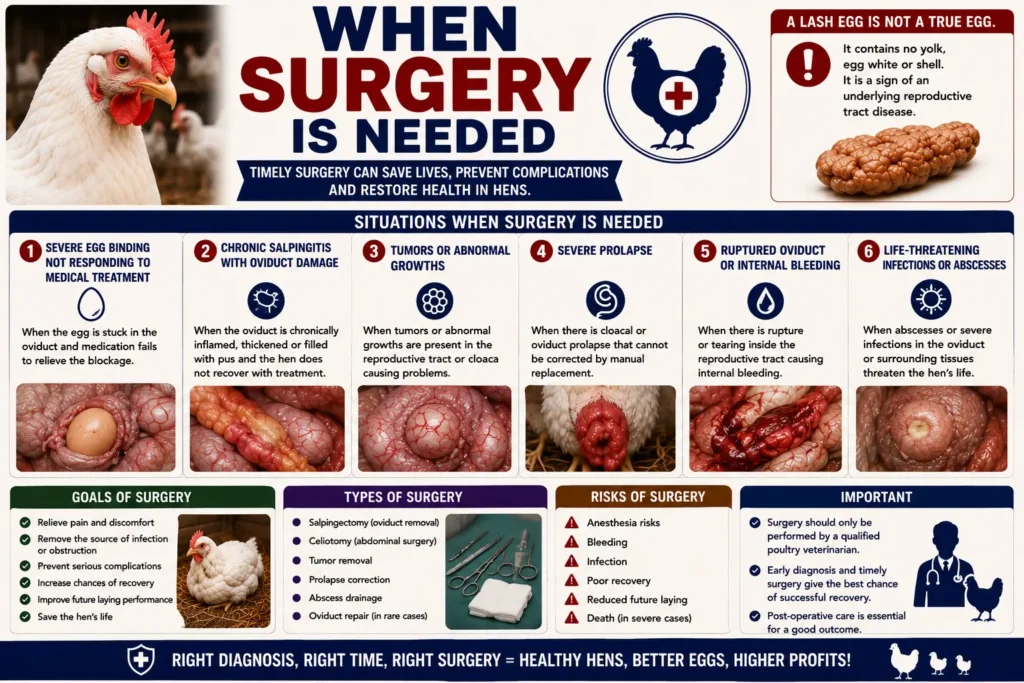
2. Severe or Recurrent Egg Binding
Most egg-bound hens respond to supportive care: warmth, hydration, and gentle assistance. When an egg is truly stuck and can’t be moved despite these efforts, or when it happens repeatedly, surgical removal may be the only safe option left.
3. Egg Yolk Peritonitis
This happens when a yolk drops into the abdominal cavity instead of entering the oviduct. Mild cases sometimes resolve with the body reabsorbing the material, but severe or infected cases, especially with fluid buildup, often require surgical drainage or oviduct removal.
4. Reproductive Tumors
Ovarian or oviductal tumors are relatively common in older hens, particularly commercial layer breeds kept well past typical production age. Surgery may be considered if a tumor is localized, accessible, and the hen is otherwise a reasonable surgical candidate.
5. Chronic Prolapse
A prolapse that keeps recurring despite manual correction and supportive care can lead to tissue damage, infection, and vent-picking from flockmates. Surgical repair is sometimes the only way to break that cycle.
Signs That May Point Toward a Surgical Case
- Swollen, fluid-filled abdomen that doesn’t improve with treatment
- Repeated bouts of the same reproductive illness
- A lash egg combined with ongoing symptoms after antibiotics
- Straining with no egg produced despite supportive care
- A visible mass or firm swelling in the abdominal area
- Prolapse that recurs within days or weeks of correction
How Vets Decide When Surgery Is Needed
- Physical exam and history — tracking how the hen has responded to treatment so far
- Imaging — X-rays or ultrasound to assess the size and location of the problem
- Bloodwork — checking organ function and overall ability to tolerate anesthesia
- Response to prior treatment — surgery is usually considered after antibiotics or supportive care haven’t worked
- Quality of life discussion — weighing the hen’s current suffering against surgical risk and recovery demands
Expert Tip: Ask your vet directly what happens if you choose not to pursue surgery. Understanding the realistic alternative, whether that’s ongoing management, hospice-style comfort care, or humane euthanasia, makes the decision clearer either way.
Surgery vs. Conservative Treatment
| Surgery | Conservative Treatment | |
| Best for | Chronic, recurrent, or structural problems | Early, mild, or first-time issues |
| Success potential | Can resolve the underlying problem directly | May manage symptoms without fixing the cause |
| Risks | Anesthesia risk, infection, recovery complications | Risk of the condition progressing untreated |
| Cost and access | Higher cost; requires an avian-experienced vet | Often more accessible and affordable |
| Recovery time | Days to a few weeks post-surgery | Varies; can be ongoing if not curative |
Warning: Not every vet clinic performs avian reproductive surgery. General small-animal vets may not have the specialized training chickens need for this kind of procedure. Ask specifically about avian or exotic-animal surgical experience before scheduling.
What Reproductive Surgery Recovery Looks Like
- Immediate post-op period — hens are typically kept warm, quiet, and closely monitored for the first 24–48 hours
- Pain management — anti-inflammatory medication is standard for post-surgical comfort
- Restricted activity — limiting movement and perching to protect the surgical site
- Modified diet — soft, easy-to-digest food while appetite returns
- Follow-up monitoring — tracking incision healing, appetite, and droppings closely
Did You Know?
A hen that has her oviduct removed (salpingohysterectomy) will no longer lay eggs, but she can otherwise live a normal, healthy life. This procedure is sometimes chosen specifically to stop chronic reproductive illness in hens that are kept as pets rather than for egg production.
Common Mistakes When Considering Reproductive Surgery
- Waiting too long, letting a manageable condition become a surgical emergency
- Assuming any vet can perform the procedure, without confirming avian surgical experience
- Skipping bloodwork or imaging, which helps predict surgical risk
- Underestimating recovery care, treating surgery as a quick fix rather than a process
- Not asking about alternatives, including the option of supportive or hospice-style care for very old or frail hens
When to Call a Vet About Possible Surgery
- A hen has had two or more rounds of antibiotics for the same reproductive issue without lasting improvement
- Her abdomen is swollen and doesn’t respond to supportive care
- She has a prolapse that keeps recurring
- You’ve found a lash egg and symptoms continue afterward
- A vet has mentioned surgery as a future possibility and you want to understand the timeline
Recognizing early when surgery is needed, rather than waiting until a hen is critically ill, generally leads to a safer procedure and a smoother recovery.
Prognosis After Reproductive Surgery
| Condition Treated | General Outlook |
| Chronic salpingitis (oviduct removal) | Good, if the hen is otherwise healthy and surgery goes well |
| Severe egg binding (surgical removal) | Fair to good, depending on how long the egg was stuck |
| Egg yolk peritonitis | Guarded to fair, depending on infection severity |
| Localized reproductive tumor | Variable, depending on tumor type and spread |
| Recurrent prolapse | Good, when repair addresses the underlying cause |
Outcomes vary by case, which is exactly why a full workup, not just symptoms alone, should guide the decision.
Preventing the Need for Reproductive Surgery
- Address reproductive infections early, before they become chronic
- Manage body weight, since obesity increases reproductive strain
- Provide a balanced, calcium-appropriate layer diet
- Manage light exposure in pullets to avoid early, forced egg production
- Monitor older hens closely, since reproductive disease risk rises with age
Final Thoughts
Recognizing when surgery is needed comes down to watching how a hen responds to treatment, not waiting for a crisis. Chronic salpingitis, unresolved egg binding, severe peritonitis, and recurrent prolapse are the situations most likely to end up here, and reproductive surgery can genuinely resolve conditions that supportive care and medication alone can’t touch. Keep track of your hen’s symptoms and treatment response, and talk with an avian-experienced vet as soon as a pattern of illness starts repeating. That’s how you catch the right moment, not too early, not too late.
FAQ
How do I know when surgery is needed for my hen? Surgery is typically considered when a reproductive condition, like chronic salpingitis or severe egg binding, doesn’t improve with antibiotics or supportive care, or when it keeps recurring despite treatment.
What is reproductive surgery in chickens called? The most common procedure is a salpingohysterectomy, which removes the oviduct. Depending on the condition, vets may also perform an ovariectomy or exploratory surgery.
Is reproductive surgery safe for hens? It carries real risks, including anesthesia complications, since birds require specialized anesthetic protocols. Outcomes are generally better when performed by a vet experienced in avian surgery on a hen that’s otherwise stable.
Can a hen live without an oviduct after surgery? Yes. A hen that undergoes oviduct removal will stop laying eggs but can otherwise live a normal, healthy life afterward.
How long is recovery after reproductive surgery in hens? Most hens need several days to a few weeks of restricted activity, pain management, and close monitoring before returning to normal behavior.
Is surgery always the best option for salpingitis? Not always. Surgery is usually reserved for chronic, recurrent, or severe cases. Early or mild salpingitis is often treated first with antibiotics and supportive care.
What happens if I choose not to pursue surgery for my hen? Depending on the condition, alternatives include ongoing medical management, ongoing supportive care, or, in severe and untreatable cases, a conversation with your vet about humane euthanasia to prevent prolonged suffering.