Can Chickens Recover From Salpingitis? What the Evidence Shows

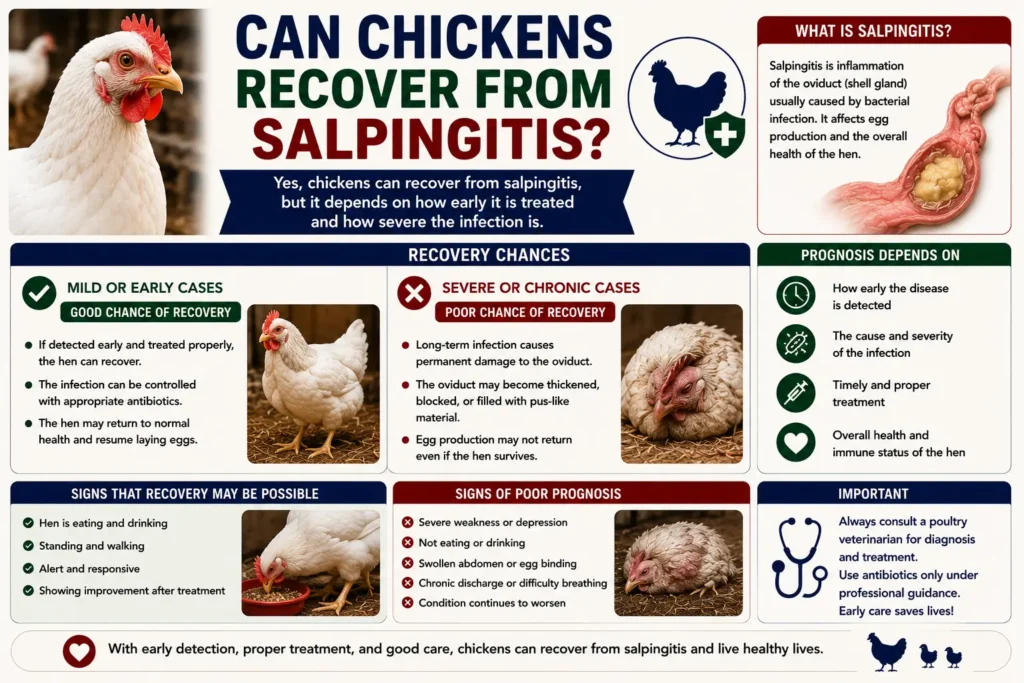
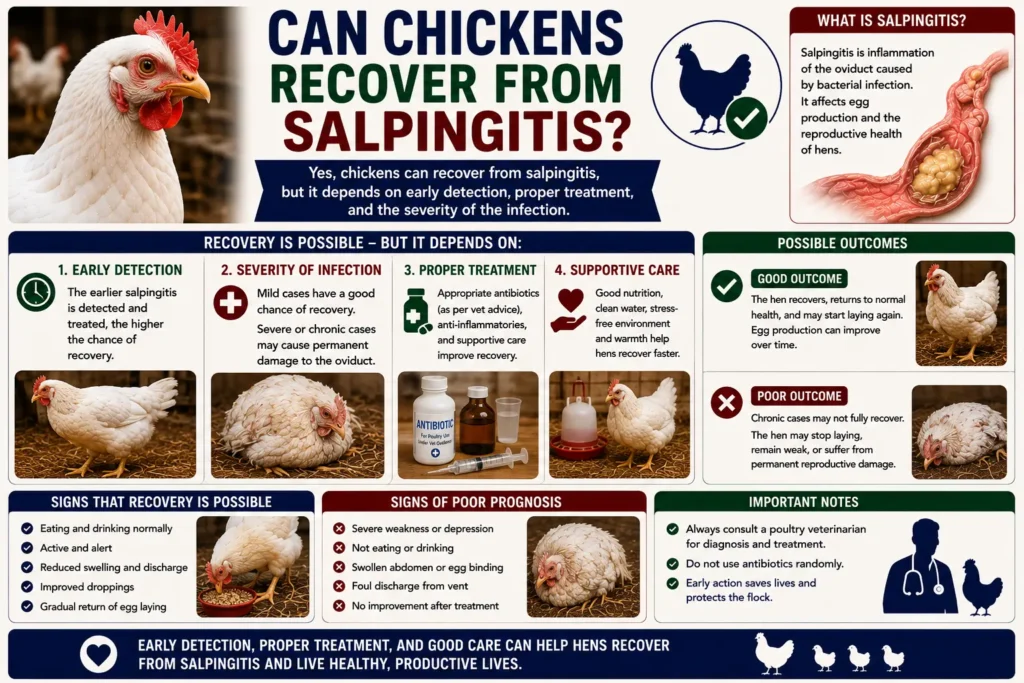
Can chickens recover from salpingitis, or is this one of those diagnoses backyard keepers dread hearing? The honest answer is: sometimes, but the recovery rate depends heavily on how early it’s caught and how severe the inflammation has become. Salpingitis is an infection or inflammation of the oviduct, the tube that forms and moves the egg, and it’s one of the more common reproductive problems in laying hens.
This guide breaks down what salpingitis actually is, why it happens, what treatment looks like, and how to judge whether your hen has a realistic shot at recovery.
Table of Contents
Quick Answer
Mild, early-stage salpingitis caught before a mass forms can sometimes resolve with antibiotics and supportive care under a vet’s guidance. Advanced cases with a large egg-mass buildup have a much lower recovery rate and often require surgery or humane treatment decisions.
What Is Salpingitis in Chickens?
Salpingitis is inflammation of the oviduct, usually caused by a bacterial infection that travels up from the vent or spreads from another part of the reproductive tract. It’s one of the leading causes of death in laying hens over two years old, according to veterinary pathology reports from poultry diagnostic labs.
The oviduct can respond to infection by producing a thick, cheese-like buildup of pus, yolk material, and tissue debris — often called “lash egg” material. This mass can grow large enough to press on other organs, which is why severe cases carry a poor prognosis.
Read More: https://lashegg.com/euthanasia-decision-for-hens/
How Salpingitis Develops
Bacteria such as E. coli, Salmonella, and other opportunistic organisms commonly cause salpingitis. Infection often starts after:
- Stress from overcrowding, heat, or predator attacks
- An egg that breaks inside the oviduct
- Vent pecking or injury that lets bacteria enter
- A prior respiratory infection that spreads to the reproductive tract
- Genetics and breed — high-production hybrid layers are more prone to reproductive disease
Recovery Rate: How Often Do Hens Recover From Salpingitis?
The recovery rate for salpingitis varies a lot depending on the stage of disease. Early, mild cases treated promptly have a fair chance of improvement. Chronic or advanced cases, where a firm mass has formed in the oviduct, have a much lower recovery rate, and many hens in this stage don’t respond to antibiotics alone.
Veterinary literature, including guidance summarized in the Merck Veterinary Manual, notes that reproductive tract disease is a leading cause of mortality in commercial and backyard laying hens, and that chronic salpingitis often has a guarded to poor prognosis once a mass has formed.
Recovery Outlook by Stage
| Stage | Description | Recovery Outlook |
| Early / Acute | Mild swelling, hen still eating, may lay soft or odd eggs | Fair to good with prompt vet treatment |
| Moderate | Reduced appetite, abdominal swelling, irregular laying | Guarded; needs veterinary diagnosis and antibiotics |
| Chronic / Advanced | Large firm mass, labored breathing, fluid in abdomen | Poor; often requires surgery or humane treatment decision |
| Peritonitis (ruptured) | Infection has spread into the abdominal cavity | Poor to critical; emergency vet care needed |
Did You Know?
The lash-shaped material some keepers find in the nest box isn’t actually an egg. It’s a buildup of infected material from the oviduct, and finding one is a strong sign your hen needs veterinary evaluation, not just extra calcium or vitamins.
Symptoms of Salpingitis in Hens
Because chickens naturally hide illness, salpingitis symptoms often aren’t obvious until the disease has progressed. Watching for early changes gives your hen the best chance at recovery.
| Symptom | Early Sign | Advanced Sign |
| Egg-laying | Fewer eggs, soft-shelled or misshapen eggs | Complete stop in laying |
| Abdomen | Slight swelling | Firm, distended “penguin stance” |
| Appetite | Mild decrease | Significant weight loss |
| Behavior | Slightly quieter than usual | Lethargy, hiding, unresponsive |
| Breathing | Normal | Labored, especially with fluid buildup |
| Droppings | Occasionally watery | Persistent diarrhea or foul odor |
When to Call a Vet
Contact a poultry-experienced vet if your hen shows a swollen abdomen, stops laying suddenly, walks with a “penguin” stance, or produces a lash-shaped mass in the nest box. Early diagnosis meaningfully improves the recovery rate.
How Vets Diagnose Salpingitis
A vet typically starts with a physical exam, checking for abdominal swelling and assessing the hen’s overall condition. From there, diagnosis may include:
- Abdominal palpation to feel for a mass or fluid
- X-rays or ultrasound to visualize the oviduct and check for egg material
- Bloodwork to check for signs of infection or inflammation
- Fluid analysis if abdominal fluid is present
- In some cases, exploratory surgery, which can be both diagnostic and treatment
Home observation can raise suspicion, but a confirmed diagnosis needs professional veterinary tools. Guessing and starting antibiotics without guidance can mask symptoms without solving the underlying problem.
Treatment Options for Salpingitis
Treatment depends entirely on how advanced the condition is. This is where the line between home care and professional veterinary treatment matters most.
Home Care (Supportive Only)
Home care can support a hen during treatment but cannot cure salpingitis on its own. Supportive steps include:
- Isolating her from the flock to reduce stress
- Offering easy-access food and water
- Keeping her warm and calm
- Monitoring droppings, appetite, and abdomen size daily
Veterinary Treatment
- Antibiotics — prescribed based on culture results when possible, since blind antibiotic use can fail against resistant bacteria
- Anti-inflammatory support — to reduce swelling and discomfort
- Fluid drainage — if fluid has built up in the abdomen
- Surgery (salpingohysterectomy) — removal of the affected oviduct, which some avian vets perform in cases where the hen is otherwise healthy and the mass hasn’t spread
- Humane euthanasia — considered when the disease is advanced, the hen is in pain, and no treatment offers a reasonable chance of recovery
Expert Tip
Ask whether your vet can run a culture and sensitivity test before starting antibiotics. It takes a few extra days but significantly improves the odds that the chosen antibiotic will actually work.
Common Mistakes Keepers Make
- Assuming a soft-shelled egg is just a calcium issue instead of an early salpingitis sign
- Waiting weeks to see if the hen “figures it out” before calling a vet
- Using leftover antibiotics from a previous flock issue without a proper diagnosis
- Ignoring a lash-shaped mass in the nest box instead of treating it as a warning sign
- Skipping follow-up vet visits after initial treatment, missing signs of relapse
Warning
Untreated salpingitis can progress to egg yolk peritonitis, a life-threatening infection of the abdominal cavity. If your hen’s abdomen becomes firm and swollen and she stops eating, treat this as an emergency, not a wait-and-see situation.
Can Chickens Recover From Salpingitis Long-Term?
Even hens that respond to treatment may have reduced future egg production or a higher chance of recurrence, since the oviduct tissue can remain scarred or weakened. Some hens go on to live comfortable lives as non-laying pets after treatment, while others relapse within months. Whether a chicken can fully recover from salpingitis long-term really depends on how much oviduct damage occurred before treatment began.
Hens that undergo surgical removal of the affected oviduct typically stop laying eggs from that side permanently but can otherwise live a normal lifespan if the surgery is successful and infection doesn’t recur.
Preventing Salpingitis in Your Flock
Prevention lowers the risk of your flock developing salpingitis in the first place, which matters because recovery rates drop sharply once the disease is advanced.
- Provide a balanced layer feed with adequate calcium and protein for reproductive health
- Reduce flock stress with adequate space, shade, and predator protection
- Keep nest boxes clean to lower bacterial exposure
- Manage body weight — overweight hens have higher rates of reproductive disease
- Consider reducing light exposure to slow laying rate in older hens, which some keepers use to ease strain on the reproductive tract
- Address respiratory infections promptly, since they can spread to the oviduct
People Also Ask
What does a lash egg mean for my chicken? A lash egg is a sign of salpingitis, not a true egg. It’s a mass of pus, yolk, and tissue debris from an infected oviduct, and it usually means your hen needs a veterinary evaluation.
Is salpingitis contagious to other chickens? Salpingitis itself isn’t typically contagious between hens, since it develops from an individual hen’s own infection. However, the underlying bacteria that caused it, such as E. coli, can spread through a flock under poor sanitation or stress conditions.
Can antibiotics cure salpingitis in chickens? Antibiotics can help in early or mild cases, especially when prescribed after a culture confirms the right medication. In advanced cases with a large mass, antibiotics alone often aren’t enough, and surgery or humane euthanasia may be considered.
How long does it take a chicken to recover from salpingitis? Mild cases treated early may show improvement within one to two weeks of starting antibiotics. Recovery from surgery can take several weeks, and some hens never return to full laying capacity even after treatment.
Should I euthanize a chicken with salpingitis? This depends on severity. Vets and keepers generally consider euthanasia when the hen is in visible pain, has a large mass causing organ pressure, or hasn’t responded to treatment, since prolonging suffering isn’t considered humane treatment.
Final Thoughts
So, can chickens recover from salpingitis? The recovery rate is genuinely mixed — early cases have a real chance with prompt veterinary treatment, while advanced cases carry a tougher prognosis. Watching your flock for early signs like soft eggs, reduced appetite, or abdominal swelling gives you the best shot at catching salpingitis before it becomes severe. When symptoms appear, don’t wait — a poultry-experienced vet can confirm the diagnosis and walk you through realistic treatment options.