Vaccination and Reproductive Health: How They’re Connected in Hens

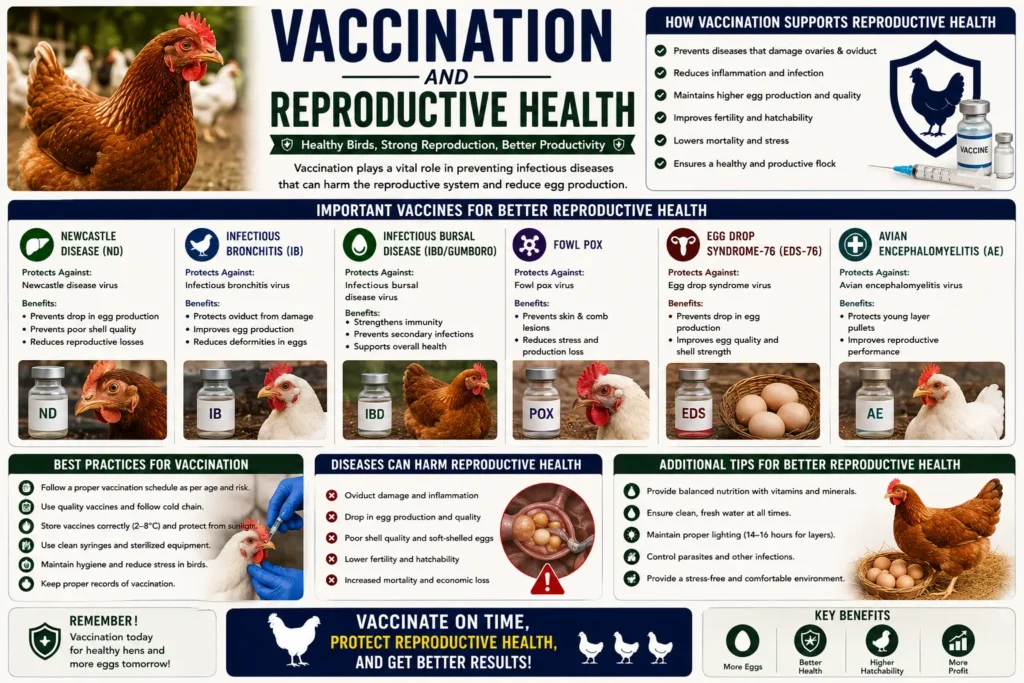
Vaccination and reproductive health might seem like separate topics, but in backyard flocks, they’re closely linked. Certain poultry vaccines protect against diseases that damage the reproductive tract directly, while others support the general immune resilience that helps a hen’s body fend off secondary infections like salpingitis. Understanding this connection helps keepers make smarter decisions about which vaccines actually matter for their flock.
This guide covers the core poultry vaccines relevant to backyard keepers, how they relate to reproductive health, and where vaccination fits into a broader flock wellness plan.
Table of Contents
Quick Answer
Vaccination and reproductive health connect most directly through diseases like infectious bronchitis, which can permanently damage a hen’s oviduct, and Marek’s disease, which affects overall immune function. Vaccinating chicks early, especially against Marek’s and infectious bronchitis where regionally relevant, supports long-term reproductive resilience.
Read More: https://lashegg.com/supplements-for-healthy-hens/
Why Vaccination Matters for Reproductive Health
A hen’s reproductive tract is vulnerable to more than just bacterial infections like salpingitis. Several viral diseases can cause lasting reproductive damage, sometimes before a keeper notices any symptoms. This is the core reason vaccination and reproductive health deserve to be discussed together, rather than as separate flock management topics.
According to guidance summarized by the Merck Veterinary Manual, several common poultry vaccines exist specifically because early viral infection during a chick’s development can cause permanent damage to organs, including the reproductive tract, that isn’t reversible later in life.
Did You Know?
A hen’s reproductive system, including the oviduct, is still developing during her first weeks of life. This is part of why some poultry vaccines are given at hatch or in the first days of life — timing matters for preventing lasting damage.
Key Poultry Vaccines and Their Link to Reproductive Health
Marek’s Disease Vaccine
Marek’s disease is a viral infection that can cause tumors and immune suppression throughout the body, including tissues connected to reproductive function. It’s typically given at the hatchery on day one, since exposure very early in life offers the best protection. Unvaccinated flocks face a higher lifetime risk of illness that can indirectly affect reproductive health through general immune compromise.
Infectious Bronchitis Vaccine
Infectious bronchitis is one of the clearest examples of vaccination and reproductive health intersecting directly. This virus can permanently damage the oviduct in young hens, leading to poor eggshell quality, misshapen eggs, or reduced lifetime egg production, even after the hen recovers from the initial respiratory illness. Vaccination timing and relevance vary by region, so a poultry vet or extension office can advise on local risk.
Newcastle Disease Vaccine
Newcastle disease affects the respiratory, nervous, and reproductive systems and can cause a sharp, sometimes permanent drop in egg production in surviving hens. It’s more relevant in regions where the disease is present, and requirements vary by country and even by state or region within larger countries.
Fowl Pox Vaccine
While fowl pox itself isn’t primarily a reproductive disease, it can cause enough overall stress and illness that a hen’s laying temporarily stops. It’s commonly recommended in areas with high mosquito exposure, since the virus can spread through insect bites.
Poultry Vaccines Comparison Table
| Vaccine | Primary Concern | Reproductive Health Link | Typical Timing |
| Marek’s disease | Tumors, immune suppression | Indirect, through overall immune health | Day 1 (hatchery) |
| Infectious bronchitis | Respiratory illness | Direct — can permanently damage oviduct | Early chick stage; varies by region |
| Newcastle disease | Respiratory/neurological illness | Direct — can reduce lifetime egg production | Varies by region and risk level |
| Fowl pox | Skin lesions, general illness | Indirect — illness stress can pause laying | Point of lay or earlier, region-dependent |
Expert Tip
Ask your hatchery which vaccines chicks received before purchase. Marek’s disease vaccination especially needs to happen very early, so knowing your starting point helps you decide if any additional vaccination makes sense for your flock.
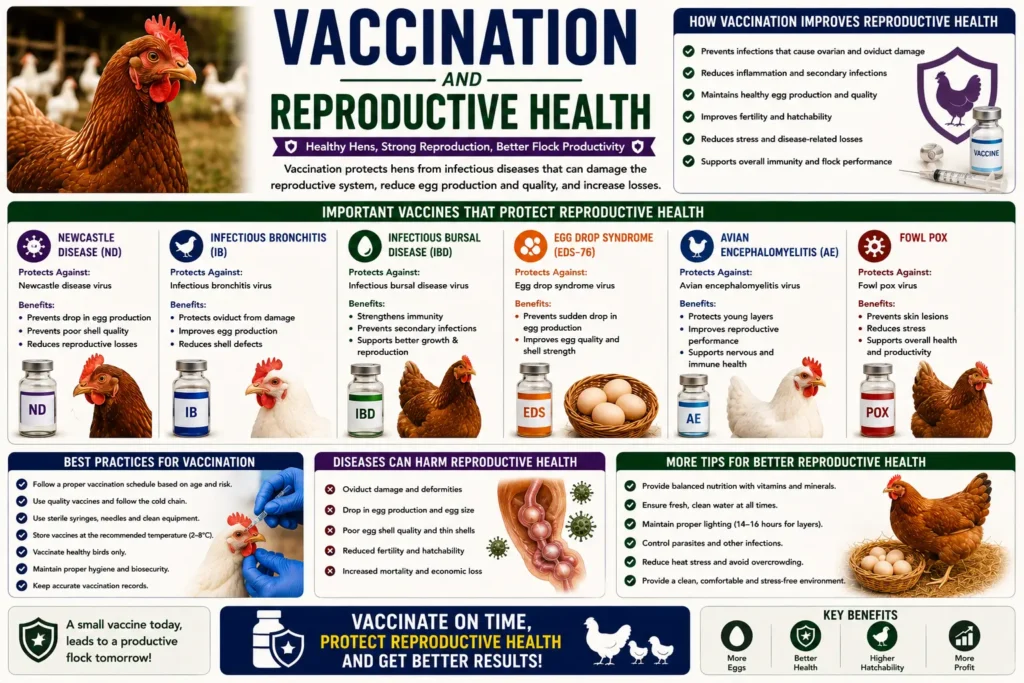
Vaccination Timing and Reproductive Development
| Chick Age | Reproductive Development Stage | Vaccination Relevance |
| Day 1 | Reproductive tissue still forming | Marek’s disease vaccine most effective here |
| 1–6 weeks | Continued development | Infectious bronchitis vaccination window in many regions |
| 8–18 weeks (pullet stage) | Oviduct maturing toward point of lay | Vaccination protection from earlier doses still building resilience |
| Point of lay (18–20 weeks) | Reproductive system becoming fully active | Existing vaccine protection now most relevant |
When to Call a Vet
If you’re setting up a new flock or unsure which poultry vaccines are recommended in your region, a poultry-experienced vet or local extension office can help you build a vaccination plan appropriate to your area’s specific disease risks.
Vaccinated vs. Unvaccinated Flocks: What the Difference Looks Like
| Factor | Vaccinated Flock | Unvaccinated Flock |
| Marek’s disease risk | Significantly reduced | Higher risk of tumors and immune suppression |
| Infectious bronchitis oviduct damage risk | Lower, if vaccinated early | Higher risk of permanent reproductive damage if exposed |
| Overall disease resilience | Generally stronger | More vulnerable to secondary infections |
| Egg production stability | More consistent over the hen’s lifetime | Greater risk of unexplained drops from viral illness |
This doesn’t mean an unvaccinated flock will definitely develop problems — many backyard flocks in low-exposure areas do fine without extensive vaccination. It does mean the risk profile is different, which matters for keepers weighing vaccination and reproductive health as part of their flock planning.
Common Mistakes Keepers Make Around Vaccination
Common Mistakes Keepers Make
- Assuming all poultry vaccines are relevant everywhere, when many are regionally specific
- Vaccinating too late for diseases like Marek’s, which need protection from day one
- Skipping vaccination research entirely because backyard flocks feel “low risk”
- Not asking the hatchery or seller which vaccines chicks already received
- Confusing vaccination with treatment — vaccines prevent disease but don’t cure an active infection
Warning
Vaccines don’t provide instant protection. Most take one to three weeks to build effective immunity, so newly vaccinated birds still need normal biosecurity precautions during that window.
Building a Vaccination Plan That Supports Reproductive Health
- Research which poultry diseases are common in your specific region — a local extension office or avian vet is the best source.
- Confirm which vaccines, if any, your chicks received from the hatchery or breeder.
- Decide whether additional vaccination makes sense based on your flock’s exposure risk (backyard-only vs. exposure to wild birds or other flocks).
- Time any additional vaccinations appropriately for the chick’s age and the specific vaccine’s requirements.
- Maintain good biosecurity even after vaccination, since no vaccine offers complete protection.
- Keep records of what your flock has received, especially if you regularly add new birds.
Vaccination Isn’t a Substitute for Overall Flock Management
Vaccination and reproductive health are connected, but vaccines work best as one part of a broader wellness plan, not a stand-alone solution. Nutrition, sanitation, stress reduction, and prompt veterinary care for symptoms still play essential roles, even in a fully vaccinated flock.
- A vaccinated hen still needs balanced layer nutrition to support healthy egg production
- Vaccination reduces certain disease risks but doesn’t prevent nutritional or bacterial reproductive issues like salpingitis
- Biosecurity (quarantine, clean water, pest control) remains necessary regardless of vaccination status
People Also Ask
Do backyard chickens need vaccines? It depends on regional disease risk and flock exposure. Marek’s disease vaccination is widely recommended even for small backyard flocks, since it’s inexpensive, given at hatch, and protects against a common, serious disease.
Can vaccines cause reproductive problems in chickens? Properly administered poultry vaccines are not associated with causing reproductive problems. In fact, several vaccines exist specifically to prevent diseases that would otherwise damage reproductive tissue.
What vaccine protects a hen’s egg-laying ability the most? Infectious bronchitis vaccination has one of the clearest direct links to protecting future egg-laying ability, since the unvaccinated virus can permanently damage the oviduct in young birds.
Is it too late to vaccinate an adult hen? Some vaccines are most effective when given very early in life, like Marek’s disease vaccine at hatch. For adult hens, a vet can advise whether any vaccination still offers meaningful protection based on your flock’s situation.
How do I know which poultry vaccines my flock needs? A local extension office, agricultural department, or poultry-experienced vet can advise on regional disease risks and appropriate vaccination timing for your specific location and flock setup.
Final Thoughts
Vaccination and reproductive health connect through several key poultry vaccines, especially Marek’s disease and infectious bronchitis, both of which can affect a hen’s long-term reproductive function if she’s exposed unprotected. Building a vaccination plan suited to your region, alongside solid nutrition and sanitation practices, gives your flock the strongest foundation for lasting reproductive health. When in doubt about vaccine timing or regional relevance, a poultry-experienced vet or local extension office is the most reliable resource.
FAQ
Q: How are vaccination and reproductive health connected in chickens? A: Several poultry vaccines, especially for infectious bronchitis and Marek’s disease, protect against illnesses that can permanently damage a hen’s reproductive tract or overall immune resilience, directly linking vaccination and reproductive health.
Q: Which poultry vaccines matter most for backyard flocks? A: Marek’s disease vaccine is widely recommended for nearly all flocks due to its low cost and early-life timing. Infectious bronchitis and Newcastle disease vaccines matter more in regions where those diseases are present.
Q: Can an unvaccinated hen still lay eggs normally? A: Yes, many unvaccinated hens in low-exposure backyard settings lay normally throughout their lives. The risk is that exposure to certain viral diseases without vaccination can cause reproductive damage if the flock does encounter them.
Q: Does vaccination prevent salpingitis in chickens? A: Not directly, since salpingitis is usually caused by bacteria rather than the viruses most poultry vaccines target. Vaccination supports overall immune health, which can indirectly help resilience against secondary infections.
Q: When should chicks receive their first vaccinations? A: Marek’s disease vaccine is typically given at the hatchery on day one. Other vaccines, like infectious bronchitis, are usually given within the first few weeks of life, though exact timing depends on the specific vaccine and regional guidance.