Salpingitis vs Egg Binding: Why Chicken Owners Confuse These Two Conditions

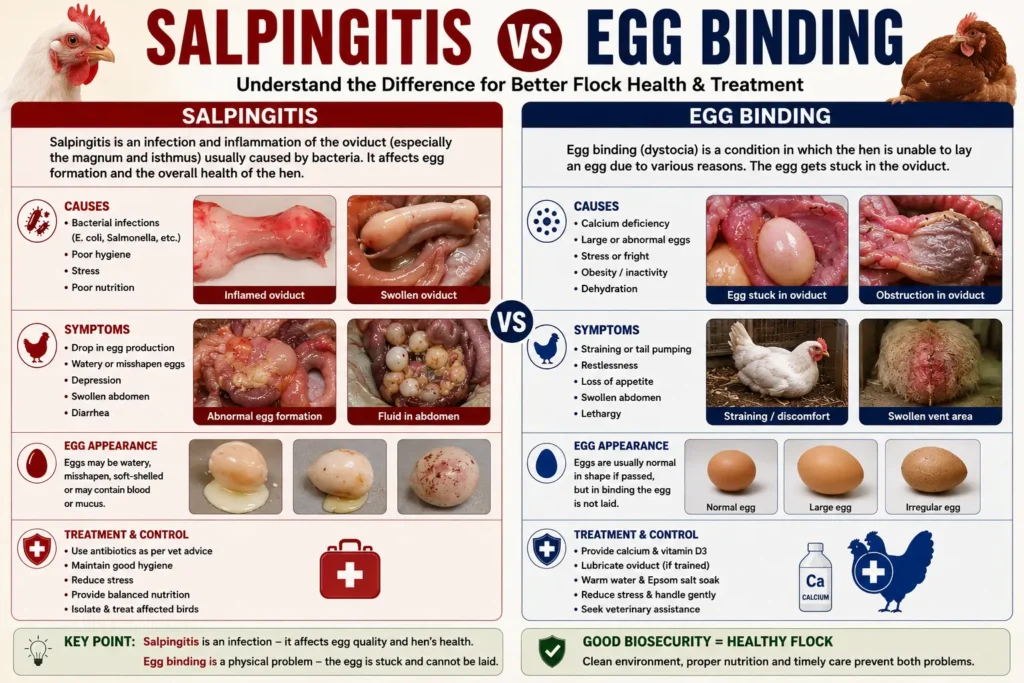
A hen straining in the nesting box, standing hunched, or refusing to move can send any owner into panic mode. The tricky part is that salpingitis vs egg binding produce strikingly similar warning signs, even though they are two different problems inside the hen’s body. One involves a stuck egg. The other involves an infected reproductive tract. Telling them apart matters, because the right response for one can be the wrong response for the other.
This guide walks through both conditions in plain language, compares their symptoms side by side, and explains exactly when a home fix is reasonable and when you need a vet on the phone immediately.
Quick Answer: Egg binding means a hen has a fully formed egg stuck inside her and cannot pass it. Salpingitis means the oviduct itself is infected or inflamed, which can cause pain, swelling, and abnormal discharge, sometimes without any egg being stuck at all. The two can look alike from the outside but need different treatment.
Table of Contents
What Is Egg Binding?
Egg binding happens when a hen cannot pass an egg that has already formed inside her oviduct. The egg becomes lodged, usually near the vent, and normal muscle contractions fail to push it out. Left untreated, egg binding can become life-threatening within 24 to 48 hours, since the stuck egg puts pressure on internal organs and can interfere with the hen’s ability to pass droppings.
Read More: https://lashegg.com/salpingitis-vs-lash-egg/
Common Causes of Egg Binding
- Calcium deficiency, which weakens the muscle contractions needed to lay
- Obesity, which crowds the abdominal cavity
- Oversized or misshapen eggs, including double-yolkers
- Dehydration, which reduces muscle function
- First-time laying, since pullets sometimes struggle with their first few eggs
- Cold temperatures, which can slow muscle activity
- Lack of exercise or cramped housing
Symptoms of Egg Binding
- Straining or repeated squatting without producing an egg
- A wide, waddling, penguin-like walk
- Abdominal swelling that can sometimes be felt as a firm shape
- Tail pumping up and down
- Lethargy and reduced appetite
- Pale comb and wattles
- Sitting fluffed up and reluctant to move
What Is Salpingitis?
Salpingitis is inflammation or infection of the oviduct, the tube responsible for building and moving an egg from the ovary to the vent. Unlike egg binding, salpingitis is not about a single stuck egg. It’s an ongoing infection process, usually bacterial, that damages the tissue lining the reproductive tract over time.
Poultry pathology data reviewed by veterinary extension programs list salpingitis as one of the most frequent causes of death in mature laying hens, particularly those several years into production.
Common Causes of Salpingitis
- Bacterial infection, most often E. coli, though Salmonella and other bacteria are sometimes involved
- Ascending infection traveling upward from the cloaca
- Respiratory infections that spread into the reproductive tract
- Chronic stress, including overcrowding or poor ventilation
- Age, with older hens at higher risk after years of laying
- Genetics, since some high-production breeds show elevated rates
Symptoms of Salpingitis
- Reduced or stopped egg production over time, not a single missed egg
- Fluid-filled, swollen abdomen (“water belly”)
- Lethargy and appetite loss
- Foul-smelling vent discharge
- Passing a lash egg, a solid mass of pus and tissue
- Penguin-like posture in advanced cases
- Sudden collapse or death in severe, untreated cases
Salpingitis vs Egg Binding: Side-by-Side Comparison Table
Because both conditions share a few overlapping symptoms, a direct comparison makes the difference between salpingitis and egg binding much easier to see.
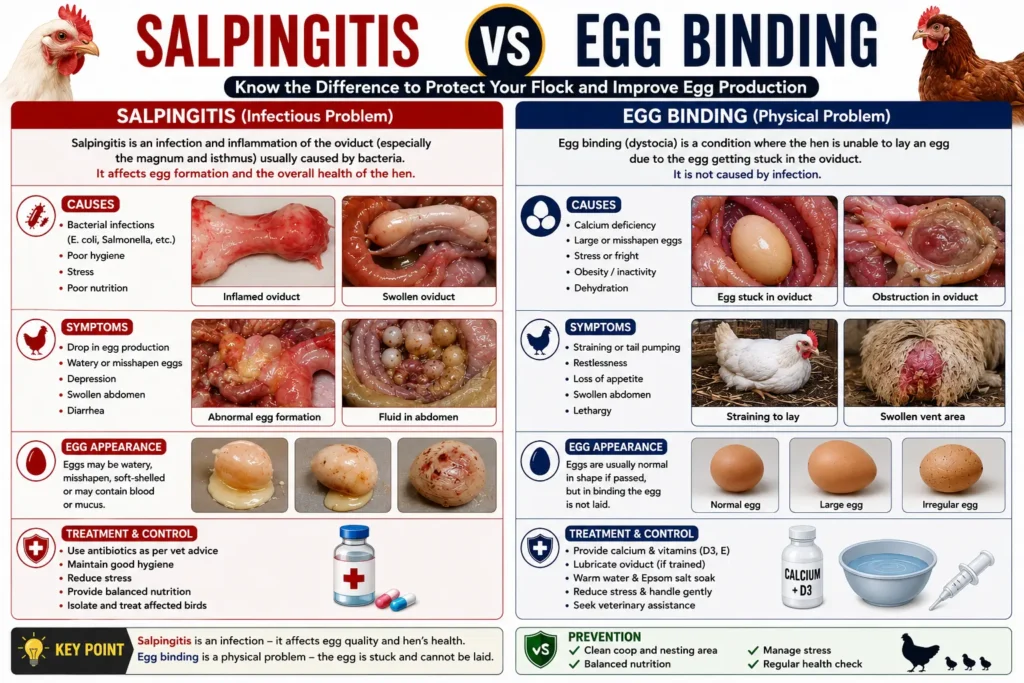
| Feature | Egg Binding | Salpingitis |
| Root cause | A formed egg stuck in the oviduct | Bacterial infection or inflammation of the oviduct |
| Onset | Sudden, often within hours | Gradual, developing over days or weeks |
| Egg production | Stops abruptly with one stuck egg | Declines steadily over time |
| Abdominal feel | Firm, egg-shaped mass often palpable | Soft, fluid-filled swelling |
| Discharge | Usually none | Often present, foul-smelling |
| Lash egg present | No | Sometimes |
| Emergency level | Life-threatening within 24–48 hours | Ranges from mild to life-threatening depending on stage |
| Home treatment role | Warm baths and lubrication can sometimes help | Home care alone is not sufficient; antibiotics needed |
Egg Binding Comparison: What Makes Symptoms Overlap
An egg binding comparison with salpingitis shows why owners mix them up. Both conditions can cause a hunched, penguin-like stance, reduced appetite, and reluctance to move. The key difference is timing and texture. Egg binding hits suddenly and involves a firm, egg-shaped lump you may be able to feel. Salpingitis builds gradually and often produces a softer, fluid-like swelling instead of one distinct mass.
How to Check for a Stuck Egg at Home
If you suspect egg binding, a gentle physical check can help confirm it before you decide on next steps.
- Wash your hands and put on clean gloves if available.
- Gently feel the lower abdomen, just above the vent, for a firm, rounded shape.
- Look at the vent area for swelling, protrusion, or visible shell.
- Watch the hen’s behavior for 15–20 minutes, noting straining, tail pumping, or repeated squatting.
- Avoid excessive handling, since stress can worsen the situation.
Warning
Never attempt to physically pull or force an egg out. This can break the egg inside the hen, causing a life-threatening internal injury. If a warm bath and gentle massage do not help within an hour, treat it as an emergency and contact a vet.
Diagnosing Egg Binding vs Salpingitis
For Suspected Egg Binding
- Abdominal palpation to feel for a firm, egg-shaped mass
- Radiographs, which clearly show a formed egg
- Vent examination to check for visible obstruction
For Suspected Salpingitis
- Bloodwork to check for signs of infection
- Radiographs or ultrasound to assess fluid buildup and oviduct condition
- Culture and sensitivity testing of any discharge or lash egg material
- Necropsy, in hens that have already died, to confirm diagnosis
Expert Tip
If you’re not sure which condition you’re dealing with, don’t guess and delay care. Both conditions can turn fatal quickly, and a vet exam with imaging is the fastest way to tell them apart with confidence.
Treatment Options
Egg Binding Treatment
- Warm water soak for 15–20 minutes to relax the vent muscles
- Lubrication around the vent with a water-based, pet-safe lubricant
- A calm, dark, warm space to reduce stress and encourage natural passing
- Calcium supplementation, since deficiency is a common underlying cause
- Veterinary intervention, including manual extraction or, in severe cases, surgery, if home methods fail within a few hours
Salpingitis Treatment
- Antibiotics chosen based on culture results, not guesswork
- Anti-inflammatory medication to reduce swelling and discomfort
- Fluid drainage for hens with significant abdominal fluid buildup
- Surgery, in select severe cases involving abscess or major tissue damage
- Supportive home care, including isolation, clean bedding, and easy access to food and water
Common Mistakes Owners Make
- Assuming straining always means egg binding when it could be salpingitis
- Trying to force out a suspected stuck egg by hand
- Waiting more than a few hours before seeking help for suspected egg binding
- Treating salpingitis symptoms with home remedies alone instead of antibiotics
- Ignoring a lash egg because it doesn’t look like a “real” symptom of illness
- Not isolating a sick hen, which adds unnecessary flock stress
Recovery and Long-Term Outlook
| Factor | Egg Binding | Salpingitis |
| Typical recovery time | Hours to a couple of days if treated early | Days to weeks, depending on severity |
| Recurrence risk | Higher in hens prone to large or misshapen eggs | Higher in hens with chronic or repeated infections |
| Long-term laying | Usually returns to normal | Can decline permanently in severe cases |
| Prevention focus | Diet, calcium, weight management | Hygiene, stress reduction, prompt treatment of respiratory illness |
Most hens recover fully from a single episode of egg binding when it’s caught and treated quickly. Salpingitis carries a more variable outlook, since it depends on how advanced the infection was at diagnosis and how the hen responds to antibiotics.
Prevention Strategies
- Provide a balanced layer feed with adequate calcium
- Keep hens at a healthy weight through proper portioning and space to move
- Ensure constant access to clean water, especially in hot weather
- Reduce stress through consistent routines and enough nesting box space
- Monitor older or high-production hens more closely
- Address respiratory illness quickly to prevent it from spreading to the reproductive tract
- Keep coop bedding clean and dry to lower bacterial exposure
When to Call a Vet
Reach out to a poultry-experienced veterinarian right away if you see:
- No egg passed after an hour of warm bath and gentle care
- A firm abdominal mass combined with visible distress
- Fluid-filled, soft abdominal swelling that develops gradually
- Foul-smelling discharge from the vent
- A lash egg in the nesting box
- Lethargy, appetite loss, or collapse
When to Call a Vet: Egg Binding vs Salpingitis
For suspected egg binding, act within hours, not days. For suspected salpingitis, don’t wait for the hen to look severely ill. Early antibiotics, guided by proper testing, offer the best chance of preserving normal reproductive function.
Can Egg Binding Lead to Salpingitis?
Yes, in some cases. A stuck egg that isn’t resolved can cause tissue damage or create conditions where bacteria are more likely to take hold in the oviduct. This is one more reason prompt treatment of suspected egg binding matters, beyond just resolving the immediate blockage.
Are Some Hens More Prone to Both Conditions?
Certain factors raise the risk for both issues at once. Overweight hens, hens laying unusually large eggs, and older hens nearing the end of peak production tend to show higher rates of egg binding and salpingitis. Breed also plays a role, since some high-output laying breeds face elevated risk for reproductive tract problems in general.
Nutrition’s Role in Both Conditions
Diet quality touches both conditions more than many owners realize. Calcium is the clearest link, since a shortfall weakens the muscle contractions a hen needs to pass an egg smoothly, raising the odds of egg binding. Protein and overall body condition matter too. Hens on unbalanced diets, whether underfed or carrying excess weight, tend to show weaker immune responses, which makes it easier for the bacteria behind salpingitis to take hold.
A consistent, age-appropriate layer feed, paired with free-choice oyster shell for extra calcium, addresses both risk factors at once. University extension programs focused on poultry nutrition generally recommend reviewing flock diet whenever reproductive issues start showing up repeatedly, rather than treating each episode as an isolated event.
Age and Flock Management Considerations
Older hens face a higher baseline risk for both conditions simply because years of laying put cumulative strain on the reproductive tract. Flock owners managing hens past their second or third laying season should watch more closely for early warning signs, since catching either condition early makes a real difference in outcome.
Flock size and housing setup matter too. Overcrowded coops raise stress hormones, which can suppress immune function and make salpingitis more likely to develop. The same crowded conditions can also disrupt normal nesting behavior, indirectly contributing to straining and egg binding in more anxious hens.
Frequently Asked Questions
What’s the main difference between salpingitis and egg binding? Egg binding is a single stuck egg blocking the oviduct. Salpingitis is an ongoing infection or inflammation of the oviduct itself. Comparing salpingitis vs egg binding, one is a mechanical blockage and the other is a disease process.
Can a hen have both salpingitis and egg binding at the same time? Yes. An unresolved case of egg binding can damage oviduct tissue, which raises the risk of a secondary infection developing into salpingitis.
How fast does egg binding become an emergency? Egg binding can become life-threatening within 24 to 48 hours. If a warm bath and gentle care don’t resolve it within an hour or two, treat it as urgent and contact a vet.
Is a firm belly always egg binding? Not always. A firm, egg-shaped mass usually points to egg binding, while a softer, fluid-filled swelling is more typical of salpingitis. A vet exam is the most reliable way to confirm which one you’re dealing with.
Can egg binding be treated at home? Mild cases sometimes respond to a warm bath, lubrication, and a calm environment. If the hen doesn’t pass the egg within a couple of hours, professional veterinary care is needed.
Does salpingitis ever go away without antibiotics? Some very mild cases may resolve with rest and supportive care, but most cases require targeted antibiotics to fully clear the infection and prevent it from becoming chronic or life-threatening.
Will a hen lay normally again after egg binding or salpingitis? Many hens return to normal laying after a single, well-managed episode of egg binding. Salpingitis outcomes vary more, with some hens laying normally again and others experiencing reduced or permanently stopped production after severe cases.