Soft Shell Egg Treatment: A Practical, Step-by-Step Fix Plan

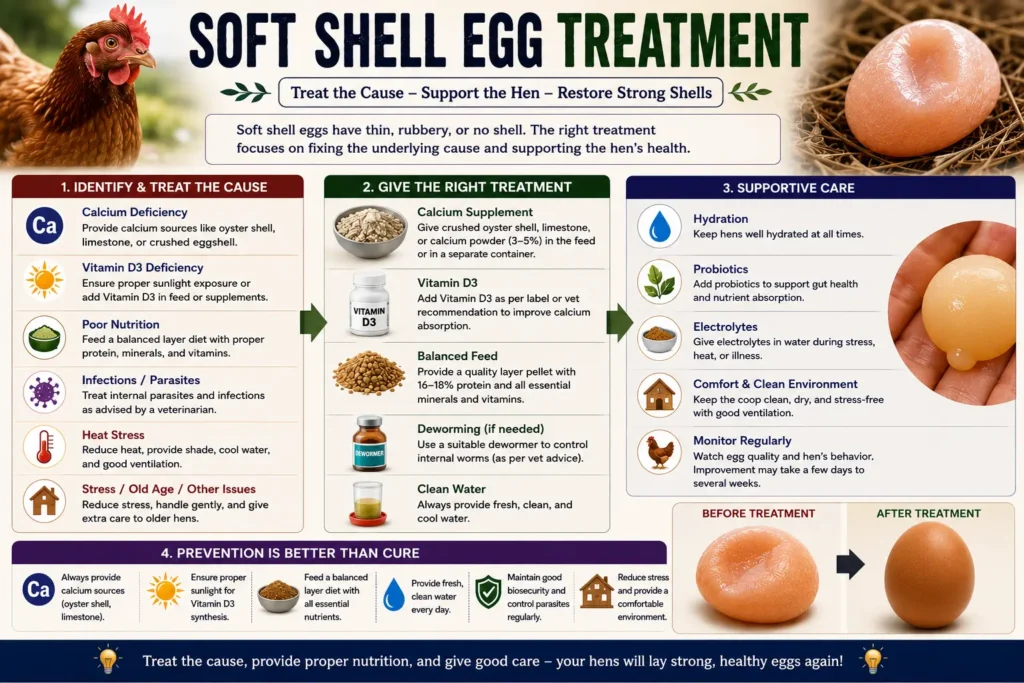
Finding a rubbery egg in the nest box is a clear signal your hen needs help — but not the kind that means calling a vet right away. Soft shell egg treatment almost always starts at home, with calcium, water, and a few environmental checks, before it ever needs professional intervention.
This guide walks through exactly what to do, in order, when you spot a soft or thin-shelled egg. It also covers how to prevent soft shell eggs from becoming a recurring problem, and the specific signs that mean home treatment isn’t enough and a veterinarian needs to get involved.
Quick Answer: Effective soft shell egg treatment starts with switching to a complete layer feed, offering free-choice calcium (like crushed oyster shell), ensuring constant access to fresh water, and reducing heat or flock stress. Most cases improve within a few days to two weeks. If it doesn’t, or other symptoms appear, see a veterinarian.
Table of Contents
Step-by-Step Soft Shell Egg Treatment Plan
Work through these steps in order. Most soft shell egg cases resolve at the first or second step without needing anything more advanced.
- Confirm the hen is on a complete layer feed. Non-layer feed, scratch grains, or too many treats diluting the diet are common, easily fixed culprits.
- Offer crushed oyster shell or eggshell free-choice, in a separate dish from the regular feed, so hens can self-regulate calcium intake as needed.
- Check water access. Make sure fresh, clean water is always available — dehydration compounds calcium and shell-quality issues.
- Assess the temperature. During hot weather, add shade, ventilation, and cool water to reduce heat stress, which directly interferes with shell formation.
- Reduce recent stressors. If you’ve added new birds, changed housing, or had a predator scare, give the flock time to settle before expecting shell quality to normalize.
- Monitor for two to three weeks. Most dietary and environmental causes resolve within this window once the underlying issue is corrected.
- Contact a veterinarian if there’s no improvement, or if the pattern is joined by other symptoms.
Expert Tip: Track which hen is laying the soft shell eggs if you can. Treatment that works for one hen’s calcium gap won’t necessarily explain a different hen’s heat-stress-related soft shell egg, so identifying the individual helps you target the right fix.
Read More: https://lashegg.com/what-causes-soft-shell-eggs/
Soft Shell Egg Treatment by Cause
Treatment differs slightly depending on what’s actually driving the problem. Matching the fix to the cause speeds up recovery.
| Suspected Cause | Recommended Treatment | Expected Timeline |
| Calcium deficiency | Switch to layer feed, add free-choice oyster shell | 3–7 days |
| Young pullet calibrating | No treatment needed, monitor only | Resolves in 1–3 weeks |
| Heat stress | Shade, ventilation, cool water, electrolytes if needed | Improves as heat subsides |
| General flock stress | Reduce disruptions, allow flock to settle | 1–2 weeks |
| Older hen, declining production | Supportive calcium, manage expectations | Ongoing, gradual |
| Suspected illness | Veterinary diagnosis and treatment | Varies, needs professional care |
H3: When Calcium Supplementation Is the Right Soft Shell Egg Treatment
Calcium deficiency is the most common cause, so it’s usually the first thing to correct. The right approach is offering calcium free-choice rather than force-feeding it or mixing large amounts directly into feed, which can lead to excess intake in hens that don’t need it and insufficient intake in hens that do.
- Crushed oyster shell is the most widely used and well-absorbed source
- Crushed, dried eggshell from your own flock also works, and recycles a resource you already have
- Avoid offering calcium sources meant for other species, since particle size and absorption differ
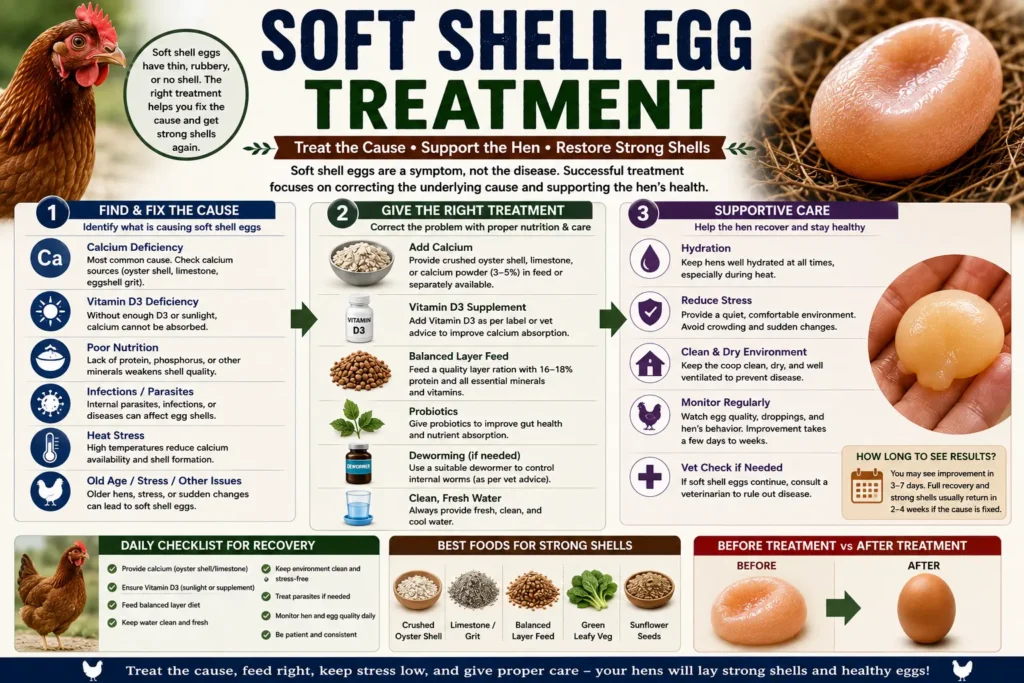
How to Prevent Soft Shell Eggs Long-Term
Treating an active case is only half the picture. Knowing how to prevent soft shell eggs from recurring saves both the hen and the owner repeated trouble.
- Feed a complete, age-appropriate layer diet consistently, rather than switching between feeds or relying heavily on treats and scratch
- Keep free-choice calcium available at all times, not just when you notice a problem
- Provide adequate vitamin D3, either through balanced feed or safe sun exposure, since it supports calcium absorption
- Manage heat proactively during summer months with shade structures, ventilation, and frozen treats
- Minimize unnecessary flock disruptions, introducing new birds gradually and keeping routines predictable
- Monitor older hens more closely, since age-related shell quality decline is harder to fully prevent but easier to manage with consistent supportive care
Did You Know? Sources referencing University Extension Services note that consistent access to a balanced layer ration with free-choice calcium is one of the most effective preventive measures against recurring shell-quality problems in backyard flocks.
What NOT to Do When Treating a Soft Shell Egg
A few common instincts can actually slow recovery rather than help it.
- Don’t force extra calcium into the main feed for the whole flock — hens not needing it can develop other imbalances
- Don’t assume every soft shell egg needs medication — most cases are dietary or environmental, not something an antibiotic or supplement beyond calcium would fix
- Don’t ignore a persistent pattern hoping it resolves on its own past the two-to-three-week window
- Don’t skip checking for heat stress just because the feed looks adequate on paper
Warning: Home treatment steps address the most common causes of soft shell eggs, but they won’t resolve a case caused by underlying illness. If soft shell eggs continue despite proper treatment, that’s the signal to move from home care to veterinary evaluation.
When Home Treatment Isn’t Enough
Most soft shell egg cases respond to the steps above. A smaller number of cases need more than home treatment can offer.
H3: Signs Soft Shell Egg Treatment at Home Has Failed
- No improvement after two to three weeks of proper diet, calcium, and environmental adjustments
- Multiple hens affected at the same time, suggesting a shared cause beyond individual diet
- Soft shell eggs appearing alongside respiratory symptoms like coughing or nasal discharge
- Lethargy, appetite loss, or reduced overall egg production developing alongside the shell issue
When to Call a Vet
When to Call a Vet: If home-based soft shell egg treatment hasn’t improved the pattern within two to three weeks, if several hens are affected at once, or if other symptoms appear, contact a veterinarian. A professional exam can rule out illness that diet and calcium alone won’t resolve.
Recovery Timeline: What to Expect
| Timeframe | What You Should See |
| Days 1–3 | Diet and calcium adjustments in place; no change expected yet |
| Days 4–7 | Improvement often begins in dietary or heat-related cases |
| Week 2 | Most straightforward cases show clear improvement |
| Week 3+ | If no improvement, treat as a signal to consult a veterinarian |
People Also Ask
What is the fastest soft shell egg treatment? Offering free-choice crushed oyster shell alongside a complete layer feed is the fastest, most direct treatment for the most common cause — calcium deficiency — with improvement often visible within a few days.
How do I prevent soft shell eggs during summer? Focus on cooling measures: shade, good ventilation, cool drinking water, and reducing activity during peak heat, since heat stress is a leading seasonal cause.
Can I give my chicken a calcium supplement made for humans? It’s better to use a poultry-specific source like crushed oyster shell, which is formulated in a particle size and form hens absorb well, rather than a human supplement.
Does soft shell egg treatment work the same for young and old hens? The basic approach — proper diet and free-choice calcium — applies to both, though young pullets typically resolve on their own quickly, while older hens may need ongoing supportive care rather than a full resolution.
How long should I try home treatment before calling a vet? Give proper diet and environmental treatment two to three weeks. If there’s no improvement by then, or if other symptoms appear sooner, a veterinary evaluation is the next step.
Common Mistakes Owners Make
Common Mistakes
- Mixing calcium into the main feed instead of offering it free-choice
- Giving up on treatment too early, before the two-to-three-week window has passed
- Overlooking heat as a factor because the diet already looks adequate
- Treating every soft shell egg the same way without considering the hen’s age or recent flock changes
- Waiting too long to call a vet when treatment clearly isn’t working
Final Thoughts
Soft shell egg treatment is one of the more straightforward fixes in backyard chicken keeping, and most cases respond well to a complete layer diet, free-choice calcium, and attention to heat and stress. Knowing how to prevent soft shell eggs going forward — consistent feed, constant calcium access, and proactive heat management — cuts down on how often you’ll need to treat one again.
Give home treatment a fair trial of two to three weeks, and keep watching for other symptoms along the way. If the pattern doesn’t improve, or something else changes about your hen’s health, that’s the point to bring in a veterinarian rather than continuing to adjust the diet on your own.
FAQ
What is the best soft shell egg treatment to start with? Start with a complete layer feed and free-choice crushed oyster shell, since calcium deficiency is the most common underlying cause and responds quickly to this treatment.
How can I prevent soft shell eggs from happening again? Keep a consistent layer diet with free-choice calcium available at all times, manage heat proactively in summer, and minimize unnecessary flock disruptions.
Is medication ever part of soft shell egg treatment? Only if an underlying illness is diagnosed by a veterinarian. Most soft shell egg cases are dietary or environmental and don’t require medication.
Can soft shell egg treatment reverse age-related shell decline? Not fully. Supportive calcium and a good diet can help, but some decline in shell quality with age is a natural part of a hen’s reproductive lifespan.
How do I know if my soft shell egg treatment is working? Watch for a gradual improvement in shell hardness over one to two weeks. A shell that goes from shell-less to soft to nearly normal over that window shows the treatment is working.
Does every hen need the same soft shell egg treatment approach? Not necessarily. The core treatment — diet and calcium — applies broadly, but the underlying cause (heat, age, stress) may call for additional, hen-specific adjustments.