Shell-Less Egg Treatment: What Actually Works

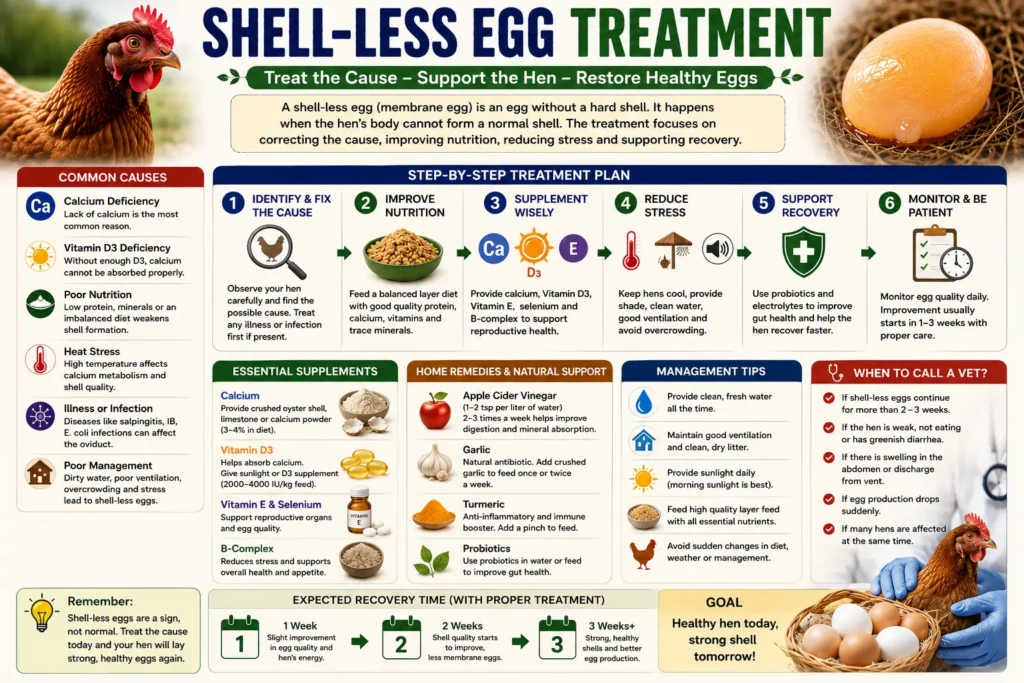
The right shell-less egg treatment starts with figuring out why it happened, because there is no single fix that works for every case. A hen laying without a shell might need more calcium, less stress, or in rare cases, veterinary care for an underlying illness.
The good news is that most cases respond well to a simple, targeted treatment plan you can start today. This guide walks through exactly what to do, in order, along with a prevention plan so it doesn’t keep happening.
Quick Answer
Most shell-less egg treatment starts with calcium and stress correction, since these cause the vast majority of cases. Offer free-choice oyster shell, confirm a complete layer feed, and reduce recent stress triggers. If the problem continues past one to two weeks or affects multiple hens, veterinary treatment becomes necessary.
Table of Contents
Step 1: Confirm the Cause Before Treating
Effective shell-less egg treatment depends on matching the fix to the actual cause. Treating a viral infection with more oyster shell won’t help, just like adding calcium won’t fix a stress-driven case.
| Likely Cause | Key Clue | Treatment Direction |
| Calcium deficiency | Diet heavy in treats/scratch, no oyster shell offered | Home dietary correction |
| Vitamin D3 deficiency | Limited sun exposure, indoor housing | Home dietary correction |
| Stress | Recent predator scare, new birds, loud noise | Environmental correction |
| Young pullet | First few eggs ever laid | Time and monitoring |
| Aging hen | Hen is 2+ years into laying | Diet support, monitoring |
| Infectious disease | Multiple hens affected, respiratory symptoms | Veterinary treatment |
| Heat stress | Recent heat wave | Environmental correction |
The Home Treatment Plan (Step-by-Step)
Step 1: Audit the Diet
- Confirm layer feed makes up at least 90% of daily intake.
- Cut back on treats, scratch grains, and table scraps until shells normalize.
- Check the feed bag’s calcium percentage — it should sit around 3.5–4%.
Step 2: Add Free-Choice Calcium
- Offer crushed oyster shell in a separate dish, not mixed into feed.
- Let hens self-regulate intake rather than force-feeding a fixed amount.
- Replace the supply every few days to keep it fresh and accessible.
Step 3: Support Vitamin D3
- Ensure hens get direct sunlight exposure for at least part of the day.
- Confirm the feed is fortified with vitamin D3 if hens are housed indoors most of the time.
- Consider a vet-approved supplement only if deficiency is confirmed or suspected long-term.
Step 4: Reduce Stress
- Identify and remove the specific stress trigger where possible — a new bird, a predator, construction noise.
- Keep the coop routine consistent: same feeding times, same access schedule.
- Give the flock a few quiet, undisturbed days to reset.
Read More: https://lashegg.com/what-causes-shell-less-eggs/
Step 5: Manage Heat
- Provide shade over the run during peak afternoon sun.
- Offer cool, fresh water at all times, changed more frequently in hot weather.
- Add electrolyte supplements to water during heat waves if recommended by your feed supplier or vet.
Step 6: Monitor and Log
- Track which hen laid the shell-less egg and on what date.
- Watch for a pattern across the next 5–7 days.
- Note any other symptoms: lethargy, respiratory sounds, reduced appetite.
Expert Tip
Start the oyster shell and diet correction together, not one at a time. Since calcium and vitamin D3 deficiencies often overlap, treating both from day one gets results faster than isolating variables and testing them individually.
When Home Treatment Isn’t Enough
Warning
Home-based shell-less egg treatment is not appropriate when:
- Multiple hens are affected within the same week
- Total flock egg production has dropped noticeably
- The hen shows respiratory symptoms: coughing, sneezing, nasal discharge
- The hen seems lethargic, has ruffled feathers, or has stopped eating
- Signs of egg binding are present: straining, wide stance, swollen abdomen
- The pattern continues past one to two weeks despite diet and stress correction
When to Call a Vet
See a poultry veterinarian if the shell-less eggs continue beyond a week of consistent home treatment, if more than one hen is affected, or if any additional symptoms appear. According to the Merck Veterinary Manual, infectious causes of poor shell quality, such as infectious bronchitis virus, typically present as a flock-wide production drop rather than a single isolated egg, which helps separate cases that need professional treatment from those that don’t.
Veterinary Treatment Options by Cause
| Cause | Veterinary Treatment Approach |
| Infectious bronchitis virus | Supportive care, isolation, biosecurity measures; no direct antiviral cure exists, so management focuses on comfort and preventing spread |
| Egg Drop Syndrome | Vet consultation, flock-wide biosecurity review, monitoring |
| Reproductive tract abnormality | Diagnostic exam, ongoing management plan, sometimes reduced-lay strategies |
| Severe vitamin D3 or calcium deficiency | Vet-guided supplementation and bloodwork if home correction fails |
| Chronic egg binding history | Physical exam, supportive treatment, management adjustments |
A veterinarian typically confirms the underlying cause through a physical exam, a review of flock production records, and sometimes bloodwork or imaging before recommending a specific treatment path. Home care and professional treatment are not competing options — they apply to different stages and severities of the same problem.
How Long Shell-Less Egg Treatment Takes to Work
| Cause | Expected Recovery Time |
| Calcium deficiency | 3–7 days after correction |
| Vitamin D3 deficiency | 1–2 weeks |
| Acute stress | Days to 1 week after trigger removed |
| Young pullet | 1–2 weeks, self-resolving |
| Heat stress | Resolves once weather cools or cooling measures are in place |
| Aging hen | Gradual, partial improvement only |
| Infectious disease | Variable, vet-guided, often several weeks |
Did You Know?
Many keepers see their very next egg from the same hen come back with a normal shell within just two to three days of adding free-choice oyster shell, since the shell gland only needs the calcium to be available at the right point in the cycle.
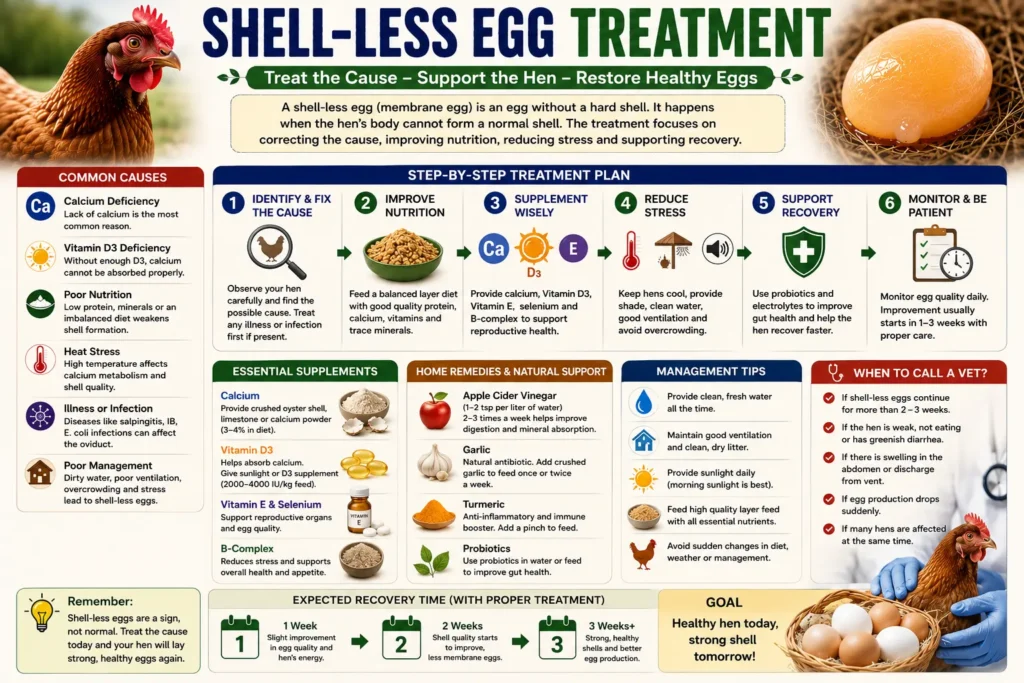
How to Prevent Shell-Less Eggs From Coming Back
Treating the current case matters, but prevention keeps it from becoming a recurring problem. These steps to prevent shell-less eggs work as a long-term maintenance plan, not just a one-time fix.
- Feed a complete, age-appropriate layer ration as the core of the diet year-round
- Keep free-choice oyster shell available at all times, not just after a problem appears
- Maintain consistent daylight exposure, roughly 14–16 hours for actively laying hens
- Build a predator-proof, low-stress coop environment to minimize chronic stress
- Plan ahead for heat waves with shade structures and extra water stations
- Practice strong biosecurity, limiting contact with wild birds and new flock introductions without quarantine
- Reassess hen nutrition every few months, especially as hens age past their second laying year
- Watch first-time layers closely but avoid over-intervening during their first few weeks
Common Mistakes That Undermine Treatment
- Adding calcium but continuing to overfeed treats that dilute the overall diet
- Mixing oyster shell into feed instead of offering it free-choice
- Giving up on a treatment plan after just one or two days
- Ignoring flock-wide patterns and treating each hen as an isolated case
- Skipping the vet when multiple hens are affected, assuming it will resolve on its own
Prevention vs. Treatment: Quick Comparison
| Focus | Treatment | Prevention |
| Timing | After a shell-less egg appears | Ongoing, before problems start |
| Primary goal | Correct an active deficiency or trigger | Maintain consistent calcium, D3, and low stress |
| Typical timeframe | Days to a couple of weeks | Continuous |
| Vet involvement | Only for persistent or flock-wide cases | Routine flock health checks |
Whether you’re treating an active case or setting up a longer-term plan to prevent shell-less eggs, the core actions overlap heavily: consistent calcium, adequate vitamin D3, low stress, and close monitoring. Most hens respond well within a week or two, and keeping a simple laying log makes it easy to catch the next issue early, before it becomes a bigger flock health concern.
5. FAQ
What is the best shell-less egg treatment? The best treatment depends on the cause, but for most hens it starts with free-choice oyster shell, a complete layer feed, and reduced stress. This resolves the majority of cases within a week.
How fast does shell-less egg treatment work? Diet-related cases often improve within 3–7 days of adding calcium and vitamin D3 support. Stress-related cases can resolve even faster once the trigger is removed.
Can I treat a shell-less egg at home without a vet? Yes, in most cases. A single shell-less egg from an otherwise healthy hen usually responds to dietary and environmental correction without professional treatment.
How do I prevent shell-less eggs from happening again? Keep free-choice oyster shell available at all times, feed a complete layer ration, ensure vitamin D3 exposure, and minimize stress and heat exposure in the coop long-term.
Does adding calcium always fix a shell-less egg? Not always. Calcium fixes the most common cause, but stress, age, heat, and infectious disease can all cause the same symptom and require different treatment approaches.
When does shell-less egg treatment require a vet? When the pattern continues past one to two weeks, affects multiple hens at once, or comes with respiratory symptoms, lethargy, or signs of egg binding.
Is shell-less egg treatment different for older hens? Partially. Older hens often need ongoing extra calcium support rather than a one-time fix, since their shell gland naturally becomes less efficient with age.