What Is a Rubber Egg?

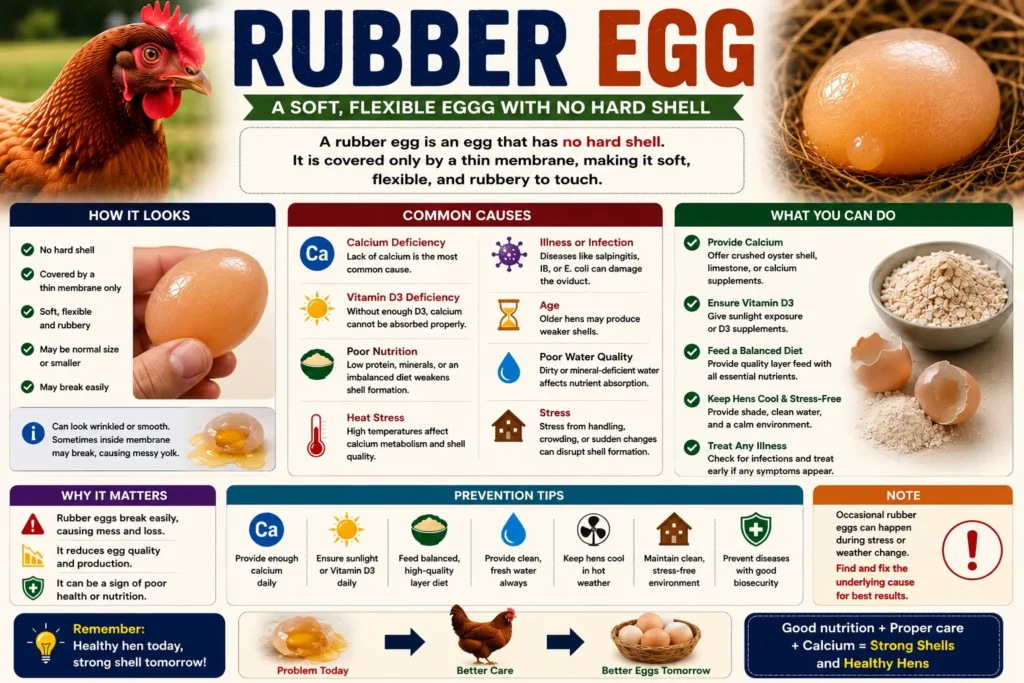
A rubber egg is a chicken egg that comes out with a soft, bendable covering instead of a hard shell. Squeeze it gently and it gives, almost like a small water balloon wrapped in a stretchy skin. Keepers also call it a rubbery egg, a leathery egg, or a shell-less egg, and all four terms describe the same basic thing.
Quick note before we go further: if you searched “rubber egg” hoping to find the classic science experiment where vinegar dissolves a shell until it bounces, that’s a real thing too, and we cover it briefly below. But if a hen actually laid this egg in your coop, the rest of this guide is what you need.
Quick Answer
A rubber egg from a chicken is a real egg with no hard shell, only membrane, usually caused by low calcium, stress, or a young or aging reproductive system. It’s typically harmless as a one-off. Repeated rubber eggs need diet correction and sometimes a vet visit.
Table of Contents
Rubber Egg (Chicken) vs. Rubber Egg (Vinegar Experiment)
Both meanings are common enough that it’s worth separating them clearly before anything else.
| Type | What It Is | Cause |
| Rubber egg from a hen | A naturally laid egg missing its hard shell | Diet, stress, age, or illness in a live hen |
| Vinegar rubber egg experiment | A raw egg soaked in vinegar until the shell dissolves | Acetic acid reacting with calcium carbonate in the shell |
The science experiment works because vinegar is acidic enough to dissolve calcium carbonate, the same mineral that makes up a normal shell. After 24–48 hours in vinegar, the shell disappears and only the membrane remains, which is a fun, safe way to demonstrate chemistry at home or in a classroom. It has nothing to do with hen health and isn’t something you need to worry about if a child brings it home from science class.
The rest of this article focuses on the version that matters for chicken keepers: a naturally laid rubbery egg straight from the nest box.
Why Hens Lay a Rubber Egg
1. Calcium Deficiency
This is the leading cause of a rubber egg in backyard flocks. A laying hen needs about 3.5 to 4.5 grams of calcium daily. Without enough, the shell gland can’t deposit the calcium carbonate needed to harden the shell before the egg is laid.
2. Vitamin D3 Deficiency
Calcium intake alone isn’t enough if the hen’s body can’t absorb it. Vitamin D3, from sunlight or fortified feed, is what allows calcium to actually get used during shell formation.
3. Stress
A predator scare, a new bird in the flock, or a sudden loud noise can rush an egg through the shell gland faster than normal, leaving it without enough time to harden.
4. Age of the Hen
- New pullets sometimes lay a leathery egg or two while their reproductive system calibrates.
- Older hens, typically past their second or third laying year, naturally produce a weaker shell more often as the shell gland becomes less efficient.
Read More: https://lashegg.com/shell-less-egg-treatment/
5. Heat Stress
Hot weather cuts feed intake and speeds up how quickly an egg moves through the reproductive tract, both of which shortchange shell formation.
6. Infectious Disease
Less common but worth ruling out: infectious bronchitis virus specifically affects the reproductive tract in laying hens. The Merck Veterinary Manual notes it can cause soft-shelled or shell-less eggs alongside a broader drop in flock egg production, which is a useful clue that points toward disease rather than diet.
Did You Know?
The same vinegar reaction used in the classroom experiment is a simplified version of what happens naturally when a hen’s calcium supply runs short. Both cases boil down to the shell gland — or an outside acid — not being able to build or preserve the calcium carbonate structure of a normal shell.
Rubber Egg, Leathery Egg, or Soft-Shell Egg: Are They Different?
Not really — these are mostly different names for points along the same spectrum.
| Term | Shell Condition | Typical Cause |
| Rubber egg / rubbery egg | No hard shell, membrane only | Calcium/D3 deficiency, stress, age, illness |
| Leathery egg | No hard shell, membrane only, sometimes thicker/tougher texture | Same causes, similar mechanism |
| Soft-shell egg | Thin, partial, flexible shell present | Same causes, slightly further along in shell formation |
Whichever word you use, the underlying causes and the response plan are nearly identical.
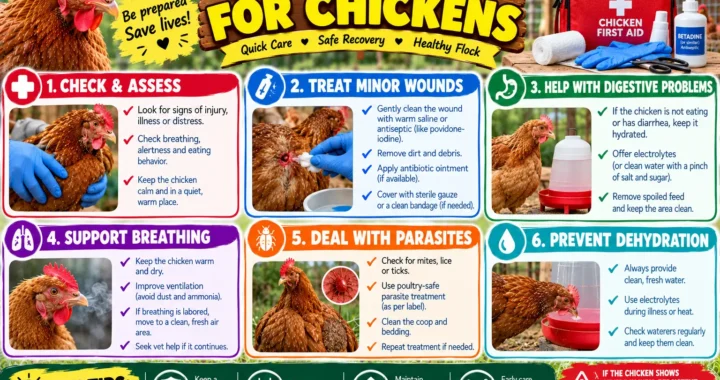
What to Do When You Find a Rubbery Egg
Step-by-Step Response Plan
- Identify the hen, if possible, by watching the nest box over the next day or two.
- Check the current diet. Confirm layer feed makes up the bulk of intake, not treats or scratch.
- Add free-choice oyster shell in a separate dish so hens can regulate their own calcium intake.
- Check for sunlight or D3-fortified feed access, since calcium alone won’t fix the problem without it.
- Think back on recent stress, including new birds, predator activity, or a coop change.
- Watch the pattern for a week. One rubber egg from one hen is usually not urgent.
- Check for other symptoms: coughing, sneezing, lethargy, or a flock-wide drop in egg output.
- Escalate to a vet if the pattern doesn’t improve or multiple hens are affected.
Expert Tip
Don’t just look at the egg — look at the flock’s overall production numbers for the week. A single leathery egg from a hen that’s otherwise laying normally is a very different signal than a sudden dip across the whole coop.
Common Mistakes Keepers Make With a Rubber Egg
- Assuming a one-time rubbery egg means something is seriously wrong
- Mixing oyster shell into the feed instead of offering it free-choice
- Overlooking stress as a cause because “nothing changed” that they noticed
- Ignoring flock-wide symptoms while focused only on the one odd egg
- Confusing a naturally laid rubber egg with the vinegar experiment version
When a Rubber Egg Signals Something More Serious
Warning
Treat it as more than a diet issue if you notice:
- Multiple hens laying rubbery or shell-less eggs in the same week
- A clear drop in total flock egg production
- Respiratory symptoms: coughing, sneezing, nasal discharge
- Lethargy, reduced appetite, or ruffled feathers
- Signs of egg binding: straining, a wide stance, visible abdominal swelling
- The pattern continuing past one to two weeks despite diet correction
When to Call a Vet
Contact a poultry veterinarian if a rubber egg keeps appearing beyond a week of dietary correction, if it affects more than one hen, or if it comes with any respiratory or behavioral symptoms. According to the Merck Veterinary Manual, infectious causes of poor shell quality tend to show up as a flock-wide production drop, which is one of the clearest ways to tell a disease-driven case apart from a simple nutrition gap.
How Calcium and Diet Fix Most Cases
| Nutrient | Role in Shell Formation | Best Source |
| Calcium | Builds the hard calcium carbonate shell | Layer feed, free-choice crushed oyster shell |
| Vitamin D3 | Allows the body to absorb and use calcium | Sunlight, fortified layer feed |
| Phosphorus | Works alongside calcium in shell mineral balance | Balanced layer feed |
Most rubber egg cases linked to diet resolve within three to seven days once free-choice oyster shell and adequate D3 exposure are in place. Stress-related cases often resolve even faster, sometimes within a couple of days of removing the trigger.
Preventing a Rubber Egg Long-Term
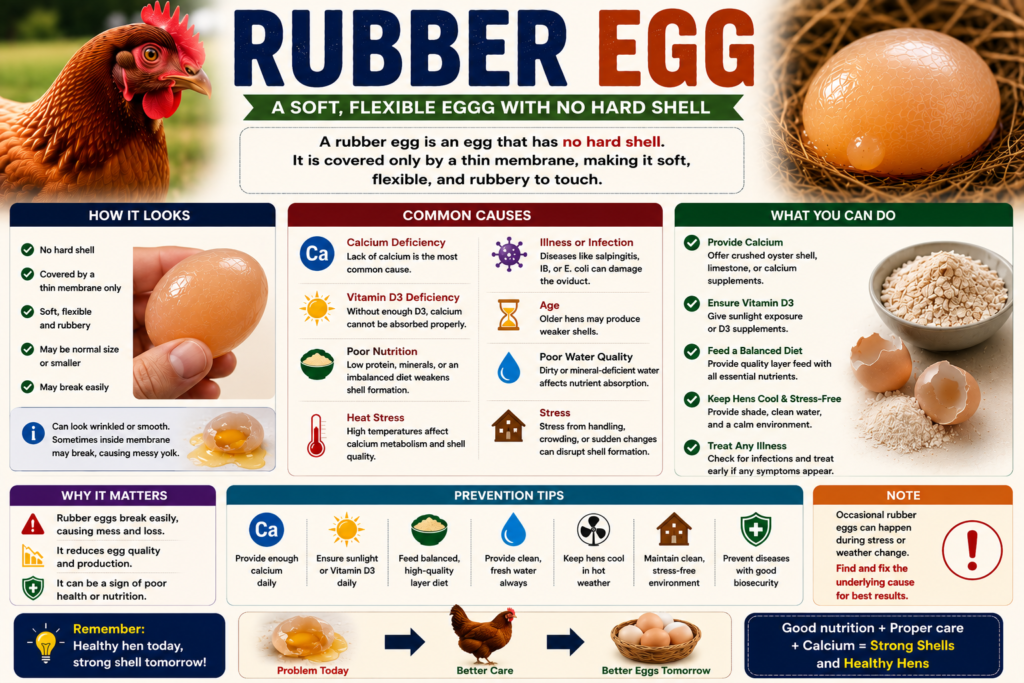
- Feed a complete, age-appropriate layer ration as the main part of the diet
- Keep free-choice crushed oyster shell available at all times
- Ensure regular sunlight exposure or a D3-fortified feed
- Maintain 14–16 hours of consistent daylight for actively laying hens
- Build a low-stress, predator-proof coop environment
- Plan for summer heat with shade and constant access to cool water
- Practice good biosecurity to reduce disease risk
- Reassess the flock’s diet every few months, especially as hens age
Recovery Timeline by Cause
| Cause | Typical Recovery Time |
| Calcium deficiency | 3–7 days after correction |
| Vitamin D3 deficiency | 1–2 weeks |
| Acute stress | Days to about a week |
| Young pullet | 1–2 weeks, resolves on its own |
| Heat stress | Resolves once heat is managed |
| Aging hen | Gradual, partial improvement |
| Infectious disease | Variable, requires veterinary guidance |
A single rubber egg is rarely a reason to panic. It’s a signal, not a diagnosis, and most of the time it points straight back to calcium, stress, or the natural rhythm of a young or aging hen. Track the pattern, correct the diet, and bring in a vet if things don’t turn around within a week or more hens start showing the same issue.
5. FAQ
What causes a rubber egg from a chicken? Most rubber eggs come from calcium deficiency, vitamin D3 deficiency, stress, or the natural reproductive rhythm of a young or aging hen. Less often, an infectious disease is the cause.
Is a rubbery egg safe to eat? Yes, if it’s collected promptly and the membrane is clean and intact, a rubber egg is just as safe to eat as any normal fresh egg.
Is a rubber egg from a hen the same as the vinegar science experiment? No. A hen-laid rubber egg happens naturally due to diet, stress, or health factors. The vinegar version is a chemistry demonstration where acid dissolves an egg’s shell over a day or two.
What’s the difference between a rubbery egg and a leathery egg? These terms are typically used interchangeably to describe the same thing: an egg with no hard shell, only a stretchy membrane covering.
How do I stop my chickens from laying rubber eggs? Offer free-choice oyster shell, feed a complete layer ration, ensure vitamin D3 through sunlight or fortified feed, and reduce stress and heat exposure in the coop.
Should I worry if my hen lays one rubber egg? Usually not. A single occurrence, especially from a very young or older hen, is common. Watch for a repeated pattern or additional symptoms before assuming a serious problem.
When should a rubber egg prompt a vet visit? See a vet if it continues past one to two weeks despite diet correction, affects multiple hens, or comes with respiratory symptoms, lethargy, or signs of egg binding.