What Is a Double Yolk Egg?

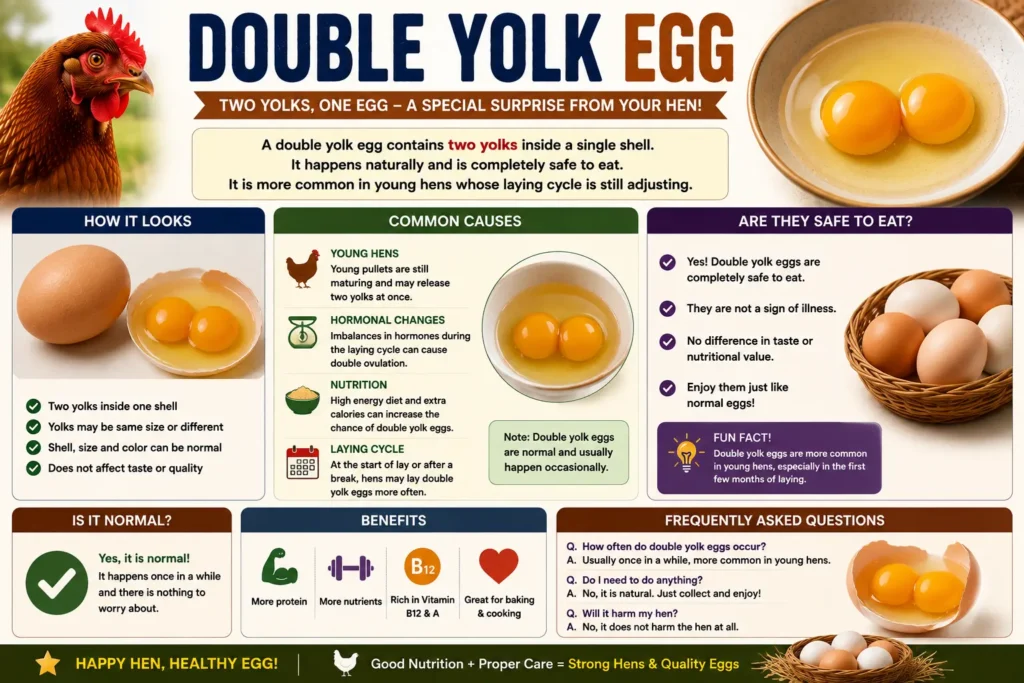
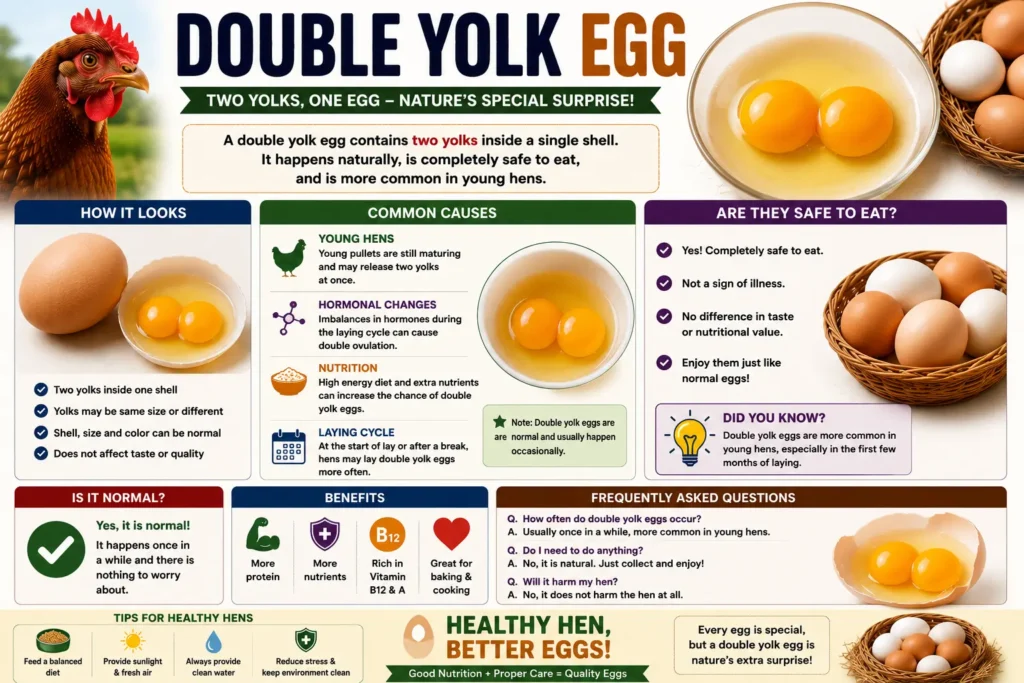
A double yolk egg is exactly what it sounds like: one egg, one shell, but two separate yolks inside. Crack it open and you’ll see two round, distinct yolks floating in the same pool of egg white, sometimes noticeably larger and heavier than a normal single-yolk egg.
If you just cracked one open and started searching, the good news comes first: a double yolk egg is almost always harmless, both to eat and as a sign of your hen’s health. It’s simply a quirk of timing in how her body released the yolks. This guide covers exactly why it happens, which hens are most likely to lay them, and the rare situations where it’s worth paying closer attention.
Table of Contents
Quick Answer
A double yolk egg happens when a hen releases two yolks close together and her body wraps both in a single shell. It’s completely safe to eat and usually not a sign of illness. Young hens just starting to lay are the most common source.
Why Hens Lay a Double Yolk Egg
1. Rapid Ovulation in Young Hens
This is the most common cause by far. When a pullet first starts laying, her reproductive system hasn’t fully settled into a steady rhythm yet. Occasionally, she releases two yolks within a short window, and both end up traveling down the oviduct together, picking up white, membranes, and shell as if they were one egg.
2. Hormonal Irregularities
Even in older hens, a temporary hormone fluctuation can trigger a double ovulation. This is uncommon compared to the young-hen pattern but not abnormal on its own.
Read More: https://lashegg.com/rubber-egg-vs-soft-shell-egg/
3. Genetics and Breed Tendencies
Some breeds and bloodlines are simply more prone to double yolks than others, particularly breeds selected for fast, early, or heavy production. If double yolk eggs run in a particular line of birds, it often continues to show up across multiple hens from that line.
4. Overfeeding or Rapid Weight Gain
Hens that gain weight quickly, especially young pullets on a rich diet, sometimes ovulate more than once in a short window. This is one reason a slow, controlled transition onto layer feed is often recommended for new layers.
5. Peak Production Age
Hens in their prime laying years, particularly in the first year of consistent laying, tend to produce more double yolk eggs than hens well past their peak, simply due to how active and fast their reproductive cycle is running.
Did You Know?
The largest confirmed egg on record, verified by Guinness World Records, weighed nearly one pound and contained a double yolk inside a double shell. While that’s an extreme outlier, it shows just how much variation is possible even within something as ordinary-seeming as a double yolk egg.
Is a Double Yolk Egg Safe to Eat?
Yes. A double yolk egg is nutritionally similar to two single-yolk eggs combined and is completely safe to eat, provided it’s fresh and properly stored like any other egg. There’s no additional risk tied to the double yolk itself.
| Nutrient (approximate) | Single Yolk Egg | Double Yolk Egg |
| Calories | ~70 | ~120–140 |
| Protein | ~6g | ~10–12g |
| Fat | ~5g | ~9–10g |
| Cholesterol | ~186mg | ~370mg |
Expert Tip
If you bake with double yolk eggs regularly, weigh a few or crack them into a measuring cup first. Since they run larger than standard eggs, a recipe calling for “3 large eggs” may come out too wet or too rich if all three happen to be double yolkers.
Can You Hatch a Double Yolk Egg?
Rarely, and almost never successfully with both chicks surviving. A double yolk egg usually doesn’t have enough room, air cell space, or resources inside the shell for two developing embryos to grow to full term. Most double yolk eggs set for hatching either fail to develop or result in complications partway through incubation.
If you’re specifically trying to hatch fertile eggs, most keepers recommend setting aside any double yolkers and incubating single-yolk eggs instead, since hatch rates are significantly better and more predictable.
Which Hens Are Most Likely to Lay a Double Yolk Egg?
| Hen Type | Likelihood | Why |
| New pullets (first few months laying) | High | Reproductive system still calibrating |
| Hens in peak first-year production | Moderate to high | Fast, active ovulation cycle |
| Breeds selected for early/heavy laying | Moderate | Genetic tendency toward double ovulation |
| Mature hens, years 2–4 | Lower | Cycle has stabilized |
| Older hens past peak laying | Low | Slower, less frequent ovulation overall |
Common Mistakes People Make About Double Yolk Eggs
- Assuming a double yolk egg means something is wrong with the hen
- Worrying it’s unsafe to eat or somehow “defective”
- Trying to hatch double yolk eggs expecting two healthy chicks
- Panicking after just one occurrence instead of tracking whether it becomes a pattern
- Assuming every large egg must be a double yolker without cracking it open to check
When a Double Yolk Egg Might Signal Something to Watch
A double yolk egg on its own is not a health concern. That said, a few surrounding patterns are worth keeping an eye on, mostly because they relate to a hen’s overall reproductive health rather than the double yolk itself.
Warning
Pay closer attention, and consider a vet consultation, if you notice:
- Very frequent double yolk eggs from an older hen who previously laid normally, which can occasionally point to a reproductive tract irregularity
- Signs of straining or difficulty laying, since an oversized double yolk egg can occasionally contribute to egg binding
- A hen appearing lethargic, off her feed, or showing a swollen abdomen alongside frequent oversized eggs
- Any drop in overall flock health alongside the double yolk pattern
When to Call a Vet
A double yolk egg by itself is not a reason to call a vet. However, if a hen appears to strain, stand unusually wide, or seem uncomfortable after laying an oversized egg, egg binding becomes a real possibility and does warrant prompt veterinary attention. According to the Merck Veterinary Manual, oversized eggs are one recognized contributing factor in egg-binding cases, particularly in hens laying unusually large eggs relative to their body size.
Double Yolk Egg vs. Other Unusual Eggs
| Egg Type | What It Is | Cause |
| Double yolk egg | One shell, two yolks | Two yolks released close together |
| Yolkless egg (“wind egg” or “fart egg”) | One shell, no yolk | A piece of tissue mistakenly triggers shell formation |
| Shell-less egg | Fully formed egg, no hard shell | Calcium deficiency, stress, age, or illness |
| Soft shell egg | Thin, partial shell | Similar causes to a shell-less egg, less severe |
Will My Hen Keep Laying Double Yolk Eggs?
For most hens, double yolk eggs are more common early in their laying life and taper off as their cycle settles into a steady, predictable rhythm. A hen that lays several in her first few months of production often shifts to consistent single yolks within a matter of weeks, though some hens and bloodlines continue producing them occasionally throughout their laying years.
There’s no reliable way to force or prevent a double yolk egg, since it comes down to natural ovulation timing rather than anything in the diet or environment you control directly.
What to Do If You Keep Finding Double Yolk Eggs
- Note which hen is laying them, if identifiable, to see if it’s one bird or spread across the flock.
- Check her age and how long she’s been laying. New layers explain most cases.
- Weigh or measure a few eggs if you’re curious whether size correlates with the pattern.
- Keep using the eggs normally. They’re safe to eat and simply nutritionally larger.
- Watch for any signs of discomfort in the hen after laying, especially with unusually large eggs.
- Contact a vet only if straining, lethargy, or other symptoms appear alongside the pattern.
Finding a double yolk egg in the carton is one of the more pleasant surprises backyard keepers run into, and it rarely means anything beyond a young or actively laying hen doing exactly what her body is built to do. Enjoy it, use it in the kitchen without hesitation, and only escalate to a vet if it comes paired with signs of discomfort or difficulty laying.
5. FAQ
What causes a double yolk egg? A double yolk egg happens when a hen releases two yolks close together during ovulation, and both travel down the oviduct together, ending up wrapped in one shell.
Is a double yolk egg safe to eat? Yes. A double yolk egg is completely safe to eat and is simply larger and more nutrient-dense than a standard single-yolk egg.
Which hens are most likely to lay a double yolk egg? Young pullets in their first few months of laying are the most likely, though breed genetics and peak production age also play a role.
Can a double yolk egg hatch into two chicks? It’s extremely rare and usually unsuccessful. Most double yolk eggs don’t have enough space or resources for two embryos to fully develop.
Does a double yolk egg mean my hen is sick? No. It’s generally a normal part of a young or actively laying hen’s reproductive rhythm, not a sign of illness on its own.
Will my hen always lay double yolk eggs? Usually not. Most hens taper off after their first few months of laying as their reproductive cycle settles into a steady, single-yolk pattern.
Should I worry if I find several double yolk eggs in a row? Generally no, especially from a young hen. Only worry if it comes with straining, lethargy, or signs of difficulty laying.