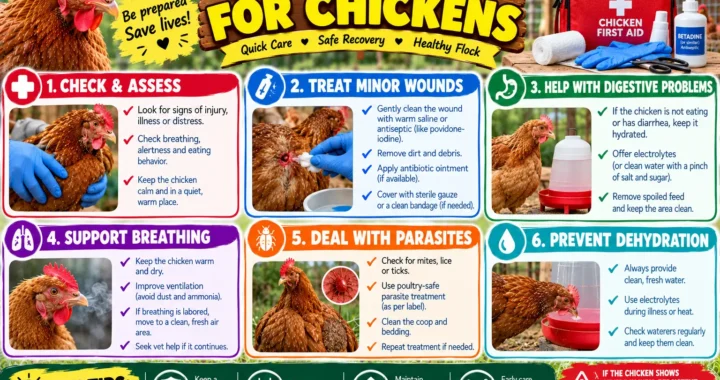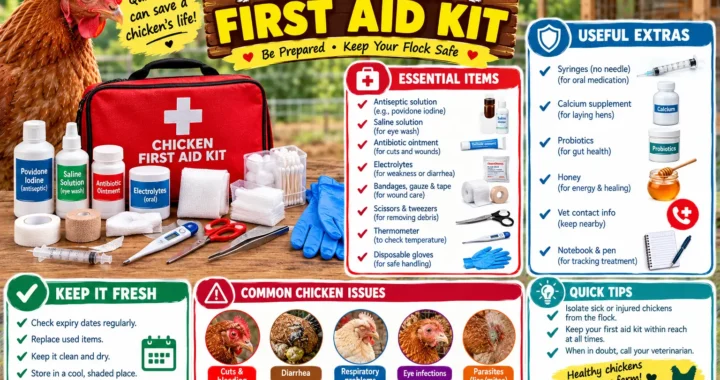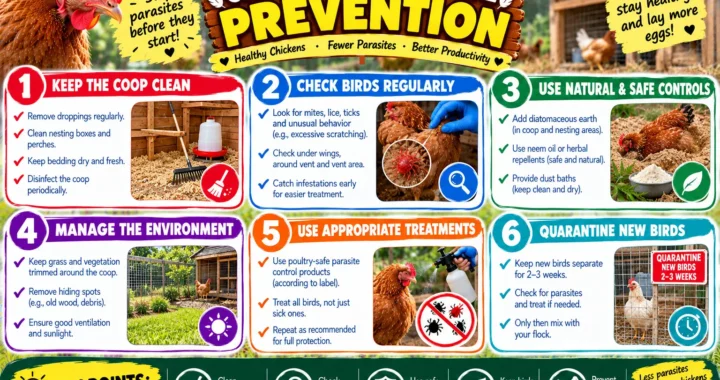
Egg Binding Treatment: What to Do, in the Right Order

Once you know a hen has a stuck egg, the next question is simple: what now? Egg binding treatment isn’t one single action. It’s a sequence of steps, starting with calm, supportive care and escalating quickly if she doesn’t improve.
This guide walks through that sequence in order, exactly as you’d need to follow it in the moment, along with what a veterinarian does when home care isn’t enough.
Table of Contents
Quick Answer: Egg binding treatment starts with a warm water soak, gentle lubrication, calcium, and a calm, quiet space. If there’s no improvement within a few hours, or if she shows weakness or collapse, veterinary treatment — which may include injectable calcium, fluids, manual assistance, or surgery — becomes necessary.
Follow the numbered steps below in order. Skipping ahead or skipping steps entirely can do more harm than good.
Before You Start: Confirm What You’re Treating
Egg binding treatment only works if egg binding is actually the problem. Before beginning, do a quick check:
- Straining with no egg produced, especially over 30-plus minutes
- Wide, waddling walk, different from her normal gait
- Firm, egg-shaped mass felt gently in the lower abdomen
- Tail pumping, a rhythmic up-and-down tail motion while straining
If these signs are present, proceed with treatment. If you’re seeing very different symptoms, like discharge, diarrhea, or foot swelling, egg binding may not be the right diagnosis; a vet visit is the safer next step either way.
Read More: https://lashegg.com/egg-binding-symptoms/
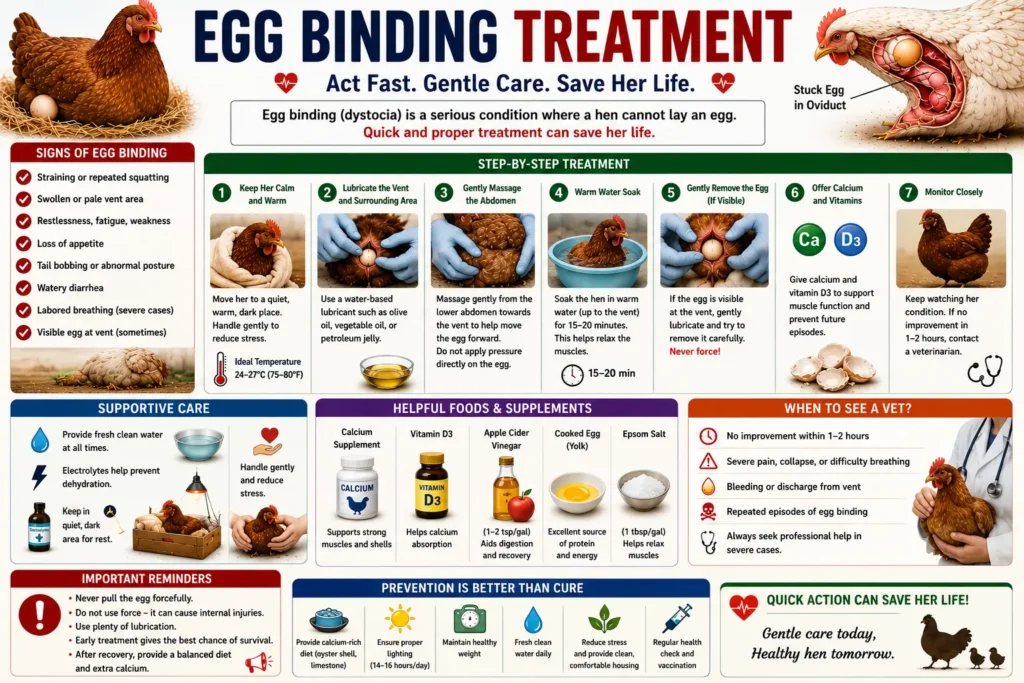
Step-by-Step Home Treatment for Egg Binding
These steps are supportive first-response care, appropriate when the hen is alert, responsive, and in the early or moderate symptom stage. They are not a substitute for veterinary care if she doesn’t improve quickly.
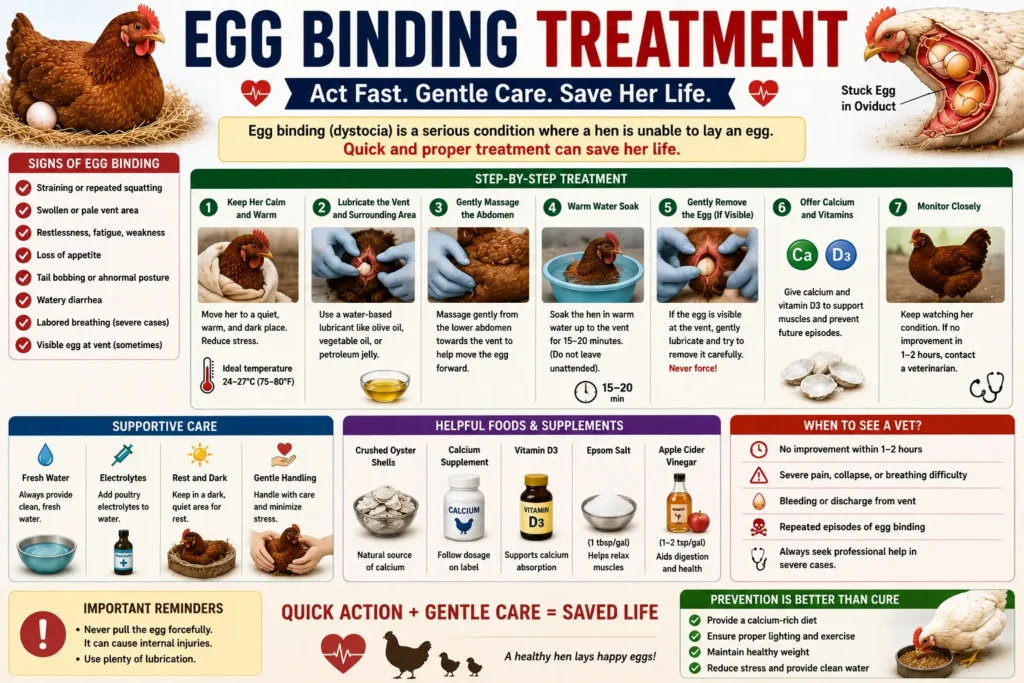
- Move her to a warm, quiet, dimly lit space, separate from the rest of the flock. Reducing stress and stimulation supports normal muscle relaxation.
- Give a warm water soak. Fill a shallow container with warm (not hot) water, roughly body temperature, and gently place her rear end in it for 15 to 20 minutes. This helps relax the muscles around the vent.
- Dry her gently afterward and keep her warm, since a wet, cold hen adds unnecessary stress.
- Apply a water-based lubricant around the vent opening, which can ease the egg’s passage without forcing anything.
- Offer a calcium supplement formulated for poultry, following label directions, since calcium supports the muscle contractions needed to pass the egg.
- Offer water with electrolytes, encouraging her to drink if she’s willing.
- Give her 30 to 60 minutes in a calm setting, then check for progress. Repeat the soak once more if there’s partial improvement but no egg yet.
- Reassess after a few hours. If she hasn’t passed the egg and shows no improvement, move to veterinary treatment without further delay.
Warning: Never attempt to manually pull, push, or squeeze a stuck egg out. This is one of the most common and most dangerous mistakes in egg binding treatment attempted at home. Forcing the egg can cause it to break internally, leading to sharp shell fragments injuring the reproductive tract, or a fatal rupture.
Table 1: Home Treatment Steps at a Glance
| Step | Purpose | Time Needed |
| Warm soak | Relax vent muscles | 15–20 minutes |
| Lubrication | Ease passage | A few minutes |
| Calcium supplement | Support muscle contraction | Immediate |
| Calm rest | Reduce stress interference | 30–60 minutes |
| Reassessment | Decide next steps | Ongoing, every 30–60 minutes |
What If Home Treatment Doesn’t Work?
If the hen hasn’t passed the egg after one or two rounds of home care, or if she shows any decline rather than improvement, it’s time to stop home treatment and move to professional care. This isn’t a failure on your part. Some cases genuinely need veterinary tools that aren’t available at home.
Common Mistakes:
- Repeating home care for many hours instead of escalating when it isn’t working
- Attempting to manually extract the egg out of frustration or urgency
- Skipping the calm, low-stress environment step, which reduces treatment effectiveness
- Not offering water during the process, worsening dehydration
- Assuming a single soak is enough without reassessing afterward
Veterinary Egg Binding Treatment: What to Expect
A veterinarian has tools and options that go well beyond home care, and understanding them helps you know what to expect at a visit.
Physical Exam and Confirmation
A vet will palpate the abdomen to confirm the egg’s position and may use imaging, such as an X-ray, if the egg is higher in the tract and harder to feel directly.
Injectable Calcium and Fluids
Calcium injections can support stronger, more effective muscle contractions than an oral supplement alone, and fluid therapy addresses dehydration that often accompanies prolonged straining.
Manual Assistance
In some cases, a vet can gently assist the egg’s passage using lubrication and careful manual technique, done safely with proper training and equipment.
Egg Aspiration
If the egg can’t be moved intact, a vet may carefully collapse and remove it in pieces through the vent, a technique that requires professional skill to avoid injury.
Surgery
In severe or repeated cases, or when the egg has broken internally, surgical removal may be necessary. This is typically reserved for cases where less invasive options aren’t working.
Table 2: Home Treatment vs. Veterinary Treatment
| Approach | Tools Used | Best For |
| Home treatment | Warm soak, lubricant, oral calcium, calm rest | Early to moderate symptoms, alert hen |
| Veterinary treatment | Injectable calcium, fluids, manual assistance, aspiration, surgery | No home improvement, severe symptoms, repeat episodes |
Expert Tip: Call ahead before bringing in an egg-bound hen. Many vet clinics can advise you on urgency over the phone and prepare for treatment before you arrive, which saves valuable time.
When to Skip Home Care Entirely and Go Straight to a Vet
When to Call a Vet:
- Leg weakness, paralysis, or inability to stand
- Collapse or unresponsiveness
- Labored or open-mouth breathing
- Cold body temperature, a sign of shock
- No improvement after one or two rounds of home treatment
- This is a repeat episode in a hen who has been egg bound before
Any of these signs mean home treatment for egg binding should be skipped in favor of immediate professional care. According to the Merck Veterinary Manual, prompt intervention meaningfully improves outcomes in egg-bound birds, while delays raise the risk of internal injury or death.
Aftercare Following Egg Binding Treatment
Recovery depends on how advanced the case was before treatment, but general aftercare applies in most situations.
- Keep her separated in a calm space for a day or two after treatment.
- Offer easy access to food and water, and don’t worry if appetite is reduced at first.
- Continue calcium support during recovery to help prevent a repeat episode.
- Watch closely for returning symptoms, since hens who have experienced egg binding once are more prone to it happening again.
- Reintroduce her to the flock gradually once she’s eating, moving, and behaving normally.
Did You Know? Because egg binding can recur, many experienced keepers track which hens have had an episode and pay closer attention to their calcium intake and body condition going forward.
Preventing the Need for Egg Binding Treatment in the First Place
- Offer free-choice calcium, such as crushed oyster shell, alongside a complete layer feed.
- Maintain a healthy body weight, since excess internal fat raises risk.
- Ensure constant fresh water access, especially in hot weather.
- Watch first-time layers closely, since their first few eggs carry higher risk.
- Keep the coop calm and low-stress, supporting normal reproductive function.
University extension services and poultry health researchers consistently identify calcium management and hydration as the two most controllable prevention factors, meaning fewer flocks ever need egg binding treatment to begin with.
5. FAQ
Q: What is the first step in egg binding treatment? A: The first step in egg binding treatment is a warm water soak of the hen’s rear end for 15 to 20 minutes, which helps relax the muscles around the vent before trying anything else.
Q: How to treat egg binding at home safely? A: How to treat egg binding at home safely involves a warm soak, gentle lubrication, an oral calcium supplement, and a calm, quiet space, followed by reassessment every 30 to 60 minutes.
Q: What does egg bound chicken treatment look like at the vet? A: Egg bound chicken treatment at a veterinary clinic may include injectable calcium, fluid therapy, manual assistance, egg aspiration, or in severe cases, surgery.
Q: How long should I try home treatment before going to a vet? A: If there’s no improvement after one or two rounds of home care, typically within a few hours, it’s time to move to veterinary treatment rather than continuing to wait.
Q: Is it ever safe to manually pull out a stuck egg? A: No. Manually forcing a stuck egg out is not a safe form of egg binding treatment and can cause the egg to break internally or damage the reproductive tract.
Q: Can egg binding treatment prevent future episodes? A: Treatment resolves the immediate episode, but ongoing calcium support, healthy body weight, and hydration are what actually reduce the chance of a repeat episode.
Q: Does egg binding treatment always require surgery? A: No. Most cases resolve with home care or non-surgical veterinary treatment like injectable calcium and manual assistance. Surgery is typically reserved for severe or repeated cases.