Egg Binding Symptoms: Why Timing Matters More Than the List

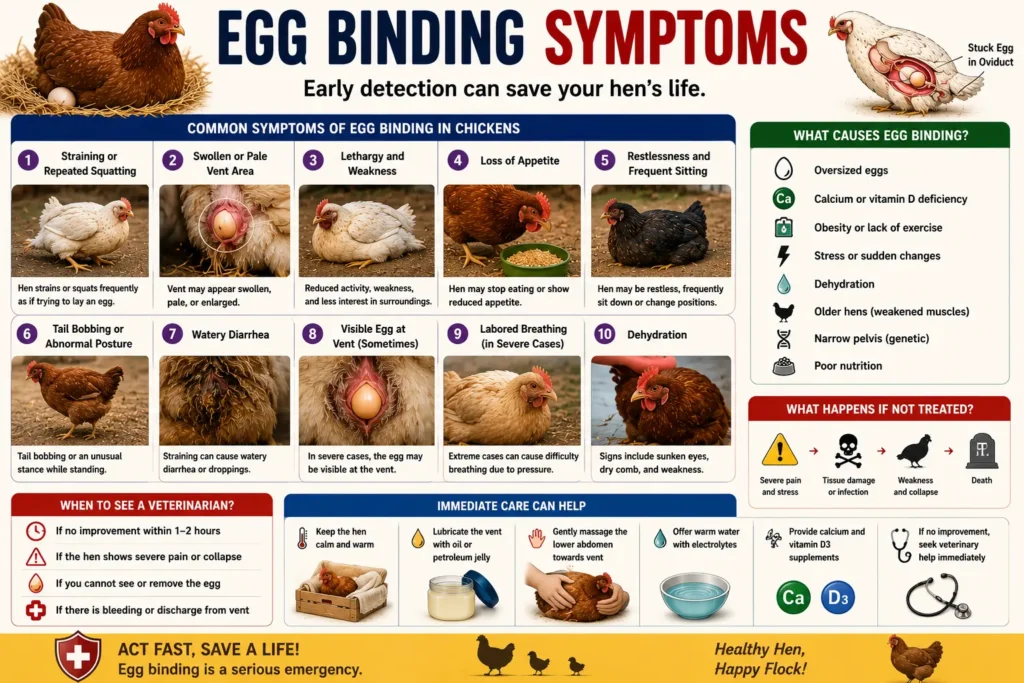
Most articles list egg binding symptoms all at once, as if every sign appears together. In reality, they show up in stages, and knowing which stage you’re seeing changes how urgently you need to act.
This guide breaks egg binding symptoms down by how far the condition has progressed, from the very first subtle change to the signs that mean you need veterinary help right now. Recognizing the stage is often more useful than just recognizing the symptom.
Table of Contents
Quick Answer: Egg binding symptoms progress in three general stages: early (mild straining, slightly reduced activity), moderate (repeated straining, waddling walk, fluffed feathers), and severe (weakness, leg paralysis, collapse). Severe-stage symptoms need immediate veterinary care.
Use the stage-by-stage breakdown below to figure out where your hen falls and what that means for your next move.
What’s Actually Happening During Egg Binding
Egg binding symptoms all trace back to one root problem: an egg stuck somewhere in the reproductive tract, unable to move forward normally. The stuck egg presses on nearby organs, nerves, and tissue, and the resulting symptoms depend on how long it’s been stuck and how much pressure has built up.
This is why early egg binding symptoms look mild and easy to miss, while advanced symptoms can look dramatic and frightening. It’s the same underlying problem, just at a different point in its timeline.
Read More: https://lashegg.com/egg-binding-in-chickens/
Stage One: Early Egg Binding Symptoms
These are the signs of egg bound chicken behavior most owners miss, because they look like ordinary tiredness or a slow day.
- Slightly longer time than usual spent in the nesting box
- Mild, occasional straining, without obvious distress
- Slightly reduced appetite
- A bit quieter or less active than her normal baseline
- No egg produced after a longer-than-normal visit to the nest
Did You Know? Because early egg binding symptoms are so subtle, many cases aren’t caught until stage two, which is exactly why knowing your flock’s normal daily behavior matters so much.
Stage Two: Moderate Egg Binding Symptoms
This is the stage most people associate with a classic case of egg binding, and it’s where symptoms of egg binding become much harder to miss.
- Repeated straining with visible effort and no egg produced
- Wide, waddling, penguin-like walk
- Fluffed-up feathers and a hunched, uncomfortable posture
- Tail pumping – a rhythmic up-and-down tail movement while straining
- Pale comb and wattles
- Reduced or absent appetite
- Firm or swollen lower abdomen, noticeable when gently felt
Table 1: Early vs. Moderate Egg Binding Symptoms
| Symptom Category | Stage One (Early) | Stage Two (Moderate) |
| Straining | Mild, occasional | Frequent, visibly effortful |
| Walk | Normal or slightly slower | Wide, waddling gait |
| Posture | Slightly quiet | Hunched, fluffed feathers |
| Appetite | Mildly reduced | Noticeably reduced |
| Comb color | Usually normal | Often pale |
| Abdomen | Not noticeably different | Firm or swollen |
Stage Three: Severe Egg Binding Symptoms — A True Emergency
Warning: These signs of egg bound chicken distress mean the situation has become critical. Do not wait to see if she improves on her own. Contact a veterinarian immediately.
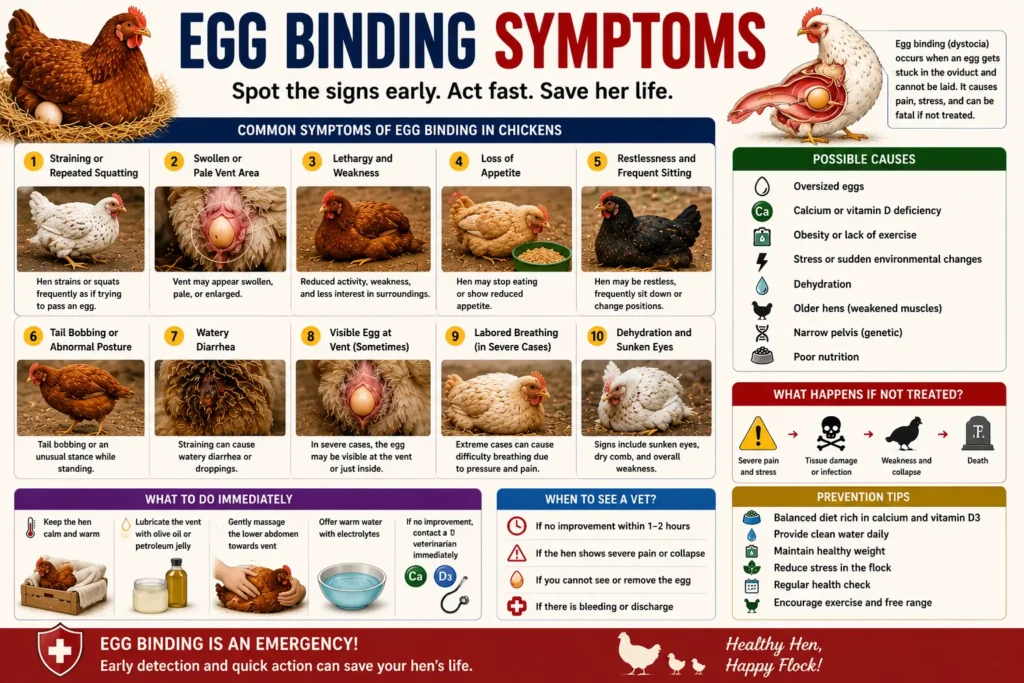
- Leg weakness or paralysis, from nerve pressure caused by the stuck egg
- Inability to stand or stay upright
- Extreme lethargy or unresponsiveness
- Labored or open-mouth breathing
- Cold to the touch, a sign of shock
- Little to no interest in food or water
Severe egg binding symptoms mean the stuck egg has been in place long enough to cause significant internal pressure or the beginning of shock. This stage requires emergency veterinary care, not home management.
Symptoms That Look Like Egg Binding But Aren’t
Some conditions overlap with egg binding symptoms enough to cause confusion. Telling them apart matters, since the right response is different for each.
Table 2: Egg Binding vs. Similar Conditions
| Condition | Overlapping Symptom | Key Difference |
| Egg binding | Straining, lethargy | Firm abdominal mass, tail pumping |
| Egg yolk peritonitis | Lethargy, reduced appetite | Often no straining; fluid-filled abdomen instead of firm mass |
| Bumblefoot | Reluctance to walk normally | Visible foot swelling or scab, no straining |
| Internal parasites | Lethargy, reduced appetite | Digestive symptoms like diarrhea, no tail pumping |
| Reproductive tract infection | Discharge, lethargy | Discharge present, straining less consistent |
Expert Tip: If you’re unsure whether you’re seeing egg binding symptoms or something else, a gentle check of the lower abdomen for a firm, egg-shaped mass is one of the most reliable ways to tell egg binding apart from look-alike conditions at home.
How Long Symptoms Take to Progress
There’s no fixed timeline, but egg binding symptoms typically escalate faster than owners expect.
- Hours 0–6: Early symptoms only, may be missed entirely
- Hours 6–24: Moderate symptoms become clear, straining and walk changes are obvious
- Hours 24–48: Risk of progression to severe symptoms rises sharply without treatment
- Beyond 48 hours: High risk of organ damage, rupture, or death
Common Mistakes:
- Waiting to see if mild straining resolves on its own for more than a few hours
- Assuming a wide walk is just “normal” for that hen without investigating
- Missing early symptoms because daily flock observation is inconsistent
- Confusing egg binding symptoms with simple tiredness or heat stress
- Not checking the abdomen by hand when symptoms are ambiguous
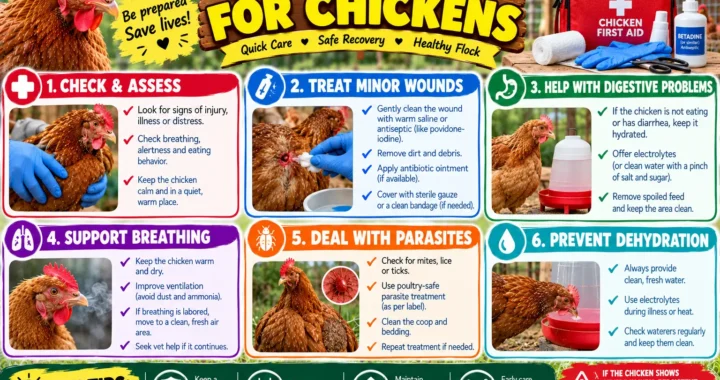
What to Do the Moment You Spot Symptoms
- Identify the stage using the breakdown above.
- Move the hen to a calm, quiet space, away from flock stress.
- Check hydration and offer water with electrolytes if she’ll drink.
- For early or moderate symptoms, gentle home support (a warm soak, calcium, calm rest) can sometimes help; see our full guide on egg binding in chickens for detailed home care steps.
- For severe symptoms, skip home care and contact a veterinarian immediately.
- Track the timeline, noting when symptoms started and how they’ve changed, since this helps a vet assess urgency quickly over the phone.
When to Call a Vet
When to Call a Vet:
- Any severe-stage symptom: leg weakness, collapse, labored breathing, or unresponsiveness
- Moderate symptoms with no improvement after several hours of calm rest and gentle support
- You can’t tell whether what you’re seeing is egg binding or something else
- This is a repeat episode in a hen who has been egg bound before
- You’re not confident handling home care steps safely
A veterinarian can confirm true egg binding through physical exam and, if needed, imaging, and can provide treatments not available at home, including injectable calcium, fluid therapy, and manual or surgical egg removal when necessary. Prompt care meaningfully improves outcomes, while delayed care raises the risk of internal injury.
Recovery: What to Expect After Symptoms Resolve
Once the egg passes or is removed, most hens improve within a day or two, though full recovery timing depends on how advanced the symptoms were before treatment.
- Expect reduced appetite and activity for the first day or so
- Watch closely for returning symptoms, since egg binding can recur in the same hen
- Continue calcium and hydration support during recovery
- Resume full normal activity gradually as her energy returns
Preventing Egg Binding Symptoms From Developing
- Provide free-choice calcium, such as crushed oyster shell, alongside a complete layer feed.
- Maintain a healthy body weight to avoid internal compression of the reproductive tract.
- Ensure constant fresh water access, especially during hot weather.
- Watch first-time layers closely, since their first few eggs carry higher risk.
- Reduce environmental stress with a consistent routine and calm surroundings.
- Build a daily observation habit, so early-stage symptoms don’t go unnoticed.
University extension services and poultry health researchers consistently point to calcium status and hydration as the two most controllable factors in preventing egg binding before symptoms ever start.