How to Prevent Egg Binding: Beyond the Basic Checklist

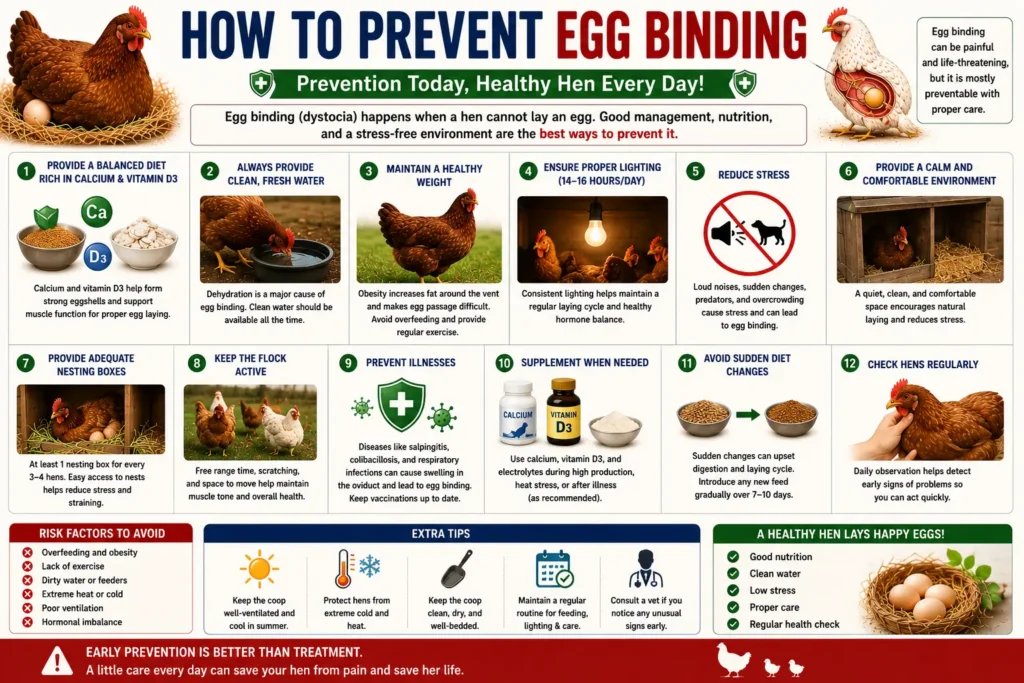
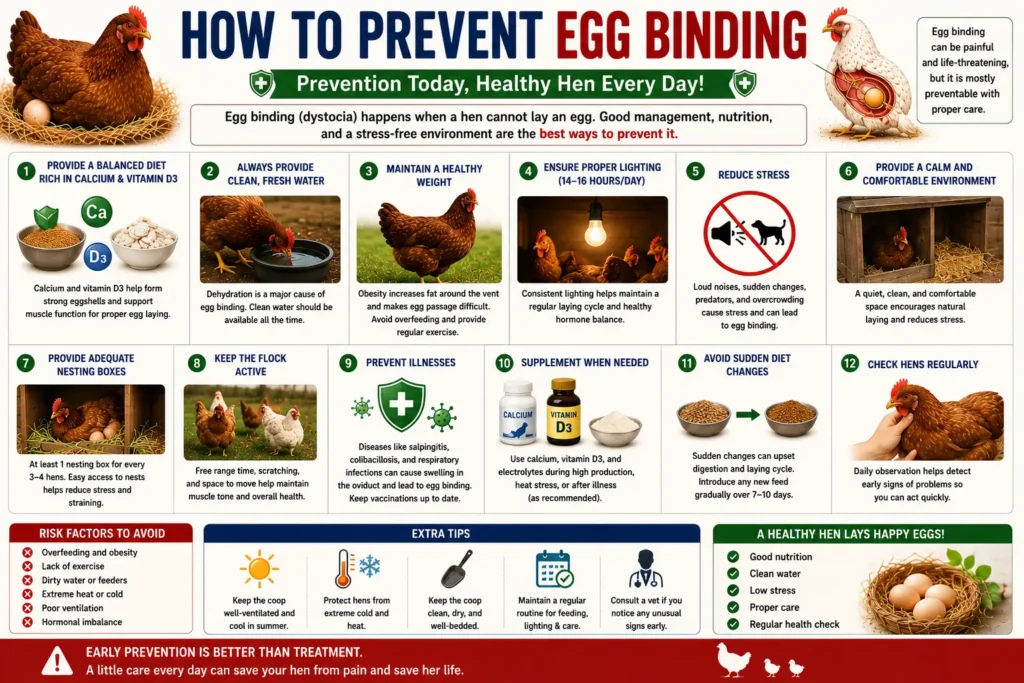
Ask how to prevent egg binding and you’ll find the same short list everywhere: feed calcium, keep her hydrated, don’t let her get overweight. That advice is correct, but it’s incomplete on its own. Prevention works best when it’s matched to where a hen is in her life, not applied the same way to every bird in the flock.
This guide turns the basic checklist into an actual plan, organized by life stage and season, with a monitoring routine you can put into practice today.
Table of Contents
Quick Answer: How to prevent egg binding comes down to four pillars: consistent calcium and hydration, healthy body weight, low environmental stress, and closer monitoring during higher-risk periods like early laying, hot weather, and older age. A one-size-fits-all approach misses the timing that matters most.
The sections below walk through prevention by life stage, then bring it together into a simple monitoring routine any flock owner can maintain.
Read More: https://lashegg.com/egg-binding-causes/
The Four Pillars of Egg Binding Prevention
Before getting into timing, it helps to see the full framework. Every effective approach to preventing egg bound chickens rests on these four pillars working together, not any single one in isolation.
- Nutrition – calcium, vitamin D3, and overall diet balance
- Body condition – maintaining healthy weight, neither underweight nor overweight
- Hydration – constant access to clean, fresh water
- Environment – low stress, consistent routine, appropriate flock density
Weakness in any single pillar raises risk, even if the other three are well managed. That’s why a genuinely effective prevention plan addresses all four together.
Pillar One: Nutrition That Actually Supports Prevention
Calcium: Getting the Delivery Right, Not Just the Amount
Free-choice oyster shell, offered separately from feed, lets hens regulate their own calcium intake based on need, which fluctuates through the laying cycle. Mixing calcium directly into feed removes that self-regulation and can lead to inconsistent intake across the flock.
Vitamin D3: The Often-Missed Piece
Calcium absorption depends on adequate vitamin D3, whether from a complete feed or natural sunlight exposure. A flock with plenty of dietary calcium but limited sun access or an incomplete feed can still develop a functional deficiency.
Matching Feed to Life Stage
A complete, age-appropriate layer ration matters more than people often realize. Starter, grower, and layer feeds have different calcium and protein ratios for a reason, and using the wrong one at the wrong stage undermines prevention efforts.
Table 1: Nutrition Checklist by Purpose
| Nutrient | Role in Prevention | Delivery Method |
| Calcium | Supports muscle contraction for laying | Free-choice oyster shell, separate from feed |
| Vitamin D3 | Enables calcium absorption | Complete feed or adequate sunlight |
| Balanced protein | Supports overall muscle and tissue health | Age-appropriate complete layer feed |
Pillar Two: Managing Body Condition
Both underweight and overweight hens carry elevated risk, for different reasons. Overweight hens have internal fat compressing the reproductive tract; underweight hens may lack the muscular and physiological reserve needed for normal contractions.
- Check body condition by touch, feeling along the keel bone; it should be padded but not sharply prominent or heavily buried in fat
- Limit high-calorie treats like scratch grains and table scraps to a small portion of overall diet
- Encourage natural activity through foraging space, which supports healthy weight more effectively than calorie restriction alone
Expert Tip: Body condition scoring by touch is more reliable than by eye, especially in fluffier breeds where feathers can hide both excess weight and thinness.
Pillar Three: Hydration as an Everyday Priority
Water access is easy to overlook because it seems obvious, but inconsistent access is a real and common gap.
- Check waterers at least twice daily, more often in hot weather
- Position multiple water sources if you have a larger flock, reducing competition
- Clean waterers regularly to keep hens drinking consistently, since dirty water reduces intake
- Add electrolytes during heat waves or after any stressful event
Pillar Four: Reducing Environmental Stress
- Maintain a consistent daily routine for feeding, light exposure, and coop access
- Predator-proof the coop and run to reduce chronic low-level stress
- Avoid sudden flock changes when possible; introduce new birds gradually and with a proper quarantine period
- Provide adequate space per bird to reduce overcrowding-related stress
Prevention by Life Stage: A Practical Plan
Preventing Egg Binding in First-Time Layers
Pullets just starting to lay carry higher baseline risk since their reproductive tract hasn’t fully matured. During this period:
- Confirm they’re on a complete layer feed with free-choice calcium available
- Watch daily for the first few weeks, since this is when risk is highest
- Avoid introducing additional stress (new coop, new flock mates) during this window if possible
- Note her first several eggs for size and shape, flagging anything unusually large
Preventing Egg Binding During Peak Laying Years
Hens in their prime laying years generally carry the lowest baseline risk, but consistency still matters:
- Maintain steady access to calcium and water without gaps
- Monitor body condition periodically, since risk can still rise with weight changes
- Watch for seasonal risk factors, particularly heat stress in summer
Preventing Egg Binding in Older Hens
Older hens face rising risk again as muscle tone declines and years of laying take a cumulative toll:
- Watch for any change in laying pattern or shell quality as an early signal
- Maintain calcium support even as egg production naturally slows
- Monitor more closely if she’s had a prior episode of egg binding, since recurrence risk is elevated
Table 2: Prevention Priorities by Life Stage
| Life Stage | Primary Risk | Prevention Focus |
| First-time layers | Immature reproductive tract | Daily monitoring, complete diet from day one |
| Peak laying years | Generally lower risk | Consistency in all four pillars |
| Older hens | Declining muscle tone | Close monitoring, continued calcium support |
Seasonal Prevention Considerations
- Spring – watch new pullets starting to lay; confirm feed transitions are correct
- Summer – prioritize hydration and shade; heat stress compounds other risk factors
- Fall – reassess body condition heading into cooler months
- Winter – maintain consistent light and routine despite shorter days; monitor water for freezing in cold climates
Did You Know? Heat stress doesn’t just affect shell quality; it also reduces water and feed intake at the same time, which means summer months quietly stack two egg binding risk factors on top of each other.
Building a Simple Monitoring Routine
- Daily: Quick visual check of the flock’s general behavior and activity
- Weekly: Handle a few hens to check body condition by touch
- Weekly: Check waterer cleanliness and free-choice calcium supply levels
- Monthly: Review egg size and shell quality trends across the flock
- After any stressful event: Extra observation for a few days afterward
Common Mistakes:
- Treating prevention as a one-time setup instead of an ongoing routine
- Applying the same level of vigilance to every hen regardless of life stage
- Focusing only on calcium while overlooking hydration and stress
- Assuming a healthy-looking flock means no monitoring is needed
- Waiting for a first episode before taking prevention seriously
When Prevention Isn’t Enough
Even a well-managed flock can still experience egg binding, since some causes, like reproductive tract abnormalities, aren’t preventable through diet or routine alone.
When to Call a Vet:
- A hen shows signs of egg binding despite a solid prevention routine
- She’s had a prior episode and you want guidance on individualized prevention
- You suspect an anatomical or structural risk factor rather than a manageable one
- You’re unsure whether your current routine is actually addressing her specific risk factors
According to the Merck Veterinary Manual and university poultry extension guidance, consistent nutrition, body condition management, and stress reduction meaningfully lower risk, though they don’t eliminate it entirely. A veterinarian can help address the factors prevention alone can’t reach.
Putting It All Together
Preventing egg bound chickens isn’t about any single fix. It’s a routine built from four pillars, applied with extra attention during the higher-risk windows of a hen’s life: her first weeks of laying, hot summer months, and her later years. Consistency across all four matters more than perfecting any one of them.
5. FAQ
Q: What’s the most important step in how to prevent egg binding? A: No single step covers it, but consistent free-choice calcium alongside a complete layer feed is generally considered the most impactful single factor in how to prevent egg binding.
Q: Does egg binding prevention differ for young versus older hens? A: Yes. Egg binding prevention for young, first-time layers focuses on close monitoring during her first weeks, while prevention for older hens focuses on maintaining calcium support as muscle tone naturally declines.
Q: Can preventing egg bound chickens really lower risk, or is it random? A: Preventing egg bound chickens through consistent nutrition, healthy body weight, hydration, and low stress meaningfully lowers risk, though it can’t eliminate every case, since some causes are structural rather than preventable.
Q: How often should I check on egg binding prevention basics like water and calcium? A: Check water at least twice daily and free-choice calcium supply weekly, with a broader body condition check on a weekly basis as well.
Q: Does hot weather really affect egg binding prevention? A: Yes. Heat reduces both water and feed intake at the same time, which is why hydration becomes an even higher prevention priority during summer months.
Q: Is there a way to prevent egg binding in a hen who has already had it once? A: You can lower recurrence risk with strict attention to calcium, hydration, and body condition, but a hen with a prior episode should be monitored more closely long-term, and a vet can help assess any underlying risk factor.
Q: Do overweight and underweight hens have the same egg binding risk? A: Both carry elevated risk, but for different reasons: overweight hens face internal compression of the reproductive tract, while underweight hens may lack the physiological reserve for normal muscle contractions.