Egg Peritonitis in Chickens: A Serious Internal Condition

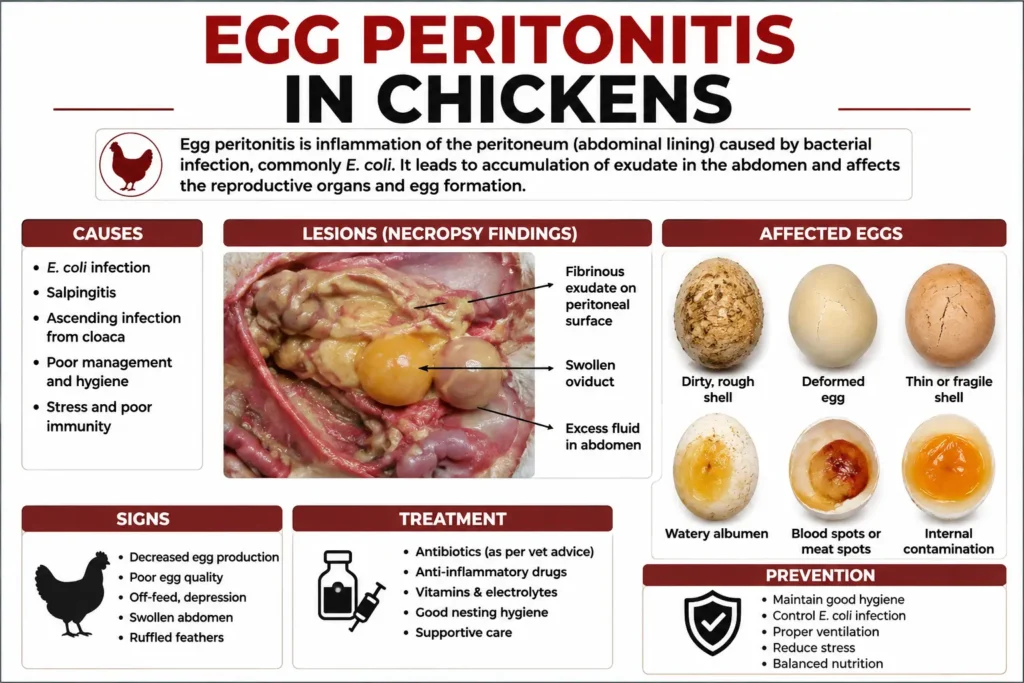
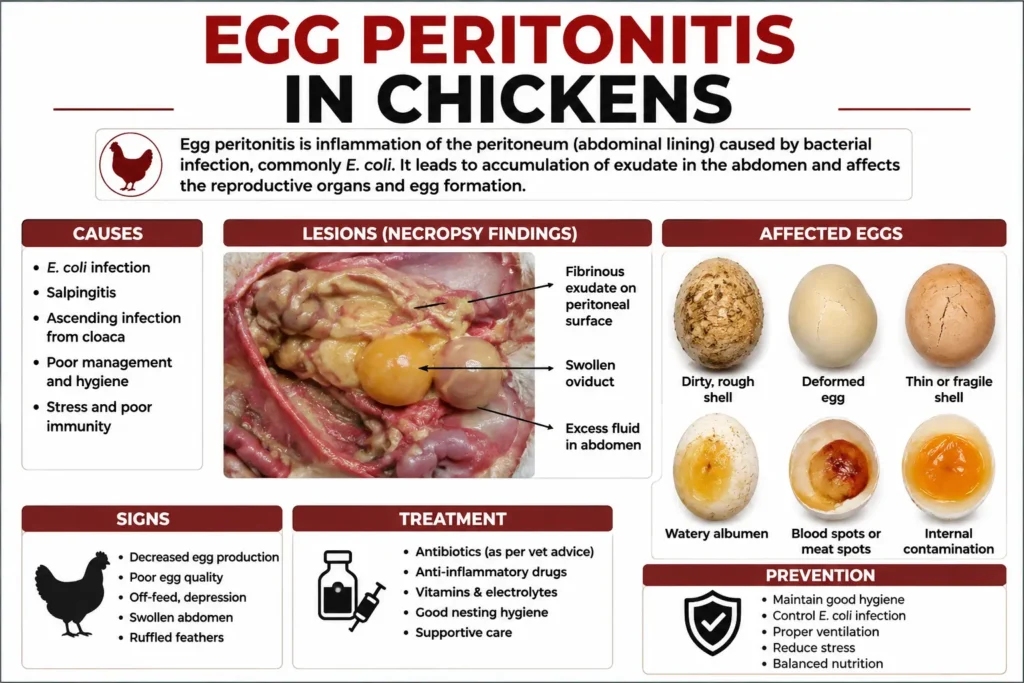
A hen with a swollen belly, a “penguin” stance, and a general decline that doesn’t quite match egg binding might be dealing with something different. Egg peritonitis in chickens is an internal infection that happens when yolk material ends up in the abdominal cavity instead of moving normally through the reproductive tract.
It’s more common in older, high-production hens and tends to develop gradually rather than appearing overnight. Because it shares some symptoms with egg binding, it’s often misdiagnosed at home, which makes understanding it on its own terms important.
Table of Contents
Quick Answer: Egg peritonitis in chickens, also called egg yolk peritonitis, happens when yolk material enters the abdominal cavity and triggers inflammation or infection. Symptoms include a swollen, fluid-filled abdomen, lethargy, reduced appetite, and a distinctive upright “penguin” posture. It requires veterinary diagnosis and treatment.
This guide covers what causes it, how it’s different from other reproductive issues, and what treatment and recovery actually look like.
What Is Egg Yolk Peritonitis?
To understand egg peritonitis in chickens, it helps to know how the reproductive system normally works. A hen releases a yolk from the ovary, and it’s supposed to be captured by the infundibulum, the funnel-shaped opening of the oviduct, before continuing its journey to become a full egg.
Sometimes that capture fails, or the oviduct’s normal one-way flow reverses, and yolk material ends up loose in the abdominal cavity instead. The body treats this as foreign material, triggering inflammation, and often a secondary bacterial infection follows. This combination of inflammation and infection is what defines chicken peritonitis in the reproductive context.
Read More: https://lashegg.com/how-to-prevent-egg-binding/
What Causes Egg Peritonitis in Chickens
Ovulation Without Oviduct Capture
The most direct cause: a yolk releases from the ovary but isn’t properly captured by the infundibulum, leaving it free in the abdominal cavity.
Reverse Peristalsis
Sometimes egg material already partway through the oviduct moves backward instead of forward, depositing yolk or partial egg contents into the abdomen.
Oviduct Blockage or Rupture
A blockage from a previous egg-binding episode, scarring, or a ruptured oviduct can force yolk material out of its normal path.
Bacterial Infection
Bacteria, often E. coli, can infect yolk material once it’s in the abdominal cavity, or can travel up the reproductive tract and contribute to the problem directly. According to veterinary references including the Merck Veterinary Manual, bacterial involvement is common in clinical cases of egg yolk peritonitis.
High-Production Genetics and Age
Hens bred for very high egg output, and hens further along in their laying years, both carry increased risk, likely related to the cumulative physical demands placed on the reproductive tract over time.
Table 1: Common Causes of Egg Peritonitis in Chickens
| Cause | Mechanism |
| Failed oviduct capture | Yolk released but not caught by the infundibulum |
| Reverse peristalsis | Egg material moves backward into the abdomen |
| Oviduct blockage or rupture | Physical obstruction forces yolk out of normal path |
| Bacterial infection | Infection of misplaced yolk material or ascending infection |
| Age and genetics | Cumulative reproductive tract wear in high-production hens |
Signs and Symptoms of Egg Peritonitis in Chickens
Symptoms often develop gradually, which is part of what makes this condition harder to catch early compared to more sudden conditions.
- Swollen, fluid-filled abdomen, often the most noticeable sign
- Upright “penguin” stance, from the discomfort and pressure of abdominal swelling
- Lethargy and reduced activity
- Reduced or absent appetite
- Pale comb and wattles
- Drop in egg production, sometimes stopping altogether
- Labored breathing, if abdominal swelling presses on the air sacs
- Weight loss despite the visibly swollen abdomen
Did You Know? The swelling in egg peritonitis in chickens comes from fluid accumulation, not a solid mass, which is one of the clearest ways it differs on physical exam from a hen that’s simply egg bound.
Egg Peritonitis vs. Egg Binding: Key Differences
These two conditions get confused often, since both involve reproductive distress and can include lethargy and abdominal changes. Telling them apart matters for treatment.
Table 2: Egg Peritonitis vs. Egg Binding
| Feature | Egg Peritonitis | Egg Binding |
| Onset | Gradual, over days to weeks | Often more sudden |
| Abdomen | Swollen, fluid-filled | Firm, egg-shaped mass |
| Straining | Usually absent | Prominent, repeated straining |
| Posture | Upright “penguin” stance | Hunched, fluffed feathers |
| Underlying issue | Yolk material in abdominal cavity | Physical egg obstruction in tract |
If you’re unsure which condition you’re seeing, our guide to egg binding symptoms covers the staged progression of that condition specifically, which can help with comparison.
Expert Tip: A gentle abdominal check can help distinguish the two at home: a firm, discrete mass suggests egg binding, while a soft, fluid-like fullness across the abdomen points more toward egg peritonitis in chickens. Either way, a vet exam is the only way to confirm.
How Vets Diagnose Egg Peritonitis in Chickens
Home observation can raise suspicion, but confirming egg yolk peritonitis typically requires professional evaluation:
- Physical exam – checking abdominal fluid, body condition, and overall health
- Abdominal fluid sampling – analyzing fluid for signs of infection or inflammation
- Imaging – X-ray or ultrasound to assess the extent of fluid and rule out other causes
- Bloodwork – checking for signs of systemic infection or organ involvement
- Necropsy – in cases where the hen doesn’t survive, this often provides the clearest retrospective diagnosis
Treatment Options for Egg Peritonitis in Chickens
Treatment depends heavily on how advanced the condition is and the hen’s overall health at diagnosis.
Antibiotic Therapy
If bacterial infection is confirmed or suspected, a veterinarian may prescribe antibiotics targeted to the likely or identified bacteria involved.
Supportive Care
Fluid therapy, nutritional support, and a calm recovery environment help a hen manage the physical toll of the condition alongside direct treatment.
Abdominal Fluid Drainage
In cases with significant fluid buildup, a vet may drain excess fluid to relieve pressure and improve comfort, sometimes repeated if fluid reaccumulates.
Hormonal Therapy to Suspend Laying
Some vets use hormonal treatment to temporarily stop egg production, giving the reproductive tract time to recover without the ongoing demands of laying.
Surgery
In severe, recurring, or non-responsive cases, surgical removal of affected tissue may be considered, though this carries more risk and is typically reserved for specific circumstances a vet will evaluate case by case.
Table 3: Treatment Approaches at a Glance
| Treatment | Purpose | When Used |
| Antibiotics | Address bacterial infection | Confirmed or suspected bacterial involvement |
| Supportive care | Manage overall health and comfort | Nearly all cases |
| Fluid drainage | Relieve pressure from fluid buildup | Significant abdominal swelling |
| Hormonal therapy | Pause egg production | Allow reproductive tract recovery |
| Surgery | Remove affected tissue | Severe or non-responsive cases |
Warning: Egg peritonitis in chickens is not something to manage with home remedies alone. Unlike some milder reproductive issues, it involves internal infection risk that needs professional diagnosis and, in most cases, professional treatment.
Recovery and Prognosis
Recovery varies widely depending on how early the condition was caught and treated. Mild, early-caught cases with prompt antibiotic and supportive care often have a reasonable recovery. Advanced cases with significant fluid buildup and systemic illness carry a more guarded outlook, and some hens don’t fully recover even with treatment.
- Expect a gradual return of appetite and activity during recovery, not an overnight change
- Egg production may not return to previous levels, especially after hormonal therapy or in older hens
- Watch closely for recurrence, since some hens experience repeat episodes over time
Common Mistakes When Dealing With Egg Peritonitis in Chickens
Common Mistakes:
- Assuming abdominal swelling is simply weight gain or normal aging
- Confusing egg peritonitis in chickens with egg binding and delaying the right kind of care
- Waiting too long to seek veterinary evaluation once swelling is noticed
- Expecting antibiotics alone to resolve significant fluid buildup
- Not monitoring for recurrence after apparent recovery
When to Call a Vet
When to Call a Vet:
- A hen shows a swollen, fluid-filled abdomen without the firm mass typical of egg binding
- She adopts an upright “penguin” posture alongside lethargy
- Egg production drops sharply or stops without another clear explanation
- Labored breathing accompanies abdominal swelling
- Symptoms have been present for more than a few days without improvement
Because egg peritonitis in chickens often develops gradually and can involve serious internal infection, early veterinary involvement gives the best chance at effective treatment. This isn’t a condition where a wait-and-see approach serves the hen well.
Can Egg Peritonitis in Chickens Be Prevented?
There’s no guaranteed way to prevent it, but general reproductive health support lowers overall risk:
- Maintain balanced nutrition, supporting healthy reproductive tract function overall.
- Manage body condition, since obesity is linked to broader reproductive health issues.
- Reduce stress, which supports normal hormonal and reproductive function.
- Monitor older, high-production hens more closely, given their elevated baseline risk.
- Address other reproductive issues promptly, since unresolved problems like recurring egg binding can contribute to future complications.
University extension services and veterinary researchers note that while general flock health management reduces risk factors broadly, egg yolk peritonitis can still occur even in well-managed flocks, since some of the underlying reproductive mechanics aren’t fully within an owner’s control.
5. FAQ
Q: What is egg peritonitis in chickens exactly? A: Egg peritonitis in chickens is an internal condition where yolk material ends up in the abdominal cavity instead of moving normally through the reproductive tract, triggering inflammation and often bacterial infection.
Q: How is egg yolk peritonitis different from egg binding? A: Egg yolk peritonitis causes gradual, fluid-filled abdominal swelling without straining, while egg binding involves a firm, discrete mass and repeated straining as the hen tries to pass a stuck egg.
Q: Is chicken peritonitis contagious to other birds? A: No. Chicken peritonitis in this context is a reproductive and internal condition specific to the affected hen, not a contagious illness that spreads between birds.
Q: Can egg peritonitis in chickens be treated at home? A: No. This condition typically involves internal infection and fluid buildup that require veterinary diagnosis and treatment, unlike some milder reproductive issues that respond to supportive home care.
Q: What does the recovery outlook look like for egg yolk peritonitis? A: Recovery depends heavily on how early it’s caught. Mild, early-treated cases often recover reasonably well, while advanced cases with significant fluid buildup carry a more guarded prognosis.
Q: Are certain hens more likely to get egg peritonitis in chickens? A: Yes. Older hens and those from high-production breeds appear to carry higher risk, likely related to cumulative wear on the reproductive tract over time.
Q: Will a hen lay eggs again after recovering from egg peritonitis? A: Some hens return to laying, though production may not reach previous levels, especially if hormonal therapy was used to pause laying during treatment or if the hen is older.