Coccidiosis Treatment: How to Help a Sick Bird Recover Fast

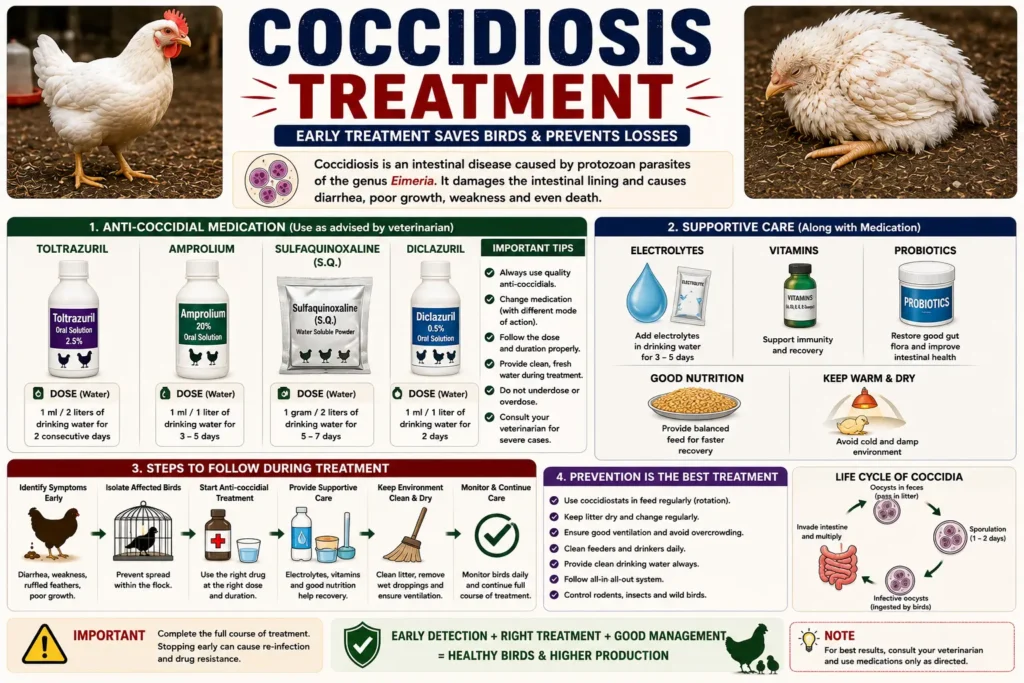
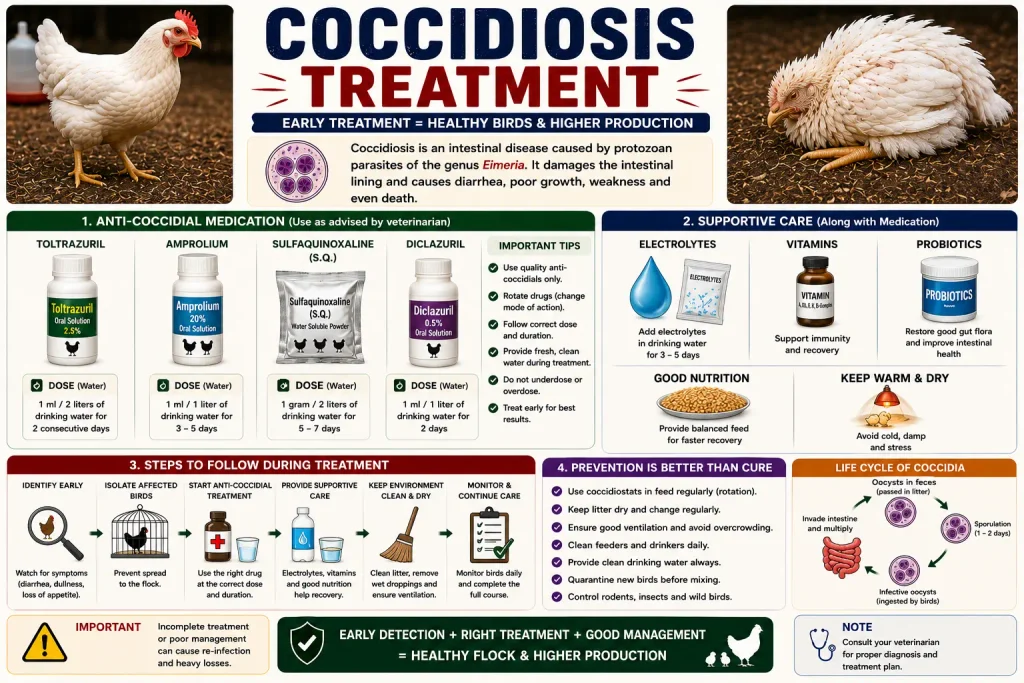
Quick Answer: Coccidiosis treatment centers on anticoccidial medication, most commonly amprolium, given in drinking water for 5 to 7 days. Supportive care matters just as much as the medication itself: clean water, electrolytes, warmth, and a dry, freshly cleaned coop all speed up recovery. Most birds improve within a few days when treatment starts early, but severe cases need veterinary guidance.
If you’ve just confirmed coccidiosis in your flock, or you’re strongly suspecting it based on bloody droppings and a lethargic bird, you need a clear plan, not a wall of theory. This guide walks through exactly how coccidiosis treatment works, what medications are used, how supportive care fits in, and when a case needs more than home management.
Coccidiosis moves fast, especially in young chicks, so starting the right treatment for coccidiosis in chickens within the first day or two of symptoms makes a real difference in outcomes.
Table of Contents
Understanding What You’re Treating
Coccidiosis is caused by Eimeria parasites that invade and damage the intestinal lining. Effective coccidiosis treatment has two goals: stop the parasite’s life cycle and support the bird’s body while damaged gut tissue heals.
This is why treatment isn’t just “give medicine and wait.” A bird with damaged intestines often can’t absorb nutrients well, so hydration and easy-to-digest nutrition matter just as much as the anticoccidial drug itself.
Why Fast Action Matters
Eimeria parasites multiply quickly inside the gut. A mild case can turn into a severe one within 24 to 48 hours, especially in chicks under 8 weeks old who haven’t built up any immunity yet.
Coccidiosis Treatment Options
1. Amprolium (First-Line Treatment)
Amprolium is the most widely used coccidia treatment for backyard flocks. It works by blocking the parasite’s ability to absorb thiamine, which the parasite needs to survive and reproduce. This stops the infection cycle without acting as a broad-spectrum drug.
- Typically given in drinking water
- Standard course runs 5–7 days
- Available over the counter under brand names like Corid
- Safe for use in chicks and adult birds when dosed correctly
Warning: Never combine amprolium with thiamine (vitamin B1) supplements during treatment. Thiamine can counteract the medication and reduce its effectiveness.
Read More: https://lashegg.com/coccidiosis-symptoms-in-chickens/
2. Sulfa-Based Medications
In more severe or resistant cases, a vet may prescribe a sulfa-based drug such as sulfadimethoxine. These work differently from amprolium and may be used when amprolium alone hasn’t controlled the outbreak.
3. Toltrazuril (Where Available)
Toltrazuril is a broader-acting anticoccidial used in some regions, often for more severe outbreaks or commercial settings. Availability and legal use vary by country, so check with a vet or local regulations before use.
Coccidiosis Treatment Options Compared
| Medication | Best For | Typical Duration | Vet Prescription Needed? |
| Amprolium | Mild to moderate cases | 5–7 days | Usually not (OTC) |
| Sulfa-based drugs | Resistant or severe cases | 5–7 days, vet-guided | Yes |
| Toltrazuril | Severe outbreaks (where legal) | 1–2 day course typically | Yes, in most regions |
Step-by-Step Coccidiosis Treatment at Home
- Isolate any bird showing symptoms from the rest of the flock
- Confirm symptoms match coccidiosis (watery or bloody droppings, lethargy, pale comb)
- Start amprolium in the drinking water at the labeled dose
- Remove access to plain water so the bird only drinks the medicated water
- Offer poultry-safe electrolytes alongside treatment for hydration support
- Provide a warm, quiet, low-stress recovery space
- Deep-clean and dry the coop bedding while treatment is underway
- Monitor droppings and appetite daily for improvement
- Complete the full medication course even if symptoms improve early
- Recheck with a vet if there’s no improvement within 48 hours
Expert Tip: Mix medicated water fresh daily during treatment. Amprolium can lose effectiveness if left sitting too long, especially in warm weather.
Supportive Care That Speeds Recovery
Medication treats the parasite, but supportive care helps the bird’s body recover from the damage already done.
- Offer clean, fresh electrolyte water at all times
- Keep sick birds warm, especially chicks, since they lose body heat fast when ill
- Provide easily digestible feed during recovery
- Minimize handling and stress while the bird heals
- Keep the recovery space clean and dry to avoid reinfection
Did You Know? A bird recovering from coccidiosis may have temporary difficulty absorbing nutrients even after the parasite is cleared, which is why easing back into normal feed gradually can help.
Common Mistakes During Coccidiosis Treatment
Common Mistakes:
- Stopping medication as soon as droppings look normal, which risks relapse
- Giving thiamine supplements alongside amprolium
- Treating without confirming the cause, when other illnesses can look similar
- Not cleaning the coop during treatment, allowing reinfection from contaminated bedding
- Under-dosing based on guesswork instead of following label instructions or vet guidance
When Home Treatment Isn’t Enough
Warning: If a bird shows severe bloody droppings, extreme lethargy, refuses water, or multiple birds get sick within a short window, this goes beyond standard home treatment and needs veterinary input.
When to Call a Vet
When to Call a Vet:
- Symptoms don’t improve within 48 hours of starting treatment
- A bird refuses water, since dehydration accelerates decline quickly
- You see blood loss severe enough to cause visible weakness
- Multiple birds in the flock get sick around the same time
- You’re treating very young or fragile chicks and want dosing confirmed
A vet can also run a fecal test to confirm the exact Eimeria species involved, which helps decide whether a different medication is needed for resistant cases, according to guidance summarized by the Merck Veterinary Manual.
How Long Does Coccidiosis Treatment Take to Work?
Most birds show noticeable improvement within 2 to 3 days of starting amprolium, with a full recovery typically by the end of the 5–7 day course. Severe cases, or those involving significant blood loss, may take longer and benefit from extended supportive care even after the medication course ends.
Can Coccidiosis Come Back After Treatment?
Yes. Recovering from one infection doesn’t protect against all Eimeria species, and reinfection can happen if the coop environment stays damp or overcrowded. This is why cleaning bedding during and after treatment for coccidiosis in chickens matters as much as the medication itself.
Recovery Timeline Overview
| Day | What to Expect |
| Day 1–2 | Start medication, isolate bird, begin supportive care |
| Day 3–4 | Appetite and energy typically start improving |
| Day 5–7 | Complete medication course, monitor droppings closely |
| Day 8+ | Gradual return to normal feed and flock reintroduction if fully recovered |
Preventing the Need for Repeated Treatment
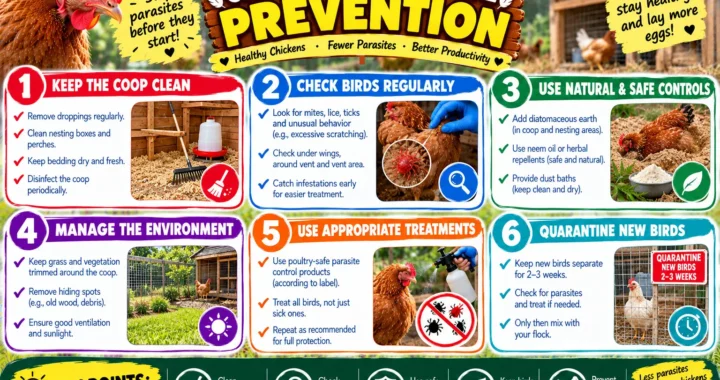
Ongoing prevention reduces how often you’ll need to reach for coccidiosis treatment in the first place.
- Keep bedding dry, especially around waterers
- Avoid overcrowding brooders and coops
- Consider a coccidiosis vaccine for day-old chicks
- Use medicated starter feed if not vaccinating, but not both at once
- Clean and rotate bedding on a consistent schedule
Common Mistakes:
- Using both a coccidiosis vaccine and medicated feed together, which can cancel out the vaccine’s benefit
- Assuming one successful treatment means the flock is now immune to all future cases
Coccidia Treatment for Adult Hens vs. Chicks
| Factor | Chicks | Adult Hens |
| Urgency | High, symptoms escalate fast | Usually moderate |
| Dosing sensitivity | Requires careful, weight-appropriate dosing | More dosing flexibility |
| Recovery speed | Can be slower due to low immunity | Often faster due to partial immunity |
| Egg withdrawal | Not applicable | Check label for egg withdrawal period |
Expert Tip: If you keep laying hens, always check the medication label for an egg withdrawal period. Some anticoccidial treatments require pausing egg consumption for a set number of days after treatment.
FAQ: People Also Ask About Coccidiosis Treatment
What is the best coccidiosis treatment for chickens? Amprolium is the most common first-line coccidiosis treatment, given in drinking water for 5 to 7 days, and is effective for most mild to moderate cases.
How quickly does coccidiosis treatment work? Most birds show improvement within 2 to 3 days of starting treatment, with full recovery typically by the end of the medication course.
Can I treat coccidiosis without a vet? Mild to moderate cases can often be treated at home with over-the-counter amprolium, but severe cases or non-improving symptoms need veterinary care.
Is coccidia treatment safe for laying hens? Yes, when dosed correctly, though some medications require an egg withdrawal period before eggs are safe to eat again.
What happens if coccidiosis is left untreated? Untreated coccidiosis can cause severe dehydration, intestinal damage, and death, particularly in young chicks.
Do I need to treat the whole flock or just the sick bird? This depends on exposure risk. In many cases, treating the whole flock’s water source is recommended since other birds may already be exposed even without visible symptoms.
Wrapping Up: Getting Coccidiosis Treatment Right
Coccidiosis treatment works best when it starts early and combines the right medication with solid supportive care. Amprolium remains the standard first choice for most backyard flocks, paired with hydration, warmth, and a clean, dry coop during recovery.
Watch your birds closely during and after treatment, and don’t hesitate to reach out to a vet if symptoms don’t improve within 48 hours or if you’re dealing with young, fragile chicks. Quick, correct treatment for coccidiosis in chickens is usually all it takes to get a flock back on track.
5. FAQ Section (Structured)
Q: What is the standard coccidiosis treatment for chickens? A: The standard treatment is amprolium given in drinking water for 5 to 7 days, combined with supportive care like electrolytes and warmth.
Q: How long does coccidia treatment take to work? A: Most birds improve within 2 to 3 days, with full recovery typically by the end of the treatment course.
Q: Can coccidiosis treatment be done at home? A: Yes, for mild to moderate cases. Severe symptoms or non-improving birds need veterinary attention.
Q: What should I avoid during coccidiosis treatment? A: Avoid giving thiamine supplements alongside amprolium and avoid stopping medication early, even if symptoms seem to improve.