Chicken Worms: The Complete Guide for Backyard Flock Owners

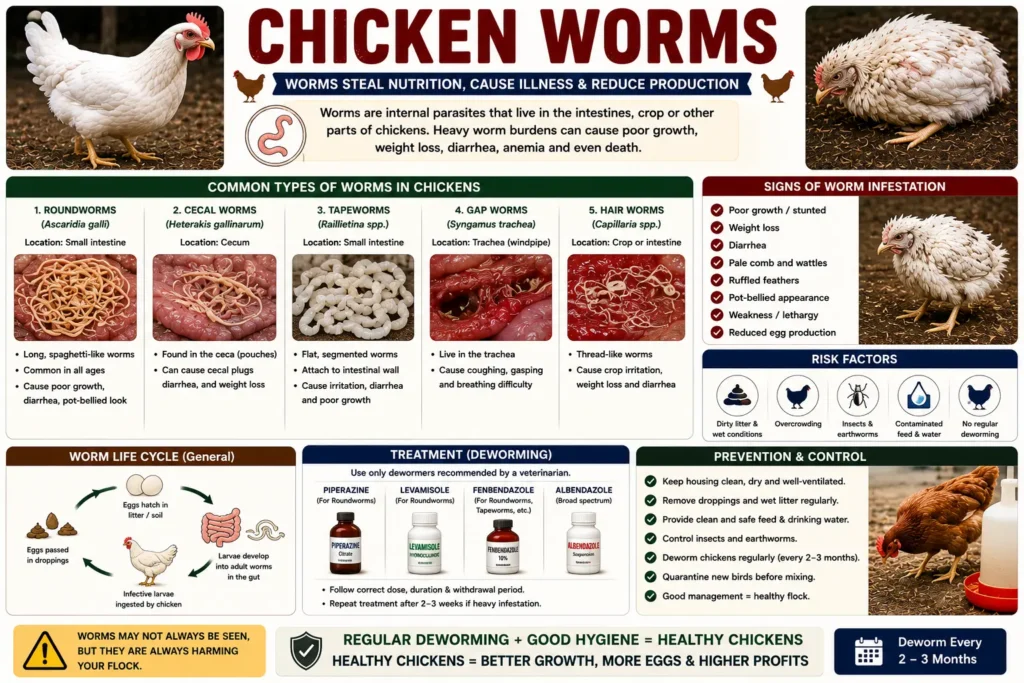
Quick Answer: Chicken worms are intestinal parasites that live in a bird’s digestive tract, feeding off nutrients and sometimes causing weight loss, poor egg production, and diarrhea. Most flocks carry a low-level worm burden without visible symptoms, but heavy infestations can seriously affect health. Regular fecal checks, good coop hygiene, and targeted deworming when needed keep worm levels under control.
If you’ve spotted long, thin, spaghetti-like strands in droppings or noticed a hen losing weight despite eating normally, worms in chickens are a common culprit. They’re one of the most widespread parasite issues in backyard flocks, and yet most owners never think to check for them until symptoms show up.
This guide covers every type of chicken worm, how birds get infected, the symptoms to watch for, and exactly how to treat and prevent an infestation the right way.
Table of Contents
Just How Common Are Chicken Worms?
Nearly every free-range or pastured flock carries some level of intestinal worms. This isn’t unusual or a sign of poor care. The issue only becomes a health concern when the worm burden gets high enough to affect nutrition, immunity, or egg production.
Confined flocks with less ground access tend to have lower exposure, but even coop-only birds can pick up worms through contaminated feed, water, or contact with wild birds and insects.
Types of Chicken Worms
Understanding which type of worm you’re dealing with matters, since treatment and severity vary.
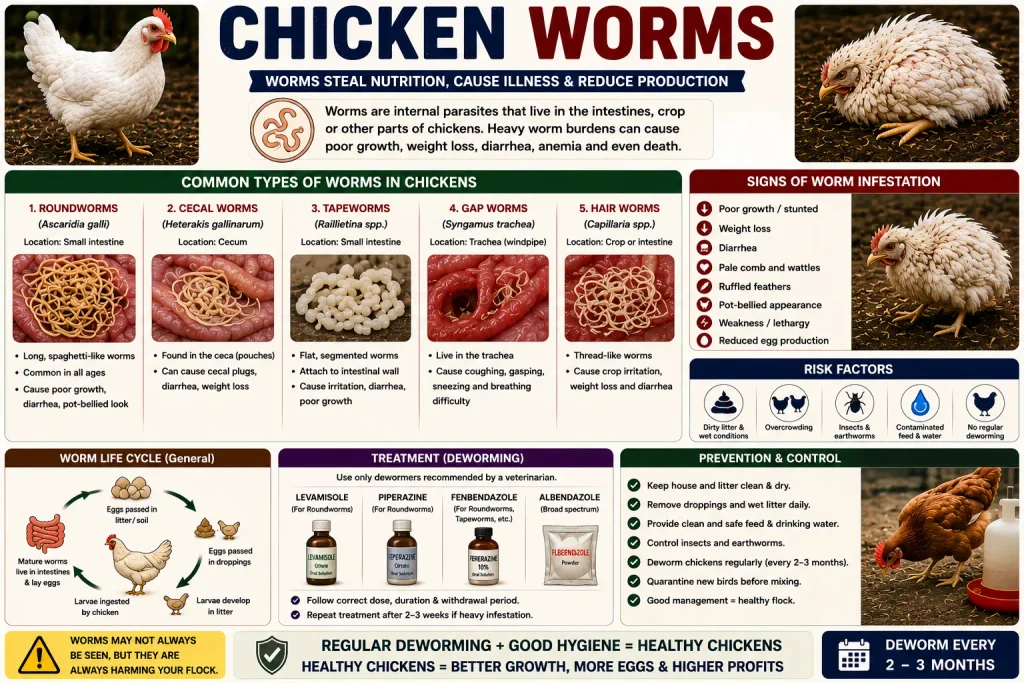
1. Roundworms (Ascaridia galli)
The most common type of intestinal worms in chickens. Roundworms live in the small intestine and can grow up to several inches long. Heavy infestations can cause weight loss, reduced egg production, and intestinal blockage in severe cases.
2. Cecal Worms (Heterakis gallinarum)
These worms live in the ceca and are usually less harmful on their own, but they’re important because they can carry the protozoan parasite responsible for blackhead disease, a serious illness in turkeys and sometimes chickens.
3. Capillary Worms (Hairworms)
Very thin, hair-like worms that burrow into the intestinal lining. Because of their location, they can cause more tissue damage relative to their size, leading to diarrhea and poor nutrient absorption.
4. Gapeworms
These worms live in the trachea rather than the intestines, causing birds to gasp, stretch their necks, and shake their heads trying to clear their airway. Gapeworm infections are less common but more visually alarming than most intestinal worm types.
5. Tapeworms
Flat, segmented worms that attach to the intestinal wall. Chickens typically get tapeworms by eating an infected intermediate host, like a beetle, earthworm, or snail, rather than through direct exposure to droppings.
Read More: https://lashegg.com/coccidiosis-treatment-chickens/
Chicken Worm Types at a Glance
| Worm Type | Location | Main Symptom | Transmission |
| Roundworms | Small intestine | Weight loss, reduced laying | Contaminated ground/droppings |
| Cecal worms | Ceca | Often no symptoms | Droppings; carries blackhead risk |
| Capillary worms | Intestinal lining | Diarrhea, poor absorption | Contaminated ground |
| Gapeworms | Trachea | Gasping, head shaking | Earthworms, contaminated ground |
| Tapeworms | Intestine | Weight loss, poor condition | Insects, snails, earthworms |
How Chickens Get Worms
1. Direct Ground Contact
Most worm eggs are passed in droppings and become infective after sitting on the ground for a period of time. Birds that peck at contaminated soil or grass pick up these eggs directly.
2. Intermediate Hosts
Certain worms, like tapeworms and gapeworms, require an intermediate host such as earthworms, snails, slugs, or beetles. A chicken becomes infected by eating one of these hosts while foraging.
3. Contaminated Water or Feed
Standing water or feed that’s been in contact with contaminated soil or droppings can also spread worm eggs to unaffected birds.
4. Wild Bird Exposure
Wild birds sharing a yard or range area can introduce new worm species into a flock that wasn’t previously exposed.
Chicken Worm Symptoms
Symptoms of chicken worms range from nothing noticeable at all to serious illness, depending on the worm type and infestation level.
- Visible worms in droppings (long, thin, or segmented)
- Unexplained weight loss despite normal appetite
- Pale comb and wattles
- Reduced or stopped egg production
- Diarrhea or loose droppings
- Lethargy and reduced activity
- Gasping or head shaking (specific to gapeworms)
- Poor feather condition
Did You Know? Many chickens carry a mild worm burden their entire lives with zero visible symptoms. Symptoms typically only show up once the parasite load becomes significant.
Chicken Worm Symptoms by Severity
| Level | Signs | Action Needed |
| Light burden | Usually no visible symptoms | Routine monitoring |
| Moderate burden | Mild weight loss, slightly reduced laying | Fecal test, consider deworming |
| Heavy burden | Visible worms, diarrhea, lethargy, pale comb | Deworming treatment needed |
| Severe burden | Intestinal blockage, severe weight loss | Veterinary care needed |
How Chicken Worms Are Diagnosed
The most reliable way to confirm chicken worms is a fecal float test, which identifies worm eggs under a microscope even before symptoms appear. Visual inspection of droppings can catch heavier infestations, but light to moderate worm burdens often go unnoticed without testing.
Expert Tip: Run a fecal test twice a year for free-range flocks, even if no symptoms are present. Catching a rising worm burden early is much easier to manage than treating a heavy infestation after symptoms appear.
Chicken Worm Treatment Options
Dewormers
Several dewormers are used for chicken worms, and choice often depends on the worm type identified and regional product availability.
| Dewormer | Targets | Notes |
| Fenbendazole | Roundworms, capillary worms, gapeworms | Common broad-spectrum option |
| Piperazine | Roundworms only | Narrower spectrum, less effective on other worm types |
| Ivermectin | Some worm types, plus external parasites | Off-label use in poultry in many regions |
Warning: Always check egg withdrawal periods before treating laying hens. Some dewormers require pausing egg consumption for a set number of days after treatment.
Step-by-Step Deworming Process
- Confirm worm presence through a fecal test or visible worms
- Choose an appropriate dewormer based on the worm type identified
- Follow label dosing exactly, or get guidance from a vet
- Treat the entire flock, since exposure is usually shared
- Clean and rotate bedding and range area during treatment
- Recheck with a follow-up fecal test 2–3 weeks after treatment
- Repeat treatment if the follow-up test still shows a high egg count
Common Mistakes When Treating Chicken Worms
Common Mistakes:
- Treating only the symptomatic bird instead of the whole flock
- Using piperazine for worm types it doesn’t effectively treat
- Skipping the follow-up fecal check after treatment
- Ignoring egg withdrawal periods for laying hens
- Assuming a dewormer is a one-time fix instead of part of ongoing management
Preventing Chicken Worms
Pasture and Range Management
- Rotate range areas or pasture to reduce ground contamination
- Avoid overstocking a small area with too many birds
- Keep grass mowed short, since worm larvae often climb short grass blades to be ingested
Coop and Feeding Hygiene
- Keep feed and water elevated off the ground
- Clean up spilled feed promptly to avoid attracting insects that carry worm larvae
- Regularly clean and dry bedding
Routine Monitoring
- Schedule fecal testing twice a year for outdoor flocks
- Watch for early symptoms like subtle weight changes or reduced laying
- Keep a simple health log to track patterns over time
Do Free-Range Chickens Get More Worms Than Confined Ones?
Yes, generally. Birds with regular ground access are exposed to more contaminated soil, insects, and intermediate hosts than birds kept mostly indoors or on non-soil flooring. This doesn’t mean free-ranging is unsafe. It means rotation and monitoring matter more for pastured flocks.
Can Worms in Chickens Spread to Humans?
Most chicken worm species are host-specific and don’t infect humans. Good hygiene practices, like washing hands after handling birds or cleaning coops, remain a sensible precaution regardless.
When to Call a Vet
When to Call a Vet:
- A bird shows signs of intestinal blockage, like severe lethargy and stopped droppings
- Gapeworm symptoms appear, since these worms can cause breathing difficulty
- Weight loss continues despite deworming treatment
- You’re unsure which worm type is present and want confirmation before treating
- Multiple birds show heavy symptoms at once
A vet or extension poultry specialist can also help identify less common worm species and confirm whether a treatment plan needs adjusting, based on guidance available through resources like university extension services and the Merck Veterinary Manual.
FAQ: People Also Ask About Chicken Worms
How do you know if a chicken has worms? Common signs include visible worms in droppings, weight loss, reduced egg production, and diarrhea, though a fecal test is the most reliable way to confirm.
What is the best treatment for chicken worms? Fenbendazole is a commonly used broad-spectrum dewormer for chicken worms, though the right choice depends on the specific worm type identified.
Can chickens die from worms? Yes, in severe, untreated cases, heavy worm burdens can cause intestinal blockage, malnutrition, and death, though this is uncommon with routine monitoring.
How often should I deworm my chickens? Many flock owners deworm only when a fecal test confirms a significant worm burden, rather than on a fixed schedule, to avoid unnecessary medication use.
Are intestinal worms in chickens contagious to other birds? Yes, since worm eggs spread through droppings and contaminated ground, flockmates sharing the same space are commonly exposed together.
Can I prevent chicken worms naturally? Pasture rotation, dry bedding, and reducing exposure to intermediate hosts like snails and beetles can lower worm risk, though they don’t guarantee complete prevention.
Wrapping Up: Managing Chicken Worms in Your Flock
Chicken worms are common, usually manageable, and rarely a cause for panic when caught early. Roundworms, cecal worms, capillary worms, gapeworms, and tapeworms each behave a little differently, but routine fecal testing and good coop hygiene go a long way toward keeping worm levels low across all of them.
Keep an eye on weight, egg production, and droppings, and don’t hesitate to run a fecal test if something seems off. For heavy infestations, breathing-related symptoms, or unclear cases, a vet or poultry extension specialist can help you land on the right treatment plan.
5. FAQ Section (Structured)
Q: What are chicken worms? A: Chicken worms are intestinal or respiratory parasites, including roundworms, cecal worms, capillary worms, gapeworms, and tapeworms, that live in or on a bird’s body.
Q: What causes worms in chickens? A: Chickens get worms mainly through contact with contaminated ground, droppings, or intermediate hosts like earthworms, snails, and beetles.
Q: What are the symptoms of intestinal worms in chickens? A: Symptoms include weight loss, reduced egg production, diarrhea, pale comb, and sometimes visible worms in droppings.
Q: How do you treat chicken worms? A: Treatment typically involves a dewormer like fenbendazole, chosen based on the worm type, along with flock-wide treatment and follow-up fecal testing.