Chicken Lice: A Complete Guide to Identification and Treatment

Quick Answer: Chicken lice are wingless insects that live entirely on a bird’s body, feeding on skin flakes, feather debris, and sometimes blood. Unlike mites, lice on chickens don’t survive long off their host, so treatment focuses almost entirely on the birds themselves rather than the coop. Most infestations clear up within a few weeks with the right insecticidal treatment and consistent follow-up.
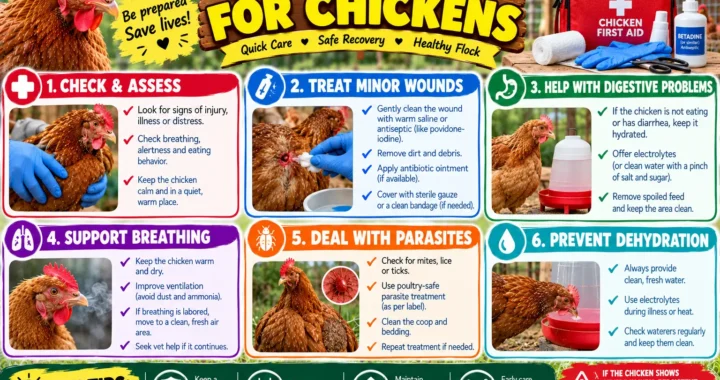
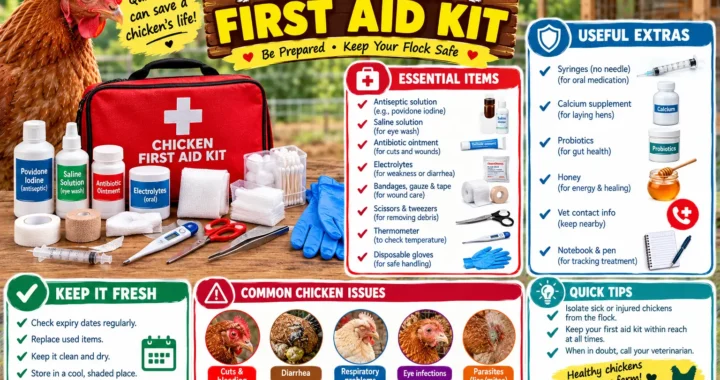
If you’ve noticed your hens fluffing, preening excessively, or losing feathers around the vent and under the wings, chicken lice are one of the most likely causes. They’re one of the most common external parasites in backyard flocks, and while they rarely cause serious illness on their own, a heavy infestation can stress birds and affect egg production.
This guide walks through everything you need to know: how to spot chicken lice, the different types, how they spread, and a complete treatment and prevention plan.
Table of Contents
What Are Chicken Lice, Exactly?
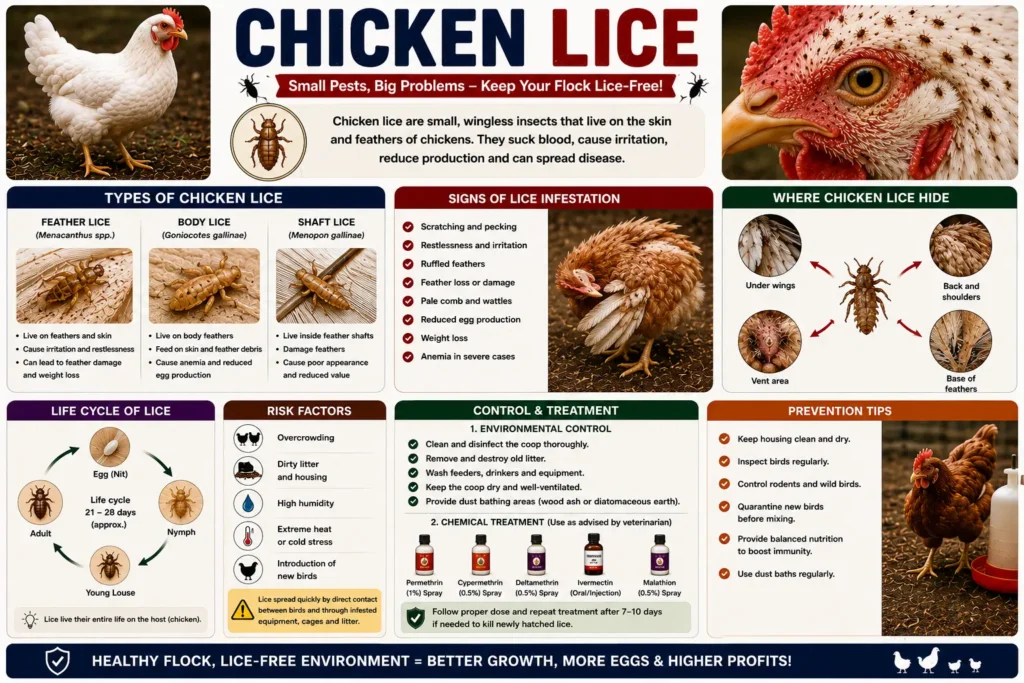
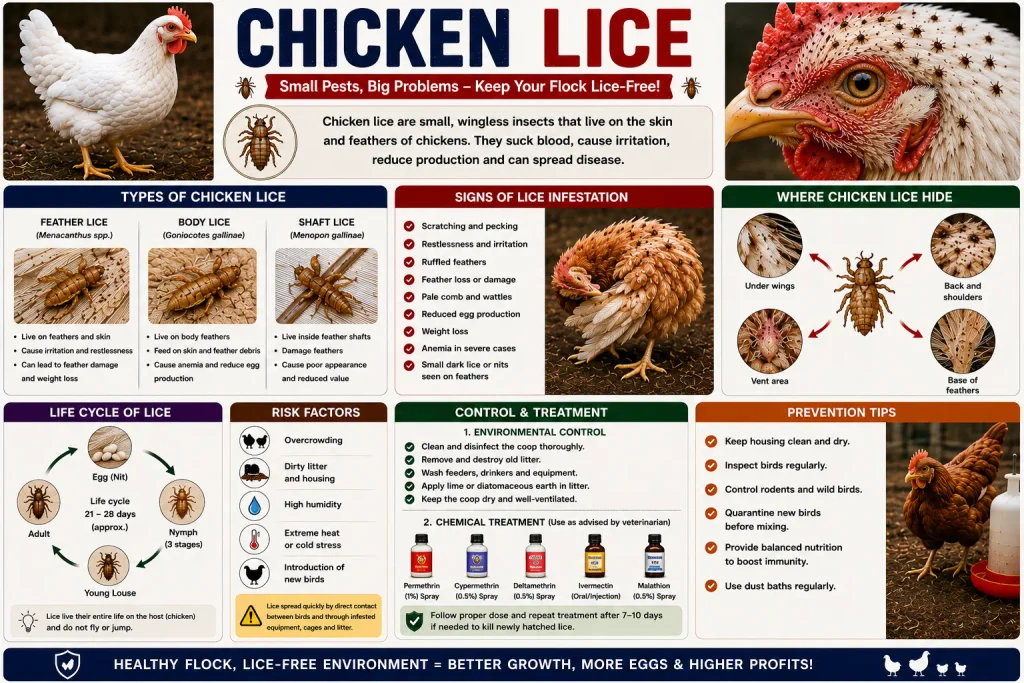
Chicken lice are small, flattened, wingless insects that spend their entire life cycle on the bird. Unlike mites, which often hide in the coop during the day, lice on chickens stay on the host at all times, feeding on dead skin, feather debris, and feather shafts.
This full-time-on-bird lifestyle is actually useful information for treatment. Since chicken lice can’t survive long away from a host, thorough treatment of the birds themselves is usually more important than deep coop treatment, which matters more for mites.
Types of Chicken Lice
Several species can affect backyard flocks, and while all are broadly similar in impact, location on the body can vary.
1. Shaft Louse (Menopon gallinae)
One of the most common types, often found on the body, thighs, and around the vent. It moves quickly through feathers when disturbed.
2. Wing Louse (Lipeurus caponis)
Found mainly on the large wing feathers, where it feeds on feather material and can cause visible feather damage along the wing shafts.
3. Body Louse (Menacanthus stramineus)
Considered one of the more damaging species, often found on the skin around the vent, breast, and thighs, where it can cause irritation and scabbing.
4. Head Louse (Cuclotogaster heterographa)
More commonly affects younger birds, found around the head and neck area.
Chicken Lice Types at a Glance
| Louse Type | Common Location | Typical Sign |
| Shaft louse | Body, thighs, vent | Fast-moving insects visible when feathers parted |
| Wing louse | Large wing feathers | Feather shaft damage |
| Body louse | Skin near vent, breast | Irritation, scabbing |
| Head louse | Head and neck (young birds) | Irritation around head |
Chicken Lice Symptoms
- Excessive preening or feather picking
- Visible feather damage, especially ragged or chewed-looking edges
- Small, pale-yellow egg clusters (nits) attached to feather shafts, usually near the vent
- Restlessness and reduced activity
- Reduced egg production in heavier infestations
- Scabbing or irritated skin in severe cases
- Visible insects moving through feathers when parted, especially around the vent
Did You Know? Chicken lice eggs, called nits, are often easier to spot than the adult lice themselves. Look for small clusters stuck firmly to the base of feathers near the vent.
How to Check for Chicken Lice
Step-by-Step Inspection Guide:
- Hold the bird gently and part feathers around the vent, thighs, and under the wings
- Look for fast-moving, flattened insects roughly the size of a sesame seed
- Check feather shafts for small pale egg clusters (nits) near the base
- Examine wing feathers closely for chewed or ragged edges
- Repeat checks on multiple birds, since lice spread quickly between close flock members
Expert Tip: Check for chicken lice monthly, and more often during warmer months when populations tend to grow faster.
Read More: https://lashegg.com/chicken-mites-identification-treatment/
How Chicken Lice Spread
- Direct contact between infested and healthy birds
- New birds introduced to the flock without a quarantine period
- Wild birds visiting shared feeding or roosting areas
- Shared equipment, like nesting material or carriers, moved between flocks
- Close roosting conditions that increase bird-to-bird contact
Chicken Lice Treatment
Treating the Birds
Since chicken lice live entirely on the host, effective treatment focuses on thorough application to the bird’s body.
- Choose a poultry-safe insecticidal dust or spray labeled for lice
- Apply treatment to the vent area, under the wings, and around the thighs, where lice concentrate most
- Treat every bird in the flock at the same time, even those without visible symptoms
- Repeat treatment 7–10 days later to catch newly hatched lice from surviving eggs
- Recheck feathers 2–3 weeks after the second treatment to confirm the infestation has cleared
Warning: Always use a product specifically labeled safe for poultry. General livestock or household insecticides can be harmful if used on chickens without the correct formulation and dosing.
Supporting Coop Hygiene
While coop treatment isn’t the main focus for lice the way it is for mites, general hygiene still helps reduce reinfection risk.
- Clean and refresh bedding regularly
- Provide a dust bath area with diatomaceous earth or wood ash, which many birds use naturally
- Avoid overcrowding, which increases direct bird-to-bird contact
Chicken Lice Treatment Options Compared
| Method | Purpose | Notes |
| Poultry-safe dust | Direct bird treatment | Apply to vent, wings, thighs |
| Poultry-safe spray | Direct bird treatment | Good for larger flocks, faster application |
| Dust bath with diatomaceous earth | Preventive/supportive | Not a substitute for active infestation treatment |
| Repeat treatment (7–10 days later) | Kills newly hatched lice | Essential step, often skipped |
Common Mistakes When Treating Chicken Lice
Common Mistakes:
- Treating only the symptomatic bird instead of the entire flock
- Skipping the second treatment round, allowing newly hatched lice to survive
- Confusing chicken lice with mites and using the wrong treatment approach
- Using non-poultry-safe insecticides
- Assuming a dust bath alone will resolve an active, established infestation
Chicken Lice vs. Chicken Mites: Key Differences
| Factor | Lice | Mites |
| Lives on bird full-time? | Yes | Varies (some hide in coop) |
| Feeds on | Skin debris, feather material | Blood, skin, or feather material depending on species |
| Coop treatment needed? | Less critical | Often essential (especially red mites) |
| Movement speed | Fast when disturbed | Varies by species |
| Visible eggs | Yes, nits on feather shafts | Less commonly visible as distinct eggs |
Did You Know? Because chicken lice and mites cause overlapping symptoms like feather damage and restlessness, correctly identifying which parasite you’re dealing with changes how aggressively you need to treat the coop itself.
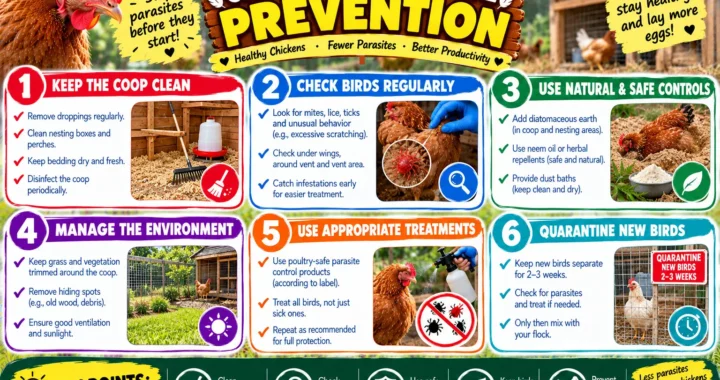
Preventing Chicken Lice
- Quarantine new birds for at least 2 weeks before adding them to the flock
- Inspect the flock regularly, especially around the vent and under wings
- Provide consistent access to dust bath areas
- Avoid overcrowding in coops and runs
- Limit contact with wild birds around feeders and roosting areas
- Clean and rotate bedding regularly to support overall flock health
Can Chicken Lice Spread to Humans or Other Pets?
Chicken lice are host-specific parasites, meaning they’re adapted to live on poultry and don’t establish infestations on humans or other pets like dogs and cats. Direct contact during treatment is generally low-risk, though washing hands afterward remains good practice.
How Long Does a Chicken Lice Infestation Take to Clear?
With proper treatment, including the follow-up application 7–10 days later, most infestations clear within 3 to 4 weeks. Delayed or incomplete treatment, such as skipping the second round, often leads to the infestation persisting much longer.
When to Call a Vet
When to Call a Vet:
- The infestation persists despite two full rounds of treatment
- Birds show significant skin irritation, scabbing, or feather loss beyond typical lice damage
- Egg production drops noticeably and doesn’t recover after treatment
- You’re unsure whether you’re dealing with lice, mites, or another skin issue
- Young, elderly, or already weakened birds are affected
A vet or poultry extension specialist can confirm the exact louse species involved and help rule out other causes of feather loss or skin irritation, drawing on resources like the Merck Veterinary Manual and regional university extension services.
FAQ: People Also Ask About Chicken Lice
What do chicken lice look like? Chicken lice are small, flattened, pale to straw-colored insects, roughly the size of a sesame seed, often seen moving quickly through feathers near the vent.
How do you get rid of chicken lice? Treatment involves applying a poultry-safe insecticidal dust or spray to the whole flock, repeated after 7–10 days to catch newly hatched lice.
Are chicken lice the same as mites? No. Chicken lice live entirely on the bird and feed mainly on skin and feather debris, while mites vary by species and some hide in the coop and feed on blood.
Can chicken lice cause serious health problems? Most infestations cause irritation and stress rather than severe illness, though heavy, prolonged infestations can affect egg production and overall condition.
Do chicken lice live in the coop? No, generally not. Chicken lice depend on the host and don’t survive long off the bird, unlike some mite species.
How often should I check my flock for chicken lice? Monthly checks are a good baseline, with more frequent inspections during warmer months when populations can grow faster.
Wrapping Up: Keeping Chicken Lice Under Control
Chicken lice are common, generally manageable, and rarely dangerous when caught and treated early. Since lice on chickens live entirely on the host, thorough, whole-flock treatment with a proper follow-up round is the most effective path to clearing an infestation.
Make regular flock checks part of your routine, especially around the vent and under the wings, and treat promptly if you spot nits, feather damage, or excessive preening. For infestations that don’t clear with standard treatment, a vet or extension poultry specialist can help confirm what’s really going on and get your flock back to normal.
5. FAQ Section (Structured)
Q: What are chicken lice? A: Chicken lice are small, wingless insects that live entirely on a bird’s body, feeding on skin debris and feather material.
Q: What causes chicken lice infestations? A: Chicken lice spread through direct bird-to-bird contact, new birds introduced without quarantine, and shared equipment or roosting areas.
Q: How do you treat lice on chickens? A: Treatment involves a poultry-safe insecticidal dust or spray applied to the whole flock, repeated 7–10 days later.
Q: Can chicken lice come back after treatment? A: Yes, especially if the second treatment round is skipped or new birds are introduced without a quarantine period.