Chicken Mites: How to Spot Them Before They Take Over Your Coop

Quick Answer: Chicken mites are tiny external parasites that feed on blood, skin, or feathers, causing itching, feather loss, and in heavy infestations, anemia. They spread fast in warm, humid coops and can survive for weeks in cracks and crevices even without a host. Catching a chicken mite infestation early makes treatment far easier than waiting until birds show serious symptoms.
If your hens are suddenly restless at night, losing feathers, or you’ve spotted tiny moving specks on the roosts, chicken mites are one of the most likely explanations. They’re one of the most common external parasite problems in backyard flocks, and they multiply fast once conditions are right.
This guide covers every type of chicken mite, how to tell them apart, symptoms to watch for, and a full treatment and prevention plan that actually works.
Table of Contents
Why Chicken Mites Are Such a Persistent Problem
Unlike some parasites that only live on the bird, many mites on chickens also live in the coop itself, hiding in cracks, perches, and nesting material during the day and coming out to feed at night. This makes treating the bird alone ineffective if the coop isn’t treated too.
Mite populations can explode quickly in warm weather, sometimes going from a handful of mites to a full infestation within just a couple of weeks.
Types of Chicken Mites
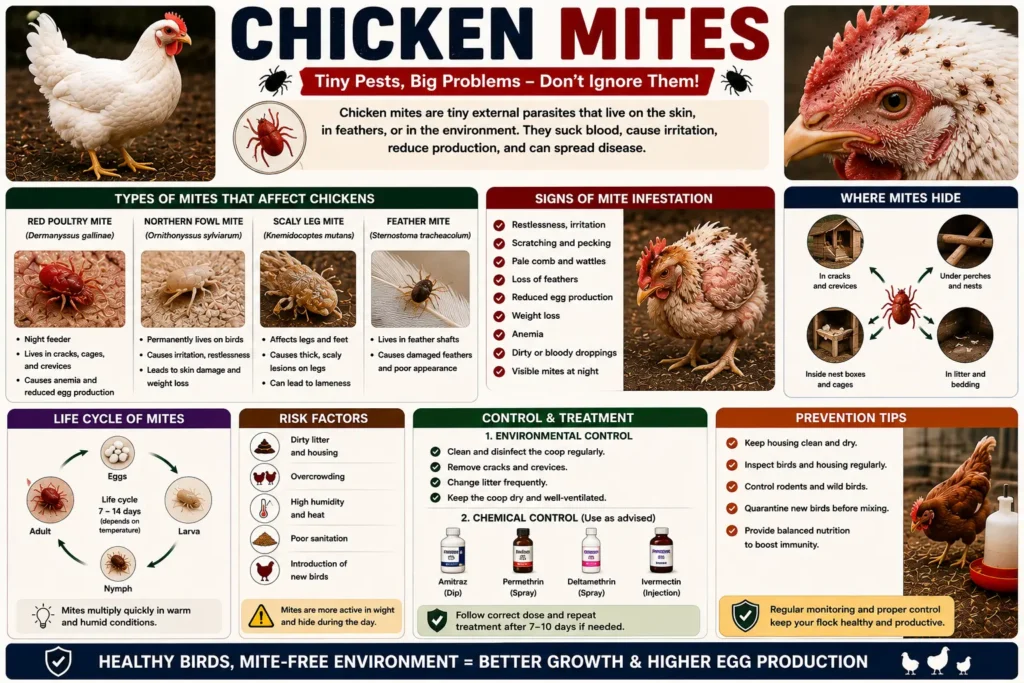
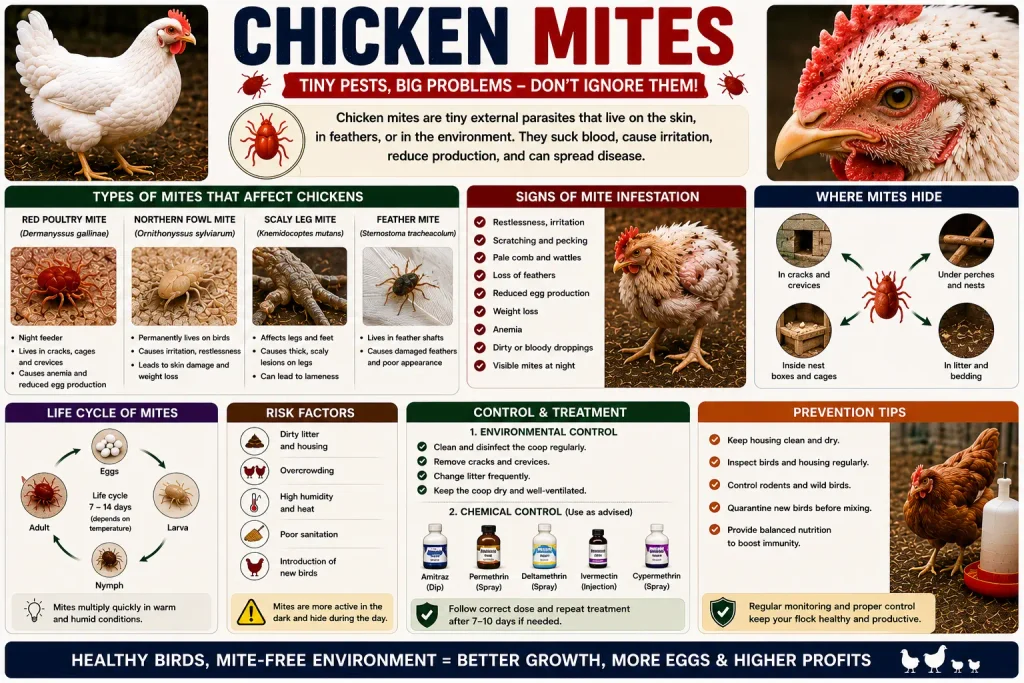
1. Red Mites (Dermanyssus gallinae)
The most common and problematic type of chicken mite. Red mites feed on blood at night and hide in the coop during the day, making them harder to spot on the birds themselves. They appear grey or red, depending on whether they’ve recently fed.
2. Northern Fowl Mites (Ornithonyssus sylviarum)
Unlike red mites, northern fowl mites live on the bird full-time rather than hiding in the coop. They’re most often found around the vent area, thighs, and under the wings.
3. Scaly Leg Mites (Knemidocoptes mutans)
These mites burrow under the scales on a chicken’s legs, causing thickened, crusty, raised scales over time. Unlike red mites and northern fowl mites, scaly leg mites cause a very distinct, visible leg condition rather than general itching.
4. Depluming Mites
Less common but notable for burrowing into feather shafts, causing feather loss and irritation that leads birds to pull out their own feathers.
Chicken Mite Types at a Glance
| Mite Type | Lives On Bird or Coop? | Key Sign | Feeding Pattern |
| Red mites | Coop (hides during day) | Restlessness at night, pale comb | Nocturnal blood feeder |
| Northern fowl mites | Bird (full-time) | Irritation near vent/thighs | Feeds day and night |
| Scaly leg mites | Bird (burrows in leg scales) | Crusty, raised leg scales | Burrows under skin |
| Depluming mites | Bird (feather shafts) | Feather loss, self-plucking | Feeds on feather material |
Chicken Mite Symptoms
Symptoms vary depending on the mite type, but several signs show up across most infestations.
- Restlessness, especially at night with red mites
- Feather loss or damaged feathers
- Visible scabbing or crusty patches (especially on legs)
- Pale comb and wattles from blood loss in heavy infestations
- Reduced egg production
- Reluctance to enter the coop or use nesting boxes
- Visible tiny moving specks on birds, perches, or nesting material
Did You Know? A heavy red mite infestation can cause enough blood loss to lead to anemia, and in extreme, prolonged cases, this has been linked to bird deaths, particularly in young or already weakened chickens.
How to Check for Chicken Mites
Step-by-Step Inspection Guide:
- Check birds at night with a flashlight, since red mites are most active after dark
- Examine the underside of perches and roost bars for small moving dots
- Look under wings, around the vent, and near the thighs for northern fowl mites
- Inspect legs closely for raised, crusty scales that suggest scaly leg mites
- Check nesting material and coop crevices for mite clusters or grey/red dust-like debris
- Wipe a perch with a white cloth or tissue, since red mite residue often leaves reddish-brown smudges
Expert Tip: Check coop crevices and the underside of roosts weekly during warm months, since chicken mite populations grow fastest in heat and humidity.
How Chicken Mites Spread
- Wild birds visiting the coop or run
- New birds introduced without a quarantine period
- Secondhand coops, equipment, or nesting material
- Rodents that can carry mites between structures
- Direct contact between infested and healthy birds
Chicken Mite Treatment
Treating the Birds
- Use a poultry-safe insecticidal spray or dust labeled for mites
- Apply treatment directly to affected areas: under wings, around the vent, and the base of feathers
- Repeat treatment according to the product label, since most require a second application to catch newly hatched mites
- For scaly leg mites, a common home approach involves soaking legs and applying a suffocating treatment like petroleum jelly, though a vet can recommend more targeted options for stubborn cases
Treating the Coop
Coop treatment is just as critical as treating the birds themselves, especially for red mites that spend most of their time off the bird.
- Remove all bedding and nesting material and dispose of it away from the coop
- Scrub perches, nest boxes, and walls with hot, soapy water
- Apply a poultry-safe coop treatment or diatomaceous earth into cracks and crevices
- Let the coop dry completely before adding fresh bedding
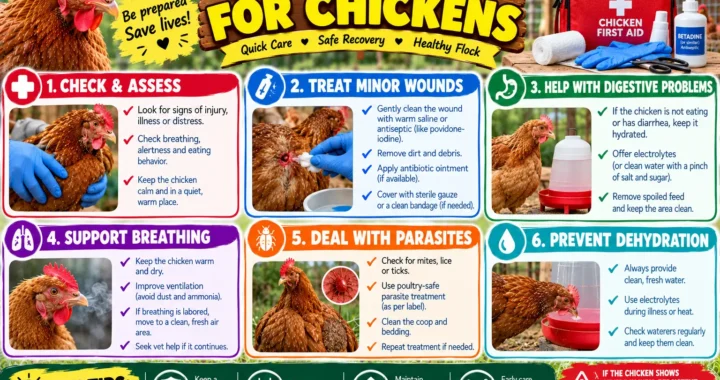
- Repeat the full cleaning process 7–10 days later to catch newly hatched mites
- Continue monitoring weekly for several weeks after treatment
Warning: Never use products labeled only for general household pest control in the coop. Always choose products specifically labeled safe for poultry environments.
Read More: https://lashegg.com/chicken-worm-treatment-guide/
Chicken Mite Treatment Comparison
| Method | Best For | Notes |
| Poultry-safe dust/spray | Birds directly | Repeat per label instructions |
| Diatomaceous earth | Coop crevices, dust baths | Mechanical action, not a fast kill |
| Full coop deep clean | Red mite infestations | Most effective for coop-dwelling mites |
| Leg soak + suffocating treatment | Scaly leg mites | Vet guidance helpful for severe cases |
Common Mistakes When Dealing With Chicken Mites
Common Mistakes:
- Treating only the birds and skipping the coop, allowing red mites to survive and reinfest
- Doing only one treatment round instead of the recommended follow-up application
- Using non-poultry-safe pesticides in the coop
- Ignoring early signs like mild restlessness until the infestation becomes severe
- Introducing new birds without a quarantine period, risking a fresh infestation
Preventing Chicken Mites
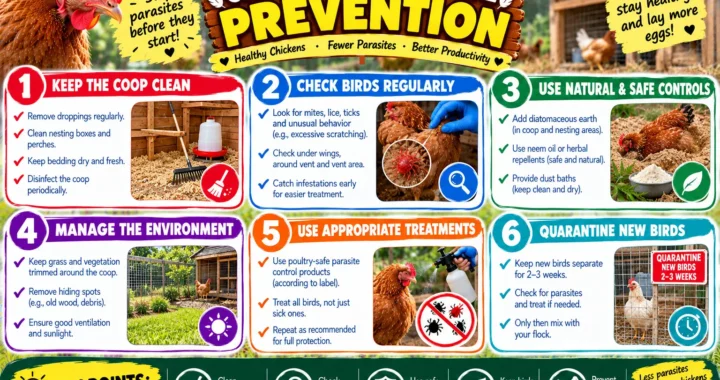
- Quarantine new birds for at least 2 weeks before introducing them to the flock
- Inspect birds and coop regularly, especially in warm weather
- Keep the coop clean and dry, since mites thrive in damp, dirty conditions
- Provide dust bath areas with diatomaceous earth or wood ash, which many birds use naturally to manage light parasite loads
- Seal cracks and crevices in the coop structure where red mites like to hide
- Limit wild bird access to feed and coop areas where possible
Chicken Mites vs. Lice: What’s the Difference?
| Factor | Mites | Lice |
| Feeding | Many feed on blood | Feed on skin debris and feathers |
| Movement | Some hide in coop, others live on bird | Live entirely on the bird |
| Visible signs | Scabbing, restlessness, leg changes | Feather damage, visible eggs (nits) on feather shafts |
| Common location | Vent, thighs, legs, coop crevices | Around vent and under wings |
Did You Know? Chicken mites and lice are often confused because their symptoms overlap, but treatment approaches differ enough that correct identification matters for effective control.
When to Call a Vet
When to Call a Vet:
- A bird shows signs of anemia, like an extremely pale comb and weakness
- Scaly leg mite symptoms are severe or not improving with home treatment
- An infestation keeps returning despite thorough coop and bird treatment
- You’re unsure whether you’re dealing with mites, lice, or another skin condition
- Young or already weak birds are affected, since they’re more vulnerable to blood loss
A vet or poultry extension specialist can help confirm the exact mite species involved and recommend treatment options for stubborn or recurring chicken mite infestations, drawing on guidance available through sources like the Merck Veterinary Manual and regional university extension services.
Can Chicken Mites Infest Humans or Other Pets?
Some chicken mite species, particularly red mites, can bite humans in cases of severe infestation, though they don’t live on human hosts long-term. Dogs and cats can occasionally pick up mites through direct contact with an infested coop, so it’s worth keeping other pets away from a heavily infested area during treatment.
How Long Does It Take to Get Rid of Chicken Mites?
With consistent treatment of both birds and coop, most infestations clear within 2 to 4 weeks. Red mite infestations can take slightly longer due to their ability to survive off the host in coop crevices for extended periods.
FAQ: People Also Ask About Chicken Mites
What do chicken mites look like? Chicken mites are tiny, often appearing as small grey, red, or black specks, sometimes visible on perches, nesting material, or directly on the bird.
How do you get rid of chicken mites fast? Treating both the birds with a poultry-safe insecticide and the coop with a full deep clean, repeated after 7–10 days, is the fastest effective approach.
Can chicken mites live in bedding? Yes, especially red mites, which hide in bedding, nesting material, and coop crevices during the day and feed on birds at night.
Are chicken mites dangerous? In heavy infestations, mites on chickens can cause anemia, reduced egg production, and significant stress, though most cases resolve well with prompt treatment.
How can I tell if my coop has a chicken mite infestation? Look for reddish-brown residue on perches, small moving specks in crevices, and birds showing restlessness or feather damage.
Do chicken mites go away on their own? No. Without treatment, chicken mite populations typically grow rather than resolve, especially in warm, humid conditions.
Wrapping Up: Staying Ahead of Chicken Mites
Chicken mites are common, fast-spreading, and manageable with the right approach. Treating the birds alone rarely solves the problem, since mites like red mites spend most of their time hiding in the coop itself.
Check your flock and coop regularly, especially during warm months, and act quickly at the first signs of restlessness, feather loss, or visible specks on the roosts. For stubborn infestations or signs of anemia, a vet or extension poultry specialist can help you get the situation fully under control.
5. FAQ Section (Structured)
Q: What causes chicken mites? A: Chicken mites spread through wild birds, new birds introduced without quarantine, secondhand equipment, and rodents carrying mites between coops.
Q: What are the signs of chicken mites? A: Signs include restlessness at night, feather loss, pale comb, scabbing, and visible small specks on perches or birds.
Q: How do you treat a chicken mite infestation? A: Treatment involves applying a poultry-safe insecticide to birds and thoroughly cleaning the coop, repeating both steps after 7–10 days.
Q: How can I prevent chicken mites in my coop? A: Quarantine new birds, keep the coop clean and dry, provide dust bath areas, and inspect the flock regularly during warm weather.