Respiratory Infection Symptoms in Chickens: What to Watch For

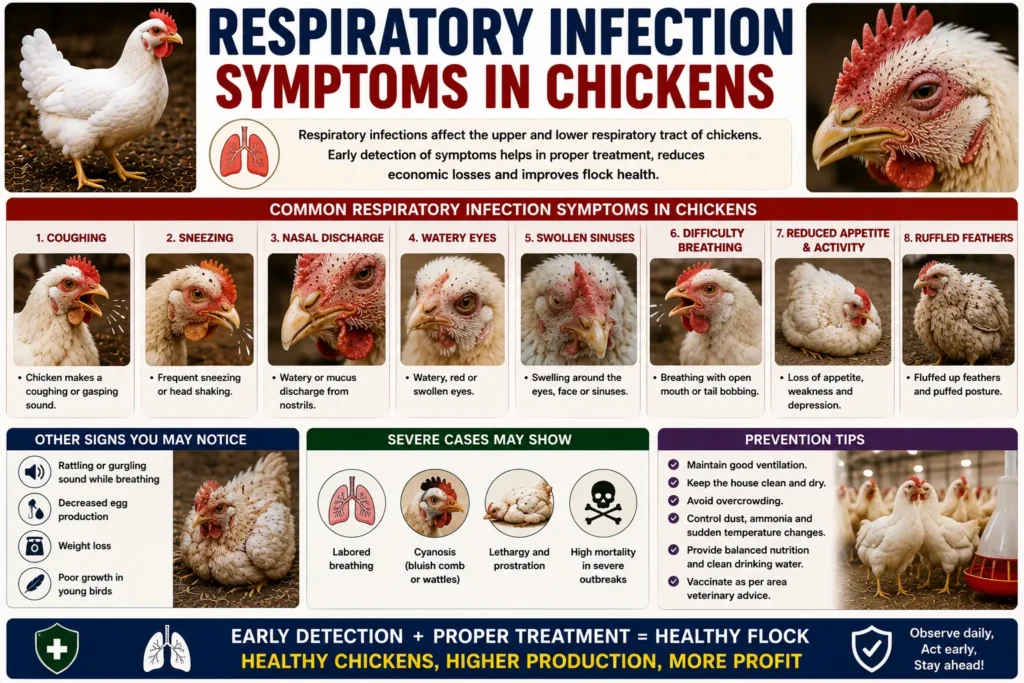
Quick Answer: Respiratory infection symptoms in chickens often start small: a little sneezing, mild nasal discharge, or a quieter-than-usual bird. Left unchecked, symptoms can progress to labored breathing, facial swelling, and rattling sounds within days. The specific pattern of symptoms can hint at the underlying cause, but a vet is needed to confirm exactly what’s going on, especially in flock-wide outbreaks.
If a bird in your flock suddenly starts sneezing more than usual or seems to be breathing harder than normal, you’re likely looking at early respiratory infection symptoms in chickens. These infections can move from mild to serious fast, so knowing what to watch for at each stage helps you respond at the right time, not too early with unnecessary worry, and not too late once the infection has spread.
This guide breaks down every symptom stage, what different symptom patterns might suggest, and exactly what to do when you spot chicken breathing problems.
Table of Contents
Why Symptom Patterns Matter
Chicken respiratory disease can come from several different causes, including viruses, bacteria, and environmental irritants like ammonia. While a vet is needed for a confirmed diagnosis, the pattern and combination of symptoms can offer useful early clues about severity and possible cause.
For example, sneezing alone with no other signs often points to a mild irritant or early-stage infection, while sneezing combined with facial swelling and multiple sick birds suggests a more serious, contagious cause.
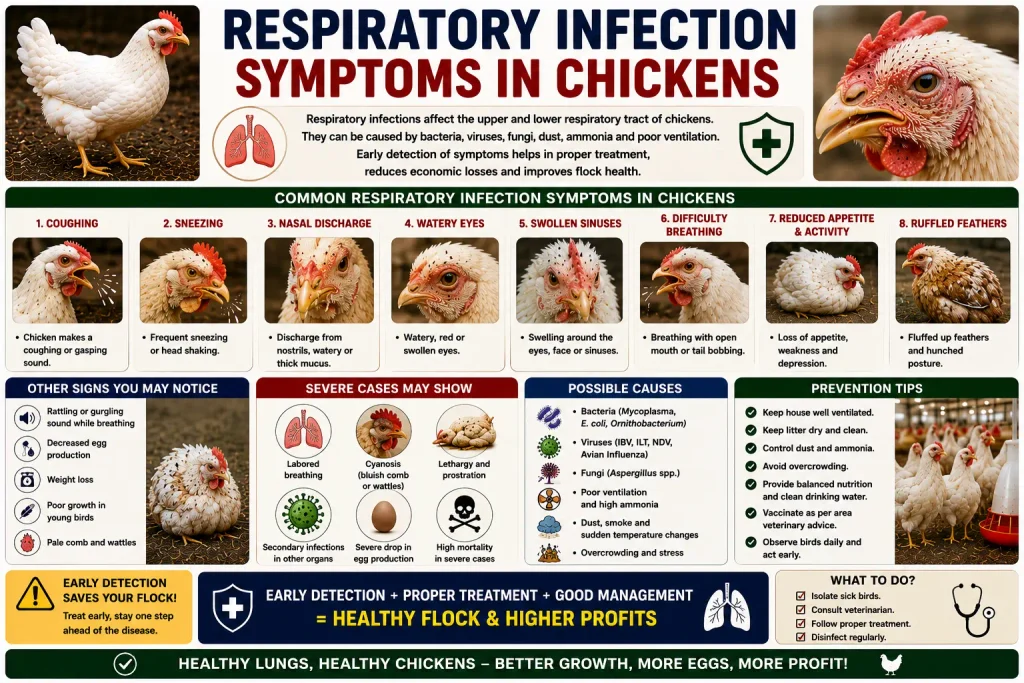
Early-Stage Respiratory Infection Symptoms
- Occasional sneezing
- Mild, clear nasal discharge
- Slightly reduced activity
- Watery eyes
- Slightly ruffled feathers
Did You Know? Many early respiratory symptoms overlap with normal dust irritation from bedding, which is why watching for a pattern over a day or two, rather than reacting to a single sneeze, gives a clearer picture.
Read More: https://lashegg.com/chicken-respiratory-infection-guide/
Moderate Respiratory Infection Symptoms
- Frequent coughing or sneezing
- Thicker or discolored nasal discharge
- Visible eye discharge or slightly swollen eyelids
- Reduced appetite
- Noticeable drop in energy or activity level
- Mild drop in egg production
Severe Respiratory Infection Symptoms
- Labored or open-mouth breathing
- Audible rattling, gurgling, or wheezing sounds
- Significant facial or sinus swelling
- Blue or purple discoloration of the comb (a sign of poor oxygenation)
- Complete loss of appetite
- Extreme lethargy or inability to stand
Warning: Open-mouth breathing, blue discoloration of the comb, or a bird unable to stand are emergency signs. Isolate the bird immediately and contact a vet as soon as possible.
Respiratory Symptom Progression Table
| Stage | Breathing | Discharge | Behavior | Urgency |
| Early | Normal | Mild, clear | Slightly quiet | Monitor |
| Moderate | Slightly labored | Thicker, discolored | Reduced appetite/energy | Isolate, monitor closely |
| Severe | Open-mouth, labored | Heavy, possibly blood-tinged | Extreme lethargy | Emergency vet care |
Chicken Breathing Problems: What Different Sounds Might Mean
| Sound | Possible Meaning |
| Sneezing only | Mild irritant or very early infection |
| Wheezing or rattling | Airway inflammation or fluid buildup |
| Gasping/gaping | Possible gapeworm or severe airway obstruction |
| Clicking sound while breathing | Often associated with certain respiratory infections affecting the trachea |
Expert Tip: Recording a short video or audio clip of unusual breathing sounds can help a vet assess severity remotely before an in-person visit, especially useful if symptoms started suddenly egg,
Symptom Differences by Likely Cause
While only testing can confirm the exact cause, certain symptom patterns are more commonly associated with specific respiratory illnesses.
| Symptom Pattern | Possibly Associated With |
| Rapid flock-wide sneezing, drop in egg quality | Infectious bronchitis |
| Chronic, recurring mild symptoms | Mycoplasma gallisepticum |
| Facial swelling, one-sided discharge | Infectious coryza |
| Severe breathing difficulty, blood-tinged discharge | Infectious laryngotracheitis |
| Symptoms plus nervous system signs (tremors, twisted neck) | Possible Newcastle disease, requires urgent vet attention |
How Vets Evaluate Respiratory Infection Symptoms
A vet typically starts with a physical exam, checking breathing sounds, discharge, and facial swelling, then considers flock history like recent additions or known exposure. In many cases, further diagnostic testing (such as swabs sent for lab analysis) is needed to pinpoint the exact organism responsible.
According to information summarized in the Merck Veterinary Manual, accurately identifying the cause behind respiratory infection symptoms in chickens matters because viral and bacterial causes require very different management approaches.
What to Do When You Spot Symptoms
Step-by-Step Response Plan:
- Isolate the symptomatic bird immediately to limit spread
- Note exactly which symptoms are present and how long they’ve lasted
- Check other flock members for early signs
- Improve coop ventilation and check for ammonia buildup
- Offer supportive care: clean water, electrolytes, warmth
- Contact a vet if symptoms are moderate to severe or spreading
- Continue monitoring daily, watching for progression or improvement
Common Mistakes:
- Waiting to isolate a bird until symptoms become severe
- Assuming a single sneeze means a full-blown infection and starting antibiotics unnecessarily
- Ignoring subtle signs like slightly reduced activity or appetite
- Not checking the rest of the flock once one bird shows symptoms
When to Call a Vet
When to Call a Vet:
- You notice open-mouth or labored breathing
- Facial swelling, blue comb discoloration, or blood-tinged discharge appears
- Multiple birds develop symptoms within a short period
- Symptoms don’t improve within a few days of supportive care
- You notice nervous system signs like tremors or a twisted neck alongside respiratory symptoms
Prompt veterinary evaluation matters most for sudden, severe, or flock-wide symptom patterns, since some causes can escalate quickly and a few are subject to reporting requirements through agricultural authorities in certain regions, per USDA and AVMA guidance.
Can Respiratory Symptoms Come and Go?
Yes, particularly with chronic causes like Mycoplasma gallisepticum, where birds may appear to recover and then show symptoms again during stress, cold weather, or after a new bird is introduced. This pattern doesn’t mean the underlying cause is fully resolved, even when visible symptoms disappear temporarily.
Do Respiratory Symptoms Always Mean Infection?
Not always. Environmental factors like ammonia buildup, dust, or poor ventilation can cause similar symptoms without an infectious cause. Improving air quality often resolves environmental cases, while infectious causes typically need more targeted treatment or supportive management.
FAQ: People Also Ask About Respiratory Infection Symptoms in Chickens
What are the first signs of respiratory infection symptoms in chickens? Early signs include occasional sneezing, mild clear nasal discharge, and slightly reduced activity, often before more obvious breathing difficulty appears.
What do chicken breathing problems sound like? They can range from mild sneezing to wheezing, rattling, gasping, or clicking sounds, each potentially pointing to a different underlying issue.
How fast do respiratory symptoms in chickens get worse? Symptoms can progress from mild to severe within just a few days, especially with highly contagious causes like infectious bronchitis.
Can respiratory infection symptoms be caused by something other than infection? Yes. Ammonia buildup, dust, and poor coop ventilation can all cause respiratory symptoms without an infectious cause being involved.
Should I isolate a chicken with respiratory symptoms right away? Yes. Isolating a symptomatic bird as soon as possible helps limit the spread of most respiratory infections to the rest of the flock.
When are respiratory symptoms in chickens an emergency? Open-mouth breathing, blue discoloration of the comb, and a bird unable to stand are emergency signs requiring immediate veterinary attention.
Wrapping Up: Watching for Respiratory Infection Symptoms
Respiratory infection symptoms in chickens can move from a simple sneeze to a serious breathing emergency faster than many owners expect. Learning to recognize each stage, from mild discharge to labored breathing, helps you respond at the right time instead of waiting too long.
Keep a close eye on your flock for sneezing, discharge, or unusual breathing sounds, and isolate any symptomatic bird right away. If symptoms are severe, spreading, or don’t improve with basic supportive care, a vet visit is the safest next step to protect the rest of your flock.
5. FAQ Section (Structured)
Q: What are common respiratory infection symptoms in chickens? A: Common symptoms include sneezing, nasal discharge, coughing, labored breathing, and reduced appetite or egg production.
Q: What causes chicken breathing problems? A: Breathing problems can stem from viral or bacterial respiratory infections, environmental irritants like ammonia, or in some cases, physical obstructions like gapeworms.
Q: How do I know if respiratory symptoms in my flock are serious? A: Labored or open-mouth breathing, blue comb discoloration, and extreme lethargy signal a serious case needing prompt veterinary care.
Q: Can mild respiratory symptoms in chickens go away on their own? A: Mild, environmentally caused symptoms often improve once air quality and ventilation improve, but infectious causes usually need more active management.