Infectious Bronchitis in Chickens: The Complete Owner’s Guide

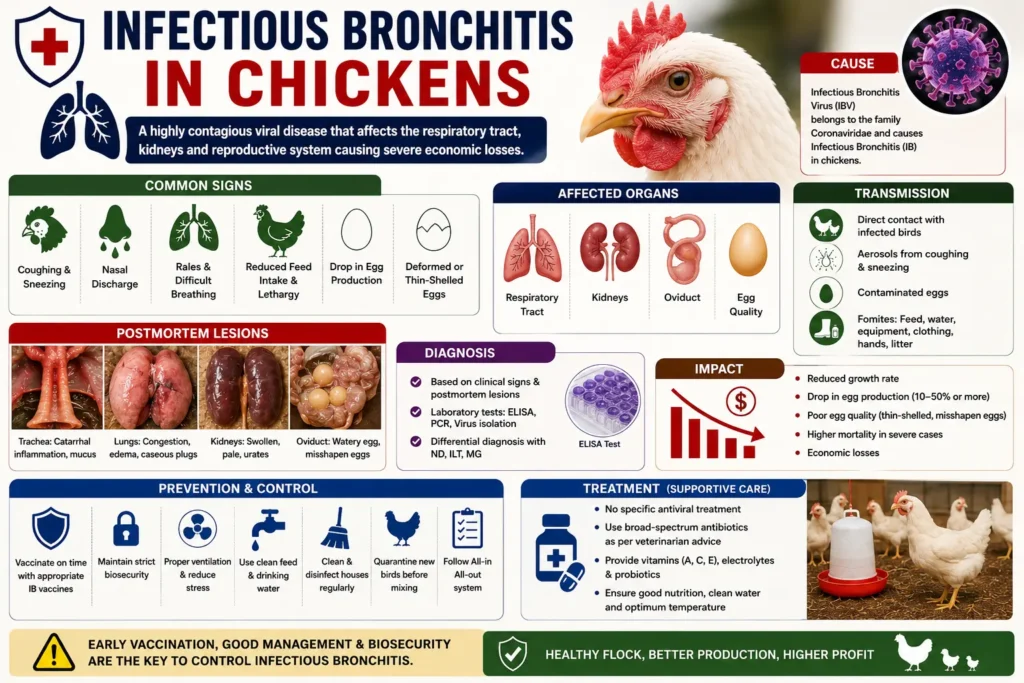
Quick Answer: Infectious bronchitis in chickens is a highly contagious viral disease that affects the respiratory system, kidneys, and reproductive tract. It spreads rapidly through a flock, causing sneezing, coughing, and a sharp drop in egg production and shell quality, even after respiratory symptoms clear. There’s no direct cure, so management focuses on supportive care, vaccination, and preventing spread to unaffected birds.
If your laying hens have suddenly started producing thin-shelled, oddly shaped, or fewer eggs alongside coughing and sneezing, chicken infectious bronchitis is one of the most likely explanations. It’s one of the most economically significant respiratory diseases in poultry worldwide, precisely because it affects both breathing and egg production at the same time.
This guide covers everything from how IB in chickens spreads, to symptoms across different systems, diagnosis, treatment limitations, and the vaccination strategies that actually reduce outbreak risk.
Table of Contents
What Makes Infectious Bronchitis Different From Other Respiratory Illnesses
Most respiratory infections in chickens primarily affect breathing. Infectious bronchitis is unusual because the virus can also target the kidneys and reproductive tract, depending on the specific strain involved. This is why a case of infectious bronchitis in chickens can look purely respiratory in one flock and involve serious egg quality issues or kidney damage in another.
The virus belongs to the coronavirus family and exists in numerous strains worldwide, which complicates both diagnosis and vaccine effectiveness, since immunity to one strain doesn’t always protect against others.
How Infectious Bronchitis Spreads
- Airborne transmission between birds in close contact
- Contaminated feed, water, and equipment
- Contact with infected droppings
- Movement of people, clothing, or tools between coops
- Introduction of new, infected birds without a quarantine period
Because the virus spreads through the air as well as direct contact, infectious bronchitis in chickens can move through an entire flock within just a few days of the first case appearing.
Symptoms of Infectious Bronchitis in Chickens
Respiratory Symptoms
- Sneezing and coughing
- Nasal discharge
- Rattling or gurgling breathing sounds
- Watery eyes
Reproductive System Symptoms
- Sudden drop in egg production
- Thin, soft, or misshapen eggshells
- Watery or abnormal egg white texture
- Reduced hatchability in breeding flocks
Kidney-Related Symptoms (Certain Strains)
- Increased water consumption
- Wet droppings
- Lethargy and reduced appetite in more severe kidney-affecting strains
Did You Know? Some infectious bronchitis strains cause primarily respiratory symptoms, while others target the kidneys or reproductive tract more heavily, which is part of why symptom presentation can vary so much between outbreaks.
Read More: https://lashegg.com/chicken-respiratory-infection-treatment/
Infectious Bronchitis Symptoms by System
| System Affected | Common Signs | Notes |
| Respiratory | Sneezing, coughing, discharge | Usually first symptoms to appear |
| Reproductive | Drop in egg production, poor shell quality | Can persist even after respiratory symptoms clear |
| Kidney (certain strains) | Increased thirst, wet droppings, lethargy | More serious strain-dependent outcome |
How Long Do Symptoms Last?
Respiratory symptoms often improve within 1 to 2 weeks in otherwise healthy adult birds. Egg production and shell quality issues can take considerably longer to fully recover, sometimes several weeks to a couple of months, even after the bird appears fully healthy otherwise.
Diagnosing Infectious Bronchitis in Chickens
A vet typically considers infectious bronchitis based on the classic combination of respiratory symptoms and a sudden egg production or quality drop, especially when multiple birds are affected within a short time. Laboratory testing, such as PCR testing on swabs, can confirm the virus and identify the specific strain involved.
According to guidance summarized in the Merck Veterinary Manual, strain identification matters for flocks with recurring outbreaks, since it can inform which vaccine type might offer better future protection.
Expert Tip: If you notice both respiratory symptoms and a sudden egg quality change at the same time, mention both to your vet, since this combination is a strong clue pointing toward infectious bronchitis specifically.
Treatment for Infectious Bronchitis in Chickens
There is no antiviral cure for infectious bronchitis. Treatment focuses entirely on supportive care and preventing secondary infections while the bird’s immune system clears the virus.
Supportive Care Steps
- Isolate affected birds to reduce further spread
- Provide clean water with electrolytes to support hydration
- Keep birds warm and in a low-stress, well-ventilated environment
- Offer easily digestible feed during recovery
- Monitor closely for secondary bacterial infections, which sometimes follow the initial viral illness
- Continue monitoring egg production and shell quality even after respiratory symptoms resolve
Warning: Antibiotics don’t treat the infectious bronchitis virus itself, but a vet may prescribe them if a secondary bacterial infection develops on top of the viral illness. Never use antibiotics as a standalone treatment for suspected IB in chickens.
Vaccination Against Infectious Bronchitis
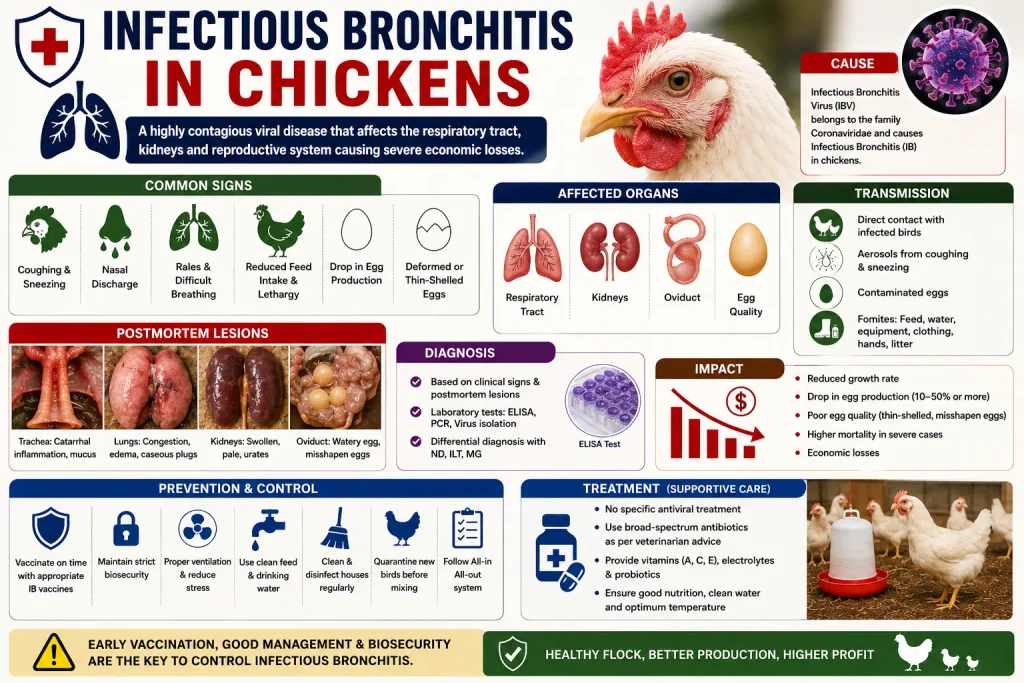
Vaccination is one of the most effective tools for reducing the severity and spread of infectious bronchitis in commercial and larger backyard flocks. Vaccines are typically given to young chicks and may involve a booster schedule depending on the specific product and regional strain prevalence.
| Vaccine Consideration | Details |
| Timing | Often given at hatch or in early weeks of life |
| Strain matching | Vaccine effectiveness depends partly on matching local circulating strains |
| Booster needs | Some programs require periodic boosters, especially for laying flocks |
| Backyard flock use | Increasingly available, though less standardized than commercial programs |
Expert Tip: If you’ve had repeated infectious bronchitis outbreaks in your flock, ask a vet or local extension poultry specialist about which vaccine strain best matches what’s circulating in your region.
Common Mistakes When Managing Infectious Bronchitis
Common Mistakes:
- Assuming antibiotics will cure the infection, when they only address secondary bacterial issues
- Returning recovered birds to unaffected flocks too soon
- Overlooking ongoing egg quality issues after respiratory symptoms clear
- Skipping vaccination in flocks with a history of repeated outbreaks
- Introducing new birds without a proper quarantine period
When to Call a Vet
When to Call a Vet:
- Multiple birds show respiratory symptoms within a short window
- Egg production or shell quality drops suddenly alongside respiratory signs
- Symptoms include increased thirst or unusually wet droppings, suggesting possible kidney involvement
- Symptoms don’t improve within 1 to 2 weeks
- You’re planning a vaccination program and want strain-specific guidance
Vet involvement is particularly valuable for confirming infectious bronchitis versus other causes of chicken respiratory disease, since management and long-term prevention strategies differ.
Preventing Infectious Bronchitis in Your Flock
Biosecurity Basics
- Quarantine new birds for at least 2–4 weeks before introducing them
- Limit visitor access to coops and clean footwear/equipment between different bird areas
- Avoid sharing equipment between flocks without cleaning and disinfecting first
Flock Management
- Consider vaccination, especially for larger flocks or areas with known outbreak history
- Reduce overcrowding and unnecessary stress
- Maintain good coop ventilation and clean, dry bedding
Can Infectious Bronchitis Affect Meat Birds Differently Than Layers?
Yes, to some degree. While respiratory symptoms occur in both, the egg production and shell quality impact is specific to laying flocks. Meat birds primarily show respiratory and, in some strain cases, kidney-related symptoms without the egg-related component.
Does Recovery From Infectious Bronchitis Provide Lasting Immunity?
Recovered birds typically develop some immunity to the specific strain they were exposed to, but this doesn’t guarantee protection against other circulating strains, which is part of why infectious bronchitis in chickens can recur in the same flock from a different strain.
FAQ: People Also Ask About Infectious Bronchitis in Chickens
What is infectious bronchitis in chickens? It’s a highly contagious viral respiratory disease that also affects egg production, shell quality, and sometimes kidney function, depending on the strain.
How does chicken infectious bronchitis spread? It spreads through airborne transmission, direct contact, contaminated equipment, and introduction of infected birds without quarantine.
Can infectious bronchitis in chickens be cured? No. There’s no direct antiviral cure. Treatment relies on supportive care while the bird’s immune system clears the virus.
Does IB in chickens affect egg production permanently? Not usually. Most hens recover normal egg production and shell quality over several weeks to a couple of months, though severe cases can cause longer-lasting effects.
Is there a vaccine for infectious bronchitis in chickens? Yes. Vaccination is widely used, particularly in commercial flocks, and is increasingly available for backyard flock owners as well.
Can chickens get infectious bronchitis more than once? Yes, since there are multiple viral strains and immunity to one doesn’t reliably protect against others.
Wrapping Up: Managing Infectious Bronchitis in Chickens
Infectious bronchitis in chickens is fast-spreading, has no direct cure, and can hit both respiratory health and egg production hard. Supportive care, quick isolation, and, where appropriate, vaccination are the main tools available for managing and reducing outbreak impact.
Watch your flock closely for the combination of respiratory symptoms and egg quality changes, since together they’re a strong signal pointing toward this specific illness. If symptoms are widespread, severe, or don’t improve within a couple of weeks, a vet can help confirm the diagnosis and guide your next steps.
5. FAQ Section (Structured)
Q: What causes infectious bronchitis in chickens? A: It’s caused by a coronavirus that spreads easily through airborne transmission, direct contact, and contaminated equipment.
Q: What are the signs of chicken infectious bronchitis? A: Signs include sneezing, coughing, nasal discharge, a drop in egg production, and poor eggshell quality.
Q: How is IB in chickens treated? A: There’s no direct cure. Treatment relies on supportive care such as hydration, warmth, and isolation while the immune system clears the virus.
Q: Can infectious bronchitis in chickens be prevented? A: Vaccination, quarantine for new birds, and strong biosecurity practices are the main prevention strategies.