Do Chickens Stop Laying Eggs As They Get Older? Yes, Gradually

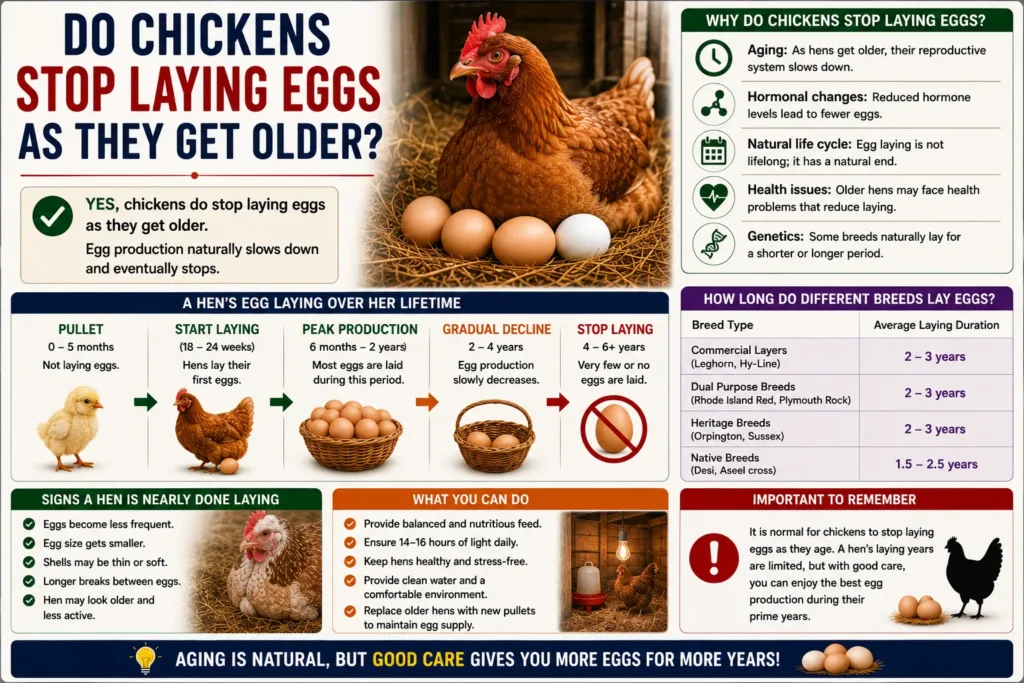
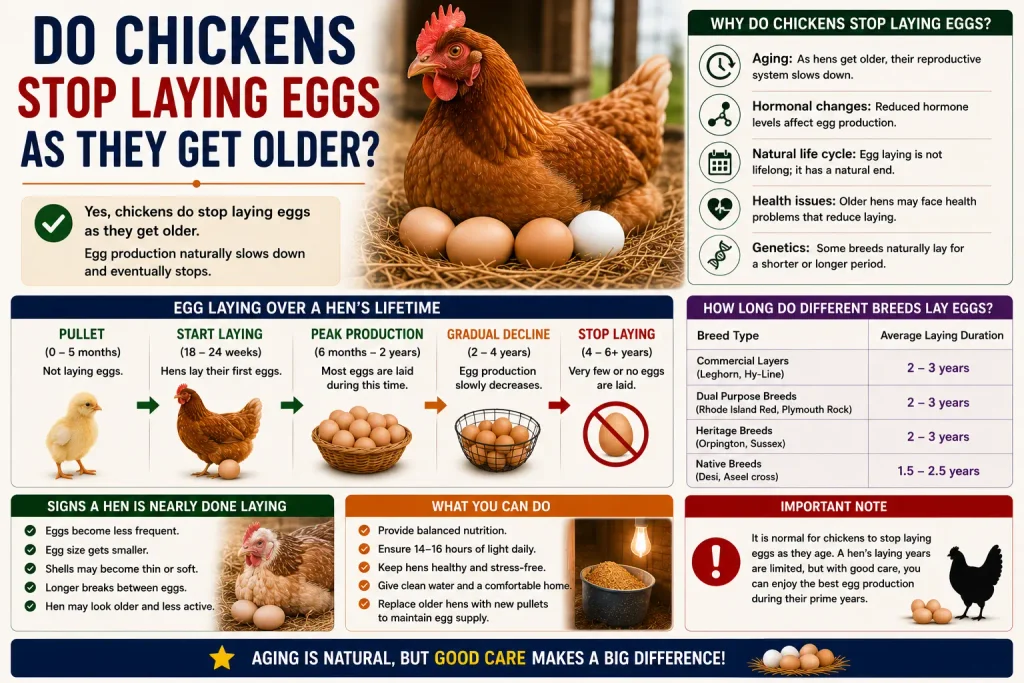
Do chickens stop laying eggs as they get older is a question with a simple biological answer, but a much more complicated practical one. Yes, egg production naturally declines with age, but the real question most keepers are actually asking is what to do about it once it happens.
This guide skips past the basic biology, covered in depth elsewhere, and focuses on the decisions keepers actually face: how to tell normal age-related decline from illness, whether to keep older hens as pets, how to integrate new layers, and how to support a flock that includes both young and aging birds.
Quick Answer: Yes, chickens stop laying eggs as they get older, though the process is gradual rather than sudden. Older hens not laying at full capacity anymore is completely normal after roughly 2 to 3 years. Most keepers either retire older hens as non-laying flock members or gradually introduce younger pullets to maintain overall egg output.
Table of Contents
The Real Question Behind “Do Chickens Stop Laying Eggs As They Get Older”
It’s Rarely an All-or-Nothing Switch
Most older hens not laying at their previous rate still produce occasional eggs for years, rather than stopping completely overnight. Age and egg production have a gradual relationship, which means the practical question isn’t usually “has she stopped” but “how much has she slowed, and what should I do about it.”
Why This Matters for Flock Planning
Understanding that decline is gradual changes how keepers plan. Rather than reacting suddenly when one hen “stops,” most flocks benefit from an ongoing rotation approach that accounts for age and egg production shifting slowly across the whole group over time.
| Age Range | Typical Status | Planning Consideration |
| 1–2 years | Peak production | Primary egg source |
| 3–4 years | Moderate decline | Still contributing, less reliably |
| 5–6 years | Significant decline | Occasional eggs, mostly retired |
| 7+ years | Minimal to no laying | Fully retired, companion role |
Deciding What to Do With Older Hens Not Laying
Option 1: Keep Them as Retired Flock Members
Many backyard keepers choose to keep older, non-laying hens simply as pets and flock companions. Hens often continue contributing in non-egg ways, including pest control, flock social structure, and, for some breeds, natural predator awareness that benefits younger birds.
Option 2: Rehome or Sell as Non-Layers
Some keepers choose to rehome older hens to people specifically looking for calm, established birds rather than high egg output, such as those wanting flock companions or 4-H and educational settings.
Option 3: Processing for Meat
In some situations, particularly larger or homestead-style operations, older hens are processed once laying drops significantly. This is a personal and practical decision that depends on a keeper’s goals, though older hens generally produce tougher meat suited to slow cooking methods rather than quick roasting.
| Option | Best For | Considerations |
| Keep as pets | Small backyard flocks, sentimental value | Ongoing feed costs without egg return |
| Rehome | Keepers wanting to reduce flock size | Requires finding an appropriate home |
| Process for meat | Homestead or production-focused setups | Different cooking approach than young birds |
Did You Know? Some heritage breed hens have been documented laying occasional eggs into their eighth or ninth year, though this level of longevity in laying is the exception rather than the rule.
Integrating New Pullets With Older Hens
Why Rotation Matters
Since age and egg production decline gradually rather than all at once, most keepers maintain steady household egg supply by adding younger pullets every year or two rather than waiting until older hens stop laying almost entirely.
Step-by-Step: Introducing Younger Birds
- Quarantine new pullets first. Keep new birds separate for at least two weeks to prevent introducing illness to the established flock.
- Introduce gradually with visual contact. A shared fence line or side-by-side pens for several days reduces aggression during the eventual full introduction.
- Provide enough space for both groups. Overcrowding increases stress and aggression, particularly when combining different age groups.
- Watch the pecking order settle. Some squabbling is normal as a new hierarchy forms; injuries or one bird being relentlessly targeted are not.
- Feed appropriately for mixed ages. A complete layer feed generally works for both groups once pullets reach laying age, with oyster shell offered separately.
Read More: https://lashegg.com/how-long-do-chickens-lay-eggs/
Expert Tip
Stagger new pullet additions by a year or two rather than replacing the whole flock at once. This keeps a more consistent overall egg supply and avoids the awkward transition period where an entire flock ages out of peak production simultaneously.
Normal Aging vs. a Health Problem in Older Hens
Signs That Point to Normal Aging
- Gradual decline over successive years, not a sudden stop
- Continued normal appetite, activity, and behavior
- Occasional eggs still produced, even if infrequent
- Decline that lines up with molting cycles and shorter daylight
Signs That Point to a Health Issue Instead
- Sudden, complete stop in a hen still within her expected productive years
- Lethargy, weight loss, or reduced activity alongside the decline
- Vent discharge, straining, or a swollen abdomen
- Pale comb color or other signs of illness
According to the Merck Veterinary Manual, reproductive tract changes become more common as hens age, including an increased risk of tumors or chronic oviduct issues, which is part of why sudden or unusual changes in older hens deserve more attention than a simple, gradual slowdown.
Common Mistakes to Avoid
- Assuming every older hen with reduced laying is simply “getting old” without checking for other symptoms
- Waiting until a hen stops laying entirely before considering flock rotation planning
- Forcing older hens into aggressive lighting schedules meant for younger, peak-production birds
- Introducing new pullets without a proper quarantine and gradual introduction period
- Overlooking the ongoing value, and cost, of keeping non-laying hens long-term
Warning
A sudden, severe drop in a hen who was previously laying consistently, especially if she’s not yet in her expected decline years, should not be assumed to simply be about age. This pattern deserves a health check rather than an assumption that “she’s just getting older.”
When to Call a Vet
Contact a poultry veterinarian if an older hen’s laying decline is sudden rather than gradual, or if it’s accompanied by lethargy, weight loss, vent discharge, or a swollen abdomen. Reproductive tumors and chronic disease become more common with age, and a vet can help distinguish these from simple, expected decline.
People Also Ask
Do chickens stop laying eggs as they get older, or just slow down? Most hens slow down gradually rather than stopping completely, often continuing to produce occasional eggs well into their later years.
At what age are older hens not laying much anymore? Significant decline typically becomes noticeable around 3 to 4 years old, with most hens laying only occasionally by 5 to 6 years.
Is it worth keeping chickens after they stop laying regularly? Many keepers find value in keeping older hens for companionship, pest control, and flock stability, even once regular egg production has dropped off.
How does age and egg production interact with molting? Older hens often take longer to resume laying after each molt compared to younger birds, contributing to the overall gradual decline in output.
Can older hens still lay eggs even if they’ve slowed down significantly? Yes, many hens continue laying occasional eggs for years after their peak, even once frequency has dropped well below their first-year output.
Final Thoughts
Do chickens stop laying eggs as they get older comes down to a clear yes, but the decline happens gradually over several years rather than all at once. The more useful question for most keepers becomes what to do about older hens not laying like they used to, whether that’s retiring them as pets, rehoming them, or planning flock rotation with younger pullets.
Watch for the difference between normal, gradual aging and a sudden or unusual drop in production, and reach out to a poultry veterinarian if an older hen’s decline comes with other symptoms rather than following the expected, gradual pattern.
5. FAQ
Q: Do chickens stop laying eggs as they get older all at the same age? A: No, the timing varies by breed and individual hen, though most show noticeable decline starting around 3 to 4 years old.
Q: What should I do with older hens not laying anymore? A: Many keepers retire older hens as companion flock members, rehome them to keepers seeking calm established birds, or in some setups, process them, depending on personal goals.
Q: Does age and egg production decline affect all breeds the same way? A: No, production hybrids often decline faster after an early peak, while heritage breeds tend to show a more gradual decline spread across more years.
Q: Can I bring an older hen back into heavier laying? A: Supportive care like good nutrition and low stress can help an older hen lay closer to her natural potential, but it won’t restore her to first-year peak production levels.
Q: Is it normal for older hens to skip laying during molt entirely? A: Yes, and older hens often take longer than younger birds to resume laying after a molt, which is a normal part of the aging pattern.