How Many Eggs Does a Chicken Lay? The Numbers That Matter

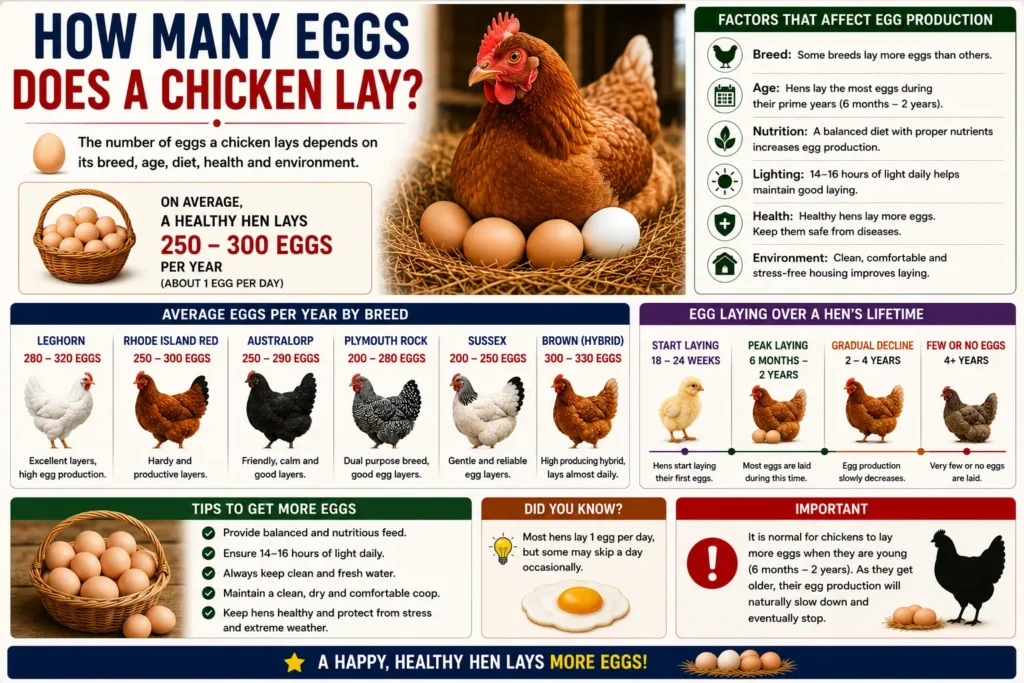
How many eggs does a chicken lay is usually one of the very first practical questions anyone asks before choosing a breed or planning flock size. The honest answer ranges widely, from under 100 eggs per year for some ornamental breeds to well over 300 for top production hybrids.
This guide breaks down realistic eggs per year numbers by breed category, the specific factors that push chicken egg production up or down, and how to set reasonable expectations for your own flock rather than relying on marketing claims from hatchery catalogs.
Quick Answer: A healthy hen typically lays between 150 and 300 eggs per year, depending heavily on breed. Production hybrids often reach 280 to 300+ eggs annually, while heritage breeds usually average 150 to 200. Age, season, nutrition, and overall health all affect how many eggs does a chicken lay in any given year.
Table of Contents
Average Eggs Per Year by Breed
Production Hybrids
Breeds developed specifically for commercial and backyard egg production consistently top the list for annual output. These birds have been selectively bred over many generations purely for laying frequency.
| Breed | Average Eggs Per Year |
| ISA Brown | 300–320 |
| Golden Comet | 280–300 |
| Leghorn | 280–300 |
| Rhode Island Red (production line) | 250–280 |
Standard Dual-Purpose Breeds
These breeds balance egg production with other traits like meat quality or hardiness, generally landing in a solid middle range for chicken egg production.
| Breed | Average Eggs Per Year |
| Plymouth Rock | 200–280 |
| Wyandotte | 180–260 |
| Australorp | 250–300 |
| Sussex | 200–250 |
Heritage and Ornamental Breeds
Breeds prized for appearance, broodiness, or historical value typically lay fewer eggs per year, though many keepers value these breeds for reasons beyond raw output.
| Breed | Average Eggs Per Year |
| Orpington | 175–200 |
| Brahma | 120–150 |
| Silkie | 100–120 |
| Polish | 150–180 |
Did You Know? The numbers above reflect a hen’s first one to two peak years. Chicken egg production naturally declines year over year afterward, meaning lifetime totals look quite different from a single strong year’s output.
Read More: https://lashegg.com/do-chickens-stop-laying-eggs-as-they-get-older/
What Actually Determines How Many Eggs a Chicken Lays
1. Breed and Genetics
As shown above, genetics set the baseline potential for eggs per year more than any other single factor. No amount of care will push a heritage breed to match a production hybrid’s output, and that’s by design rather than a flaw.
2. Age
A hen’s first year is typically her most productive, with output gradually declining afterward. This means the eggs per year figures above apply best to a hen’s peak years rather than her entire lifespan.
3. Daylight and Season
Since egg production depends on light-triggered hormone signals, hens in regions with long summer days and short winter days will show more seasonal variation than those in more consistently lit environments or with supplemental lighting.
4. Nutrition
A complete, balanced layer feed with adequate protein and calcium supports a hen reaching her genetic potential for chicken egg production. Poor nutrition can meaningfully reduce output regardless of breed.
5. Health and Stress
Parasites, illness, and chronic stress from overcrowding or predator pressure all reduce how many eggs a hen lays, sometimes significantly, even in breeds known for high output.
6. Molting
Hens typically pause laying entirely during their annual molt, which can last several weeks to a couple of months and directly reduces the year’s total egg count.
Eggs Per Year: Realistic Expectations vs. Hatchery Claims
| Source | Typical Claim | Realistic Backyard Result |
| Hatchery catalog | “Up to 300+ eggs per year” | Often 250–280 under average backyard conditions |
| Breed standard description | General range given | Varies by individual hen and care quality |
| First-year peak | Highest of a hen’s life | Not sustained in following years |
Why Backyard Numbers Often Run Lower Than Advertised
Commercial hatchery figures often reflect ideal conditions: controlled lighting, optimized nutrition, and climate-controlled housing. Backyard flocks dealing with natural seasonal light, variable weather, and more relaxed feeding schedules should expect solid, but usually somewhat lower, real-world chicken egg production.
Calculating Expected Output for Your Flock
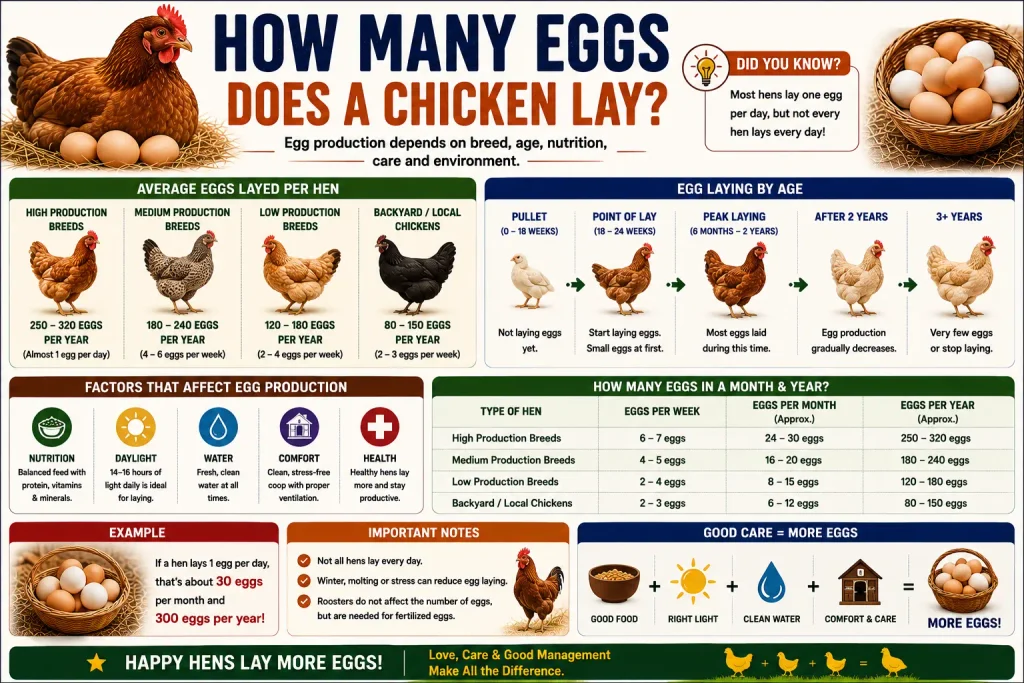
Step-by-Step: Estimating Your Flock’s Eggs Per Year
- List each hen’s breed and age. Different breeds and ages contribute very differently to total output.
- Apply realistic per-breed averages. Use the ranges above rather than peak hatchery marketing numbers.
- Adjust for age. Reduce expected output by roughly 10–20% per year past a hen’s first laying year.
- Factor in your climate. Regions with harsh winters or extreme summers may see lower annual totals without supplemental lighting or cooling support.
- Account for molting downtime. Subtract roughly 4–8 weeks of reduced or paused laying per hen per year.
Expert Tip
Track actual daily egg counts for a full year before trusting any general average for your specific flock. Individual hens, even within the same breed, can vary meaningfully, and your own data will always be more useful for planning than a generic chart.
Boosting Chicken Egg Production Responsibly
What Actually Helps
- Providing a complete, balanced layer feed with consistent access to fresh water
- Ensuring 14 to 16 hours of light through natural or supplemental sources
- Maintaining a clean, low-stress environment with adequate space per bird
- Addressing parasites and health issues promptly
What to Avoid
- Forcing continuous light exposure without any natural rest period
- Overfeeding treats at the expense of a nutritionally complete diet
- Assuming supplements or additives can override a breed’s genetic ceiling for eggs per year
Common Mistakes to Avoid
- Comparing your flock’s actual output directly to hatchery marketing numbers
- Expecting heritage breeds to match hybrid production levels
- Ignoring the impact of molting and seasonal light on annual totals
- Overlooking individual hen variation within the same breed
- Pushing for maximum output without considering long-term flock health
Warning
Chasing maximum chicken egg production through excessive artificial lighting or forced feeding practices can shorten a hen’s overall productive lifespan and increase the risk of reproductive issues like egg binding or egg yolk peritonitis. Sustainable, moderate management tends to serve backyard flocks better than maximizing every possible egg.
When to Call a Vet
Contact a poultry veterinarian if egg output drops well below expected ranges for a hen’s breed and age, especially alongside lethargy, weight loss, or other symptoms. A sudden, unexplained drop in a flock that previously matched expected eggs per year figures may point to illness, parasites, or an environmental issue worth investigating rather than normal variation.
People Also Ask
How many eggs does a chicken lay in a week? Most productive hens lay 5 to 6 eggs per week during peak season, which translates to the 250–300+ annual figures seen in top-performing breeds.
What breed of chicken lays the most eggs per year? Production hybrids like ISA Browns, Golden Comets, and Leghorns typically top the charts, often reaching 280 to 320 eggs annually under good conditions.
Does chicken egg production change with the seasons? Yes, most hens lay more during long summer days and less during shorter winter days unless supplemental lighting is used to maintain consistent day length.
How many eggs does a chicken lay in its first year compared to later years? The first year is typically a hen’s most productive, with output gradually declining by roughly 10 to 20% each subsequent year.
Can diet really change how many eggs a chicken lays? Yes, a complete layer feed with adequate protein and calcium supports a hen reaching her genetic potential, while poor nutrition can noticeably reduce output regardless of breed.
Final Thoughts
How many eggs does a chicken lay depends heavily on breed, with realistic backyard ranges running from around 100 eggs per year for ornamental breeds up to 300 or more for dedicated production hybrids. Age, season, nutrition, and overall health all shape the final number for any individual hen.
Track your own flock’s real output over time rather than relying solely on hatchery averages, and reach out to a poultry veterinarian if chicken egg production drops well below expected levels alongside other signs of illness.
5. FAQ
Q: How many eggs does a chicken lay per day? A: Chickens do not lay eggs daily in a strict sense; most productive hens lay an egg roughly every 24 to 26 hours, resulting in about 5 to 6 eggs per week at peak.
Q: What is a realistic average for eggs per year across most backyard breeds? A: A reasonable backyard average across mixed breeds often falls between 180 and 250 eggs per year, factoring in both hybrid and heritage-type hens.
Q: Does chicken egg production ever fully stop? A: Yes, eventually output declines significantly with age, though many hens continue laying occasionally for years even after peak production ends.
Q: How many eggs does a chicken lay without a rooster present? A: A rooster has no effect on the number of eggs a hen lays; roosters are only necessary for fertilizing eggs intended for hatching.
Q: Can two hens of the same breed lay very different numbers of eggs per year? A: Yes, individual variation in health, stress, and body condition can lead to noticeably different output even between hens of the same breed and age.