What Are Common Egg Abnormalities?

If you collect eggs regularly, you have probably found one that looked off. A shell with bumps. A double yolk. A watery white. These are common egg abnormalities, and most backyard chicken keepers see them at some point.
An egg abnormality is any change in shell, shape, size, color, or internal content that differs from a typical egg. Some are harmless one-off events. Others point to nutrition gaps, stress, aging hens, or disease in the flock.
Table of Contents
Quick Answer: Most common egg abnormalities come from a hen’s age, diet, stress, or the normal wear of her reproductive system. Occasional odd eggs are usually nothing to worry about. A sudden pattern across many hens is worth investigating.
This guide breaks down every major type of abnormal egg, what causes it, how to tell a harmless quirk from a warning sign, and when it’s time to call a vet.
Read More: https://lashegg.com/abnormal-chicken-eggs/
How Eggs Are Formed (And Why That Matters)
To understand common egg abnormalities, it helps to know how an egg is built. The process takes roughly 24 to 26 hours from start to finish, and it happens inside the hen’s reproductive tract in stages.
- Ovulation – A yolk releases from the ovary.
- Magnum – Egg white (albumen) layers form around the yolk.
- Isthmus – The shell membranes wrap the contents.
- Uterus (shell gland) – The hard shell forms over about 20 hours, including pigment.
- Vagina – The finished egg is laid, pointed end first.
A disruption at any stage — a stressful noise, a nutrient shortage, a viral infection, or simple aging — can change the outcome. That is why so many different problems fall under the umbrella of common egg abnormalities.
Types of Abnormal Eggs: Shell Defects
Shell problems are the most visible and the most frequently reported types of abnormal eggs. They usually trace back to how the shell gland functioned during that 20-hour window.
Soft-Shelled or Shell-less Eggs
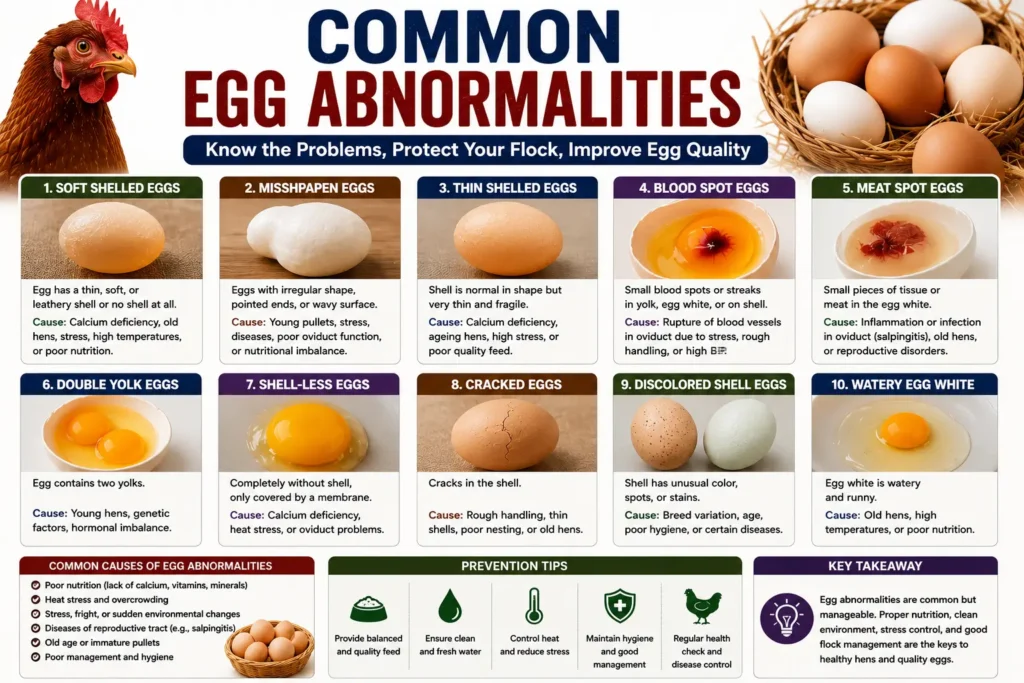
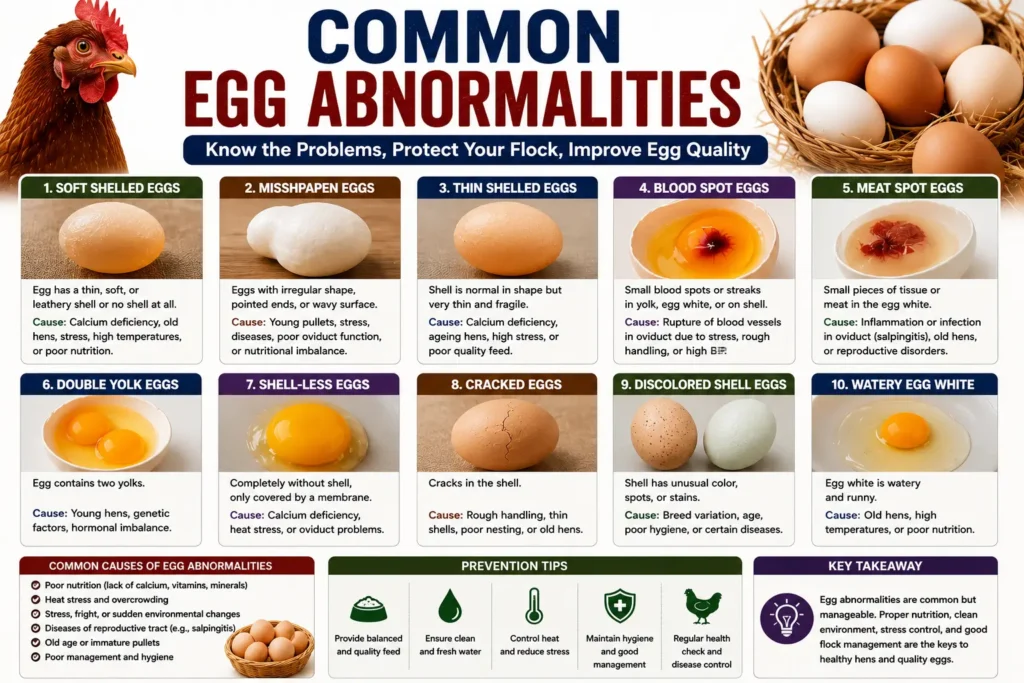
These eggs have a thin, rubbery membrane instead of a hard shell, or no shell at all. It’s common in young hens just starting to lay, since their shell gland hasn’t matured yet. In older hens, it can signal calcium deficiency or a rushed egg-laying cycle.
Thin or Fragile Shells
Shells that crack easily under normal handling often point to low dietary calcium, vitamin D deficiency, heat stress (hens eat less in hot weather, which lowers calcium intake), or age-related decline in shell quality.
Wrinkled or Ridged Shells
Fine wrinkles or raised ridges form when the egg pauses briefly during shell formation. Respiratory infections like infectious bronchitis are a well-documented cause, along with stress and overcrowding in the laying house.
Misshapen or Lopsided Eggs
Odd shapes — elongated, flat-sided, or pinched in the middle — happen when two eggs meet in the shell gland at once, or when the egg’s normal rotation is interrupted.
Chalky or Rough-Textured Shells
Extra calcium deposits create a sandpaper-like texture on the surface. This is usually a random one-off and not a health concern on its own.
Pale or Discolored Shells
Pigment is laid down last, so anything that speeds up the laying process — stress, disease, or a hen simply nearing the end of her cycle — can leave a shell pale or unevenly colored.
Table 1: Shell Defect Comparison
| Defect | Appearance | Most Common Cause | Concern Level |
| Soft-shelled | Rubbery, bendable | Young or aging hen, low calcium | Low, unless frequent |
| Thin shell | Cracks easily | Calcium/vitamin D deficiency, heat | Moderate |
| Wrinkled/ridged | Bumpy surface texture | Stress, respiratory infection | Moderate to high |
| Misshapen | Odd shape | Two eggs colliding in oviduct | Low |
| Chalky | Rough, sandpapery | Excess shell gland deposit | Low |
| Pale shell | Lighter than usual | Rushed formation, stress, disease | Moderate |
Types of Abnormal Eggs: Internal Abnormalities
Not every abnormal egg shows up on the outside. Cracking one open can reveal its own set of common egg abnormalities.
Double Yolks
Two yolks released close together get wrapped in one shell. This is common in young pullets whose ovulation timing isn’t fully regulated yet, and in certain breeds prone to it genetically.
No Yolk (Yolkless Eggs)
Sometimes a small piece of tissue triggers the oviduct to build a full egg around it, with no yolk inside. These “wind eggs” or “witness eggs” are typically laid by young hens starting production, or occasionally by older hens near the end of laying.
Blood Spots
A small ruptured blood vessel during ovulation leaves a red or brown spot on the yolk. It’s a cosmetic issue, not a sign the egg is unsafe, and it’s more common in brown-egg breeds.
Meat Spots
Tiny bits of reproductive tissue can shed into the egg during formation, appearing as brownish specks in the white. Like blood spots, they don’t make the egg unsafe to eat.
Watery Whites
As hens age, or in warm storage conditions, the thick albumen breaks down and becomes runny. This affects egg quality, not necessarily safety.
Double-Yolk vs. Yolkless: Quick Comparison
| Feature | Double Yolk | Yolkless Egg |
| Cause | Two yolks released together | Tissue fragment triggers oviduct |
| Typical hen | Young, high-production breeds | Young pullets or old hens |
| Shell size | Often larger than average | Usually smaller |
| Health concern | None | None |
Did You Know? Double-yolk eggs are more common in breeds bred for heavy egg production, since their reproductive systems are pushed to release eggs faster than the body can always regulate.
Types of Abnormal Eggs: Size and Shape Issues
Extra-Small or “Fairy” Eggs
Tiny eggs, sometimes with no yolk, often appear at the very start or the very end of a hen’s laying cycle.
Giant or Double-Yolked Extra-Large Eggs
Unusually large eggs are usually double yolks, but occasionally they contain extra fluid or a foreign object that triggered extra albumen production.
Egg-Within-an-Egg
Rare but real: a fully formed egg gets caught by a reverse peristaltic contraction and pulled back up the oviduct, where a second shell forms around it. It looks unusual but isn’t dangerous.
Common Causes Behind Egg Abnormalities
Most common egg abnormalities trace back to one of these root causes. Identifying the right one is the fastest way to fix the problem.
- Age – Pullets just starting to lay and hens nearing the end of production are the most likely to produce odd eggs.
- Nutrition gaps – Low calcium, phosphorus, vitamin D, or overall protein deficiency weaken shell and yolk formation.
- Heat stress – Hot weather reduces feed intake, which lowers calcium and nutrient uptake.
- Stress and disturbance – Loud noises, predators, overcrowding, or sudden environmental changes interrupt the laying cycle.
- Genetics and breed – Some breeds are simply more prone to double yolks or blood spots.
- Disease – Respiratory viruses like infectious bronchitis, and reproductive infections, are documented causes of shell defects and drops in egg quality.
- Medication or toxin exposure – Certain drugs and environmental toxins can interfere with shell gland function.
Expert Tip: Keep a simple log of abnormal eggs by date and hen (if you can identify individual layers). A pattern over days or weeks tells you far more than a single strange egg.
Egg Abnormalities Linked to Disease
While a single odd egg is rarely a red flag, a flock-wide pattern of common egg abnormalities can point to infectious disease. This is where home observation should shift toward professional evaluation.
Infectious Bronchitis
This respiratory virus in chickens is one of the most frequently cited causes of misshapen, wrinkled, and thin-shelled eggs, according to veterinary references such as the Merck Veterinary Manual. Affected flocks often show a sharp, sudden drop in both egg quality and quantity.
Egg Drop Syndrome
This viral condition specifically targets the shell gland, producing soft-shelled or shell-less eggs along with a general decline in production, most often in older laying flocks.
Newcastle Disease
A serious viral disease that can cause thin, rough, or discolored shells alongside broader flock health symptoms like respiratory distress and reduced activity.
Mycoplasma and Other Bacterial Infections
These infections can lower overall egg quality and are often accompanied by other symptoms like nasal discharge or swollen sinuses.
Warning: If abnormal eggs appear alongside coughing, sneezing, lethargy, reduced appetite, or a sudden flock-wide production drop, treat it as a potential disease outbreak, not just an egg quality issue. Isolate affected birds and contact a poultry veterinarian.
Table 2: Disease-Linked Symptoms
| Disease | Egg Signs | Other Flock Symptoms |
| Infectious bronchitis | Wrinkled, thin, misshapen shells | Respiratory signs, drop in lay rate |
| Egg drop syndrome | Soft or shell-less eggs | Often no other visible symptoms |
| Newcastle disease | Thin, rough, pale shells | Respiratory and nervous system signs |
| Mycoplasma infection | Reduced shell quality | Nasal discharge, swollen sinuses |
When to Call a Vet
When to Call a Vet:
- More than one or two hens are laying abnormal eggs at the same time
- Abnormal eggs appear alongside coughing, sneezing, or lethargy
- Egg production drops sharply across the flock
- You notice blood or discharge from a hen’s vent
- The pattern continues for more than a week with no clear cause (diet, heat, stress)
A single strange egg from one hen is rarely worth a vet visit. A flock-wide shift in egg quality, especially with other symptoms, deserves professional attention. Diagnosis of underlying viral or bacterial disease requires testing that only a veterinarian or diagnostic lab can perform.
Common Mistakes Flock Owners Make
Common Mistakes:
- Assuming every odd egg means disease (most don’t)
- Overcorrecting calcium without checking the whole diet
- Ignoring a pattern because “it’s just one hen”
- Not separating layer feed from feed meant for chicks or roosters
- Waiting too long to isolate a sick-looking bird
How to Prevent Common Egg Abnormalities
Prevention comes down to consistent care rather than one single fix.
- Feed a complete layer ration with balanced calcium, phosphorus, and vitamin D3, appropriate for the hen’s age and production stage.
- Offer supplemental calcium such as crushed oyster shell alongside feed, not mixed directly into it, so hens can self-regulate intake.
- Reduce heat stress with shade, ventilation, and cool water during hot months.
- Minimize sudden disturbances like predator scares, loud construction, or abrupt changes to the coop.
- Maintain a stable routine for light exposure, since laying cycles are tied closely to light patterns.
- Monitor flock health regularly and isolate any bird showing respiratory or digestive symptoms.
- Keep the coop clean to reduce disease pressure and parasite load, both of which can affect egg quality indirectly.
University extension services and organizations like the USDA and AVMA consistently point to nutrition and stress management as the two biggest levers flock owners actually control.
Are Abnormal Eggs Safe to Eat?
In most cases, yes. Blood spots, meat spots, double yolks, wrinkled shells, and pale coloring do not make an egg unsafe. The exception is any egg with a compromised shell that has been sitting unrefrigerated, since a cracked or shell-less egg is more exposed to bacteria like Salmonella. When in doubt, cook it thoroughly or discard it.
Common Egg Abnormalities: Frequently Searched Questions Answered in This Article
Throughout flock-keeping forums and search queries, a handful of questions come up again and again about common egg abnormalities. Here’s where they’re addressed above:
- Why is my hen laying eggs with no shell? → See “Soft-Shelled or Shell-less Eggs”
- Why do some eggs have two yolks? → See “Double Yolks”
- What causes blood spots in eggs? → See “Blood Spots”
- Are wrinkled eggs a sign of illness? → See “Wrinkled or Ridged Shells” and “Egg Abnormalities Linked to Disease”
- Can stress cause abnormal eggs? → See “Common Causes Behind Egg Abnormalities”