Can Humans Catch Salpingitis From Chickens?

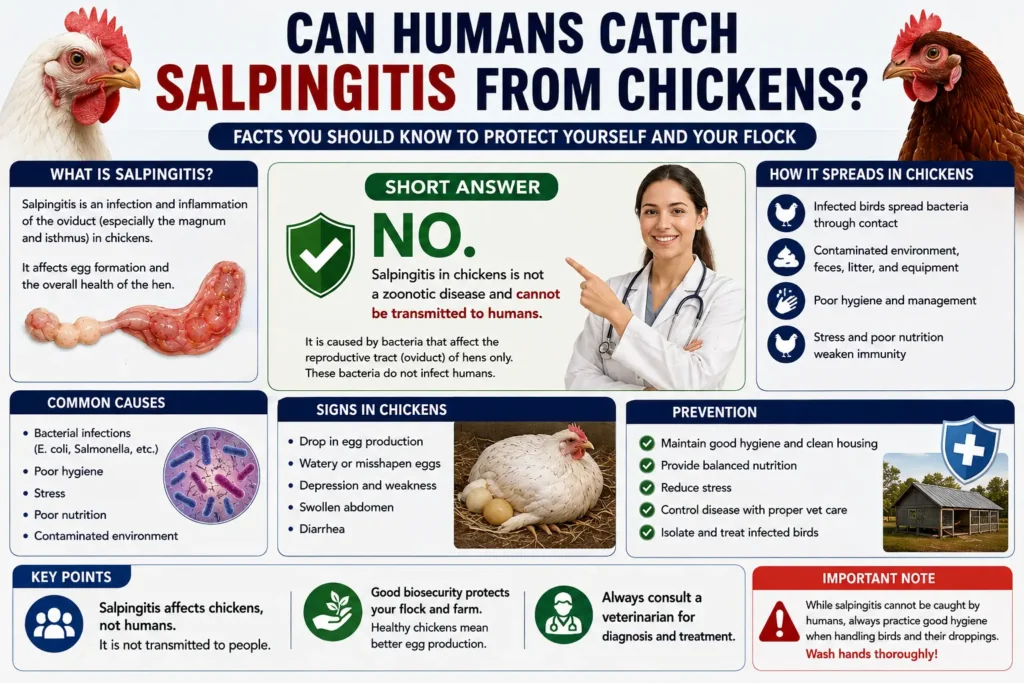
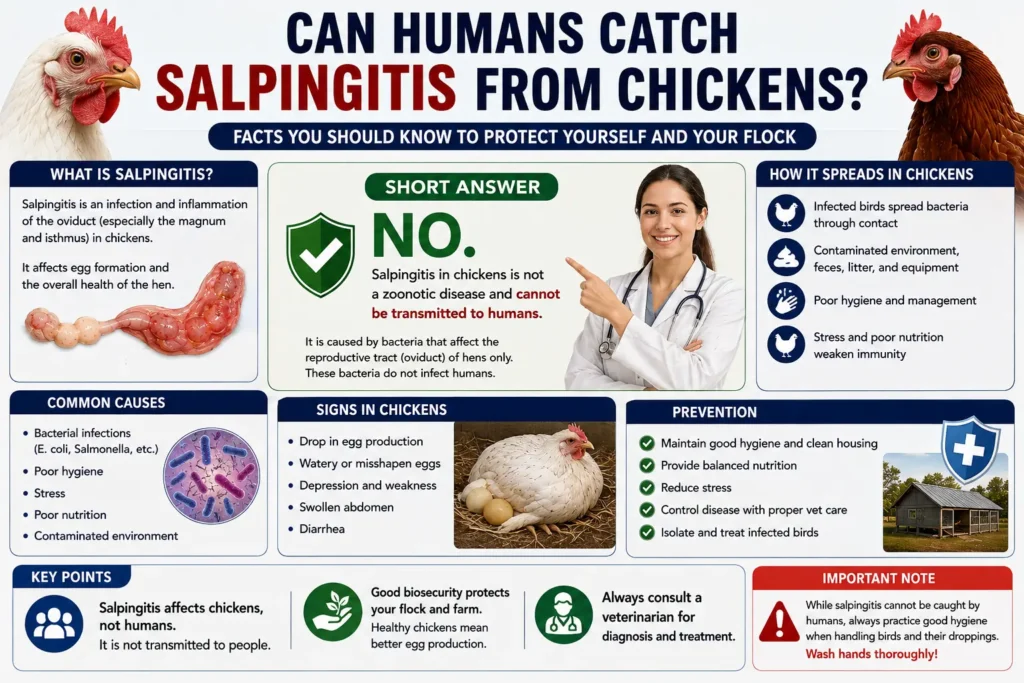
Can humans catch salpingitis from chickens? No. Human salpingitis and chicken salpingitis share a name and a general description — inflammation of the reproductive tract — but they are not the same disease, and one doesn’t turn into the other. You can’t contract salpingitis, the fallopian tube condition, by touching a lash egg, cleaning a coop, or living near infected hens.
That’s genuinely reassuring news if you just found a strange, rubbery mass in your nest box and started worrying about your own health. But the full answer is a little more layered than a flat “no,” because some of the bacteria behind chicken salpingitis are zoonotic disease agents, meaning they can make people sick in other ways, even though they won’t give you salpingitis itself.
Quick Answer: Humans cannot catch salpingitis from chickens. Human salpingitis is almost always caused by sexually transmitted infections like chlamydia or gonorrhea, not by contact with poultry. However, some bacteria that cause salpingitis in chickens — such as Salmonella and E. coli — are zoonotic and can cause separate illnesses in people, like food poisoning.
This guide breaks down exactly why chicken and human salpingitis aren’t connected, what real health risks a lash egg does carry, and how to handle a sick hen safely.
Table of Contents
Why Chicken and Human Salpingitis Are Different Diseases
Salpingitis simply means inflammation of the oviduct in birds, or the fallopian tubes in humans. Using the same medical term for both species makes them sound related, but the underlying cause is what actually determines a disease, not the name.
What Causes Human Salpingitis
In people, salpingitis is a type of pelvic inflammatory disease (PID). It develops when bacteria travel up from the vagina and cervix into the uterus and fallopian tubes. The overwhelming majority of cases trace back to sexually transmitted infections, primarily Chlamydia trachomatis and Neisseria gonorrhoeae. Less commonly, it can follow a medical procedure like an IUD insertion or, rarely, an abdominal infection such as appendicitis.
None of those pathways involve poultry. A hen’s bacteria don’t have a route into the human reproductive tract, and Chlamydia trachomatis and Neisseria gonorrhoeae are not organisms that live in chickens.
Read More: https://lashegg.com/is-salpingitis-contagious-in-chickens/
What Causes Chicken Salpingitis
In hens, salpingitis develops when bacteria or viruses already present in the bird’s environment or gut make their way into the oviduct, often through a laceration, a vent injury, or a secondary respiratory infection. The most common bacterial causes include E. coli, Salmonella species, Mycoplasma gallisepticum, and Pasteurella multocida. Viral triggers include infectious bronchitis, Newcastle disease, and avian influenza.
Side-by-Side Comparison
| Feature | Human Salpingitis | Chicken Salpingitis |
| Primary cause | STIs (chlamydia, gonorrhea) | Bacteria (E. coli, Salmonella, Mycoplasma) or viruses (bronchitis, Newcastle) |
| Transmission route | Sexual contact | Bacteria migrating from gut, cloaca, or bloodstream into the oviduct |
| Can it cross species? | No | No |
| Zoonotic risk | Not applicable | Some causative bacteria are zoonotic, though the disease itself isn’t |
| Typical treatment | Antibiotics targeting STIs | Antibiotics, supportive care, or surgery depending on cause |
Is Salpingitis a Zoonotic Disease?
Salpingitis itself is not classified as a zoonotic disease. A zoonotic disease is one that transfers directly from an animal to a human and causes the same illness in both. Salpingitis doesn’t meet that definition, because the fallopian tube inflammation in a person has an entirely different origin than the oviduct inflammation in a hen.
Where the Zoonotic Disease Confusion Comes From
The confusion usually comes from the bacteria involved, not the condition itself. Salmonella and certain strains of E. coli are well-documented zoonotic disease agents. They can pass from poultry to humans, most often through:
- Handling birds, droppings, or contaminated bedding without washing your hands
- Contact with a lash egg or other reproductive discharge
- Consuming undercooked eggs or poultry meat
- Touching your face after cleaning a coop
When these bacteria infect a person, they typically cause gastrointestinal illness, food poisoning symptoms like diarrhea, cramping, and fever, not salpingitis. The bacteria are capable of making a person sick, just not in the same way they make a chicken sick.
Did You Know? The same bacterium can behave completely differently depending on which host and which tissue it infects. Salmonella in a hen’s oviduct causes salpingitis. Salmonella in a person’s gut causes salmonellosis. Same organism, different disease, because the infection route and target tissue are different.
Is It Safe to Handle a Lash Egg or a Sick Hen?
Handling a lash egg carries some real, manageable risk, mainly from the bacteria it might contain, not from salpingitis itself.
Precautions to Take
- Wear disposable gloves before touching a lash egg or cleaning up after a sick hen.
- Never eat a lash egg. It isn’t a real egg. It’s a mass of pus, coagulated protein, and tissue debris that can carry harmful bacteria.
- Wash your hands thoroughly with soap and water immediately after handling, even if you wore gloves.
- Disinfect tools and surfaces that came into contact with the lash egg or nesting material.
- Keep children, elderly family members, pregnant women, and immunocompromised individuals away from sick birds and any reproductive discharge, since they’re more vulnerable to bacterial infections like salmonellosis.
Warning: Do not let children handle a lash egg or a hen with suspected salpingitis, even out of curiosity. Young children are at higher risk of severe illness from Salmonella and related bacteria and are also more likely to touch their face before washing their hands.
Common Mistakes People Make
- Assuming “salpingitis” in the article title means their own reproductive health is at risk
- Touching a lash egg with bare hands out of curiosity
- Feeding a lash egg to other pets or animals
- Skipping handwashing because the coop “looked clean”
- Ignoring their own symptoms after coop cleanup, assuming poultry bacteria “can’t affect humans”
Signs You Should Watch For (In Chickens, Not Yourself)
Since salpingitis is a chicken condition and not something you’ll develop from contact with your flock, the signs to monitor belong to your hens, not to you.
- Decreased or stopped egg production
- A firm, waxy, or cheese-like lash egg instead of a normal egg
- Abdominal swelling or an upright “penguin” stance
- Lethargy, reduced appetite, or hiding behavior
- Straining while trying to lay
When to Call a Vet
- Any hen that lays a lash egg, even a single time
- Visible abdominal swelling that lasts more than a few days
- A hen that stops eating or drinking
- Multiple hens showing symptoms at once, which could point to a contagious respiratory illness like infectious bronchitis
- Any unexplained deaths in the flock, since a necropsy can rule out diseases that threaten both the flock and, in rare cases, human health
Expert Tip: If you’re worried about zoonotic disease risk after a lash egg incident, the more useful test isn’t for salpingitis; it’s a bacterial culture identifying which organism caused it. That tells you whether Salmonella or another zoonotic bacterium was involved, which is the piece that actually matters for your own safety.
What’s Actually Inside a Lash Egg?
Understanding what a lash egg is made of helps explain why it carries some handling risk even though it can’t give you salpingitis. A lash egg isn’t an egg at all. It’s a solid mass made of coagulated pus, dead white blood cells, tissue debris, and sometimes fragments of an actual egg, shell, or membrane, all packed together and expelled through the vent.
Because it’s essentially a pocket of infected material, whatever bacteria caused the hen’s salpingitis are usually still present inside it. If the cause was a zoonotic organism like Salmonella, that bacteria can still be viable in the mass when you find it in the nest box. That’s the entire basis for handling precautions, not any risk of the salpingitis condition itself spreading.
Other Zoonotic Bacteria Backyard Keepers Should Know About
Salmonella and certain E. coli strains get the most attention, but they aren’t the only zoonotic disease agents that can turn up around a coop:
- Campylobacter — commonly linked to raw or undercooked poultry, causes diarrheal illness in humans
- Listeria monocytogenes — can contaminate poultry products and cause serious illness in pregnant women, newborns, and immunocompromised people
- Avian influenza (certain strains) — a respiratory virus that in rare cases has crossed from birds to humans, typically after close, prolonged contact with infected birds
- Erysipelothrix rhusiopathiae — a bacterium that can cause a localized skin infection in people who handle infected poultry with cuts or open wounds
None of these organisms cause salpingitis in a person. They cause their own distinct illnesses, which is exactly the same pattern seen with Salmonella and E. coli: the bacteria cross over, but the disease presentation is species-specific.
How Veterinarians and Doctors Approach This Differently
It helps to understand that a poultry veterinarian and a human doctor are looking at completely separate problems, even when the word “salpingitis” comes up in both conversations.
A poultry vet diagnosing a hen focuses on identifying the bacterial or viral cause inside the oviduct, deciding whether antibiotics, supportive care, or surgery is appropriate, and assessing whether the underlying cause threatens the rest of the flock. Culture and sensitivity testing on the discharge or a necropsy sample are the standard tools used to pin down the exact organism involved.
A human doctor evaluating a patient with pelvic pain or suspected PID is working from a completely different diagnostic playbook: STI testing, pelvic exams, and sometimes imaging to check for tubal damage. Chicken exposure isn’t part of that workup, because there’s no established medical pathway connecting the two.
If you’re a backyard chicken keeper and you develop symptoms like stomach upset, fever, or a skin infection after handling a sick hen, that’s a conversation for your own doctor, framed around bacterial illness or zoonotic disease exposure, not around salpingitis.
Expert Tip: If you do see a doctor after a poultry-related illness, mention that you keep chickens and recently handled a sick or symptomatic bird. That detail helps guide testing toward zoonotic bacteria like Salmonella or Campylobacter rather than more common causes of stomach illness.
Building Good Habits Around Reproductive Illness in Your Flock
Since the real risk from a salpingitis case in your flock is bacterial exposure, not the salpingitis label itself, the best long-term habit is treating every lash egg or reproductive discharge as a biohazard-lite situation, the same way you’d treat raw poultry in the kitchen.
- Keep a dedicated pair of gloves near the coop for handling anything unusual
- Store a small container of hand sanitizer or soap and water access near your coop door
- Bag and dispose of lash eggs rather than leaving them in general household trash uncovered
- Wash any clothing worn during cleanup separately from other laundry
- Teach every household member, including kids, the same handling rules
These habits protect you from the genuine zoonotic disease risks tied to backyard poultry keeping in general, whether or not salpingitis happens to be involved.
Frequently Confused Questions, Answered
Can you get an infection from touching chicken poop?
Yes. Chicken droppings can carry Salmonella, Campylobacter, and E. coli, all of which can cause gastrointestinal illness in humans if you don’t wash your hands afterward. This is a separate, well-established zoonotic disease risk that has nothing to do with salpingitis specifically.
Can chickens give humans reproductive infections?
No. There’s no documented pathway for a chicken’s reproductive tract bacteria to cause a reproductive infection in a human. Human reproductive infections like PID come from sexually transmitted organisms, not from poultry exposure.
Is it safe to eat eggs from a hen with salpingitis?
Eggs from a hen currently showing symptoms of salpingitis, and especially lash eggs themselves, should never be eaten. Eggs laid by other, healthy hens in the same flock are generally still fine to eat as long as normal egg-handling and cooking practices are followed.
Should I get rid of my whole flock if one hen has salpingitis?
Not automatically. Salpingitis in one bird doesn’t mean the rest are at risk of catching it directly. Your vet can help determine whether the underlying cause is contagious among birds and guide you on whether wider flock precautions are needed.
The Bottom Line on Zoonotic Risk and Salpingitis
Salpingitis is a poultry-specific condition, and it does not pass to humans as salpingitis under any known circumstance. The real, practical risk sits with the bacteria that sometimes cause it in chickens, which is a genuine zoonotic disease consideration worth taking seriously. Wash your hands, wear gloves around lash eggs, and keep vulnerable family members at a distance from sick birds. If you’re ever unsure whether a symptom in your flock points to something with broader zoonotic disease implications, a veterinarian and, for any human symptoms, your own doctor are the right people to ask.
5. FAQ
Can humans catch salpingitis from chickens? No. Human salpingitis is caused by sexually transmitted infections like chlamydia and gonorrhea. It doesn’t transfer from chickens, even through direct contact with an infected hen or a lash egg.
Is salpingitis a zoonotic disease? Salpingitis itself is not a zoonotic disease, since it doesn’t pass between chickens and humans as the same condition. Some of the bacteria that cause it in chickens, like Salmonella, are zoonotic and can cause other illnesses in people.
Can I get sick from touching a lash egg? It’s possible if the lash egg contains zoonotic bacteria like Salmonella or certain E. coli strains. Wear gloves, avoid bare-hand contact, and wash your hands thoroughly afterward to stay safe.
Do I need to see a doctor if I handled a sick chicken? Only if you develop symptoms like diarrhea, fever, or stomach cramps afterward. These would point to a bacterial illness like salmonellosis, not to salpingitis, which cannot develop from poultry contact.
Can eating chicken give you salpingitis? No. Salpingitis isn’t foodborne, and it isn’t transmitted through eating poultry meat or eggs. Undercooked poultry can cause other illnesses like salmonellosis, which is a different condition entirely.
Is it safe for kids to be around chickens with salpingitis? Kids can generally be around the flock, but they shouldn’t handle a lash egg or a visibly sick hen. Children are more vulnerable to zoonotic bacteria like Salmonella, so supervise handwashing after any coop visit.