Can You Eat a Lash Egg? Here’s the Direct Answer

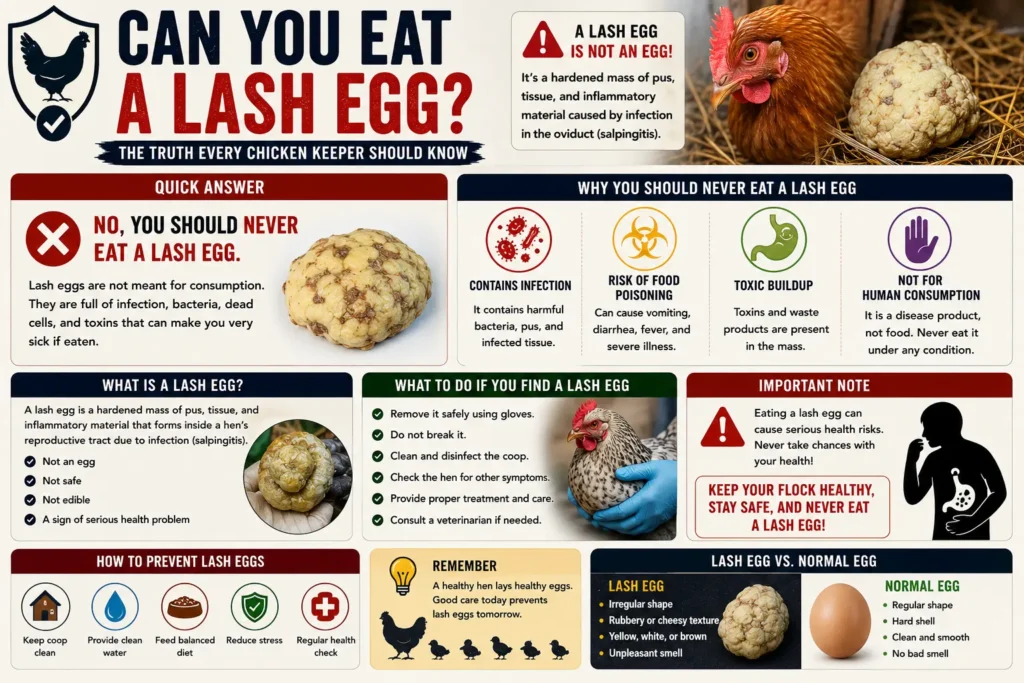
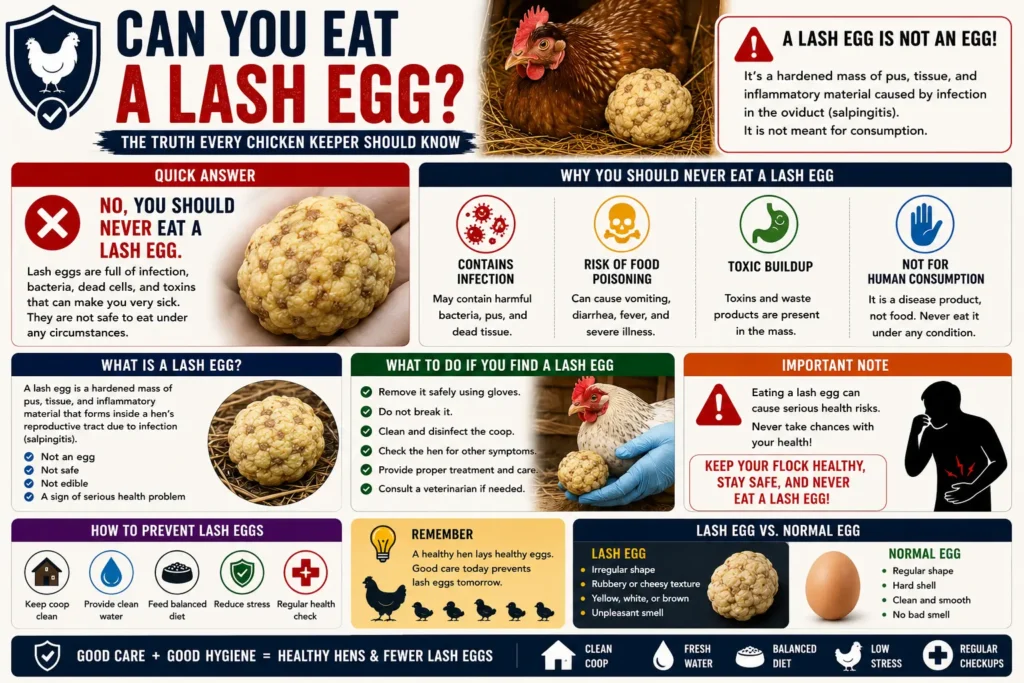
No, you cannot eat a lash egg, and you shouldn’t try. If you’re asking can you eat a lash egg because you just found a strange, rubbery mass in the nesting box, the short answer is simple: it isn’t food, and it never was. A lash egg looks like a distorted egg from the outside, but it’s actually a buildup of inflammatory tissue, pus, and cellular debris from an infected or inflamed oviduct.
This guide explains exactly what a lash egg is made of, why eating one carries real health risk, what it means for your hen’s health, and what steps to take next, both for the hen and for your flock’s safety.
Quick Answer: No, a lash egg is not edible. It forms from pus, dead tissue, and inflammatory material inside a hen’s reproductive tract, usually caused by a bacterial infection called salpingitis. It should be discarded, not eaten, and the hen that produced it should be monitored closely or evaluated by a veterinarian.
Table of Contents
Is Lash Egg Edible? Understanding What You’re Actually Looking At
Is lash egg edible in any circumstance? No — and understanding why starts with understanding what a lash egg actually is. Despite the name, it contains no yolk, no true albumen, and no shell in the way a normal egg does.
What a Lash Egg Is Made Of
A lash egg forms in layers, similar to how a true egg forms as it travels through the oviduct, except the “layers” here are inflammatory material rather than food components.
- Caseous (cheese-like) pus — thickened, solidified white blood cells and bacteria.
- Tissue debris — sloughed cells from the inflamed oviduct lining.
- Sometimes yolk material — if the lash egg formed around an internally released yolk.
- No true shell — the outer surface may look leathery or rubbery but isn’t made of calcium carbonate like a real eggshell.
Why It’s Not Comparable to a Normal Egg
| Feature | Normal Egg | Lash Egg |
| Shell | Hard, calcium-based | Absent or leathery, non-shell material |
| Contents | Yolk and albumen | Pus, tissue debris, inflammatory material |
| Formation cause | Normal reproductive cycle | Infection or inflammation (salpingitis) |
| Safe to eat | Yes | No |
| Sign of illness | No | Yes |
Why Eating a Lash Egg Is Unsafe
The material inside a lash egg often contains active bacteria, most commonly E. coli, along with inflammatory byproducts your body isn’t meant to consume. Even cooking thoroughly doesn’t make it a reasonable food item, since it isn’t nutritionally equivalent to an egg and may still carry bacterial toxins that aren’t fully neutralized by heat.
Warning: Never feed a lash egg to pets, other flock members, or compost that touches edible garden plants without careful handling. Treat it as biological waste from an infection, not as scrap material.
Read More: https://lashegg.com/biosecurity-to-reduce-infections/
Common Mistakes People Make with Lash Eggs
Common Mistakes:
- Assuming a lash egg is just a “weird-looking egg” safe to crack open and inspect bare-handed.
- Feeding it to dogs, cats, or other chickens as a treat.
- Tossing it in a compost pile that will touch vegetable garden beds without proper hot composting.
- Ignoring it as a one-time fluke without watching the hen for repeat symptoms.
What Causes a Hen to Produce a Lash Egg
Since the focus keyword question usually comes from someone holding one in their hand, it helps to understand the “why” behind it, not just the “can you eat a lash egg” answer.
Salpingitis: The Main Cause
Salpingitis is inflammation or infection of the oviduct, most often triggered by bacteria like E. coli traveling up the reproductive tract. The body responds by producing pus and inflammatory tissue, which then gets pushed out in an egg-like shape because that’s the path the oviduct naturally moves material through.
Internal Laying
Sometimes a yolk releases from the ovary but doesn’t properly enter the oviduct. The body treats it as foreign material and surrounds it with inflammatory tissue, which can combine with infection to form a lash egg.
Contributing Factors
- Prior respiratory illness that damaged the oviduct lining.
- High-production hybrid breeds under more reproductive strain.
- Poor nesting box hygiene, raising bacterial exposure.
- Age — older hens show higher rates of reproductive tract issues.
What to Do If You Find a Lash Egg
- Wear gloves before handling it. It may contain active bacteria.
- Discard it away from pets and other animals. Do not compost it near edible plants without proper hot composting methods.
- Wash your hands thoroughly afterward. Standard hygiene after handling any potentially contaminated material.
- Identify which hen laid it, if possible. Watch her closely over the following days.
- Watch for repeat lash eggs or other symptoms. One instance may resolve; repeated ones suggest an ongoing problem.
Symptoms to Monitor in the Hen
| Symptom | What It May Indicate |
| Normal behavior, one lash egg only | Possible mild, resolving inflammation |
| Repeated lash eggs | Chronic or ongoing salpingitis |
| Lethargy, appetite loss | Systemic infection |
| Swollen abdomen | Possible fluid buildup or egg yolk peritonitis |
| Foul odor or discharge from vent | Active bacterial infection |
Did You Know? Salpingitis is considered one of the more common causes of death in older commercial laying hens, according to poultry pathology references like the Merck Veterinary Manual, largely because reproductive tract stress builds cumulatively over a hen’s laying lifetime.
When Home Observation Isn’t Enough
When to Call a Vet: Contact a poultry-experienced veterinarian if a hen produces more than one lash egg, shows abdominal swelling, becomes lethargic, stops eating, or has any discharge from the vent. A single lash egg with an otherwise healthy, active hen may simply need monitoring, but repeated occurrences point toward an infection that needs proper diagnosis, not home remedies.
Home care can support a hen’s general condition — clean water, a balanced layer feed, calcium support, and a low-stress environment — but it cannot resolve an active bacterial infection inside the reproductive tract. That distinction matters, since some backyard advice online blurs the line between supportive care and actual treatment.
Expert Tip: Keep a simple log of when lash eggs appear and which hen laid them. Patterns over weeks or months help a veterinarian diagnose faster than a single data point ever could.
Can a Hen Recover After Laying a Lash Egg?
Many hens go back to laying normal eggs after a single lash egg, particularly if the underlying inflammation was mild and resolves on its own. Hens with repeated lash eggs or diagnosed chronic salpingitis have a more variable outlook, and some may eventually stop laying or require ongoing management under veterinary guidance.
Prevention Going Forward
- Maintain a complete, age-appropriate layer feed with proper calcium levels.
- Keep nesting boxes clean and dry to lower bacterial exposure.
- Reduce flock stress through adequate space and consistent routines.
- Monitor older or high-production hens more closely, since they carry higher baseline risk.
People Also Ask
Is a lash egg contagious to other chickens? The lash egg material itself isn’t directly contagious, but the bacteria causing it, often E. coli, can spread between birds through shared water, nesting boxes, or droppings.
What does a lash egg smell like? Lash eggs often carry a foul, sometimes sour or rotten odor due to the pus and bacterial content, unlike the mild smell of a normal fertilized or unfertilized egg.
Should I worry if my hen only lays one lash egg and seems fine? A single lash egg with no other symptoms may reflect a minor, resolving issue. Continue monitoring her closely for repeat occurrences or any signs of illness over the following weeks.
Can lash eggs be prevented completely? Not entirely. Good nutrition, clean housing, and low stress reduce risk, but genetics, age, and past illness also play a role that diet and management alone can’t fully control.
Is it safe to touch a lash egg with bare hands? It’s best to avoid it. Since lash eggs can contain active bacteria, gloves and thorough handwashing afterward are the safer approach.
Conclusion
Can you eat a lash egg? No, and understanding why helps make sense of what’s actually happening inside your flock. A lash egg is a sign of reproductive tract inflammation or infection, not a food item, and treating it as one carries real risk. Discard it safely, wash your hands, and watch the hen that produced it closely over the following days and weeks.
If lash eggs keep appearing, or if the hen shows lethargy, swelling, or discharge, a poultry-experienced veterinarian can diagnose the underlying cause and guide proper treatment. Home care supports general health, but it can’t replace veterinary diagnosis once an infection has already taken hold.
5. FAQ
Can you eat a lash egg if it looks mostly normal? No. Even a lash egg that looks fairly egg-shaped from the outside is made of pus and inflammatory tissue, not food, regardless of its appearance.
Is lash egg edible after cooking it thoroughly? No. Cooking doesn’t change the fact that a lash egg isn’t nutritionally an egg, and it may still carry bacterial toxins that aren’t fully neutralized by heat.
What should I do with a lash egg instead of eating it? Discard it away from pets and edible garden areas, wash your hands thoroughly afterward, and monitor the hen that produced it for repeat occurrences or other symptoms.
Does finding a lash egg mean my hen is dying? Not necessarily. A single lash egg doesn’t automatically mean a fatal condition, but repeated lash eggs or accompanying symptoms like lethargy warrant veterinary evaluation.
Can other animals safely eat a lash egg if I don’t want to? No. Feeding a lash egg to pets or other flock members risks spreading bacterial infection, so it should be discarded rather than fed to any animal.