Biosecurity to Reduce Infections: Why It Matters More Than Most Keepers Realize

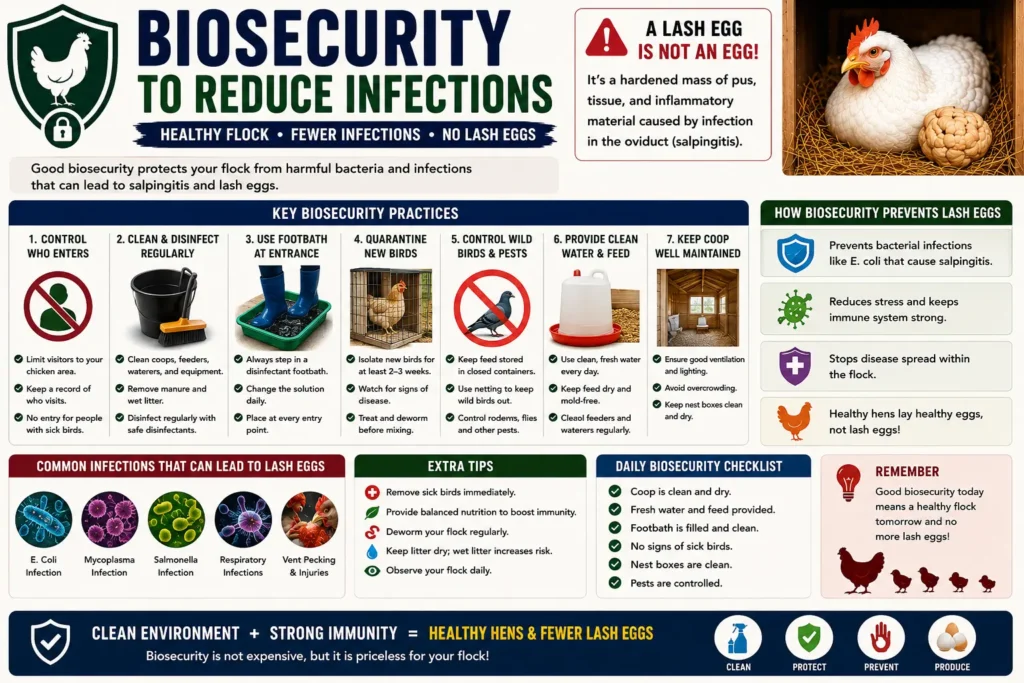
Most disease outbreaks in backyard flocks don’t start with bad luck. They start with a gap in daily habits. Biosecurity to reduce infections means the routine practices that keep bacteria, viruses, and parasites out of your coop, or stop them from spreading once they’re inside. It sounds technical, but in practice it’s mostly common sense applied consistently.
This guide breaks down exactly what biosecurity looks like for a backyard or small commercial flock, why it matters even if you never plan to show birds or sell eggs, and how solid flock management habits prevent the infections that cause the most damage: respiratory disease, reproductive tract infections, and parasite overload.
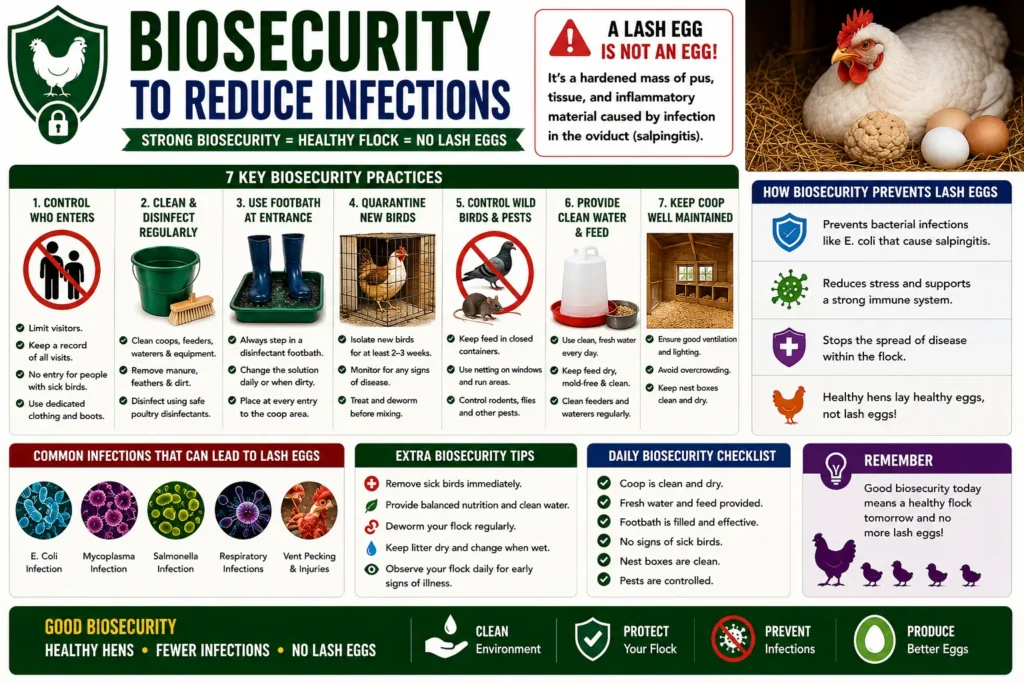
Quick Answer: Biosecurity to reduce infections comes down to controlling what enters your flock’s environment: new birds, visitors, wild bird contact, shared equipment, and contaminated water. Quarantine new birds for at least two weeks, clean water and feeders regularly, limit visitor contact with your flock, and separate sick birds immediately.
Table of Contents
What Biosecurity Actually Means for a Backyard Flock
Biosecurity isn’t just a term for large commercial operations. It applies at every scale, from a five-hen backyard coop to a 10,000-bird commercial house. The core idea stays the same: reduce the pathways disease can travel to reach your birds.
According to guidance echoed by the USDA and university poultry extension programs, most backyard disease introductions trace back to a handful of predictable sources.
- New birds brought in without quarantine.
- Visitors who recently handled other flocks.
- Shared equipment, like crates or feeders, moved between properties.
- Wild bird and rodent contact with feed or water.
- Contaminated footwear moving between coops.
Why Biosecurity to Reduce Infections Matters Even for Small Flocks
A flock of four hens can still catch and spread infectious bronchitis, E. coli, coccidiosis, or external parasites just as easily as a large operation. Smaller flocks often have less genetic diversity too, meaning one susceptible bird can let an infection take hold and spread to everyone sharing the same coop and run.
Core Pillars of Flock Management for Disease Prevention
1. Quarantine New Birds
Any new bird, whether from a breeder, swap meet, or feed store, should be kept in a separate space for a minimum of two to four weeks before joining the main flock.
| Quarantine Step | Why It Matters |
| Separate housing, no shared air space | Prevents respiratory disease spread |
| Feed and water new birds last each day | Reduces cross-contamination risk |
| Watch for coughing, discharge, or lethargy | Early sign of incubating illness |
| Wash hands between handling groups | Stops hand-to-bird pathogen transfer |
| Wait the full quarantine period, even if birds look healthy | Some diseases have long incubation periods |
Common Mistakes: Skipping quarantine because a new bird “looks healthy” is one of the most frequent ways outbreaks start. Many respiratory and reproductive infections show no symptoms for the first one to two weeks.
Read More: https://lashegg.com/supplements-for-healthy-egg-laying/
2. Control Visitor and Equipment Contact
If friends, family, or fellow poultry keepers visit your coop, especially if they keep birds themselves, ask them to avoid wearing the same shoes or clothes they wore around another flock.
- Keep a dedicated pair of “coop shoes” that never leaves the property.
- Avoid borrowing crates, feeders, or waterers from other flock owners without disinfecting first.
- Limit unnecessary foot traffic through the coop and run.
3. Manage Wild Bird and Rodent Exposure
Wild birds and rodents are common carriers of Salmonella, avian influenza, and other pathogens. Covered feeders, sealed feed storage, and reducing spilled feed all lower the contact points between wild animals and your flock.
Did You Know? Wild waterfowl are considered a natural reservoir for avian influenza viruses, which is one reason free-range flocks near ponds or wetlands face a somewhat higher exposure risk during migration seasons.
4. Clean Water and Feed Systems
Bacteria like E. coli thrive in stagnant, dirty water. Daily water changes, regular scrubbing of waterers, and keeping feed dry and pest-free are basic but powerful biosecurity steps.
5. Coop and Run Sanitation
- Remove wet or soiled bedding promptly rather than letting it build up.
- Clean nesting boxes regularly, since they’re a common site for bacterial exposure.
- Rotate or rest ground space when possible to reduce parasite and pathogen buildup in soil.
6. Isolate Sick Birds Immediately
Any bird showing respiratory symptoms, lethargy, diarrhea, or abnormal discharge should be separated from the flock right away, both to protect the sick bird from added stress and to protect the rest of the flock from exposure.
Expert Tip: Keep a simple isolation setup ready before you need it: a small dog crate or spare coop section with its own food and water dishes. Scrambling to build one after a bird already looks sick wastes valuable time.
Flock Management Practices That Support Biosecurity
Good flock management and biosecurity overlap heavily. A well-managed flock is naturally a lower-risk flock.
Stocking Density and Space
Overcrowding raises stress hormones, weakens immune response, and increases how fast disease spreads between birds sharing tight quarters. General extension guidance suggests at least 2–4 square feet of coop space per standard-size hen, with more for larger breeds or colder climates where birds spend more time indoors.
Age Segregation
Mixing young chicks with adult hens increases disease risk, since chicks have less developed immune systems and adults can carry pathogens without showing symptoms. Where possible, keep separate housing until chicks are fully vaccinated (if applicable) and closer to maturity.
Record Keeping
Tracking egg production, feed consumption, and any illness or death helps you catch subtle patterns early. A sudden dip in egg output, for instance, often shows up in records before it’s obvious just from daily observation.
Rotational Grazing or Run Rest
Letting a section of run “rest” while hens use another area reduces the buildup of parasite eggs and bacteria in the soil, which is a core part of pasture-based flock management on larger properties.
Comparing Common Biosecurity Approaches
| Practice | Backyard Flock (Small) | Small Commercial Flock |
| Quarantine new birds | 2–4 weeks, separate housing | 3–4 weeks, dedicated quarantine building |
| Visitor control | Ask about recent flock contact | Footbaths, visitor logs, restricted access |
| Water sanitation | Daily manual cleaning | Automated systems with regular flushing |
| Wild bird exposure | Covered feeders, limited free-range near wetlands | Netting, enclosed housing during outbreak alerts |
| Record keeping | Simple notebook or app | Formal production and health logs |
Diseases Most Affected by Poor Biosecurity
| Disease/Condition | Main Cause | Biosecurity Link |
| Infectious bronchitis | Viral, airborne | Spreads fast without quarantine or visitor control |
| Salpingitis / lash eggs | Bacterial, often E. coli | Linked to dirty water, poor sanitation |
| Coccidiosis | Protozoan parasite in soil | Linked to wet bedding, overcrowded runs |
| Avian influenza | Viral, wild bird reservoirs | Linked to wild waterfowl contact |
| External parasites (mites, lice) | Environmental, bird-to-bird contact | Linked to lack of quarantine, shared equipment |
Warning: Avian influenza can spread extremely fast and, in some strains, poses risk to human health as well. If you notice sudden, unexplained deaths across multiple birds, especially alongside respiratory symptoms, contact a veterinarian and your state’s animal health agency immediately rather than treating it as a routine illness.
Step-by-Step: Setting Up a Basic Biosecurity Plan
- Map your flock’s exposure points. New birds, visitors, wild animals, shared equipment, and water sources.
- Set a quarantine protocol. Minimum two to four weeks, separate housing, daily health checks.
- Create a simple visitor policy. Ask guests about recent flock contact and provide clean footwear if needed.
- Establish a daily sanitation routine. Water, feed, and bedding checks built into your normal schedule.
- Prepare an isolation space in advance. Ready before it’s needed, not after a bird gets sick.
- Keep basic health records. Egg counts, feed use, and any symptoms noted by date.
- Reassess seasonally. Migration seasons, extreme heat, and winter crowding all shift your risk profile.
When to Call a Vet
When to Call a Vet: Contact a poultry-experienced veterinarian if you see multiple birds showing symptoms at once, sudden unexplained deaths, persistent respiratory signs, or any illness that doesn’t improve with isolation and basic care. Biosecurity and flock management reduce risk, but they don’t replace diagnosis and treatment once disease is already present.
People Also Ask
What is the difference between biosecurity and general flock hygiene? Hygiene refers to cleanliness practices like washing feeders and removing waste. Biosecurity is broader — it includes hygiene but also covers quarantine, visitor control, and managing contact with wild animals and other flocks.
Can biosecurity fully prevent disease in chickens? No system eliminates risk completely, but strong biosecurity to reduce infections significantly lowers the odds and severity of outbreaks compared to flocks with no preventive routine at all.
Do small backyard flocks really need biosecurity measures? Yes. Flock size doesn’t change how pathogens spread; a five-bird backyard coop faces many of the same disease risks as a larger operation, just at a smaller scale.
How long should new chickens be quarantined before joining a flock? Most poultry health guidance recommends a minimum of two to four weeks of separate housing, with close observation for respiratory symptoms, lethargy, or discharge during that window.
Does free-ranging increase or decrease infection risk? It can do both. Free-ranging may reduce stress-related illness but increases exposure to wild birds, rodents, and pathogens in open soil, so it needs its own biosecurity considerations.
Conclusion
Biosecurity to reduce infections isn’t a one-time setup; it’s an ongoing part of daily flock management that pays off in fewer sick birds, fewer vet visits, and steadier egg production. Quarantine new arrivals, control who and what touches your flock’s space, keep water and bedding clean, and separate sick birds the moment you notice a problem.
None of these habits replace veterinary care once illness takes hold. Watch your flock closely, keep simple records, and reach out to a poultry-experienced veterinarian if symptoms spread across multiple birds or don’t improve with basic isolation and care.
5. FAQ
What does biosecurity to reduce infections actually involve day to day? It involves quarantining new birds, limiting visitor and equipment contact, controlling wild animal exposure, keeping water and feed clean, and separating sick birds right away.
Is biosecurity to reduce infections only necessary for commercial farms? No. Backyard flocks of any size benefit from the same core principles, just scaled to fit a smaller space and lower bird count.
How does flock management connect to biosecurity? Good flock management, like proper stocking density, age segregation, and record keeping, directly supports biosecurity by reducing stress and catching problems early.
What is the single most important biosecurity step for a new flock owner? Quarantining new birds for at least two to four weeks is widely considered the most impactful single step, since it catches incubating illness before it reaches the main flock.
Can wild birds really bring disease to a backyard coop? Yes. Wild birds and rodents are known carriers of pathogens like Salmonella and avian influenza, which is why covered feeders and sealed feed storage are part of standard biosecurity guidance.