Chicken Care for Beginners: Where to Actually Start

Chicken care for beginners can feel overwhelming fast, with endless opinions on breeds, coops, feed, and everything in between. The good news is that keeping a healthy, happy backyard flock comes down to a manageable handful of decisions made well upfront, followed by a simple daily routine.
This guide walks through everything you need before your first chickens arrive and what to expect in the weeks after: housing, breed selection, legal considerations, costs, and daily care. For deeper coverage of nutrition, health, and egg production once your flock is established, this guide links out to dedicated resources at each step.
Quick Answer: Chicken care for beginners starts with four decisions: check local zoning rules, choose a predator-proof coop with adequate space, pick a beginner-friendly breed, and budget for both upfront and ongoing costs. From there, daily care involves feeding, watering, egg collection, and basic observation, building toward the more detailed nutrition and health practices covered elsewhere.
Table of Contents
Before You Get Chickens: Four Things to Check First
1. Local Zoning and Regulations
Many cities and towns allow backyard chickens but restrict flock size, rooster ownership, or coop placement relative to property lines. Check local ordinances before purchasing any birds or building materials.
2. Your Realistic Time Commitment
Daily care takes 15 to 30 minutes for a small flock, but plan for someone to cover this consistently, including during vacations, since chickens need daily attention year-round.
3. Your Household’s Goals
Are you primarily after eggs, a hobby, pest control, or a combination? This shapes breed selection and flock size more than almost any other factor.
4. Your Budget
Both upfront costs (coop, run, initial birds, equipment) and ongoing costs (feed, bedding, occasional veterinary care) should factor into your planning before bringing birds home.
| Consideration | Why It Matters First |
| Zoning laws | Avoid legal issues or forced flock removal later |
| Time commitment | Daily care is non-negotiable, even during travel |
| Household goals | Shapes breed and flock size decisions |
| Budget | Covers both setup and ongoing monthly costs |
Housing: Coop and Run Basics
Space Requirements
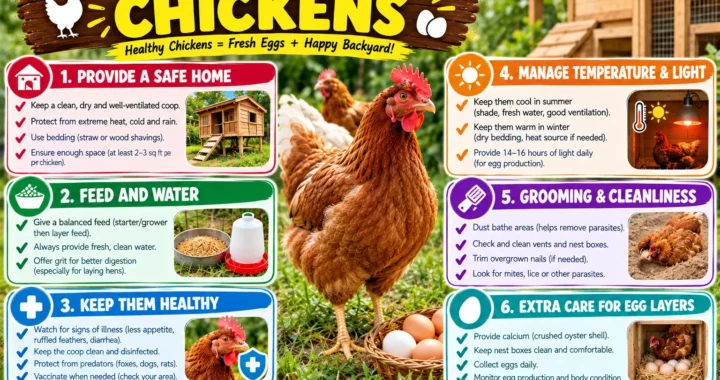
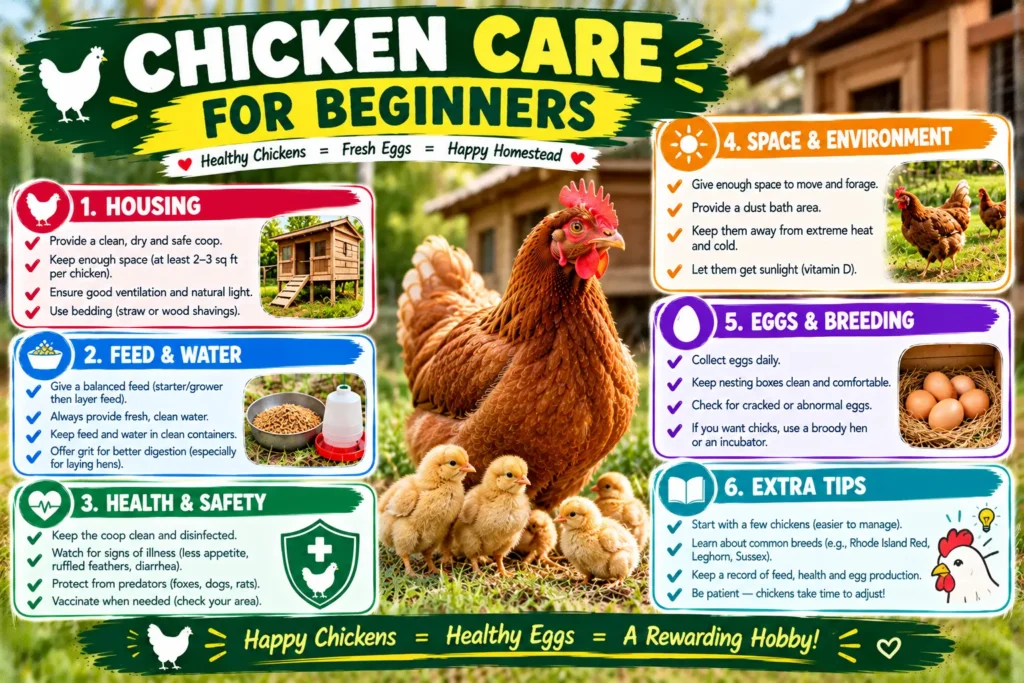
Most guidance suggests at least 3 to 4 square feet of coop space per standard-sized hen, plus 8 to 10 square feet of outdoor run space if birds won’t free-range regularly.
Essential Coop Features
- Secure, predator-proof construction, including buried or reinforced perimeter fencing
- Adequate ventilation without direct drafts on roosting birds
- Roosting bars, elevated above the nesting boxes
- Nesting boxes, roughly one per 3 to 4 hens
- Easy human access for cleaning and egg collection
| Feature | Purpose |
| Predator-proofing | Protects flock from the most common cause of losses |
| Ventilation | Reduces moisture and ammonia buildup |
| Roosting bars | Supports natural nighttime behavior |
| Nesting boxes | Encourages clean, contained egg-laying |
Did You Know? Predator losses, not disease, are the leading cause of death in many backyard flocks, which is exactly why coop security deserves more attention than most first-time keepers initially expect.
Choosing Beginner-Friendly Breeds
What Makes a Breed Good for Beginners
Calm temperament, cold and heat tolerance, and reliable egg production without excessive care demands make certain breeds especially forgiving for someone just starting out.
| Breed | Temperament | Egg Production | Climate Tolerance |
| Plymouth Rock | Calm, friendly | Good | Both cold and moderate heat |
| Australorp | Docile | Very good | Broad tolerance |
| Orpington | Very calm, friendly | Moderate | Excellent cold tolerance |
| Wyandotte | Calm, hardy | Good | Excellent cold tolerance |
| Leghorn | Active, flighty | Excellent | Better heat tolerance |
How Many Chickens to Start With
Most beginners do well starting with 3 to 6 hens, enough for meaningful egg production and flock social dynamics, without becoming overwhelming to manage while still learning the basics.
Read More: https://lashegg.com/how-to-tell-if-a-chicken-is-healthy/
Chicks vs. Started Pullets
Raising From Chicks
Starting with day-old chicks requires a brooder setup: a heat source, chick-appropriate feed, and close monitoring for the first several weeks before they’re ready for outdoor coop life.
Starting With Pullets
Purchasing pullets, young hens close to laying age, skips the brooding stage entirely and gets you to egg production faster, generally at a higher upfront cost per bird.
| Option | Pros | Cons |
| Day-old chicks | Lower cost, bonding opportunity | Requires brooder setup, longer wait for eggs |
| Started pullets | Faster to eggs, no brooding needed | Higher upfront cost, less bonding time |
Daily and Weekly Chicken Care Basics
Step-by-Step: A Simple Daily Routine
- Check and refill water. Confirm it’s clean and unfrozen in cold weather.
- Check and refill feed. Use an appropriate complete feed for your flock’s age and laying status.
- Collect eggs. Prompt collection reduces breakage and encourages good laying habits.
- Do a quick visual check. Watch for any bird acting unusually as you go about daily tasks.
- Secure the coop at dusk. This is one of the single most important daily habits for predator protection.
Weekly Tasks
- Clean and refill waterers thoroughly
- Spot-clean bedding and nesting boxes
- Observe the flock more closely for changes in behavior or condition
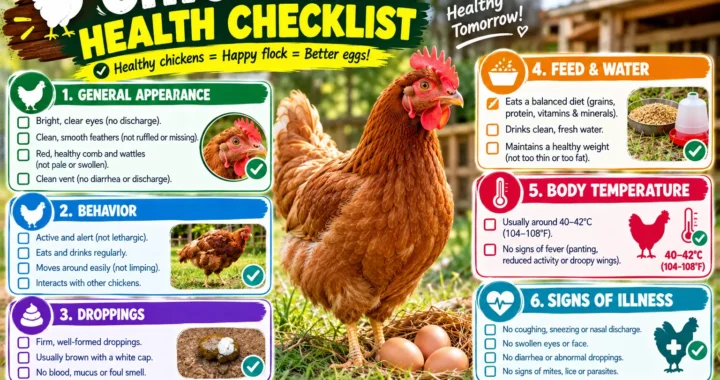
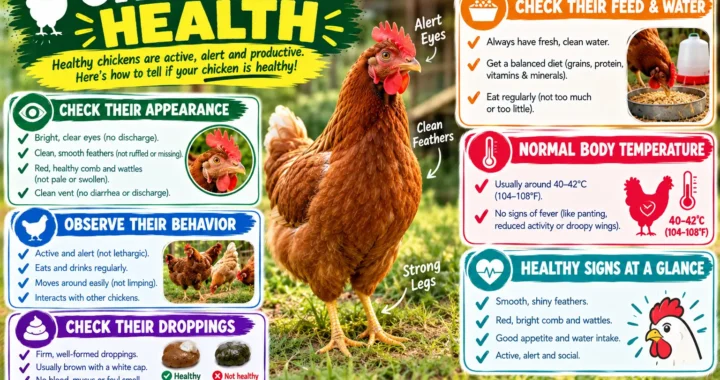
For the full breakdown of daily, weekly, monthly, and seasonal tasks, the dedicated chicken health checklist covers this in complete detail.
Feeding Basics for New Keepers
Matching Feed to Life Stage
Chicks need starter feed, growing pullets need grower feed, and actively laying hens need a complete layer feed with appropriate calcium levels. Using the wrong feed for the wrong stage is one of the most common beginner mistakes.
| Life Stage | Feed Type |
| Chicks (0–8 weeks) | Starter feed |
| Growers (8–18 weeks) | Grower feed |
| Laying hens | Layer feed |
The dedicated guide on the best feed for laying hens goes into full depth on protein, calcium, and choosing between feed forms once your flock reaches laying age.
Common Beginner Mistakes to Avoid
- Skipping local zoning research before purchasing birds or building a coop
- Underestimating predator-proofing needs, especially for underground digging predators
- Overcrowding the coop, leading to stress and health issues
- Feeding the wrong feed type for a bird’s actual life stage
- Introducing new birds without a proper quarantine period
- Expecting eggs on a strict schedule rather than understanding natural variation
Expert Tip
Visit other local keepers or a nearby feed store before finalizing your setup. Regional climate, common local predators, and available breeds all vary enough that generic advice benefits from being adjusted to your specific area.
Warning
Never bring home chickens before your coop and run are fully predator-proofed and ready. Even a single night without secure housing can result in significant, sudden flock losses, and retrofitting security after birds arrive is far more stressful than preparing it in advance.
When to Call a Vet
Contact a poultry veterinarian, ideally one identified before you actually need one, if a bird shows signs of illness beyond simple home monitoring, or if you’re unsure whether a symptom is normal or concerning. Building this relationship early, before an emergency, makes chicken care for beginners considerably less stressful when something does come up.
People Also Ask
What do I need to know before starting chicken care for beginners? Checking local zoning laws, planning secure housing, and choosing an appropriate beginner-friendly breed are the three most important steps before bringing any birds home.
How much does it cost to start backyard chicken care? Upfront costs for a small coop, run, and initial birds often range from a few hundred to over a thousand dollars depending on materials, while ongoing monthly feed and supply costs are relatively modest for a small flock.
Is it easier to start with chicks or adult chickens? Started pullets are generally easier for beginners since they skip the brooding stage and get you to egg production faster, though raising chicks offers a lower-cost, more hands-on introduction.
How do I care for chickens if I travel frequently? Arranging a reliable neighbor, friend, or professional pet sitter familiar with basic daily tasks is essential, since chickens need consistent daily care regardless of your travel schedule.
What is the biggest mistake new backyard chicken keepers make? Underestimating predator-proofing needs is one of the most common and costly mistakes, since even a seemingly secure coop can have vulnerabilities that experienced keepers learn to recognize over time.
Final Thoughts
Chicken care for beginners comes down to solid preparation upfront, zoning, housing, and breed selection, followed by a simple, consistent daily and weekly routine. Once the basics are in place, deeper topics like nutrition, health monitoring, and egg production troubleshooting become much easier to layer on as your flock and your experience both grow.
Start with the fundamentals covered here, lean on the more detailed guides linked throughout for specific topics as they come up, and don’t hesitate to identify a poultry veterinarian early, before you actually need one.
5. FAQ
Q: What’s the very first step in chicken care for beginners? A: Checking local zoning laws and regulations comes first, since this determines whether and how you can legally keep chickens at your specific property.
Q: How to care for chickens without prior farm experience? A: Backyard chicken care is very approachable for beginners; starting with a beginner-friendly breed, proper housing, and a consistent daily routine covers most of what’s needed without requiring prior experience.
Q: What backyard chicken care tasks take the most time? A: Initial coop setup and research take the most upfront time, while ongoing daily care typically takes only 15 to 30 minutes for a small flock.
Q: Do beginners need a rooster for backyard chicken care? A: No, hens lay eggs without a rooster present; a rooster is only necessary if you want fertilized eggs for hatching.
Q: How soon will new chickens start providing eggs? A: Started pullets typically begin laying within a few weeks of purchase, while chicks raised from day one take around 18 to 24 weeks to reach laying age.