How to Tell If a Chicken Is Healthy: The Fast Check

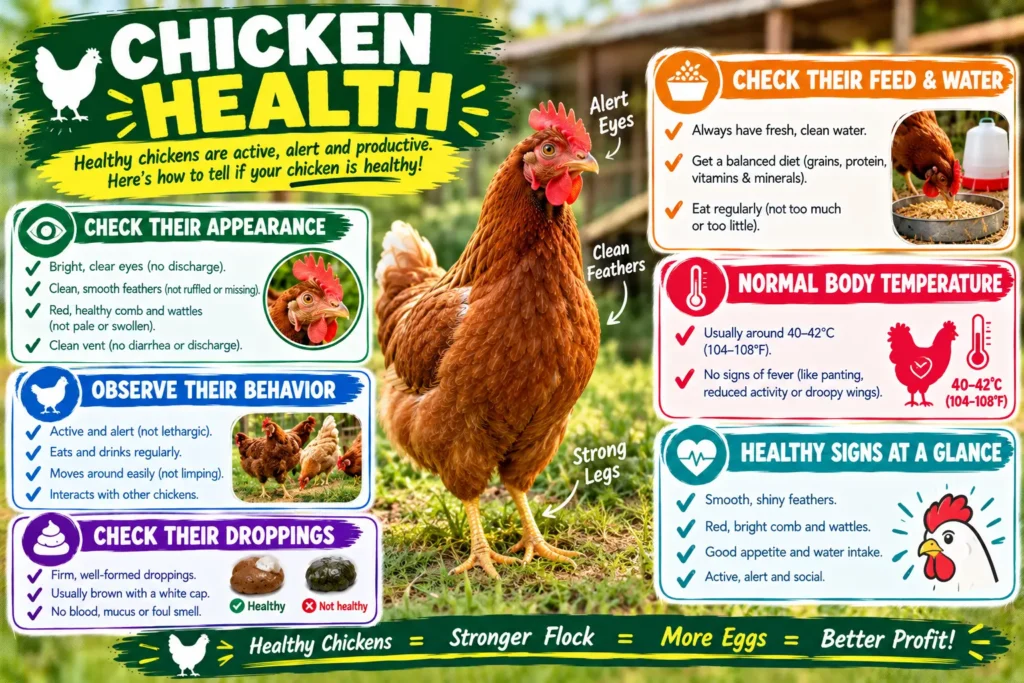
How to tell if a chicken is healthy comes down to running through a handful of quick checks you can do in a couple of minutes with any bird in front of you. This page is built as a practical, in-the-moment checklist; for the fuller picture of baseline chicken health, including vital sign ranges and a routine monthly check, the companion overview guide goes into that depth.
Here, the goal is simple: look at a specific bird right now and get a clear answer.
Quick Answer: A healthy chicken has a bright red comb, clear eyes, smooth feathers, a well-rounded body, normal droppings, and alert, active behavior. Check these six areas in order, and any single clear red flag is worth a closer look, even if everything else checks out fine.
Table of Contents
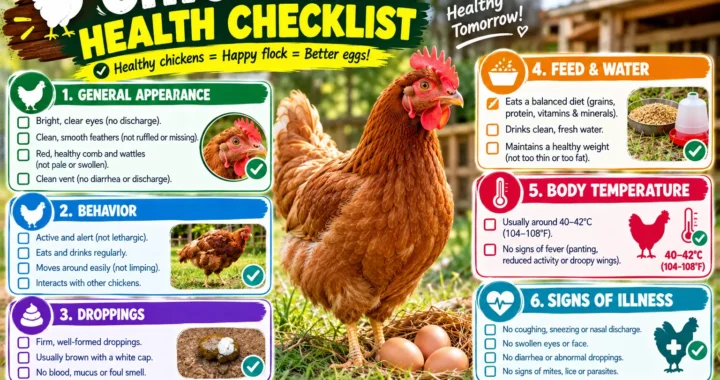
The Six-Point Healthy Chicken Checklist
1. Comb and Wattles
Look for bright red color (or breed-appropriate darker tones), full shape, and no swelling, scabs, or discoloration.
2. Eyes
Check for clear, bright, fully open eyes without discharge, cloudiness, or swelling.
3. Feathers
Scan for smooth, glossy feathers lying naturally, aside from expected rough patches during a normal molt.
4. Body Condition
Gently feel the keel bone; it should be noticeable but not sharp, with reasonable muscle coverage on either side.
5. Droppings
Check recent droppings for a firm, brown or green appearance with a white urate cap, not watery, bloody, or unusual in color.
6. Behavior
Watch for alert, active engagement with surroundings and flock mates, normal appetite, and typical vocalization patterns.
| Check Point | Healthy Sign | Red Flag |
| Comb/wattles | Bright red, full | Pale, blue, swollen, scabbed |
| Eyes | Clear, open, bright | Cloudy, discharge, swollen shut |
| Feathers | Smooth, glossy | Dull, ruffled (outside molt), bald patches |
| Body condition | Rounded, palpable keel | Very thin or excessively fat |
| Droppings | Firm, capped | Watery, bloody, unusual color |
| Behavior | Alert, active, eating | Lethargic, hiding, not eating |
Did You Know? Checking a chicken’s comb color is one of the fastest health indicators available, since reduced blood flow from illness, cold, or anemia shows up as paleness there before many other visible signs appear.
Read More: https://lashegg.com/chicken-health/
Step-by-Step: Doing the Check in Under Two Minutes
- Approach calmly and observe first. Watch behavior and posture before handling the bird.
- Check the comb, wattles, and eyes. These are visible without needing to pick the bird up.
- Pick up the bird gently. Feel body condition along the keel bone.
- Fan through the feathers briefly. Check for parasites, skin irritation, or bald patches.
- Glance at recent droppings nearby. Note color, consistency, and any red flags.
- Set the bird down and watch her rejoin the flock. Normal, confident movement back into the group is itself a good sign.
Expert Tip
Do this check on a bird you know well first, so you have a personal baseline for what “normal” looks like for her specifically before comparing other flock members against a generic standard.
Common Mistakes to Avoid
- Judging health from a distance only, without a hands-on check when something seems uncertain
- Assuming one healthy sign (like good appetite) rules out a problem elsewhere
- Comparing one breed’s comb size or feather density directly against a different breed
- Skipping the droppings check, one of the fastest-changing and most informative indicators
- Doing the check only when a bird already looks obviously unwell
Warning
Chickens are prey animals that instinctively hide illness, so a bird that fails even one of these six checks clearly may be further along in a health decline than her overall appearance suggests. Don’t wait for multiple red flags before taking a single clear one seriously.
When to Call a Vet
Contact a poultry veterinarian if a bird fails multiple points on this checklist, or if any single sign is severe, such as a very pale comb, bloody droppings, or a complete refusal to move or engage. This quick check is a screening tool, not a diagnosis, so anything concerning deserves a closer, more thorough look.
People Also Ask
What is the fastest way to tell if a chicken is healthy? Checking comb color, eye clarity, and general activity level gives a quick first impression in under a minute, though a full six-point check is more reliable.
Are healthy chicken symptoms the same across all breeds? The core signs are similar, though comb size, feather density, and typical activity level vary by breed, so knowing your specific breed’s normal appearance helps avoid false alarms.
Can a chicken look healthy but still be sick? Yes, chickens hide illness instinctively, which is why a hands-on check, including body condition and droppings, catches more than a visual glance alone.
How often should I check for signs of healthy chicken condition? A quick visual check daily, with a more thorough hands-on check monthly, catches most issues early without requiring excessive daily handling.
Is droppings color really a reliable healthy chicken symptom? Yes, droppings respond quickly to diet and health changes, making them one of the more useful and fast-responding indicators available in a quick check.
Final Thoughts
How to tell if a chicken is healthy comes down to a fast, six-point check: comb, eyes, feathers, body condition, droppings, and behavior. Running through these in order takes just a couple of minutes and catches most red flags before they become serious.egg.
Use this checklist any time you want a quick read on a specific bird, and reach out to a poultry veterinarian if a chicken fails multiple points or shows one severe, clear sign that something isn’t right.
5. FAQ
Q: How to tell if a chicken is healthy without picking her up? A: Comb color, eye clarity, feather condition, and general behavior can all be assessed visually, though a hands-on check adds body condition and closer feather inspection.
Q: What are the most reliable healthy chicken symptoms to check first? A: Comb color and overall behavior are the fastest, most visible starting points, with droppings and body condition adding more detail if anything seems uncertain.
Q: Can signs of healthy chicken condition change day to day? A: Yes, minor variation is normal, especially with weather or activity level, which is why knowing each bird’s individual baseline matters more than a single snapshot check.
Q: Should I check every chicken in my flock the same way? A: Yes, using the same consistent checklist across all birds makes it easier to compare and notice when one specific bird deviates from the rest of the flock.
Q: What should I do if a chicken fails part of this checklist? A: Look more closely at that specific area, consider whether it’s an isolated sign or part of a larger pattern, and consult a poultry veterinarian if it’s severe or doesn’t resolve quickly.