Chicken Worm Treatment: A Practical Guide to Deworming Your Flock

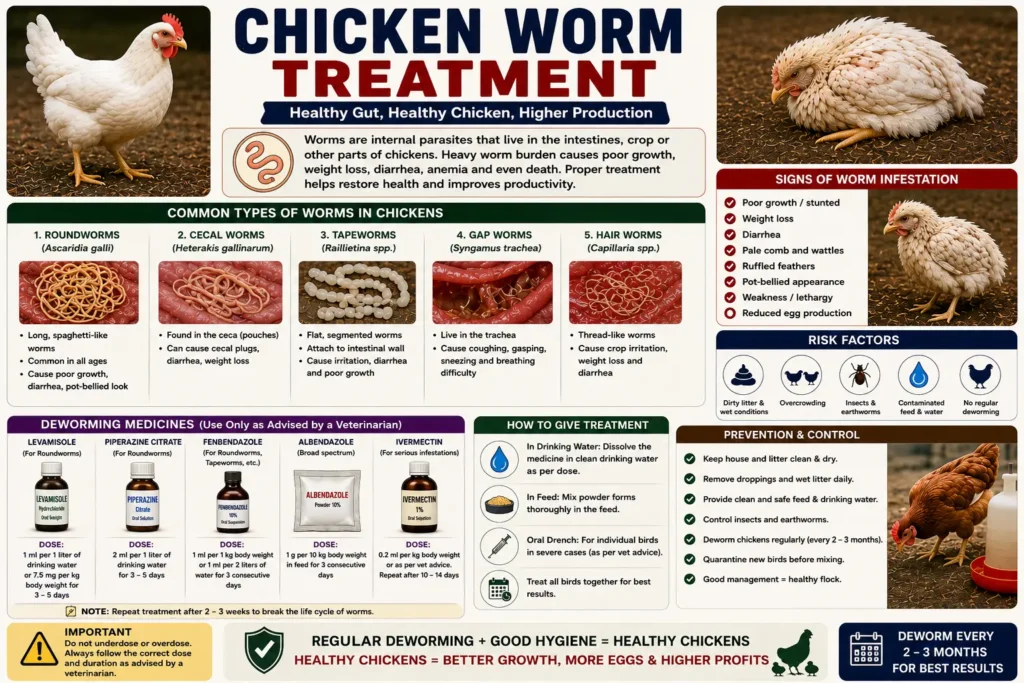
Quick Answer: Chicken worm treatment usually involves a targeted dewormer like fenbendazole, given to the whole flock at once, followed by a fecal recheck 2–3 weeks later. The right dewormer depends on which worm type is present, and treating without confirming that first often means the wrong drug for the job. Good coop and pasture hygiene during and after treatment prevents reinfection.
If a fecal test just confirmed worms, or you’ve spotted them in droppings and want to act fast, you need a treatment plan that actually matches the problem. Not every dewormer works on every worm type, and getting this wrong means treating again in a few weeks for nothing.
This guide walks through the full process of chicken worm treatment: which dewormers to use, correct dosing basics, step-by-step deworming, and how to stop worms from coming right back.
Table of Contents
Before You Treat: Confirm What You’re Dealing With
Jumping straight to treatment without knowing the worm type is one of the most common mistakes backyard keepers make. A fecal float test, done by a vet or sometimes at home with the right equipment, identifies which worm eggs are present and roughly how heavy the infestation is.
This matters because chicken worm treatment isn’t one-size-fits-all. A dewormer effective against roundworms might do very little against tapeworms or gapeworms.
Expert Tip: If you can’t get a fecal test done quickly and symptoms are clear (visible worms, weight loss, reduced laying), a broad-spectrum dewormer like fenbendazole is usually a reasonable starting choice while you arrange testing.
Read More: https://lashegg.com/chicken-worms-symptoms-treatment/
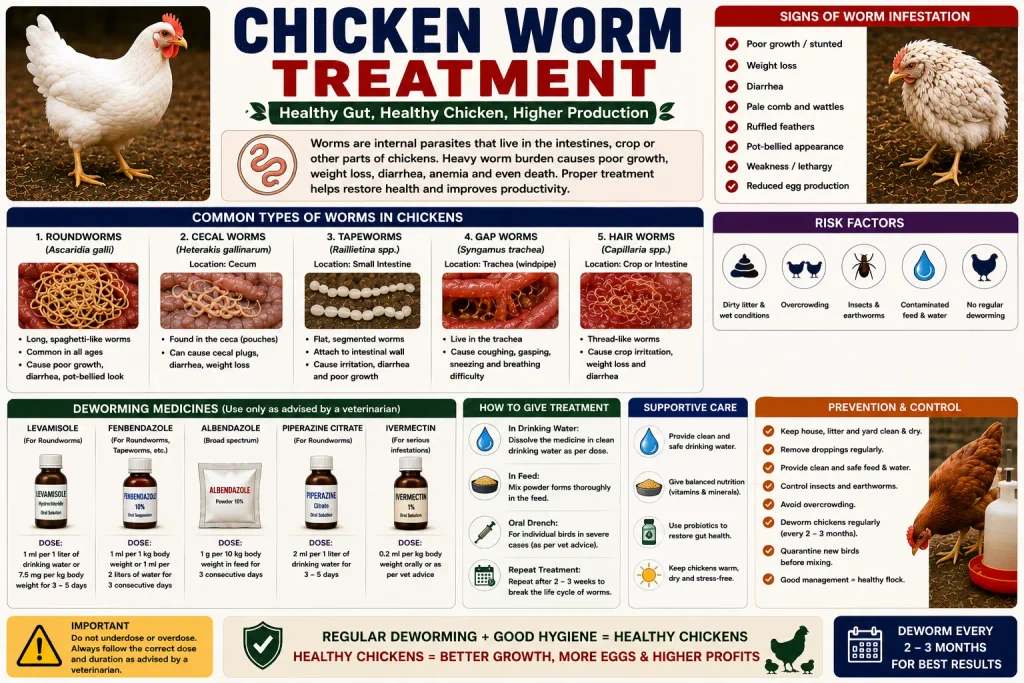
Common Dewormers for Chicken Worm Treatment
1. Fenbendazole
The most widely used broad-spectrum option for treating worms in backyard flocks. It’s effective against roundworms, capillary worms, and gapeworms, making it a solid first choice when the exact worm type isn’t confirmed yet.
- Typically given as a feed additive or oral dose over 5 days
- Broad coverage across several common worm types
- Requires an egg withdrawal period in laying hens (check product label)
2. Piperazine
An older dewormer effective mainly against roundworms. It’s less useful for other worm types, so it works best when a fecal test has specifically confirmed roundworms as the primary issue.
3. Ivermectin
Used off-label in poultry in many regions, ivermectin can treat certain internal worms and external parasites like mites at the same time. Availability and legal approval for poultry use vary by country, so check local regulations or ask a vet before using it.
4. Praziquantel
The go-to option specifically for tapeworms, since fenbendazole and piperazine don’t reliably treat this worm type. Praziquantel is less commonly stocked at general farm stores and may require a vet prescription in some areas.
Chicken Worm Treatment Options Compared
| Dewormer | Worm Types Covered | Egg Withdrawal Needed | Availability |
| Fenbendazole | Roundworms, capillary worms, gapeworms | Yes, check label | OTC in most regions |
| Piperazine | Roundworms only | Varies by product | OTC in most regions |
| Ivermectin | Some worms, plus mites/lice | Varies, often required | Off-label; vet guidance recommended |
| Praziquantel | Tapeworms | Varies by product | Often vet-prescribed |
Step-by-Step Chicken Worm Treatment Process
- Confirm worm presence and type through a fecal float test if possible
- Select the dewormer that matches the confirmed or suspected worm type
- Weigh or estimate bird weight to calculate correct dosing
- Treat the entire flock at the same time, since exposure is typically shared
- Follow the full treatment course exactly as labeled, don’t stop early
- Note any required egg withdrawal period before resuming egg consumption
- Clean and dry coop bedding during the treatment window
- Rotate or rest pasture areas if birds free-range
- Schedule a follow-up fecal test 2–3 weeks after treatment ends
- Repeat treatment only if the follow-up test shows a continued high egg count
Warning: Never guess dosing based on a product made for a different animal species. Poultry-specific dosing differs from cattle, sheep, or dog dewormers even when the active ingredient is the same.
Why Treating the Whole Flock Matters
Did You Know? Even birds showing no symptoms can carry a moderate worm burden and continue shedding eggs into the environment. Treating only the visibly sick bird often leads to quick reinfection from flockmates that were never treated.
Since worm eggs spread through shared ground, water, and bedding, a flock-wide treatment approach is almost always more effective than isolating and treating one bird alone.
Deworming Chickens: Natural and Supportive Approaches
Some flock owners look for natural approaches to complement standard chicken worm treatment, though these should not replace confirmed medical treatment for a diagnosed heavy infestation.
- Diatomaceous earth added to dust baths (limited evidence for internal worm control)
- Pumpkin seeds and garlic, popular but not well-supported by strong veterinary research
- Apple cider vinegar in water, more of a general wellness habit than a proven dewormer
Warning: Natural remedies are not a substitute for a confirmed dewormer when a fecal test shows a moderate to heavy worm burden. Relying solely on unproven methods can allow the infestation to worsen.
Common Mistakes During Chicken Worm Treatment
Common Mistakes:
- Using piperazine for a confirmed tapeworm infestation, where it has little effect
- Treating just one visibly affected bird instead of the entire flock
- Skipping the follow-up fecal test after treatment
- Ignoring egg withdrawal periods and eating eggs too soon after treatment
- Assuming natural remedies alone will clear a confirmed heavy worm burden
Recovery and Follow-Up After Treatment
Most birds show improved appetite and activity within a week of completing chicken worm treatment, assuming the correct dewormer was used. Egg production, if reduced beforehand, often returns to normal within a few weeks as the bird’s nutrient absorption recovers.
| Timeframe | What to Expect |
| During treatment | Follow full dosing course, monitor droppings |
| 1 week after | Appetite and energy typically improve |
| 2–3 weeks after | Schedule follow-up fecal test |
| 4+ weeks after | Egg production often returns to normal levels |
Preventing Reinfection After Deworming Chickens
- Rotate pasture or range areas to reduce reexposure to contaminated ground
- Keep feed and water elevated and clean to avoid attracting worm-carrying insects
- Maintain dry, regularly changed bedding
- Schedule routine fecal testing every 6 months for outdoor flocks
- Avoid overcrowding, which increases shared exposure to droppings
When to Call a Vet
When to Call a Vet:
- You’re unsure which worm type is present and want lab confirmation
- Symptoms are severe, including signs of intestinal blockage or breathing difficulty from gapeworms
- A repeat fecal test still shows a high worm count after full treatment
- You need guidance on egg withdrawal timing for laying hens
- You’re treating chicks or very young birds and want dosing confirmed
A vet or poultry extension specialist can also help if standard chicken worm treatment isn’t working, since resistant worm populations, though less common in backyard flocks, do occur and may need a different drug class.
Is Chicken Worm Treatment Safe for Egg-Laying Hens?
Yes, when the correct product and dose are used, though many dewormers require a set egg withdrawal period afterward. Always check the product label or ask a vet how many days to wait before eating eggs again after treatment.
How Often Should You Deworm Chickens?
Most backyard keepers deworm based on fecal test results rather than a fixed calendar schedule. This targeted approach, recommended by many university extension poultry programs, avoids unnecessary medication use while still catching worm burdens before they become severe.
FAQ: People Also Ask About Chicken Worm Treatment
What is the best chicken worm treatment? Fenbendazole is a commonly used broad-spectrum option, though the best treatment depends on which worm type a fecal test confirms.
How do you treat worms in chickens naturally? Some keepers use diatomaceous earth, garlic, or pumpkin seeds as supportive measures, but these aren’t a substitute for a confirmed dewormer in moderate to heavy infestations.
How long does chicken dewormer take to work? Most birds show improved appetite and energy within a week of completing treatment, with full recovery of egg production sometimes taking a few weeks longer.
Do you need to treat the whole flock or just one bird? Treating the whole flock is usually recommended, since worm exposure is typically shared even among birds without visible symptoms.
Is it safe to eat eggs during chicken worm treatment? Not always. Many dewormers require an egg withdrawal period, so check the product label before resuming egg consumption.
Can chickens get worms again after deworming? Yes. Reinfection is common if pasture and coop hygiene aren’t addressed alongside treatment, which is why prevention matters as much as the initial dewormer.
Wrapping Up: Getting Chicken Worm Treatment Right
Chicken worm treatment works best when it starts with confirming the worm type, matching the right dewormer to that type, and treating the whole flock together. Fenbendazole covers the widest range of common worm types, while tapeworms and certain other worms need more specific medications like praziquantel.
Keep monitoring droppings, weight, and egg production after treatment, and schedule that follow-up fecal test to confirm the worms are actually gone. If symptoms persist or you’re unsure which product to use, a vet or extension poultry specialist can help you land on the safest, most effective plan.
5. FAQ Section (Structured)
Q: What is the most effective chicken worm treatment? A: Fenbendazole is a widely used broad-spectrum treatment, though the ideal choice depends on the specific worm type confirmed by a fecal test.
Q: How do I know if my chicken worm treatment worked? A: A follow-up fecal test 2–3 weeks after treatment is the most reliable way to confirm the worm burden has dropped.
Q: Can I deworm my whole flock at once? A: Yes, and it’s generally recommended, since worm exposure typically spreads across the whole flock even without visible symptoms in every bird.
Q: Are there risks with chicken worm treatment? A: The main risks involve incorrect dosing or skipping egg withdrawal periods, both of which are avoidable by following label instructions or vet guidance.