Chicken Molting Symptoms: Telling Molt From Everything Else

Chicken molting symptoms can look alarming the first time you see them, especially when a normally full, glossy bird suddenly looks patchy and rough. The tricky part is that several other conditions, mites, lice, feather picking, and even nutritional deficiencies, can all cause feather loss too, and they don’t all call for the same response.
This guide focuses specifically on identification: what genuine signs of molting look like, how they differ from other causes of chicken feather loss, and a clear side-by-side comparison to help you figure out exactly what you’re looking at.
Quick Answer: Genuine chicken molting symptoms include a head-to-tail feather loss pattern, healthy-looking skin underneath, normal appetite and behavior, and gradual regrowth over several weeks. Feather loss with red or irritated skin, bald patches in unusual locations, or accompanying lethargy points toward a different cause, such as parasites, feather picking, or illness, rather than normal molt.
Table of Contents
What Genuine Molting Symptoms Actually Look Like
The Classic Pattern
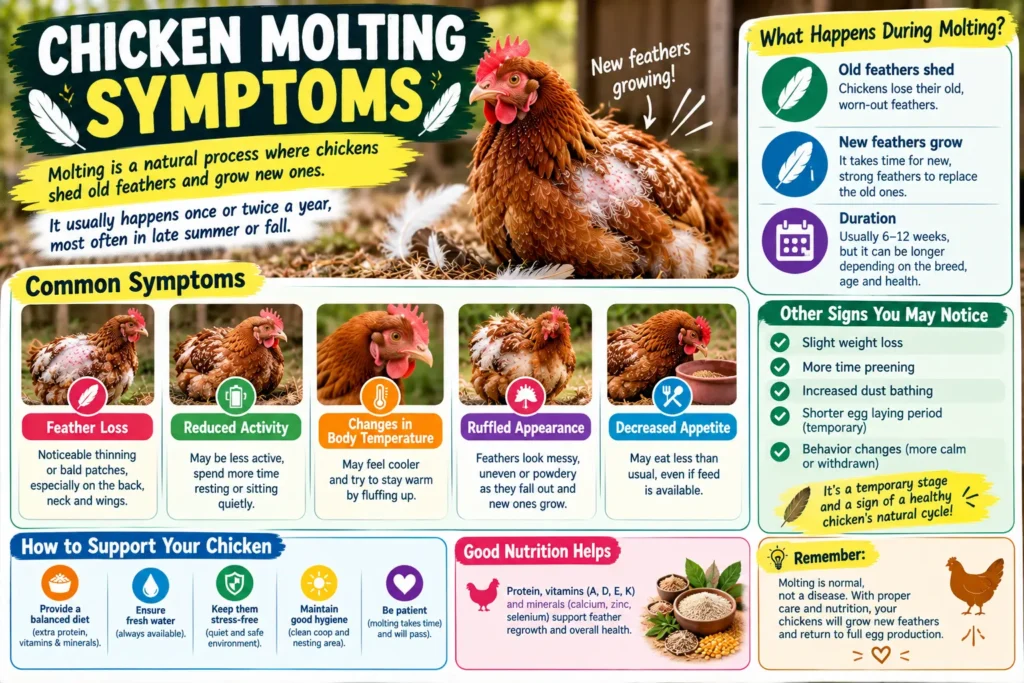
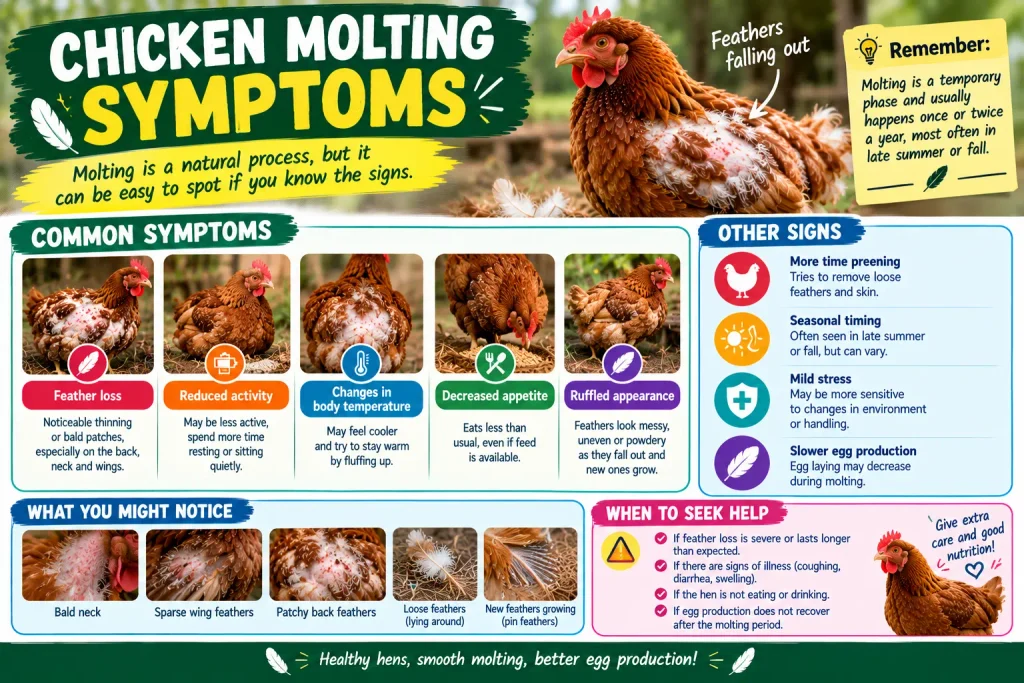
Signs of molting typically follow a predictable head-to-tail sequence: feather loss starts around the head and neck, moves down through the breast and body, and finishes with the wings and tail. This ordered pattern is one of the most reliable indicators of true molt.
Healthy Skin Underneath
A hen experiencing normal molt will show healthy, unbroken skin beneath the feather loss, without redness, scabbing, or visible irritation. This is one of the clearest ways to distinguish molting from several other causes of feather loss.
Behavior Stays Normal
Chickens going through a typical molt generally maintain normal appetite and activity levels, even while looking rough. Significant lethargy or reduced eating alongside feather loss points away from simple molting.
| Genuine Molt Sign | What to Look For |
| Pattern | Head-to-tail progression |
| Skin condition | Healthy, no redness or scabbing |
| Behavior | Normal appetite and activity |
| Timeline | Gradual regrowth over weeks |
| Pin feathers | Present as new growth emerges |
Did You Know? The waxy-looking shafts covering new pin feathers during molt actually contain a small blood supply while growing, which is why rough handling of a heavily molting hen can occasionally cause minor bleeding from a broken pin feather.
Read More: https://lashegg.com/how-long-do-chickens-molt/
Chicken Feather Loss Look-Alikes
External Parasites: Mites and Lice
Unlike the even, progressive pattern of molt, feather loss from mites or lice often appears alongside visible irritation, excessive preening, and sometimes small parasites visible at the base of feathers or around the vent.
Feather Picking
Feather picking, whether from boredom, overcrowding, or a specific flock-mate, tends to concentrate in accessible areas like the back and tail base rather than following molt’s head-to-tail order, and often shows fresh damage rather than the smooth transition of natural shedding.
Nutritional Deficiency
Poor overall nutrition, particularly inadequate protein, can cause dull, brittle feathers and slower regrowth, sometimes overlapping with or extending a molt rather than presenting as a completely separate pattern.
Broodiness-Related Feather Loss
A broody hen often plucks feathers from her own breast to create better skin contact with eggs during incubation, a specific, localized pattern distinct from a broader body molt.
Illness-Related Feather Loss
Certain systemic illnesses can cause poor feather condition and unusual shedding patterns as a secondary effect, generally accompanied by other, more telling symptoms like lethargy or poor appetite.
| Cause | Pattern | Skin Condition | Other Signs |
| Normal molt | Head-to-tail, even | Healthy | Normal appetite/behavior |
| Mites/lice | Variable, often vent/wing area | Irritated, red | Excessive preening, visible parasites |
| Feather picking | Back, tail base concentration | Fresh damage possible | Flock dynamics issue, boredom |
| Nutritional deficiency | Dull, brittle, slow regrowth | Usually healthy | Poor overall condition |
| Broodiness | Breast area specifically | Healthy, bare patch | Sitting persistently in nest |
| Illness | Variable, often patchy | Depends on cause | Lethargy, poor appetite |
Step-by-Step: Diagnosing Chicken Feather Loss
- Check the pattern first. Head-to-tail progression suggests molt; concentrated or unusual patterns suggest something else.
- Examine the skin closely. Healthy skin points toward molt; redness, scabbing, or visible parasites point elsewhere.
- Assess overall behavior. Normal appetite and activity support molt; lethargy or poor appetite suggest illness.
- Look for visible parasites. Check the base of feathers and around the vent for mites or lice, especially if skin looks irritated.
- Consider recent flock dynamics. New birds, overcrowding, or a known bully hen raise suspicion for feather picking over molt.
- Check the calendar. Feather loss during typical fall molting season, especially in an adult hen, supports molt as the likely explanation.
Expert Tip
Photograph any concerning feather loss weekly. Comparing images over a couple of weeks reveals whether the pattern is progressing like a typical molt or staying static and localized, which is a strong clue toward feather picking or parasites instead.
When Chicken Molting Symptoms Overlap With Other Causes
Molt Plus Nutritional Deficiency
A hen already molting who is also nutritionally deficient may show a slower, more prolonged process than expected, blurring the line between normal molt duration and a compounding dietary issue.
Molt Plus Mild Parasite Load
A molting hen with an existing mild mite infestation might show both the expected head-to-tail pattern and some irritation in specific spots, making careful, close examination more important than a quick glance.
Common Mistakes to Avoid
- Assuming all feather loss is molt simply because it’s fall
- Overlooking visible skin irritation because “she’s probably just molting”
- Missing a bullying flock mate as the actual cause behind localized feather loss
- Confusing a broody hen’s chest feather loss with a broader body molt
- Waiting too long to investigate feather loss that isn’t following a typical molt pattern
Warning
Feather loss paired with red, scabbed, or irritated skin, or with visible small parasites, is not typical of normal chicken molting symptoms and should be treated as a separate issue requiring targeted treatment rather than simply waiting it out as molt.
When to Call a Vet
Contact a poultry veterinarian if feather loss doesn’t match a typical molt pattern, especially when paired with skin irritation, lethargy, poor appetite, or visible parasites that don’t respond to standard treatment. A vet can help distinguish between molt, parasites, nutritional issues, and illness when the picture isn’t clear from a home examination alone.
People Also Ask
What are the very first chicken molting symptoms to look for? The earliest signs of molting typically appear around the head and neck, with a gradual, progressive feather loss pattern rather than sudden, patchy bald spots.
How can I tell chicken feather loss from molt versus mites? Molt shows a healthy, even pattern with normal skin, while mite-related feather loss usually comes with visible skin irritation, excessive preening, and sometimes visible parasites at the feather base.
Can feather picking look exactly like molting? Not exactly; feather picking tends to concentrate in specific accessible areas like the back and tail, while molt follows a broader, more even head-to-tail progression.
Do signs of molting include changes in behavior? Genuine molt typically doesn’t cause significant behavior changes beyond looking rough, so notable lethargy or appetite loss alongside feather loss suggests investigating other causes.
Is it normal for chicken molting symptoms to include some skin redness? Mild, temporary sensitivity around emerging pin feathers can occur, but significant redness, scabbing, or broken skin isn’t typical and warrants checking for parasites or another cause instead.
Final Thoughts
Chicken molting symptoms follow a fairly recognizable pattern: gradual, head-to-tail feather loss with healthy skin and normal behavior underneath. When feather loss looks different, whether that’s localized, accompanied by irritation, or paired with lethargy, it’s worth looking past molt as the automatic explanation.
Use pattern, skin condition, and behavior together rather than relying on any single sign, and reach out to a poultry veterinarian whenever chicken feather loss doesn’t clearly match the typical, healthy molting picture described here.
5. FAQ
Q: What’s the difference between chicken molting symptoms and signs of illness? A: Molt typically comes with normal appetite and behavior alongside feather loss, while illness-related feather loss is usually accompanied by lethargy, poor appetite, or other systemic symptoms.
Q: Can signs of molting include weight loss? A: Significant weight loss isn’t typical of normal molting; while energy demands increase, most hens maintain reasonable body condition, so notable weight loss suggests investigating other causes.
Q: Is chicken feather loss around the vent always a molt sign? A: Not necessarily; vent-area feather loss is also common with external parasites or occasionally reproductive issues, so it deserves closer inspection rather than automatic assumption of molt.
Q: How do I know if my hen’s feather loss is from bullying versus molting? A: Bullying-related feather loss tends to concentrate in specific, accessible spots like the back or tail base, often with fresh-looking damage, rather than the broader, even pattern typical of molt.
Q: Should I separate a hen showing unclear feather loss symptoms? A: If you’re unsure whether it’s molt or something contagious like mites, temporary isolation while you investigate further is a reasonable, low-risk precaution.