Chicken molting is the yearly process where hens drop their old feathers and grow new ones. It usually happens in fall, lasts about 8 to 16 weeks, and often stops egg laying. Your job is simple: feed more protein, keep stress low, and let nature finish the work.

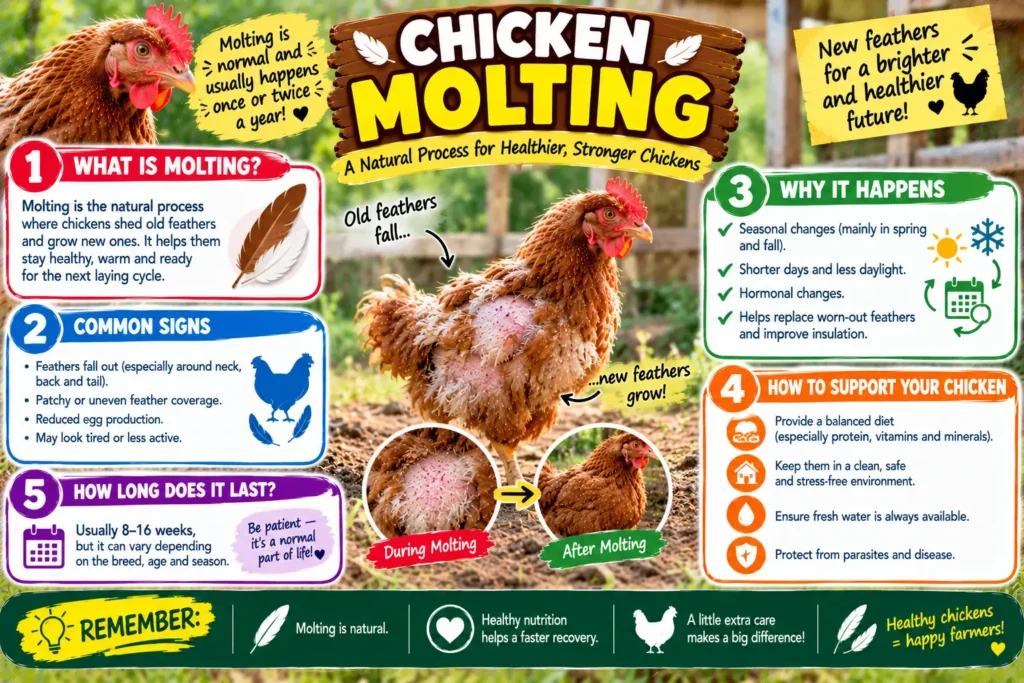
A molting flock can look rough. Feathers pile up in the run, and some hens look nearly bald. This guide explains when the molt starts, what each stage looks like, what to feed, and how to tell normal molting from a real problem.
Quick Answer: Most hens start their first full molt around 16 to 18 months old, then repeat it every fall. Expect 8 weeks on average, and up to 16 for slow birds. Switch to a feed with 18–20% protein, handle birds gently, and avoid big changes. See a vet if a hen has open wounds, seems ill, or doesn’t regrow feathers.
[Image suggestion: a hen with bare neck and new pin feathers in early fall. Alt text: hen in the middle of chicken molting with pin feathers growing on her neck]
Table of Contents
What Is Chicken Molting?
Molting is the natural shedding of worn feathers and the growth of new ones. Feathers get damaged over a year, so hens replace them before winter. Day length is the main trigger. Shorter days signal the body to pause laying and shift energy to feather growth.
Feathers are mostly protein, about 85% by one common estimate. Building a whole new coat takes a lot of nutrition, which is why egg production usually drops or stops until the molt is done.
Did You Know? A hen that is molting isn’t sick or old. Even top layers molt. The difference is that productive and younger hens tend to recover faster, according to a Purina flock nutritionist. egg
When Do Chickens Molt?
Chickens actually molt several times in life, not just once a year. Here is the full picture.
| Stage | Age | What happens |
| First juvenile molt | About 6–8 days to 4 weeks | Chick down is replaced by first feathers |
| Second juvenile molt | About 7–12 weeks | First feathers are replaced; a young rooster’s ornamental feathers appear |
| First annual molt | Around 16–18 months | The first full adult molt |
| Every year after | Usually fall | Yearly replacement of feathers |
Molt timing is not perfectly fixed. Stress, a lack of water or food, and sudden lighting changes can all bring on a molt at odd times. Broody hens also molt heavily after their chicks hatch, once they return to normal eating and drinking.
Read More: https://lashegg.com/chicken-feather-loss/
Chicken Molting Timeline: What to Expect
The pattern is the same for most hens. Feathers drop in a set order: head and neck first, then back, breast, wings, and tail.
| Stage | Typical timing | What you’ll see |
| Early signs | Week 1–2 | Dull feathers, more feathers on the ground, laying slows |
| Peak loss | Week 2–4 | Bare patches, laying often stops, pin feathers appear |
| Regrowth | Week 4–8 | Pins open into full feathers, appetite stays high |
| Finishing | Week 8–16 | Coat looks normal, hen returns to laying |
Most birds finish in about 8 weeks, though some take up to 16. A university extension source puts it at one to two months for most breeds, and notes egg production can settle roughly 15% lower after each molt.
Soft molt vs. hard molt
In a soft molt, feathers come out slowly, and you may barely notice bare patches. A hard molt drops big sections at once and leaves the hen ragged. Both are normal, and the type can affect how long it takes.
Signs your hens are molting
- Feathers pile up in the coop and run
- Feathers look dull and lose their shine
- Small spiky pin feathers show on the skin
- Egg laying slows or stops
- Hens act grumpy or dislike being picked up
- Bare skin appears, starting at the neck
If the bare spots don’t follow this pattern, something else may be going on.
What to Feed Molting Chickens
Protein is the top priority. Regular layer feed is about 16% protein, which supports egg laying but falls short for growing a whole new coat. Aim for a feed in the 18–22% range, or a complete feed around 20%, until the new feathers are in.
| Option | Approx. protein | Notes |
| Standard layer feed | About 16% | Fine for laying, lean for molting |
| Grower, all-flock, or flock raiser feed | About 18–20% | Common molt choice; add oyster shell separately |
| Protein treats (mealworms, cooked eggs, sunflower seeds) | Varies | Small extras, not a full diet |
| Scratch and corn | Low | Dilutes protein, so keep to 10% or less |
Switch feeds slowly by mixing old and new over 7 to 10 days. This protects digestion.
Expert Tip: Higher-protein feeds usually have less calcium than layer feed. Since hens have paused laying, they need less, but leave oyster shell in a separate dish. Hens that haven’t fully stopped laying can pick what they need.
Keep clean water available at all times. Feather growth needs lots of hydration. For treat ideas that add protein without upsetting the balance,
Once feathers are back and eggs resume, return to regular layer feed gradually.
How to Help Molting Chickens
You can’t rush a molt, but you can make it easier. Follow these steps:
- Raise the protein. Move to an 18–20% feed and cut treats that dilute it.
- Handle birds less. New feather shafts are sore, so limit picking up.
- Keep routines steady. Avoid moving the flock or changing the coop layout.
- Wait on new birds. Adding newcomers mid-molt causes stress and bullying, and bare hens make easy targets.
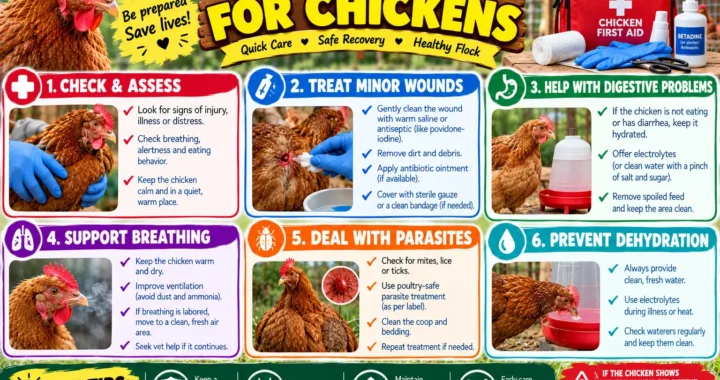
- Give shelter. Bare skin chills easily, so keep the coop dry and free of drafts.
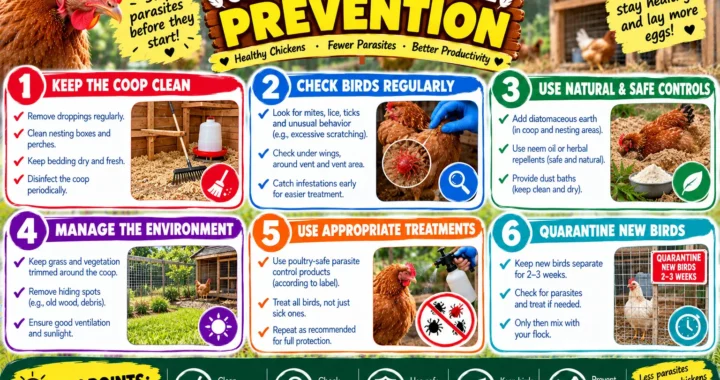
- Offer a dust bath. It helps birds stay comfortable and manage parasites. .
- Do a quick health check. Molting is a good time to look at skin, weight, and legs, gently.
Expert Tip: If a growing feather breaks and bleeds, press gently with a clean cloth and use cornstarch or flour to help it clot. Call a vet if it won’t stop.
Should you add light to keep hens laying?
Extra light can keep some hens laying, but it also interferes with the natural rest that molting gives. Many keepers let hens take their break. If you use lights, do it thoughtfully and watch body condition closely.
Can you speed up or force a molt?
No. Commercial farms once used feed withdrawal to force molts. That is stressful and unsafe, and unnecessary for backyard birds. Good protein and low stress are the only real shortcuts.
Common Mistakes:
- Feeding mostly scratch or corn during molt
- Skipping the transition to a new feed
- Picking up hens too much
- Adding new birds in the middle of a molt
- Assuming every bald spot is molt
- Ignoring bleeding pin feathers
- Forgetting to switch back to layer feed after the molt
Molt or Something Else?
Use this table to separate chicken molting from other causes of bare spots.
| Sign | Molt | Something else |
| Pattern | Even, head-to-tail | One bare patch |
| Skin | Clean with pins | Red, scabby, crawling insects |
| Behavior | Grumpy but eating | Lethargic, itching, bullied |
| Season | Usually fall | Any time |
| Breast only | No | Likely broody |
Mites, lice, rooster damage, pecking, and low protein can all mimic a molt. When in doubt, check the skin with a flashlight at night.
When Chicken Molting Becomes a Problem
Most molts are simple. A few warning signs mean you should look closer.
- A molt that drags past 16 weeks. Check protein, parasites, and general health.
- Raw or bleeding skin. Bare patches can get pecked or injured.
- Lethargy or weight loss. A normal molt doesn’t make hens weak.
- Feather loss at odd times. Stress, lack of food or water, and lighting changes can trigger a molt at the wrong time. Fix the cause.
Warning: Cold, wet weather can be hard on hens with bare skin. Provide a dry, draft-free shelter, and watch for hens shivering or hiding.
Home Care vs. Veterinary Care
| Situation | Home care | Vet care |
| Normal molt | More protein, low stress, gentle handling | Not needed |
| Bleeding pin feather | Pressure, cornstarch or flour | If bleeding won’t stop |
| Slow regrowth | Check feed, water, parasites | If none improves after fixes |
| Mites or lice suspected | Poultry-approved treatment | If skin is raw or hen is weak |
| Weakness, weight loss, pale comb | None (don’t guess) | Yes |
When to Call a Vet:
- Bleeding that doesn’t stop, or open wounds
- Lethargy, hiding, or refusing food and water
- Weight loss, a sharp breastbone, or a pale comb
- Breathing trouble, diarrhea, or swelling
- Several birds sick at once
- No regrowth after 12 weeks of good care
A vet can check for parasites, infections, and hidden illness. For flock-wide sickness or sudden deaths, contact a poultry veterinarian, your state veterinarian, or USDA APHIS. The Merck Veterinary Manual is a good reference for owners who want to read further.
Special Cases
Roosters. They molt on the same yearly rhythm, and it can be less noticeable because their feathers are long and full.
Young birds. Growing pullets go through juvenile molts, so ragged feathering is normal. Make sure chicks get a proper starter feed.
Broody hens. They often molt right after hatching.
Winter molts. A molt in cold weather is unusual. Check for mites, stress,
Final Thoughts
Chicken molting is a normal reset that makes hens ready for winter. With extra protein, gentle handling, and a steady routine, most flocks come through it with strong new feathers and healthy laying.
Watch the pattern of feather loss, the skin underneath, and each hen’s energy. If the molt looks different from the usual head-to-tail pattern, or a bird seems unwell, ask a vet to check her.
5. FAQ
What is chicken molting?
It’s the yearly shedding and regrowth of feathers. Hens usually molt in fall, when daylight drops, and often stop laying while they do it.
How long does a chicken molt last?
About 8 weeks for most birds, and up to 16 for some. Older or less productive hens tend to take longer.
At what age do chickens start molting?
Chicks have two juvenile molts before adulthood. Their first full adult molt is usually around 16 to 18 months old.
Do chickens stop laying eggs during a molt?
Usually. Feather growth takes so much protein and energy that laying slows or stops until it’s done.
What should I feed molting chickens?
A complete feed with about 18–20% protein, plus fresh water. Cut back scratch and corn, and offer protein treats in small amounts.
Should I give molting chickens extra treats?
Only protein-rich ones like mealworms or cooked eggs, and only a little. Too many treats dilute the diet.
Why is my chicken molting in winter or spring?
Stress, a lack of food or water, sudden light changes, or a broody spell can trigger a molt at odd times. Rule out mites and poor nutrition too.
Do chickens feel pain when molting?
They can feel sore, especially around new pin feathers. Handle them gently and give them a quiet, clean space.
Can a chicken die from molting?
Molting itself is natural, but a weak, underfed, or sick hen can struggle, especially in cold weather. See a vet if she is lethargic or stops eating.
How can I tell molting from mites?
Molting follows a head-to-tail pattern with clean skin and pin feathers. Mites cause patchy loss, scabs, and itching, especially around the vent and under the wings.
Do roosters molt too?
Yes. They follow the same yearly cycle as hens.