Chicken Pecking Order: The Social System Behind the Phrase

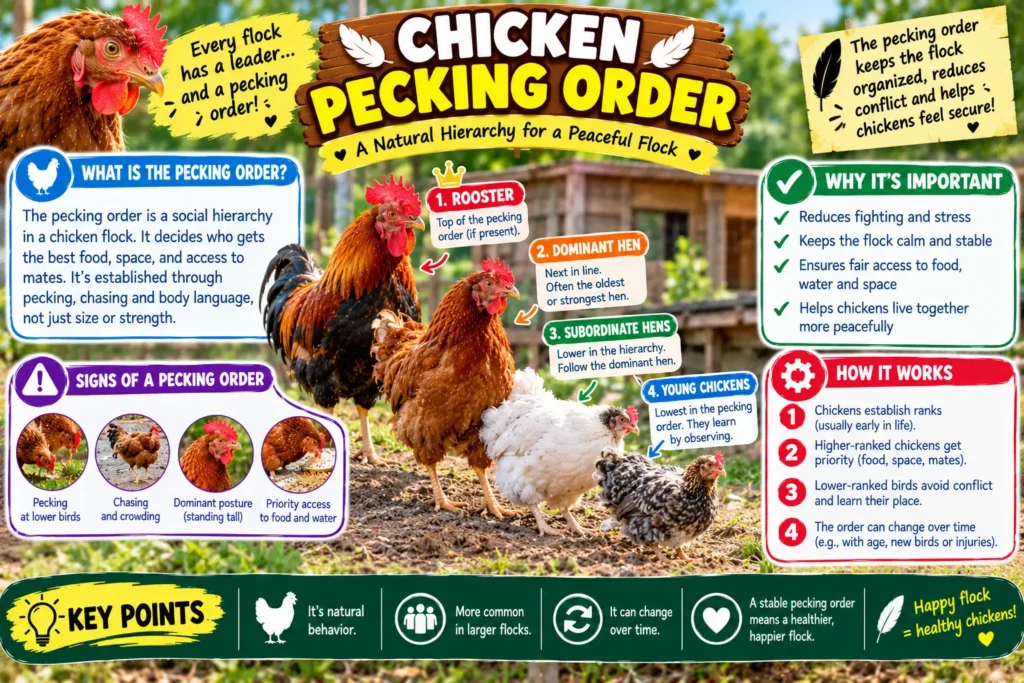
Chicken pecking order isn’t just a saying borrowed for human workplaces; it’s a real, observable social hierarchy that governs everything from feeding priority to roosting spots within a flock. Understanding how this system actually works helps you tell normal social behavior apart from a genuine problem worth intervening in.
This guide covers how flock hierarchy establishes itself, what typical pecking order behavior looks like day to day, and the specific signs that separate ordinary social structure from harmful bullying.
Quick Answer: Chicken pecking order is a hierarchical social structure where each bird holds a rank determining priority access to food, water, nesting boxes, and preferred roosting spots. Some pecking, chasing, and posturing is completely normal, especially when establishing or adjusting rank. It becomes concerning when it causes injury, prevents a specific bird from accessing basic resources, or continues at high intensity well beyond a normal adjustment period.
Table of Contents
How Chicken Hierarchy Establishes Itself
The Basic Mechanism
Chickens determine rank through a combination of physical displays, actual pecking, chasing, and posturing, occurring most intensely when a flock first forms or when new birds are introduced. Once established, this hierarchy typically requires only occasional reinforcement to maintain.
Factors That Influence Rank
- Age and size, with larger, more mature birds often ranking higher
- Breed temperament, since some breeds are naturally more assertive
- Individual personality, which varies even within the same breed and age group
- Health and confidence, since a weakened bird often drops in rank temporarily
| Factor | Effect on Rank |
| Age/size | Often correlates with higher rank |
| Breed temperament | Assertive breeds often rank higher |
| Individual personality | Significant variation regardless of other factors |
| Health/confidence | Illness or injury can temporarily lower rank |
Did You Know? The term “pecking order” was coined by a Norwegian zoologist studying chicken social behavior in the 1920s, and the phrase later became common English usage for hierarchical systems well beyond poultry.
What Normal Pecking Order Behavior Looks Like
Typical Day-to-Day Signs
- Higher-ranking birds eating first or claiming preferred food spots
- Occasional pecks that don’t break skin or cause visible distress
- A consistent pattern of certain birds moving away from others without conflict
- Higher-ranking birds claiming the best roosting spots at night
When Establishing a New Hierarchy
New flocks, or flocks with recently introduced birds, typically show more frequent and intense posturing and pecking during the first one to two weeks as rank gets sorted out, generally settling into a stable, calmer pattern afterward.
Read More: https://lashegg.com/chicken-molting/
| Behavior | Normal Context |
| Occasional pecks, no injury | Ongoing rank maintenance |
| Chasing without contact | Rank assertion |
| Increased activity after new bird introduction | Hierarchy establishing/adjusting |
| Settling within 1-2 weeks | Normal timeline for new flock dynamics |
When Pecking Order Crosses Into Bullying
Warning Signs of a Real Problem
- Pecking that breaks skin or causes visible injury
- A specific bird being prevented from accessing food or water
- Continuous, intense targeting well beyond a normal establishment period
- A bird hiding constantly or showing signs of significant stress
| Sign | Normal Pecking Order | Bullying |
| Duration | Settles within 1-2 weeks | Continues indefinitely |
| Injury | None or minimal | Visible wounds |
| Resource access | All birds eventually access food/water | Specific bird consistently blocked |
| Target’s behavior | Normal activity otherwise | Hiding, significant stress signs |
Why Intervention Matters
Left unaddressed, genuine bullying can lead to serious injury, chronic stress affecting health and egg production, and in severe cases, death of the targeted bird, making the distinction between normal hierarchy and harmful bullying genuinely important.
Managing Pecking Order Issues
Step-by-Step: Addressing Excessive Bullying
- Confirm it’s genuinely beyond normal hierarchy behavior. Use the signs above to distinguish rank-establishment from ongoing targeting.
- Increase available space. Overcrowding is one of the most common contributors to excessive pecking order aggression.
- Add multiple feeding and watering stations. This reduces resource competition that often drives conflict.
- Temporarily separate the most aggressive bird, not the victim. Removing the target can actually worsen her position when reintroduced, while separating the aggressor is more effective.
- Reintroduce gradually after a cooling-off period. A few days to a week of separation often resets particularly intense conflicts.
Introducing New Birds to Minimize Pecking Order Disruption
- Quarantine new birds for health reasons first, as covered in flock introduction guides
- Use a “look but don’t touch” period with visual contact before full integration
- Introduce new birds in pairs or small groups rather than singly, when possible
- Provide extra space and multiple resource stations during the adjustment period
| Introduction Strategy | Why It Helps |
| Visual contact period | Reduces shock of sudden full introduction |
| Group introduction | Diffuses aggression across multiple new birds rather than one |
| Extra space/resources | Reduces competition-driven conflict |
Expert Tip
Introduce new birds at night directly onto the roost when possible. Chickens are calmer and less reactive in darkness, and waking up together in the morning often results in a smoother initial interaction than a daytime introduction.
Common Mistakes to Avoid
- Removing the bullied bird instead of addressing the aggressor or underlying cause
- Introducing new birds without any transition period
- Assuming all pecking is a problem requiring intervention
- Overlooking overcrowding as a root cause of excessive conflict
- Reintroducing birds too soon after separating for an intense conflict
Warning
A bird being actively prevented from accessing food or water due to pecking order bullying needs prompt intervention. Extended resource deprivation can lead to serious health decline relatively quickly, making this a higher-priority situation than general social friction.
When to Call a Vet
Contact a poultry veterinarian if a bird sustains a significant injury from pecking order conflict, or if a targeted bird shows signs of serious stress, weight loss, or illness that might relate to chronic bullying rather than a normal hierarchy adjustment.
People Also Ask
How long does it take for chicken pecking order to establish in a new flock? Most flocks establish a stable hierarchy within one to two weeks of forming or after introducing new birds, though occasional reinforcement continues afterward.
Is chicken hierarchy the same in flocks with roosters? Roosters typically occupy the top position in mixed flocks, with hens establishing their own hierarchy beneath him, though dynamics vary by individual birds and flock composition.
Can flock pecking order change over time? Yes, hierarchy can shift due to illness, injury, aging, or the introduction of new birds, meaning rank isn’t necessarily permanent throughout a bird’s life.
Does removing the top hen disrupt the whole pecking order? Yes, removing a dominant bird, whether temporarily or permanently, often triggers a period of renewed competition as remaining birds adjust to fill the vacated position.
Should I intervene in every pecking order dispute I see? No, occasional pecking and posturing without injury is normal social behavior; intervention is warranted mainly when you see injury, resource blocking, or intensity well beyond a typical adjustment period.
Final Thoughts
Chicken pecking order is a normal, functional social system that most flocks navigate without serious incident, particularly once an initial hierarchy establishes. Understanding the difference between typical rank-related behavior and genuine bullying helps you know when to simply observe versus when to actively intervene.
Watch for injury, resource blocking, and prolonged intensity as your key warning signs, and reach out to a poultry veterinarian if pecking order conflict results in significant injury or a targeted bird’s declining health.
5. FAQ
Q: What causes chicken pecking order to become aggressive rather than normal? A: Overcrowding, inadequate resources, and introducing new birds without a proper transition period are among the most common causes of pecking order aggression crossing into genuine bullying.
Q: Does chicken hierarchy affect egg production? A: Yes, chronic stress from being low in the hierarchy or targeted by bullying can reduce a hen’s egg production, making flock dynamics a relevant factor in overall productivity.
Q: How can I tell which bird is at the top of the flock pecking order? A: The top bird typically eats first, claims the best roosting spot, and moves confidently through the flock without yielding space to others.
Q: Can two roosters coexist in the same chicken pecking order? A: It’s possible, especially with adequate space and enough hens, though conflict between roosters can be more intense than typical hen dynamics and sometimes requires separation.
Q: Is it normal for chicken hierarchy to include a bird at the very bottom who gets picked on more than others? A: Some degree of lower-ranking status is normal, but the bottom bird should still access food, water, and shelter; if she’s being prevented from these basics, that crosses into a problem worth addressing.