Why Did My Chicken Stop Laying Eggs? Start With the Timeline

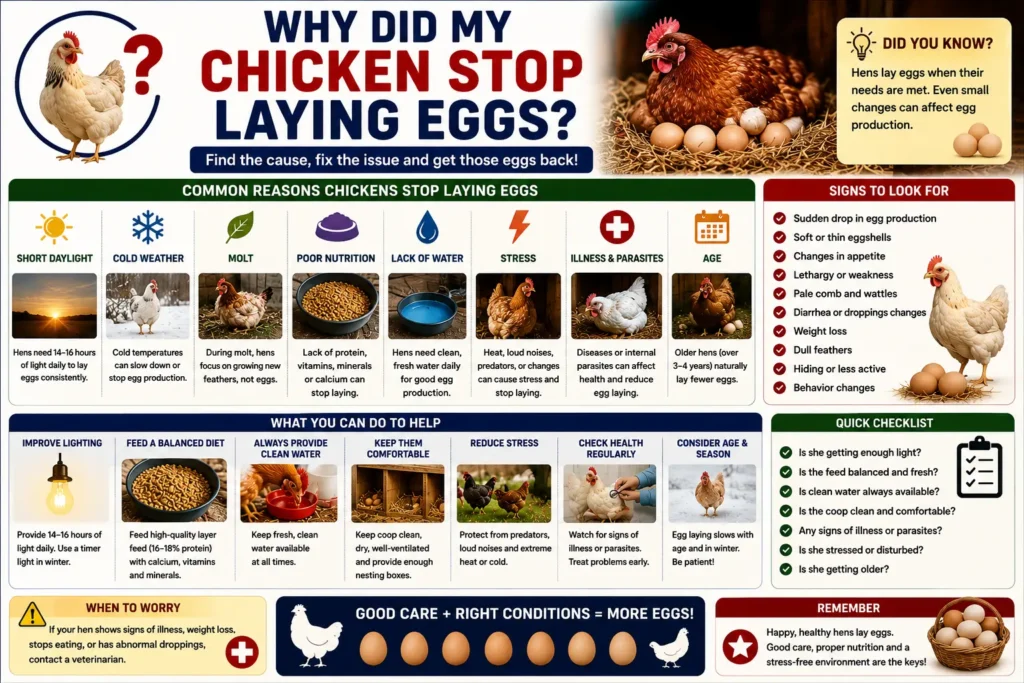
Why did my chicken stop laying eggs is a different question from asking why a flock has generally slowed down, and it deserves a different kind of answer. A hen who was laying reliably and then stopped abruptly is telling you something specific happened, recently, and the clues usually sit in the days right before the eggs stopped.
This guide uses a timeline-based approach instead of a general list of causes. By working backward from exactly when the eggs stopped, and what changed around that time, you can narrow down the real reason much faster than guessing at every possible cause at once.
Quick Answer: A chicken suddenly stopped laying most often because of a recent stressor: a predator scare, a new flock member, extreme weather, or the start of a molt. Illness, a reproductive problem, or broodiness can also cause a sudden stop, usually alongside other visible symptoms. Match the timing of the stop to recent events before assuming something is seriously wrong.
Table of Contents
Why Timing Matters More Than a Generic Cause List
One Hen vs. the Whole Flock
If only one hen stopped laying while others continued normally, the cause is more likely individual, such as illness, injury, age, or a personal stress reaction. If the whole flock stopped at once, a shared cause like weather, daylight, or a flock-wide scare becomes far more likely.
How Recently It Happened
A hen stopped laying within the last few days points toward an acute event: a predator visit, a diet change, extreme heat, or the very start of a molt. A gradual decline over several weeks points more toward daylight changes, age, or a slower-developing health issue.
| Pattern | Likely Cause Category | Next Step |
| One hen, sudden | Illness, injury, individual stress | Check health signs closely |
| One hen, gradual | Age, early molt, mild reproductive issue | Monitor over 1–2 weeks |
| Whole flock, sudden | Predator scare, weather event, diet change | Review recent environment changes |
| Whole flock, gradual | Shortening daylight, seasonal shift | Consider supplemental lighting |
Step-by-Step: Diagnosing a Chicken Suddenly Stopped Laying
Step 1: Pin Down the Exact Timing
Think back to the last confirmed egg and count the days since. A chicken suddenly stopped laying just two or three days ago points toward a very recent trigger, while a longer gap opens up more possibilities.
Step 2: Check for a Shared Flock Event
- A recent predator attack or near-miss
- A new bird added to the flock
- A sudden heat wave or cold snap
- A change in feed brand or type
- A move to a new coop or run
Step 3: Examine the Individual Hen
- Check her body condition. Feel the keel bone and overall weight for sudden loss or gain.
- Look at her comb and wattles. Pale or dull color can signal illness or parasites.
- Watch her behavior for a full day. Note appetite, energy, and whether she’s hiding or acting normal otherwise.
- Check the vent area. Discharge, swelling, or matted feathers point toward a reproductive cause.
- Look for broody behavior. A hen sitting persistently in the nesting box, fluffed and defensive, is likely broody rather than sick.
Step 4: Rule Out Hidden Nests
Especially with free-ranging hens, confirm that a hen stopped laying in the coop rather than simply laying somewhere else in the yard.
Did You Know? It can take 24 to 26 hours for a hen to form a single egg from start to finish. This means even a short-lived stressor can interrupt an egg that was already partway through formation, causing a visible gap of a day or two even after the stress passes.
Read More: https://lashegg.com/why-are-my-chickens-not-laying-eggs/
Common Reasons a Hen Stopped Laying Suddenly
1. Stress Events
A predator scare, a loud disturbance, or an aggressive new flock member can all cause a hen to pause laying abruptly, often resuming within a week once things calm down.
2. Molting Onset
The very first days of a molt can cause a surprisingly sudden stop, even before feather loss becomes obvious. According to poultry extension resources, hormonal shifts driving molt begin internally before visible feather changes appear.
3. Illness or Infection
A sudden stop paired with lethargy, pale comb, or reduced appetite suggests the hen’s body is redirecting energy toward fighting an infection rather than producing eggs.
4. Reproductive Problems
Conditions like egg binding, salpingitis, or egg yolk peritonitis can stop laying abruptly and are often accompanied by straining, an upright posture, or vent discharge. The Merck Veterinary Manual notes that reproductive tract disorders are a well-documented cause of sudden production loss in laying hens.
5. Broodiness
Broodiness can switch on within a day or two, especially in breeds known for strong maternal instincts, causing an otherwise healthy hen to stop laying and start sitting.
6. Weather Extremes
A sudden heat wave or an unexpected cold snap can cause hens to redirect energy toward temperature regulation, pausing laying until conditions stabilize.
7. Diet or Water Disruption
Running out of water for even part of a day, or a sudden feed change, can interrupt laying almost immediately in a hen who was previously consistent.
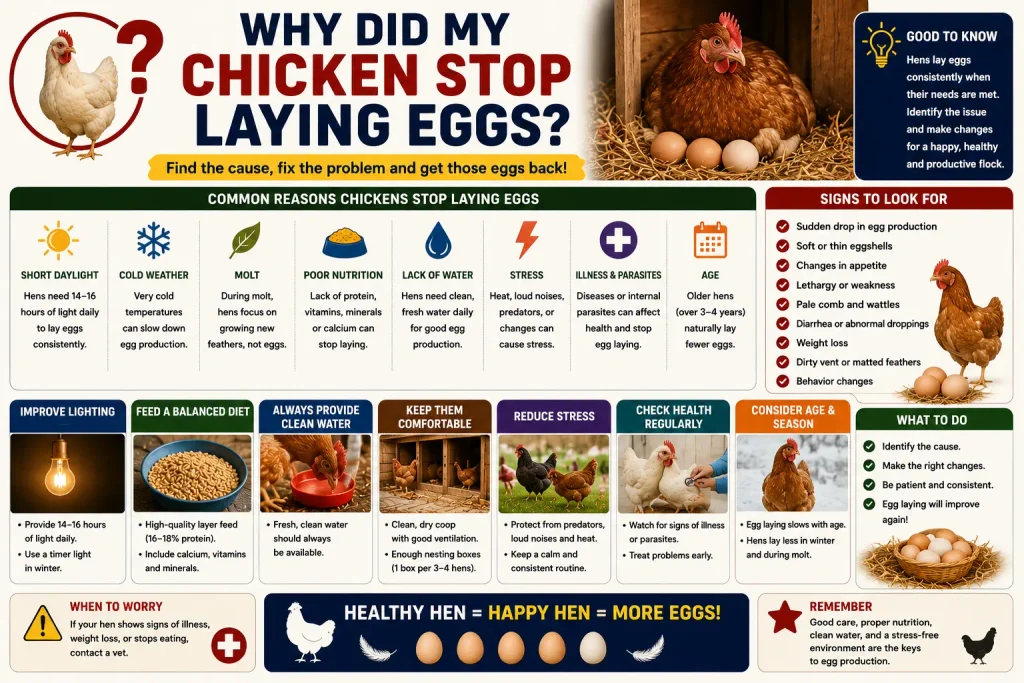
Comparing Sudden-Stop Causes
| Cause | Other Signs | Typical Duration | Needs a Vet? |
| Stress event | None beyond hiding or wariness | Days to 1 week | Usually no |
| Molting onset | Feather loss follows within days | 4–12 weeks | No |
| Illness/infection | Lethargy, pale comb, poor appetite | Until treated | Often yes |
| Reproductive issue | Straining, discharge, swollen abdomen | Until treated | Yes |
| Broodiness | Sitting persistently, fluffed posture | 2–4 weeks | No |
| Weather extreme | Panting or huddling | Days | Usually no |
| Diet/water gap | None if corrected quickly | Days | Usually no |
When a Sudden Stop Signals a Real Problem
Expert Tip
Compare the sudden stop against your flock’s laying calendar if you keep one. A single hen stopping while everyone else continues normally is a very different situation than the whole flock going quiet at once, and knowing which pattern you’re looking at saves a lot of guesswork.
Common Mistakes to Avoid
- Assuming illness immediately without checking for a recent stressor first
- Missing early molting signs because feather loss hasn’t started yet
- Confusing broodiness with sickness and missing the real cause
- Ignoring vent discharge or straining because the hen is “probably just molting”
- Not checking for hidden nests before assuming a true stop
Warning
If a hen stopped laying suddenly and also shows straining, a swollen abdomen, vent discharge, or labored breathing, treat this as more than a normal pause. These combinations often point toward a reproductive emergency or infection that needs prompt veterinary care.
When to Call a Vet
Contact a poultry veterinarian if a hen suddenly stopped laying and shows any of the following: lethargy or weakness, pale or discolored comb, vent discharge, visible straining without producing an egg, or a swollen, firm abdomen. A sudden stop with no other symptoms that lasts more than two to three weeks without an obvious explanation like molting also deserves a professional check.
Getting a Hen Back to Laying
If the Cause Was Stress or Environment
- Remove or address the stressor, such as securing the coop against predators
- Reintroduce new birds gradually, using a “look but don’t touch” separation period
- Stabilize temperature extremes with shade, ventilation, or added insulation
If the Cause Was Diet or Water
- Confirm constant access to clean water, checking it twice daily in hot weather
- Return to a consistent, complete layer feed if a recent change coincided with the stop
If the Cause Was Health-Related
Follow veterinary guidance closely, since forcing a sick or recovering hen back into heavy production before she’s ready can prolong recovery or worsen an underlying condition.
People Also Ask
Why did my chicken stop laying eggs after being consistent for months? A hen that was consistent and then suddenly stopped is usually reacting to a recent event: stress, the early stage of a molt, a diet or water gap, or the onset of an illness.
How long can a hen stopped laying stay that way before it’s abnormal? A pause of one to two weeks tied to stress, molting, or broodiness is common, but a longer stop without an obvious cause, especially with other symptoms, warrants closer investigation.
Can a chicken suddenly stopped laying start again on its own? Yes, in most stress-related, molting, or broody cases, laying typically resumes once the underlying cause resolves, often within one to a few weeks.
Is it normal for only one hen to stop laying while others continue? Yes, this pattern usually points to an individual cause like age, illness, or personal stress reaction rather than a flock-wide environmental issue.
Does broodiness explain why my chicken stopped laying eggs overnight? It can. Broodiness can switch on quickly, and a hen sitting persistently in the nest box while otherwise appearing healthy is a strong sign that broodiness, not illness, is behind the stop.
Final Thoughts
Why did my chicken stop laying eggs almost always comes down to timing. Matching the moment the eggs stopped to recent events, whether that’s a predator scare, a new flock member, the first signs of molt, or a health change, turns a confusing situation into a solvable one.
Keep watching for other symptoms alongside any sudden stop, and involve a poultry veterinarian promptly if a hen stopped laying and also shows straining, discharge, lethargy, or a swollen abdomen, since these combinations point toward issues that need more than time to resolve.
5. FAQ
Q: Why did my chicken stop laying eggs with no other symptoms at all? A: This pattern often points toward stress, the very early stage of a molt, or broodiness, all of which can pause laying without any visible signs of illness.
Q: What does it mean if my chicken suddenly stopped laying and also seems tired? A: Lethargy alongside a sudden stop suggests an illness or infection rather than a simple stress or seasonal pause, and it’s worth a closer health check.
Q: How fast can a hen stopped laying start again after a stressful event? A: Many hens resume within a week once the stressor, such as a predator scare or a new flock member, is resolved and the flock settles back into routine.
Q: Can one bullying flock mate cause a hen to stop laying? A: Yes, ongoing stress from a bullying flock mate can be enough to pause an individual hen’s laying, even while the rest of the flock continues normally.
Q: Should I worry if my chicken stopped laying eggs during a heat wave? A: A short pause during extreme heat is common and usually resolves once temperatures drop and the hen has consistent access to cool water and shade.