Chicken Prolapsed Vent Treatment: A Step-by-Step Guide

Finding red, swollen tissue hanging from your hen’s vent is scary, but chicken prolapsed vent treatment works best when you act within the first hour. This guide walks you through exactly what to do, in order, from the moment you spot the problem through full recovery, along with the mistakes that make things worse and the signs that mean it’s time to call a vet.
You’ll find a clear step-by-step protocol, a supply checklist, comparison tables for treatment options, and answers to the questions chicken keepers ask most when facing this emergency for the first time.
Table of Contents
Quick Answer: Chicken prolapsed vent treatment involves isolating the hen immediately, cleaning the tissue gently with warm water, reducing swelling with sugar or a vet-approved product, and carefully repositioning the tissue back through the vent. A loose purse-string suture placed by a vet can help hold difficult cases in place for several days while the tissue heals. Most mild cases treated within the first hour recover fully; delayed or repeat prolapses need veterinary attention.
Read More: https://lashegg.com/prolapsed-vent-in-chickens/
Before You Start: What You’re Treating
A prolapsed vent happens when tissue from the cloaca, oviduct, or occasionally the intestine turns outward and stays outside the body instead of retracting normally. It’s most often triggered by straining during egg-laying, though obesity, chronic constipation, and reproductive disease all raise the risk. Understanding what’s prolapsed helps you judge how urgent the situation is: reproductive tissue is serious but often manageable at home in mild cases, while intestinal prolapse is a more advanced emergency that needs a vet right away.
How to Tell If Home Treatment Is Appropriate
Not every prolapse is a candidate for home first aid. Home treatment is reasonable when:
- The tissue is smooth, pink to red, and moist, consistent with cloacal or oviduct tissue
- The prolapse just happened, ideally within the last hour
- There is no heavy bleeding or visible tearing
- The hen is otherwise alert and responsive
Call a vet first, rather than attempting home care alone, if the tissue looks dark, dry, or damaged, if there’s significant bleeding, or if the hen appears weak, unresponsive, or in shock.
Supplies to Gather Before You Begin
Having everything ready before you start reduces stress on the hen and speeds up treatment.
- Clean towels
- Warm water in a basin or sink
- A mild antiseptic wash approved for animal use
- A water-based lubricant or an over-the-counter hemorrhoid cream
- Plain granulated sugar or table salt (used to draw out swelling)
- Disposable gloves
- A covered dog crate or similar isolation space with dim lighting
- Electrolyte or vitamin supplement for her water afterward
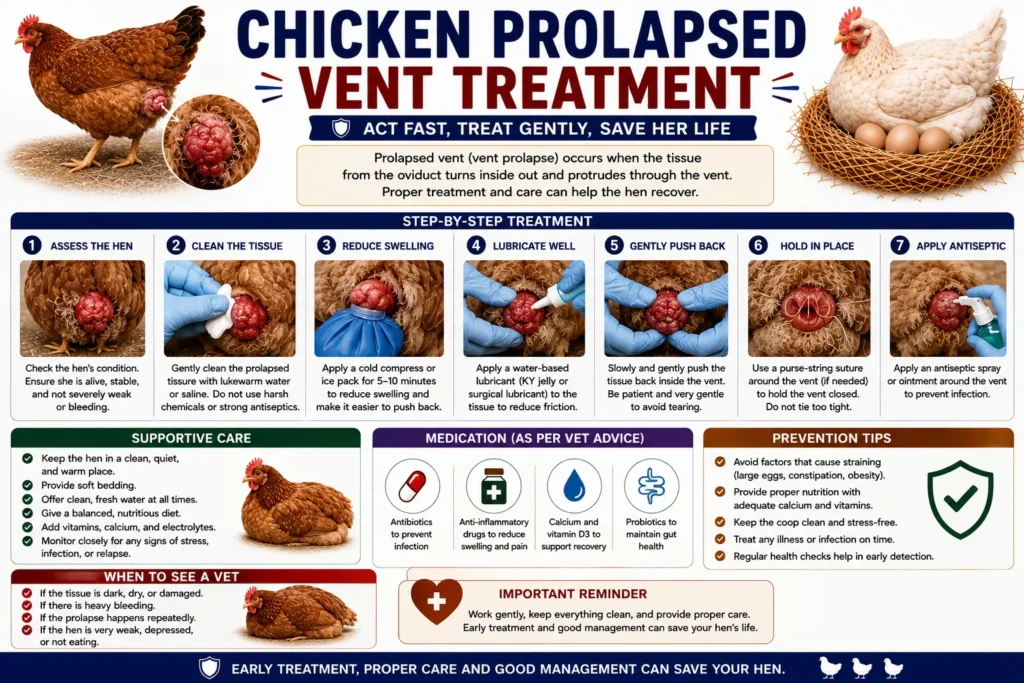
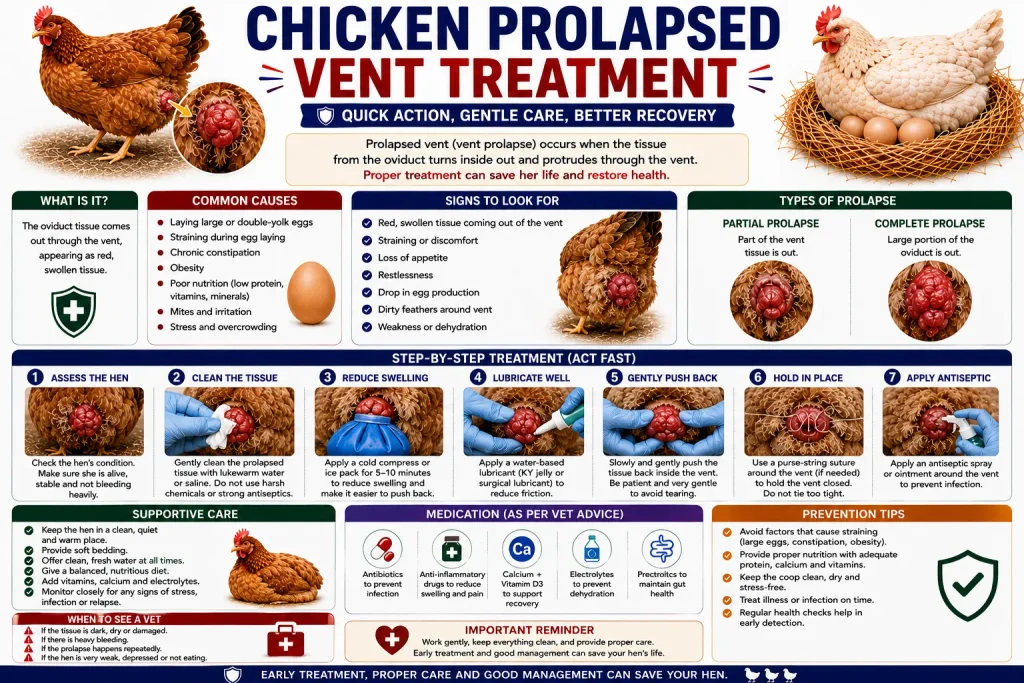
Step-by-Step Chicken Prolapsed Vent Treatment
Follow these steps in order. Move calmly and steadily; a stressed, wriggling hen is harder to treat safely.
- Isolate her immediately. Move the hen to a separate, dimly lit, quiet space away from the flock before you do anything else. Flockmates will peck at exposed tissue within minutes, so this step comes first, even before cleaning.
- Calm the hen. Wrap her loosely in a towel with her head gently covered. A calm, still bird is far easier and safer to treat.
- Clean the prolapsed tissue. Using warm water, gently rinse away any droppings, debris, or dried material from the tissue. Avoid scrubbing or applying pressure.
- Reduce the swelling. Sprinkle plain granulated sugar or table salt directly over the tissue and let it sit for several minutes. This draws fluid out of the swollen tissue through osmosis, making it smaller and easier to reposition. This is the same principle veterinary medicine uses for treating other types of prolapse in animals with hypertonic sugar solutions.
- Lubricate. Apply a water-based lubricant or a small amount of hemorrhoid cream to the tissue to ease repositioning and prevent it from drying out.
- Gently reposition the tissue. With clean, gloved, lubricated fingers, apply slow, steady pressure to guide the tissue back through the vent opening. Stop and reassess if you meet resistance; never force it.
- Hold briefly if needed. Some keepers hold gentle pressure for a minute or two after repositioning to encourage the tissue to stay in place as swelling continues to go down.
- House her in isolation. Keep the hen alone in a calm, dark space for several days to a week. This protects the healing tissue and reduces straining from stress or flock activity.
- Limit light exposure. Reducing daylight hours to under 12 per day slows egg production temporarily, giving the reproductive tract time to rest and heal without repeated straining.
- Monitor daily. Check the vent each day for swelling, redness, or a repeat prolapse, and watch appetite, energy level, and droppings for signs of recovery.
Expert Tip: If the tissue comes back out after your first attempt, cleaning and re-sugaring it before trying again is normal and often necessary. Multiple gentle attempts are safer than one forceful one.
When a Purse-String Suture Is Needed
If tissue keeps slipping back out despite proper repositioning, a veterinarian can place a loose purse-string suture around the vent opening. This suture holds the tissue in place while still allowing the hen to pass droppings and, eventually, eggs. It typically stays in for several days to about a week before a vet removes it. This step requires veterinary placement and follow-up, and it is not a safe home procedure.
Chicken Prolapsed Vent Treatment Options Compared
| Treatment Approach | When It’s Used | Who Should Do It |
| Sugar or salt application | First-line step to reduce tissue swelling before repositioning | Home care |
| Manual repositioning | Fresh, mild prolapses with intact, viable tissue | Home care, with veterinary backup if unsuccessful |
| Purse-string suture | Tissue won’t stay in after repositioning | Veterinarian only |
| Antibiotics | Signs of infection, torn or contaminated tissue | Veterinarian only, dosed for the bird’s exact weight |
| Surgical correction or amputation | Severe tissue damage, necrosis, or repeated failed reductions | Veterinarian only |
| Euthanasia | Extensive tissue damage, poor prognosis, or advanced infection | Veterinary decision, discussed with the keeper |
Warning: Never give a chicken ibuprofen or other over-the-counter human pain medication. Birds process these drugs very differently than mammals, and ibuprofen in particular can cause kidney failure in chickens. Any medication, including antibiotics, should only come from a veterinarian who has examined the bird and calculated a poultry-appropriate dose.
Aftercare: The First Week of Recovery
Successful chicken prolapsed vent treatment doesn’t end once the tissue goes back in. The days that follow matter just as much.
- Keep the hen isolated in a clean, dim space for at least several days, longer if swelling was significant
- Offer fresh water with added electrolytes to support recovery
- Feed a normal, balanced diet; avoid sudden changes that could cause digestive upset
- Check the vent at least once daily for swelling, discharge, or a repeat prolapse
- Watch droppings for straining or difficulty passing waste
- Reintroduce her to the flock gradually once the area looks fully healed and normal
Common Mistakes During Chicken Prolapsed Vent Treatment
- Skipping isolation. Cleaning or treating the tissue before separating the hen from the flock risks pecking injury while your hands are occupied.
- Using too much force. Forcing tissue back in can tear delicate tissue or push contamination deeper inside.
- Applying human medications. Over-the-counter pain relievers like ibuprofen are unsafe for chickens and should never be used.
- Stopping care too soon. Returning the hen to the flock or bright light too early raises the risk of straining and re-prolapse before healing is complete.
- Ignoring the underlying cause. Treating the visible tissue without addressing obesity, poor nutrition, or reproductive disease often leads to the same problem recurring.
- Assuming DIY antibiotics are safe. Dosing errors with antibiotics can cause serious harm; only a vet who has examined the bird should prescribe and dose medication.
Prevention: Reducing Repeat Prolapses
| Prevention Step | Why It Helps |
| Maintain a healthy body weight | Reduces pressure on the reproductive tract |
| Provide balanced layer feed and calcium | Supports strong muscle tone and shell quality |
| Avoid rushing pullets into early lay with excess light | Prevents straining injuries in immature birds |
| Keep nest boxes clean and appropriately sized | Reduces stress-related straining |
| Ensure constant fresh water | Prevents constipation, a common straining trigger |
| Monitor hens with a prolapse history closely | Catches recurrence early, before it worsens |
Did You Know? A brief flash of pink tissue right after a hen lays an egg is often completely normal and retracts within seconds on its own. True prolapse treatment is only needed when the tissue stays outside the body instead of snapping back into place.
When to Call a Vet Instead of Treating at Home
- The tissue won’t stay in place after two or three careful attempts
- There is significant bleeding or visible tearing
- The prolapsed tissue looks dark, dry, or appears to be intestine rather than reproductive tract tissue
- The hen shows labored breathing, extreme weakness, or collapse
- Home care hasn’t resolved the prolapse within 24 to 48 hours
- The prolapse keeps recurring despite proper technique and aftercare
A vet can place a purse-string suture, prescribe correctly dosed antibiotics if infection is present, and check for underlying reproductive disease that home treatment alone cannot fix.
Final Thoughts
Chicken prolapsed vent treatment comes down to speed, gentleness, and follow-through: isolate fast, clean and reduce swelling carefully, reposition without force, and give the tissue time and a calm environment to heal. Most mild, promptly treated cases recover fully, while tissue damage, repeated straining, or delayed care lower the odds. Keep monitoring your hen closely in the days after treatment, and don’t hesitate to bring in a poultry-experienced veterinarian if the tissue won’t stay in place or she isn’t bouncing back the way you’d expect.
5. FAQ
Q: What is the fastest way to start chicken prolapsed vent treatment? A: Isolate the hen from the flock immediately, then gently clean the tissue with warm water before reducing swelling with sugar or salt and carefully repositioning it. Acting within the first hour gives the best chance of success.
Q: Can I treat a prolapsed vent at home, or do I need a vet? A: Mild, fresh prolapses with intact tissue and an otherwise alert hen can often be treated at home with cleaning, swelling reduction, and gentle repositioning. Torn tissue, heavy bleeding, or a prolapse that won’t stay in needs veterinary care.
Q: How does sugar help with vent prolapse treatment? A: Sugar draws fluid out of swollen tissue through osmosis, shrinking it and making repositioning easier. This same principle is used in veterinary medicine for treating prolapse in other species with hypertonic sugar solutions.
Q: Is it safe to give my chicken antibiotics for a prolapse at home? A: No. Antibiotics should only be given under veterinary guidance, since dosing must be calculated for the bird’s exact weight, and improper use can cause harm or contribute to antibiotic resistance.
Q: What is a purse-string suture, and does my chicken need one? A: It’s a loose stitch placed around the vent opening by a veterinarian to hold repositioned tissue in place while still allowing droppings to pass. It’s typically used when tissue keeps slipping back out after manual repositioning.
Q: How long does chicken prolapsed vent treatment take to work? A: Mild cases treated promptly often show improvement within days, with full healing over roughly one to two weeks of isolation and monitoring. More severe cases involving tissue damage or infection can take longer and may need ongoing veterinary care.
Q: Can ibuprofen help with pain during prolapse treatment? A: No. Ibuprofen is unsafe for chickens and can cause kidney failure. Any pain relief should only be provided by a veterinarian using poultry-appropriate medication.
Q: Will my hen prolapse again after treatment? A: It’s possible, especially if the underlying cause, such as obesity, poor nutrition, or reproductive disease, isn’t addressed. Hens with a prolapse history should be monitored closely at each future laying cycle.