Chicken Walking Like a Penguin: What’s Really Going On

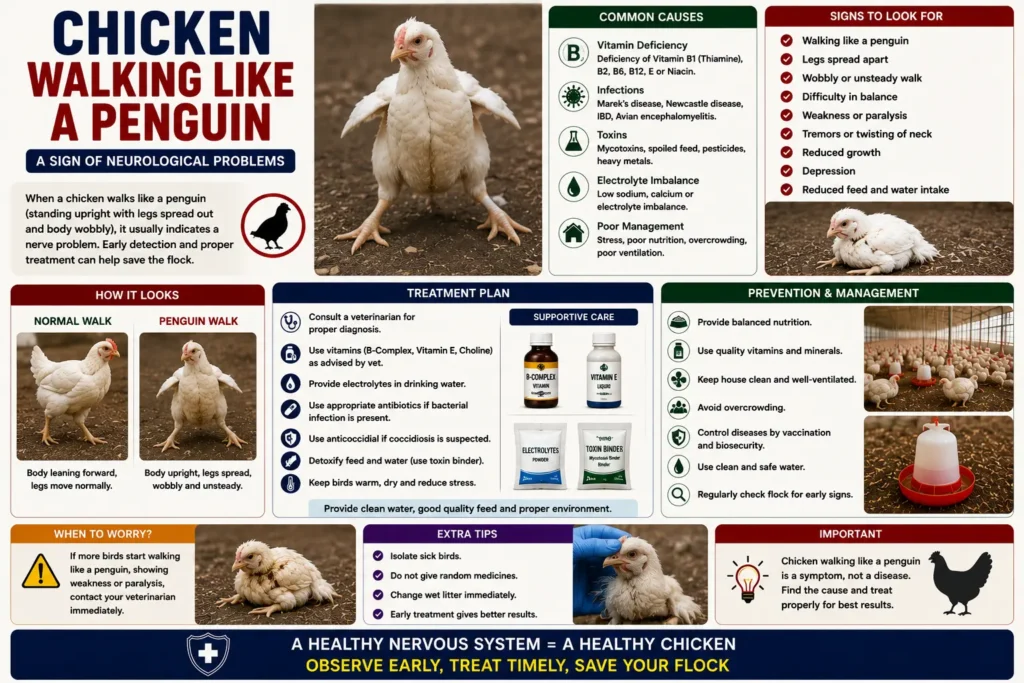
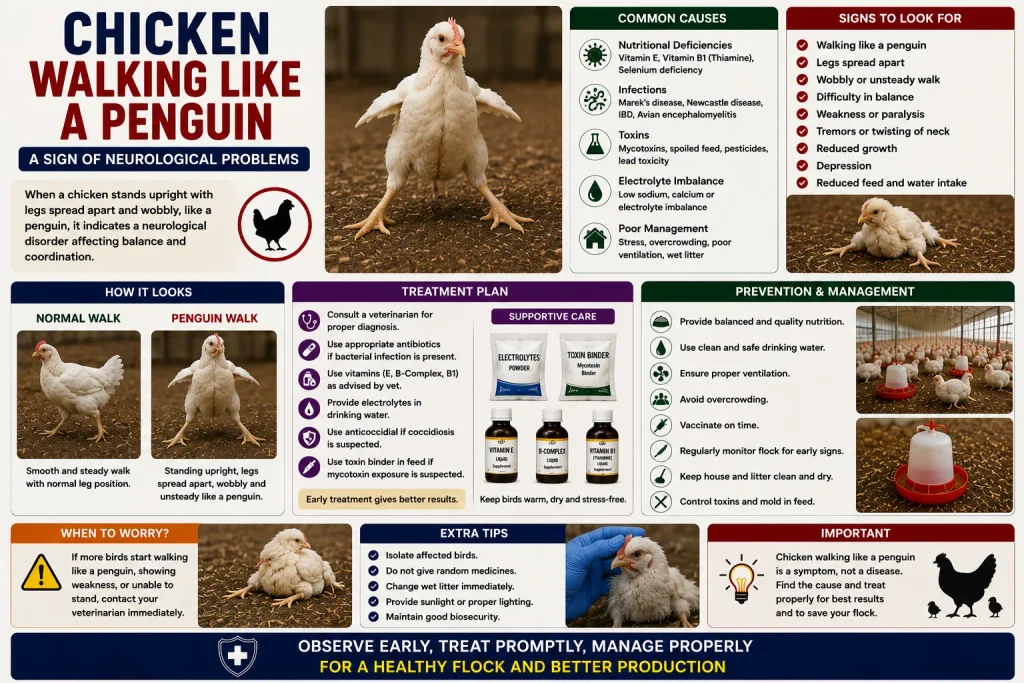
A chicken walking like a penguin catches attention fast, and for good reason. That upright, waddling posture, tail pumping up and down with each step, almost always means something is happening inside the bird’s abdomen, most often related to egg-laying.
This guide explains exactly why chickens adopt this unusual walk, how to tell a temporary case from a genuine emergency, and what steps to take at home before deciding whether a vet visit is necessary.
Quick Answer: A chicken walking like a penguin is usually straining to pass a stuck egg, dealing with a swollen abdomen from fluid or infection, or carrying extra weight from obesity or ascites. This penguin stance chicken posture calls for a same-day check. If the hen hasn’t passed an egg within 24 hours, or seems weak and in distress, contact a poultry veterinarian right away.
Table of Contents
Why Chickens Walk Like a Penguin
The Mechanics Behind the Posture
Chickens normally walk with a fairly level body and a slight forward lean. When something inside the abdomen, whether that’s a stuck egg, fluid buildup, or a mass, shifts the bird’s center of gravity, she compensates by standing more upright and holding her tail higher. The result looks strikingly similar to a penguin’s waddle.
Recognizing the Penguin Stance Chicken Posture
The penguin stance chicken presentation usually comes with a cluster of other signs, not just the walk itself. Look for the combination below rather than judging posture alone.
- Upright body position with the chest lifted
- Tail pumping or bobbing with each step
- Wide-legged, waddling gait
- Visible straining or grunting sounds
- Reduced activity and reluctance to move far
- A swollen or firm abdomen when gently felt
| Sign Combination | Likely Meaning | Urgency |
| Upright walk, straining, no egg produced | Egg binding | Urgent |
| Upright walk, swollen abdomen, lethargy | Ascites or egg yolk peritonitis | High |
| Upright walk, overweight body condition | Obesity-related posture change | Moderate |
| Upright walk, sudden onset, distress | Possible internal injury or mass | Urgent |
Leading Causes of a Chicken Standing Upright and Walking Like a Penguin
1. Egg Binding
Egg binding happens when an egg becomes stuck in the oviduct and can’t be passed normally. This is the single most common reason for a chicken walking like a penguin, particularly in young hens just starting to lay, overweight hens, or those laying unusually large eggs.
2. Egg Yolk Peritonitis
When yolk material ends up in the body cavity instead of moving through the oviduct as intended, it can trigger inflammation, infection, and a swollen abdomen that forces the bird into an upright stance. According to the Merck Veterinary Manual, this condition is a significant cause of illness and death in laying hens and often develops gradually before becoming obvious.
3. Ascites (Fluid Buildup)
Ascites, or fluid accumulation in the abdomen, can result from heart or liver problems and causes a visibly swollen belly. A chicken standing upright with a tight, fluid-filled abdomen and labored breathing needs prompt veterinary evaluation.
4. Obesity
Excess body fat, especially in heritage or dual-purpose breeds prone to overeating, shifts a bird’s center of gravity and can produce a persistent, less dramatic version of the penguin stance chicken walk even without an underlying disease.
5. Reproductive Tumors or Masses
In older hens, a tumor or mass in the reproductive tract can create similar pressure and posture changes as egg binding or peritonitis, though this is less common and typically develops over a longer period.
6. Internal Injury
A hard fall, an aggressive mating attempt, or trauma from a predator encounter can cause internal bruising or bleeding that changes how a bird carries her body while walking.
Did You Know? Hens are born with thousands of tiny, undeveloped egg cells already present in their ovaries. Reproductive stress accumulates over a laying hen’s life, which is part of why egg-related posture problems become more common as hens age.
Egg Binding vs. Other Causes: A Comparison
| Cause | Onset | Abdomen Feel | Straining? | Urgency |
| Egg binding | Sudden | Firm, egg-shaped mass | Yes | Urgent |
| Egg yolk peritonitis | Gradual to sudden | Swollen, fluid-like | Sometimes | High |
| Ascites | Gradual | Tight, fluid-filled | No | High |
| Obesity | Chronic | Soft, generally full | No | Moderate |
| Reproductive mass | Gradual | Firm, irregular | Sometimes | High |
| Internal injury | Sudden | Variable, may be tender | No | Urgent |
What to Do If Your Chicken Is Walking Like a Penguin
Step-by-Step Home Assessment
- Observe from a distance first. Watch the gait, tail movement, and general energy level before handling the bird.
- Gently palpate the abdomen. A careful feel below the vent can reveal a firm, egg-shaped mass or a softer, fluid-filled swelling.
- Check for straining. Note whether the hen is actively pushing, vocalizing, or repeatedly visiting the nesting box without success.
- Offer a warm soak. A warm bath for 15–20 minutes can relax the muscles around the vent and sometimes helps a stuck egg pass.
- Apply lubrication if trained to do so. A small amount of water-based lubricant around the vent opening can ease passage in mild egg-binding cases.
- Track timing closely. If 24 hours pass without an egg or clear improvement, treat this as an emergency.
- Move to veterinary care for anything beyond mild straining. Swelling, distress, or lethargy call for professional hands-on evaluation.
Read More: https://lashegg.com/chicken-discharge-from-vent/
Expert Tip
Calcium and overall body condition play a bigger role in preventing egg binding than most keepers expect. Maintaining a healthy weight and a properly balanced layer feed reduces the odds of a chicken walking like a penguin from a stuck egg in the first place.
Common Mistakes to Avoid
- Waiting more than 24 hours before seeking help for a suspected stuck egg
- Attempting to physically pull an egg out, which can cause internal injury or breakage
- Assuming an overweight bird’s posture is “just how she walks” without checking further
- Confusing normal, brief straining before laying with true egg binding
- Ignoring a swollen abdomen because the bird is still eating
Warning
Never attempt to break or manually extract a stuck egg without veterinary guidance. A broken egg inside the oviduct can cause severe internal injury, infection, and can quickly become life-threatening without proper care.
Diagnosing the Cause Behind Penguin-Style Walking
What a Vet May Check
- Abdominal palpation for an egg, mass, or fluid
- Body condition scoring to rule out obesity as a primary factor
- X-ray or ultrasound to confirm egg position or detect fluid buildup
- Blood work to assess organ function, particularly for suspected ascites
- Recent laying history and egg quality
Why Professional Diagnosis Matters
Because several conditions can produce a nearly identical upright, waddling walk, guessing based on appearance alone risks the wrong treatment path. University extension poultry health resources consistently emphasize hands-on examination over visual assessment for anything involving the reproductive tract.
When to Call a Vet
Contact a poultry veterinarian if a hen hasn’t passed a suspected stuck egg within 24 hours, if the abdomen feels tight or fluid-filled, if she shows labored breathing, or if the posture change is paired with lethargy, poor appetite, or a sudden stop in egg-laying.
Treatment Options by Cause
| Diagnosis | Typical Treatment | Recovery Outlook |
| Egg binding | Warm soak, lubrication, vet-assisted extraction if needed | Good if treated within 24 hrs |
| Egg yolk peritonitis | Antibiotics, anti-inflammatories, supportive care | Guarded to good |
| Ascites | Fluid drainage, treating underlying heart/liver issue | Variable, depends on cause |
| Obesity | Diet adjustment, controlled feeding, more activity | Good with management |
| Reproductive mass | Vet evaluation, sometimes surgical options | Variable |
| Internal injury | Rest, pain management, vet monitoring | Depends on severity |
Preventing a Chicken From Walking Like a Penguin
Nutrition and Weight Management
- Feed a complete, age-appropriate layer feed with adequate calcium
- Limit high-calorie treats and scratch grains, especially for less active breeds
- Monitor body condition regularly by feeling the keel bone for excess fat coverage
Reducing Reproductive Strain
- Avoid breeding or hatching from hens with a history of egg binding
- Provide clean, private nesting boxes to reduce laying-related stress
- Allow hens a natural light cycle rather than forcing extended laying through artificial lighting alone
Ongoing Monitoring
Handling hens regularly and watching for early gait changes helps catch problems before a chicken walking like a penguin becomes a full emergency. Tracking egg-laying patterns over time also reveals early reproductive issues that posture changes alone might miss.
People Also Ask
Why is my chicken suddenly standing upright and walking oddly? A sudden upright, waddling walk most often points to egg binding, though a swollen abdomen from fluid or infection can produce a similar posture and needs the same prompt attention.
Is penguin stance chicken posture always related to egg binding? No. While egg binding is the most common cause, obesity, ascites, reproductive masses, and internal injury can all produce a similar upright walk.
Can a chicken walk normally again after egg binding? Yes, most hens return to a normal gait once the stuck egg passes or is removed, though repeated episodes may signal an underlying issue worth discussing with a vet.
How long can a chicken survive with a stuck egg? Without treatment, egg binding can become life-threatening within one to two days, which is why the 24-hour mark is generally used as the point to seek veterinary help.
Does obesity alone cause a chicken to walk like a penguin? Yes, excess body fat can shift a bird’s balance enough to create a milder, ongoing version of this walk, separate from any acute egg-related emergency.
Final Thoughts
A chicken walking like a penguin is rarely something to ignore, since the posture usually traces back to pressure or swelling inside the abdomen, most often connected to egg-laying. Egg binding tops the list of causes, but ascites, infection, obesity, and reproductive masses can all produce a similar walk.
Keep a close eye on timing, straining, and abdominal feel any time you notice this posture, and involve a poultry veterinarian promptly if a suspected stuck egg hasn’t passed within 24 hours or if the bird shows signs of distress.
5. FAQ
Q: What does it mean when a chicken is walking like a penguin? A: It usually means the bird is straining against a stuck egg or dealing with abdominal swelling from infection, fluid buildup, or occasionally a reproductive mass.
Q: Is a penguin stance chicken always an emergency? A: Not immediately, but it should always prompt a same-day check, and it becomes an emergency if 24 hours pass without an egg or if the bird shows distress.
Q: Can diet help prevent a chicken from walking like a penguin? A: Yes, a balanced layer feed with proper calcium and weight management reduces the risk of egg binding, one of the most common causes of this posture.
Q: Why is my chicken standing upright but still eating normally? A: Early or mild cases of egg binding or obesity-related posture changes can occur while appetite stays normal, though close monitoring over the next day is still important.
Q: Should I try to help my chicken pass a stuck egg myself? A: A warm soak and light lubrication are reasonable first steps, but if the egg hasn’t passed within 24 hours, veterinary assistance is safer than continued home attempts.