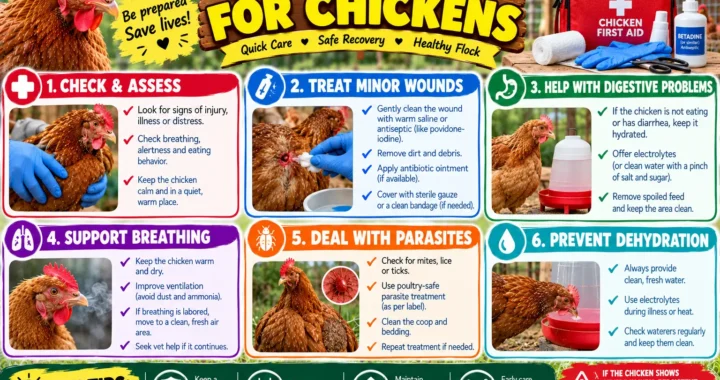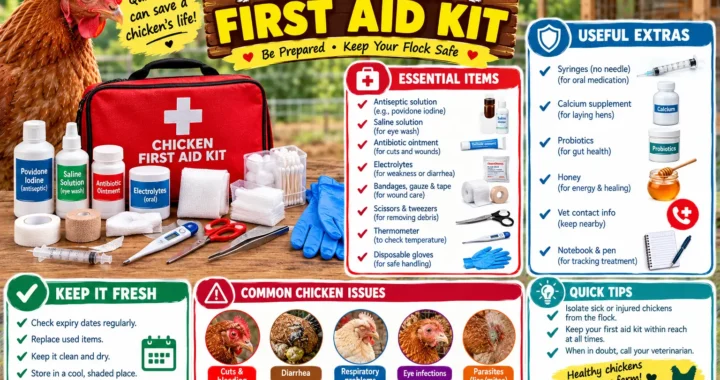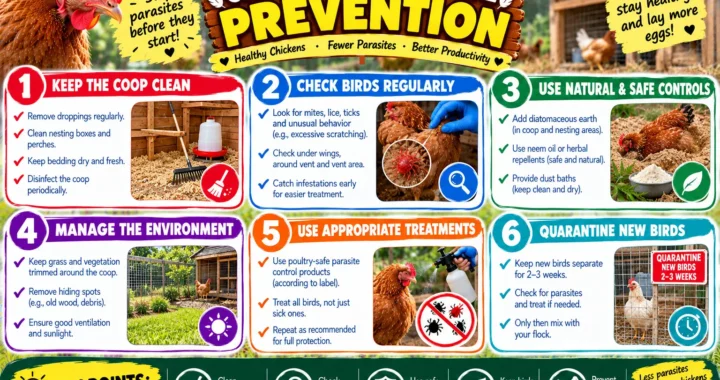
When to Take a Sick Chicken to the Vet: The Short Answer First

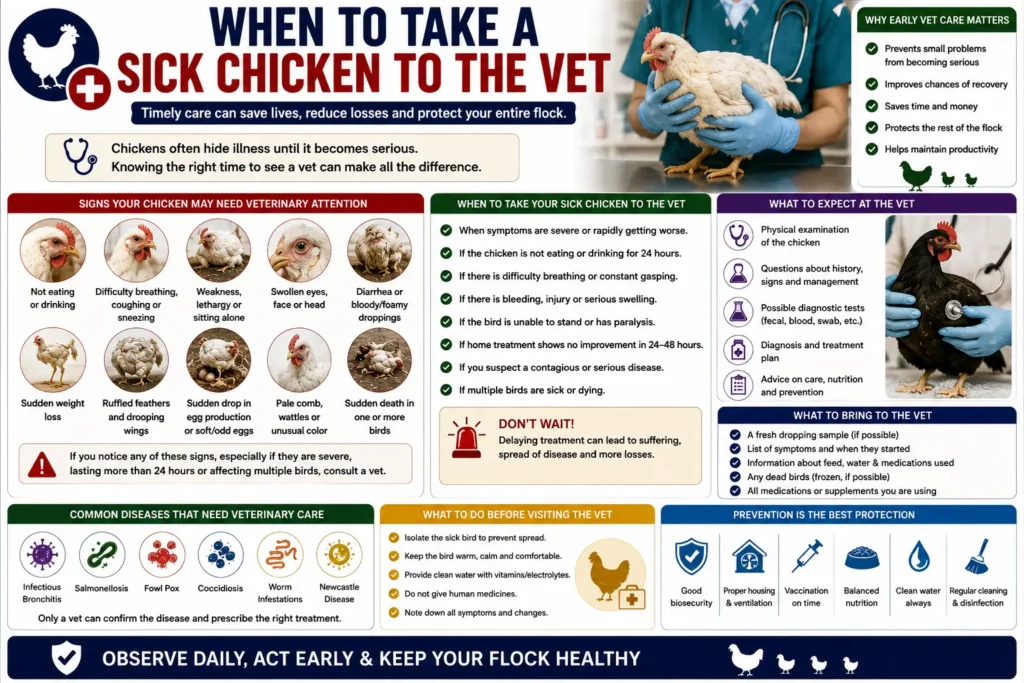
Knowing when to take a sick chicken to the vet is one of the hardest calls backyard keepers face, mostly because chickens are experts at hiding illness until it’s already serious. A bird that looks “a little off” in the morning can decline fast, which makes the decision to wait or act feel like a guessing game.
This guide replaces that guesswork with a clear framework. It covers the true emergency signs that need same-day care, the symptoms that are safe to monitor for a day or two, and the questions to ask yourself before deciding whether a trip to the vet is necessary.
Quick Answer: Take a sick chicken to the vet immediately if it can’t stand, has labored or open-mouth breathing, shows bleeding or trauma, or hasn’t eaten or had water for over 24 hours. Milder symptoms like mild lethargy, a single loose dropping, or slight appetite changes can usually be monitored at home for 24 to 48 hours before deciding on veterinary care.
Table of Contents
Why This Decision Feels So Hard
Chickens Hide Illness by Instinct
Chickens are prey animals, and prey animals that show weakness get targeted first by predators and even by flock mates. This instinct means visible symptoms often show up only once a bird has been struggling internally for some time already.
The Cost of Waiting Too Long
Because of this hiding instinct, deciding when a chicken needs a vet often comes down to catching subtle changes early rather than waiting for obvious distress. A bird that’s still standing and eating has more treatment options than one that’s already collapsed.
Read More: https://lashegg.com/chicken-walking-like-a-penguin/
True Emergency Signs: When to Take a Sick Chicken to the Vet Immediately
Physical Emergency Signs
These chicken emergency symptoms call for same-day or immediate veterinary care, not a wait-and-see approach.
- Cannot stand, walk, or hold its head up
- Labored, open-mouth, or gasping breathing
- Visible bleeding, wounds, or predator attack injuries
- A prolapse or visible internal tissue at the vent
- Sudden collapse or seizure-like activity
- Pale or blue-tinged comb and wattles
- No food or water intake for more than 24 hours
- Straining to pass a suspected stuck egg for over 24 hours
| Emergency Sign | What It Often Means | Action |
| Can’t stand or walk | Severe weakness, neurological issue, or injury | Vet immediately |
| Gasping, open-mouth breathing | Respiratory distress or obstruction | Vet immediately |
| Active bleeding | Trauma or predator injury | Vet immediately |
| Prolapse | Reproductive tract injury | Vet immediately |
| No food/water for 24+ hrs | Severe illness, pain, or shock | Vet same day |
| Suspected stuck egg, 24+ hrs | Egg binding | Vet same day |
Warning: If a chicken shows any sign from the table above, don’t wait to “see if it improves overnight.” These situations can progress from serious to fatal within hours, especially in smaller or younger birds.
Symptoms You Can Monitor Before Deciding on a Vet Visit
Not every symptom means an emergency. Some signs are worth watching closely for 24 to 48 hours before deciding whether a chicken needs a vet.
Mild, Monitorable Symptoms
- Slightly reduced appetite with normal activity otherwise
- A single loose or unusual dropping
- Mild feather ruffling during cold weather
- Brief limping after jumping down from a perch
- Slight reduction in egg production during molt or heat
How to Monitor Effectively
- Isolate the bird if symptoms persist. This protects the flock and makes tracking easier.
- Check weight daily if possible. Weight loss is one of the most reliable early warning signs.
- Track droppings, appetite, and energy. Write down what you observe rather than relying on memory.
- Set a clear time limit. Decide upfront that if there’s no improvement in 24–48 hours, it’s time for professional evaluation.
- Watch for escalation. Any new symptom, especially breathing changes or collapse, moves the situation into emergency territory immediately.
Did You Know? A healthy adult chicken’s resting heart rate runs between 250 and 300 beats per minute, roughly four times faster than a human’s. This fast metabolism is part of why illness can progress quickly once a bird stops eating or drinking.
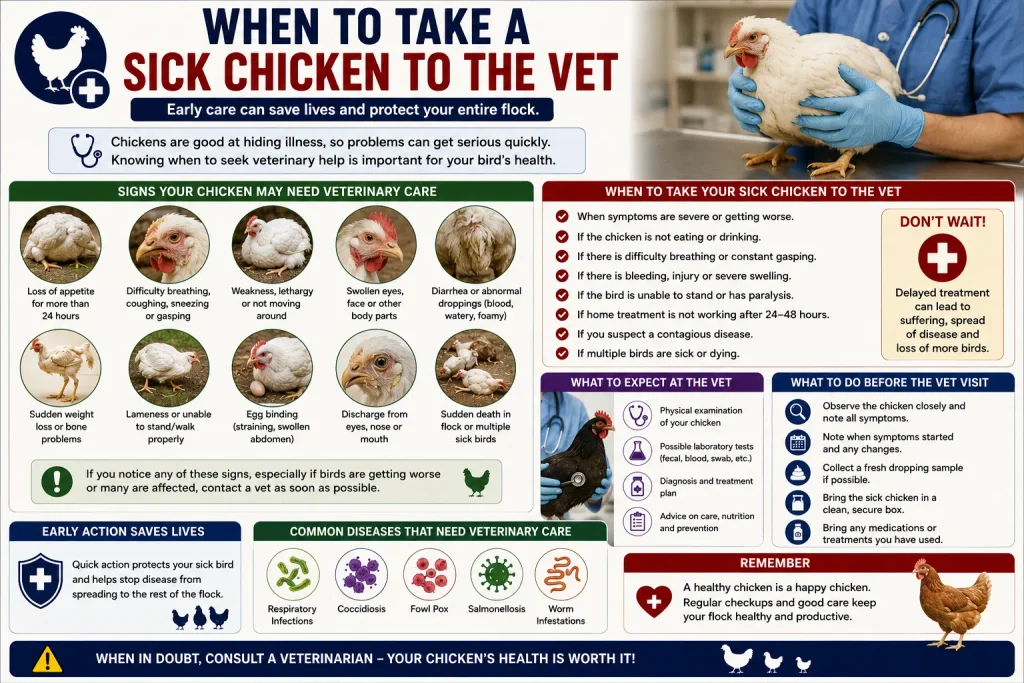
Chicken Emergency Symptoms vs. Watch-and-Wait Symptoms
| Category | Examples | Timeline |
| Emergency | Can’t stand, gasping breath, bleeding, prolapse | Same day, no delay |
| Urgent | Suspected stuck egg, sudden severe lethargy, bloody droppings | Within 24 hours |
| Monitor | Mild appetite change, single loose dropping, brief limping | 24–48 hours, then reassess |
| Low concern | Normal molting behavior, brief post-jump limp | Usually resolves on its own |
Common Conditions and Whether They Need a Vet
Respiratory Symptoms
Coughing, sneezing, or nasal discharge without breathing distress can sometimes be monitored briefly, but according to the Merck Veterinary Manual, respiratory diseases in poultry spread quickly and can escalate, so a persistent case beyond a day or two deserves veterinary evaluation.
Digestive Symptoms
A single bout of loose droppings often resolves on its own, but diarrhea lasting more than a day, especially with blood or lethargy, moves into the category of when a chicken needs a vet rather than home monitoring.
Reproductive Symptoms
Straining, an upright “penguin” posture, or a swollen abdomen point toward possible egg binding or infection. These situations have a narrow window before complications set in, making them one of the clearer answers to when to take a sick chicken to the vet.
Skin and Parasite Symptoms
Mild mite or lice infestations can often be treated at home with approved poultry products, but heavy infestations causing anemia, pale combs, or weakness need veterinary input to confirm severity and appropriate treatment.
A Simple Decision Framework
Ask These Questions First
- Can the bird stand and move normally?
- Is it eating and drinking at all?
- Is breathing normal, without gasping or clicking sounds?
- Is there any visible bleeding, swelling, or injury?
- Has this symptom lasted less than 24 hours, or longer?
A “no” to any of the first four questions, or a “longer than 24 hours” to the fifth, generally means it’s time to stop monitoring and start arranging veterinary care.
Expert Tip
Save the contact information for a poultry-experienced vet or livestock vet before you need it. Not every small-animal clinic treats chickens, and knowing exactly who to call saves valuable time during a real emergency.
Common Mistakes to Avoid
- Waiting to “see how it looks in the morning” when a bird can’t stand or is gasping for air
- Assuming a chicken is fine because it’s still eating a little
- Treating multiple birds with the same medication without knowing the actual cause
- Confusing normal molting fatigue with true lethargy
- Underestimating how quickly small or young birds can decline
Preparing for a Vet Visit
What to Bring or Report
- A description of symptoms and how long they’ve lasted
- Recent changes in diet, environment, or new flock additions
- Whether other birds are showing similar signs
- A photo or sample of abnormal droppings, if relevant
- The bird’s approximate age and breed
Finding a Poultry-Experienced Vet
Not all veterinarians treat backyard poultry regularly. University extension offices and state poultry associations often maintain referral lists, and organizations like the AVMA offer directories that can help locate a vet with real avian or poultry experience.
People Also Ask
What are the most common chicken emergency symptoms? The most common chicken emergency symptoms include an inability to stand, labored breathing, active bleeding, prolapse, and a complete refusal of food or water for over 24 hours.
How do I know when a chicken needs a vet versus home care? A chicken needs a vet when symptoms are severe from the start, such as collapse or bleeding, or when milder symptoms haven’t improved after 24 to 48 hours of careful monitoring.
Can I treat a sick chicken myself without a vet? Mild, non-emergency symptoms like a single loose dropping or brief appetite dip can often be managed at home, but infections, parasites confirmed by testing, and reproductive emergencies typically need veterinary-guided treatment.
Is it normal for a chicken to act sick during molting? Yes, chickens often seem quieter and eat a bit less during a heavy molt due to the energy demands of regrowing feathers, though this should not include labored breathing, collapse, or refusal to eat entirely.
How much does it cost to take a chicken to the vet? Costs vary widely by region and clinic, but backyard keepers should expect a basic exam visit to run from moderate to higher fees depending on diagnostics like fecal testing, blood work, or X-rays.
Final Thoughts
Deciding when to take a sick chicken to the vet comes down to reading the full picture: how severe the symptom is, how long it’s lasted, and whether it’s paired with other warning signs like breathing trouble or an inability to stand. True emergencies, like collapse, bleeding, or a stuck egg past 24 hours, never benefit from a wait-and-see approach.
Keep monitoring appetite, droppings, and energy closely with any sick bird, and lean toward calling a poultry veterinarian whenever a symptom feels uncertain, since early evaluation almost always leads to better outcomes than delayed care.
5. FAQ
Q: When should I take a sick chicken to the vet right away instead of waiting? A: Take a sick chicken to the vet right away if it can’t stand, is struggling to breathe, is bleeding, or hasn’t eaten or had water in over 24 hours.
Q: What chicken emergency symptoms should never be ignored? A: Gasping breath, visible trauma, prolapse, sudden collapse, and a suspected stuck egg past 24 hours are chicken emergency symptoms that always warrant immediate care.
Q: How long should I monitor a chicken before deciding it needs a vet? A: For mild symptoms, 24 to 48 hours of close monitoring is generally reasonable, but any worsening or new severe sign should shorten that window immediately.
Q: Is a lethargic chicken always an emergency? A: Not always, but lethargy paired with pale comb color, labored breathing, or a refusal to eat or drink usually means a chicken needs a vet rather than home monitoring alone.
Q: What should I do if I can’t reach a vet during a chicken emergency? A: Focus on supportive care, such as warmth, hydration with electrolytes, and isolation from the flock, while continuing to search for the nearest available poultry or livestock vet.