Egg Binding in Chickens: A True Emergency

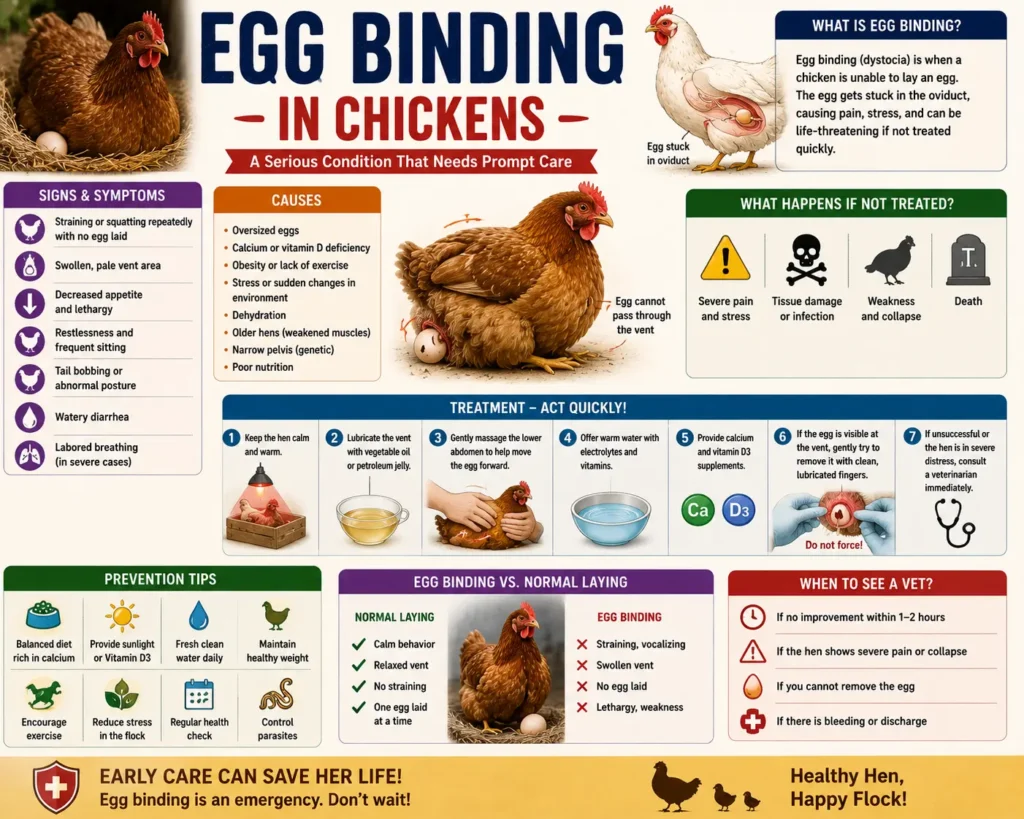
A hen straining in the nesting box, over and over, with nothing to show for it, is one of the more frightening things a flock owner can witness. Egg binding in chickens happens when an egg gets stuck in the reproductive tract, and it’s one of the few backyard poultry issues that counts as a genuine emergency.
Unlike many egg-related problems that can wait a day or two for observation, egg binding progresses fast. A hen can go from straining to critical decline within 24 to 48 hours without help.
Table of Contents
Quick Answer: Egg binding in chickens means an egg is stuck and can’t be laid normally. Warning signs include repeated straining with no egg, a wide waddling walk, lethargy, and a swollen abdomen. Time-sensitive home care can help, but a vet visit is often necessary, especially if the hen doesn’t improve within a few hours.
This guide covers exactly what to look for, safe first-response steps, and precisely when home care isn’t enough.
Read More: https://lashegg.com/signs-of-a-sick-chicken/
What Causes Egg Binding in Chickens
Understanding the cause helps you both respond correctly in the moment and prevent it from happening again.
Calcium Deficiency
The muscles that push an egg through the reproductive tract rely on calcium to contract properly. Low calcium levels are one of the most common underlying reasons a hen becomes egg bound.
Oversized or Misshapen Eggs
An unusually large egg, a double-yolked egg, or one with an irregular shape can physically struggle to pass through the oviduct, even in a healthy hen.
Obesity
Overweight hens carry extra internal fat that can compress the reproductive tract, making it harder for an egg to move through normally.
First-Time Layers
Young pullets laying their very first eggs sometimes struggle simply because their reproductive tract hasn’t fully matured or stretched to accommodate a full-sized egg yet.
Dehydration
Inadequate water intake reduces the moisture and muscle function needed for smooth egg passage, increasing egg binding risk, especially in hot weather.
Reproductive Tract Abnormalities
Scarring from a prior infection, an existing stuck egg, or a structural abnormality in the oviduct can create a physical obstruction.
Stress and Environmental Disruption
Sudden stress can interrupt normal muscle contractions in the reproductive tract, occasionally contributing to a stuck egg.
Table 1: Common Causes of Egg Binding in Chickens
| Cause | Why It Happens |
| Calcium deficiency | Weak muscle contractions in the oviduct |
| Oversized/misshapen egg | Physical difficulty passing through the tract |
| Obesity | Internal fat compresses the reproductive tract |
| First-time laying | Immature or unstretched reproductive tract |
| Dehydration | Reduced muscle function and lubrication |
| Reproductive abnormalities | Scarring or structural obstruction |
| Stress | Disrupted muscle contraction timing |
Signs of Egg Binding: What to Watch For
Recognizing the signs of egg binding early gives you the best chance of a good outcome.
- Repeated straining in or near the nesting box with no egg produced
- Wide, waddling, penguin-like walk, different from her normal gait
- Lethargy or reluctance to move
- Fluffed-up feathers and a hunched posture
- Pale comb and wattles
- Tail pumping – a visible up-and-down tail motion while straining
- Reduced or absent appetite
- Swollen or firm lower abdomen, sometimes felt more than seen
- Droppings stop or become very small, since a stuck egg can press on the vent area
Did You Know? The tell-tale wide-legged, waddling walk associated with signs of egg binding happens because the hen is instinctively trying to avoid pressure on the stuck egg with each step.
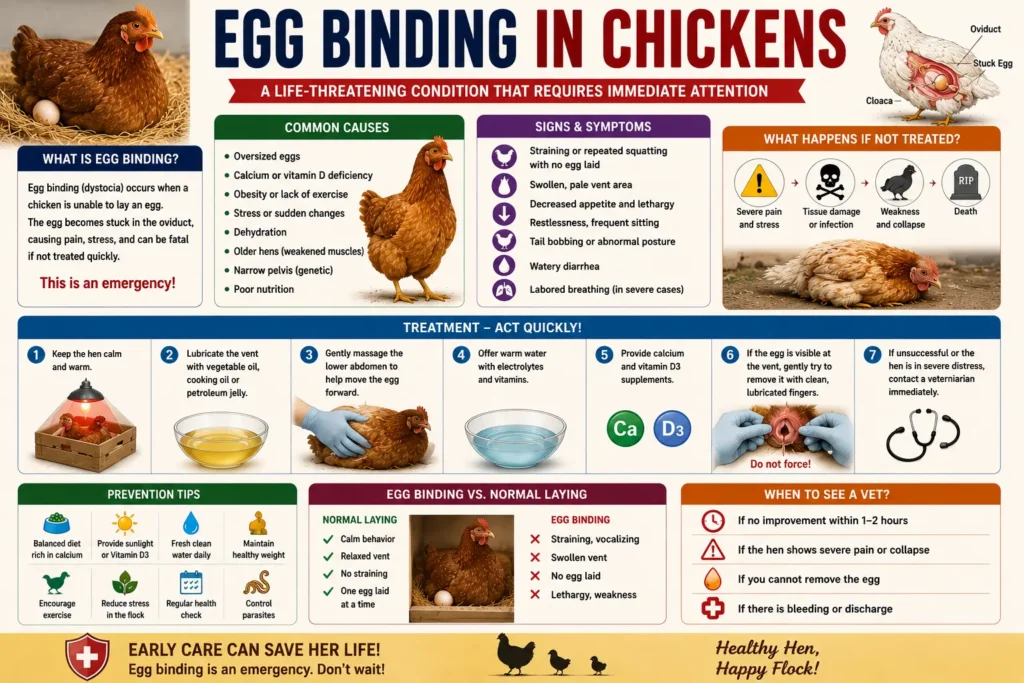
How Egg Binding Feels From the Inside (What’s Actually Happening)
A stuck egg presses against the hen’s internal organs, including the intestines and, in severe cases, nerves controlling the legs. This pressure explains why an egg bound hen may show both digestive symptoms (reduced droppings) and mobility symptoms (weak or uneven leg movement) at the same time.
Warning: If a hen shows any leg weakness or paralysis-like symptoms along with straining, treat it as a serious emergency. Pressure on nerves from a stuck egg can affect leg function directly.
Confirming Egg Binding in Chickens
Home confirmation isn’t always possible, but a few gentle checks can help support your suspicion before deciding on next steps.
- Observe from a distance first. Note the walk, posture, and general behavior without handling her yet.
- Check the vent area for visible swelling, or a firm shape you can feel just above the vent.
- Gently palpate the lower abdomen with clean, warm hands if the hen tolerates handling calmly.
- Time the straining. More than 30 to 60 minutes of repeated, unsuccessful straining is a strong signal.
A veterinarian can confirm egg binding definitively through palpation, and in some cases, imaging like an X-ray, especially if the egg is positioned higher in the tract where it’s harder to feel by hand.
Home Care for a Chicken Egg Bound: Safe First Steps
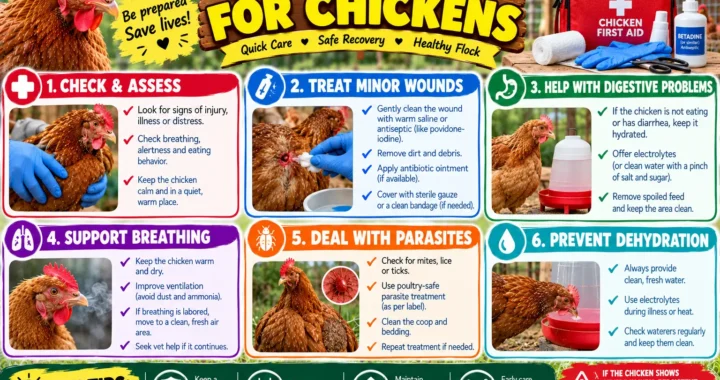
If you catch the signs early and the hen is otherwise alert, these steps can sometimes help her pass the egg on her own. They are supportive measures, not a guaranteed fix.
- Move her to a warm, quiet, dimly lit space away from the rest of the flock to reduce stress.
- Give a warm water soak. Place her rear end in a shallow container of warm (not hot) water for 15 to 20 minutes. Warmth can help relax the muscles around the vent.
- Apply a water-based lubricant gently around the vent opening after the soak, which can ease passage.
- Offer calcium in an accessible form, such as a calcium supplement made for poultry, following label guidance.
- Keep her hydrated, offering water with electrolytes if she’ll drink.
- Give her time in a calm setting, checking every 30 to 60 minutes for progress.
Expert Tip: Never attempt to manually pull or force a stuck egg out. Doing so can crack the egg internally or damage the reproductive tract, both of which can be fatal. If gentle home care doesn’t resolve it within a few hours, professional help is the safer path.
Table 2: Home Care vs. Veterinary Treatment
| Approach | What It Involves | When It’s Appropriate |
| Home care | Warm soak, lubrication, calcium, hydration, calm rest | Early signs, hen alert and responsive |
| Veterinary treatment | Manual assistance, injectable calcium, fluids, possible surgery | No improvement within a few hours, or hen is weak/collapsed |
When to Call a Vet
When to Call a Vet:
- The hen shows no improvement after several hours of home care
- She becomes weak, collapsed, or unresponsive
- Leg paralysis or dragging appears alongside straining
- You suspect an egg is stuck but can’t confirm it through home checks
- This is a repeat episode of egg binding in the same hen
- You’re not confident performing home care steps safely
A veterinarian can provide injectable calcium, fluids for dehydration, and, if needed, manual extraction or surgery to remove a severely stuck or broken egg. According to the Merck Veterinary Manual, prompt intervention significantly improves outcomes in egg-bound birds, while delays raise the risk of internal injury or death.
What Happens If Egg Binding Goes Untreated
An untreated stuck egg can lead to a ruptured oviduct, internal infection (egg yolk peritonitis), organ damage from prolonged pressure, or death, often within one to two days of onset. This is exactly why egg binding is treated as an emergency rather than a wait-and-see condition.
Recovery After Egg Binding
Most hens recover well once the egg is passed or removed, provided treatment happens promptly. After recovery:
- Expect a day or two of reduced appetite and activity as she recuperates
- Watch closely for a repeat episode, since hens who have been egg bound once have a higher chance of it happening again
- Continue supportive calcium and hydration during the recovery period
- Resume normal activity gradually, based on her energy and appetite returning
Common Mistakes When Handling Egg Binding
Common Mistakes:
- Waiting too long to intervene, assuming she’ll “work it out” on her own
- Attempting to manually extract the egg by force
- Skipping the warm soak step and going straight to handling
- Not checking for calcium deficiency as an underlying, repeatable cause
- Assuming one successful home resolution means future episodes won’t happen
Preventing Egg Binding in Chickens
- Provide free-choice calcium, such as crushed oyster shell, alongside a complete layer feed.
- Maintain a healthy body weight through balanced feeding rather than excess treats or scraps.
- Ensure constant access to fresh water, especially in hot weather.
- Reduce environmental stress, keeping routines and surroundings consistent.
- Monitor first-time layers closely, since young pullets are more prone to their first few eggs causing trouble.
- Watch for a pattern in hens who have experienced egg binding before, since recurrence is common.
University extension services and poultry health researchers consistently point to calcium management and hydration as the two most controllable prevention factors for egg binding in chickens.
5. FAQ
Q: What are the earliest signs of egg binding in chickens? A: The earliest signs of egg binding in chickens are repeated straining with no egg produced, a wide waddling walk, and lethargy. Catching these signs early gives the best chance for a good outcome.
Q: How urgent is egg binding in chickens really? A: Very urgent. A hen can go from straining to critical decline within 24 to 48 hours, which is why egg binding is treated as a true emergency rather than something to monitor casually.
Q: Can I treat a chicken egg bound at home? A: Early, mild cases can sometimes be helped with a warm soak, gentle lubrication, calcium, and hydration in a calm setting. If there’s no improvement within a few hours, veterinary care is necessary.
Q: What does an egg bound hen look like? A: An egg bound hen typically shows repeated straining, a wide penguin-like walk, fluffed feathers, a hunched posture, and sometimes visible tail pumping or a swollen lower abdomen.
Q: Can egg binding happen more than once to the same hen? A: Yes. Hens who have experienced egg binding once have a higher chance of a repeat episode, which makes ongoing calcium support and close monitoring important.
Q: Is calcium deficiency the main cause of egg binding in chickens? A: It’s one of the most common causes, since calcium is essential for the muscle contractions that move an egg through the reproductive tract, but oversized eggs, obesity, and dehydration also contribute.
Q: Should I ever try to pull a stuck egg out myself? A: No. Manually forcing a stuck egg out can crack it internally or damage the reproductive tract, both of which can be life-threatening. Gentle supportive care is safe; forceful extraction is not.