Egg Peritonitis Symptoms: Why the Timeline Matters

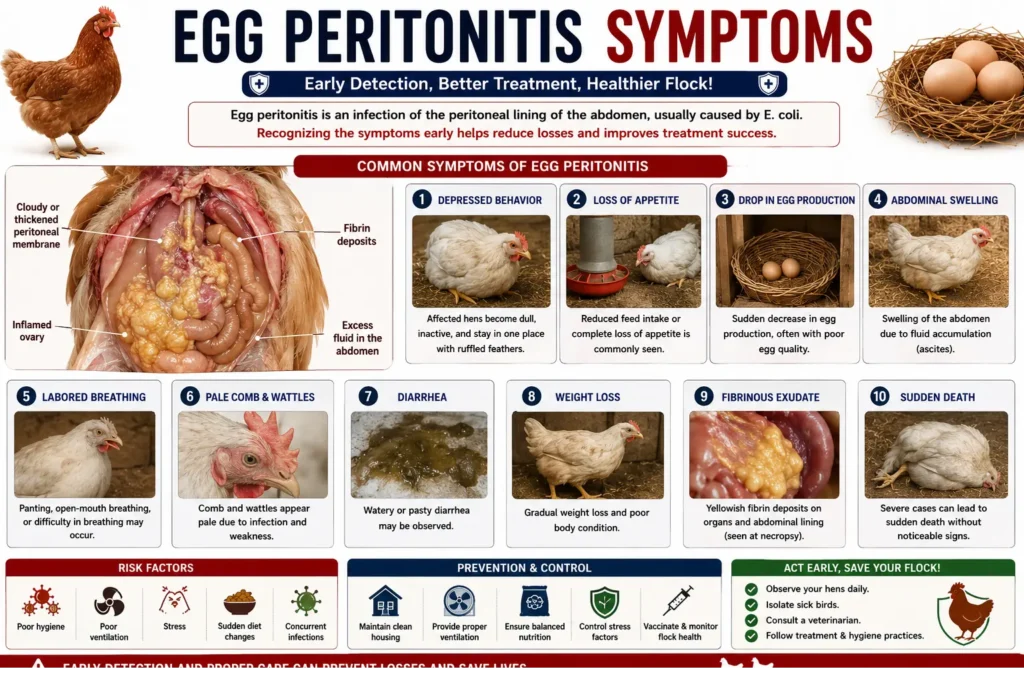
Egg peritonitis symptoms rarely appear all at once. This condition tends to build gradually, over days or weeks, as yolk material accumulates in the abdominal cavity and inflammation slowly develops. That gradual pattern is exactly why it’s often missed until it’s fairly advanced.
This guide breaks the symptoms down by stage, so you can recognize where a hen falls in that progression and understand how urgently she needs attention at each point.
Table of Contents
Quick Answer: Egg peritonitis symptoms progress from subtle early changes (mild appetite loss, slight lethargy) through moderate signs (visible abdominal swelling, upright posture, reduced egg production) to advanced symptoms (labored breathing, severe weight loss, collapse). Advanced-stage symptoms require urgent veterinary care.
Use the stage breakdown below alongside the symptom checklists to get a clearer picture of what you’re seeing and what it means.
Why Egg Peritonitis Symptoms Develop Slowly
Unlike a stuck egg, which creates an immediate physical obstruction, egg peritonitis symptoms stem from an ongoing internal process: yolk material accumulating in the abdomen, triggering inflammation, and often inviting bacterial infection over time. This slower, cumulative mechanism is why early signs are so easy to miss and why the condition often isn’t caught until visible swelling appears.
Read More: https://lashegg.com/egg-peritonitis-in-chickens/
Stage One: Early Egg Peritonitis Symptoms
These signs of egg yolk peritonitis are subtle and easily mistaken for a hen simply having an off day.
- Mildly reduced appetite
- Slightly quieter or less active behavior
- A small, gradual dip in egg-laying frequency
- No visible abdominal changes yet
- Occasional, mild lethargy that resolves and returns
Did You Know? Because early egg peritonitis symptoms are so easy to overlook, this condition is frequently first suspected only once it reaches the moderate stage, when abdominal swelling becomes visible.
Stage Two: Moderate Egg Peritonitis Symptoms
This is where chicken peritonitis symptoms become noticeably more specific and harder to attribute to something else.
- Visible abdominal swelling, soft and fluid-like rather than firm
- Upright “penguin” posture, standing more vertically than usual
- Noticeable drop in egg production, sometimes stopping
- Pale comb and wattles
- Reduced appetite, more consistent than in stage one
- General lethargy, spending more time resting than usual
Table 1: Early vs. Moderate Egg Peritonitis Symptoms
| Symptom Category | Stage One (Early) | Stage Two (Moderate) |
| Appetite | Mildly reduced | Noticeably reduced |
| Abdomen | No visible change | Soft, visible swelling |
| Posture | Normal | Upright “penguin” stance |
| Egg production | Slight dip | Significant drop or stop |
| Comb color | Usually normal | Often pale |
| Activity | Mostly normal | Increased resting, reduced activity |
Stage Three: Advanced Egg Peritonitis Symptoms — When It’s Urgent
Warning: These signs of egg yolk peritonitis indicate the condition has progressed significantly, often with systemic infection involved. Veterinary care should not be delayed at this stage.
- Labored or open-mouth breathing, from abdominal pressure on the air sacs
- Severe weight loss, despite the visibly swollen abdomen
- Significant lethargy or unresponsiveness
- Cold extremities, a sign of declining circulation
- Complete loss of appetite
- Visible distress or discomfort when moved or handled
Advanced-stage chicken peritonitis symptoms suggest substantial fluid buildup and likely bacterial involvement, both of which need professional treatment rather than home monitoring.
Table 2: Symptom Progression Timeline
| Stage | Typical Timeframe | Key Signs |
| Early | Days to weeks before diagnosis | Mild appetite/activity changes |
| Moderate | Often when first noticed | Visible swelling, penguin stance |
| Advanced | If untreated | Labored breathing, severe lethargy |
Egg Peritonitis Symptoms vs. Egg Binding Symptoms
These two conditions are commonly confused, since both involve reproductive distress. The clearest distinguishing signs of egg yolk peritonitis, compared to egg binding, come down to posture, straining, and how the abdomen actually feels.
Table 3: Symptom Comparison
| Feature | Egg Peritonitis Symptoms | Egg Binding Symptoms |
| Straining | Typically absent | Prominent, repeated |
| Abdomen texture | Soft, fluid-filled | Firm, egg-shaped |
| Onset speed | Gradual, over days to weeks | Often faster, hours to a day |
| Posture | Upright “penguin” stance | Hunched, fluffed feathers |
| Tail movement | Not typically present | Tail pumping common |
For a full stage-by-stage look at the other condition, see our guide to egg binding symptoms, which uses a similar early-to-severe framework.
Expert Tip: A gentle abdominal check is one of the most useful ways to tell these two conditions apart at home: a discrete, firm mass points toward egg binding, while a soft, diffuse fullness points toward egg peritonitis symptoms. Either way, only a vet exam can confirm which one you’re dealing with.
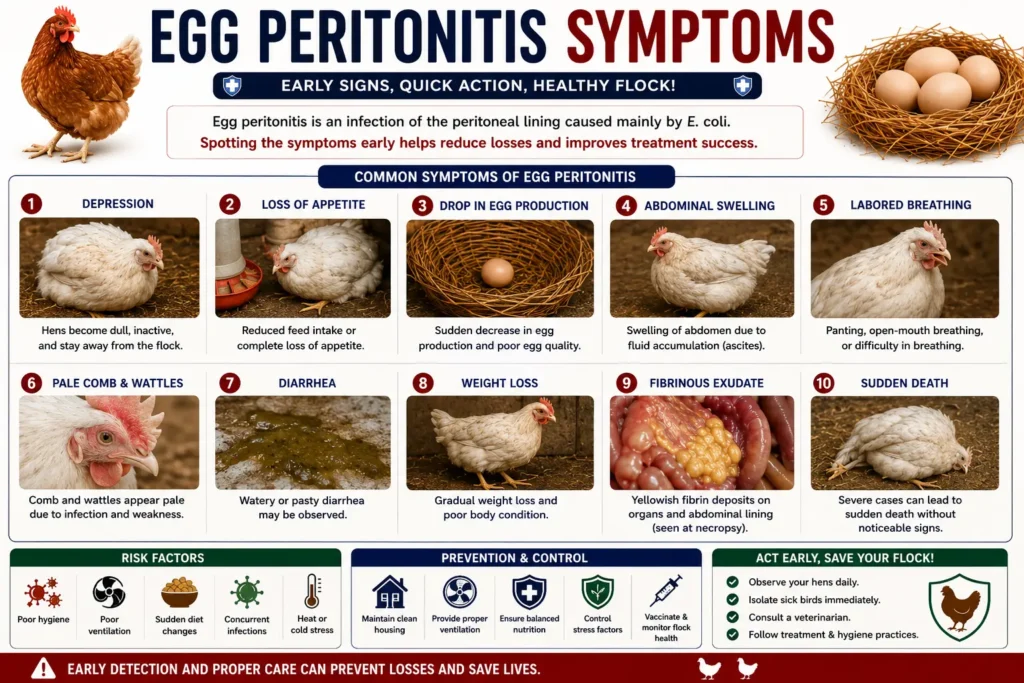
Symptom Clusters by Body System
Grouping egg peritonitis symptoms by body system can help you describe what you’re seeing more precisely, whether to yourself or to a vet over the phone.
- Digestive/abdominal: swelling, reduced appetite, weight loss
- Respiratory: labored breathing in advanced stages, from abdominal pressure
- Reproductive: drop or stop in egg production
- General/systemic: lethargy, pale comb, reduced activity
What to Do When You Notice These Symptoms
- Identify the stage using the breakdown above.
- Gently check the abdomen for texture (soft/fluid versus firm) if she tolerates handling calmly.
- Track egg production changes over the preceding days or weeks, since this often shows the earliest pattern.
- Note breathing and activity level, especially any change from her normal baseline.
- Contact a vet promptly, particularly if you’re seeing moderate or advanced-stage symptoms.
- Avoid home remedies aimed at other conditions, like egg-binding-specific soaks, since they won’t address the underlying issue here.
Common Mistakes:
- Mistaking early symptoms for simple tiredness or a molting-related slowdown
- Assuming abdominal swelling is just weight gain
- Applying egg-binding home care to what’s actually egg peritonitis
- Waiting for advanced symptoms before seeking veterinary input
- Not tracking egg production trends closely enough to catch the early pattern
When to Call a Vet
When to Call a Vet:
- Any advanced-stage symptom: labored breathing, severe lethargy, or collapse
- Visible, soft abdominal swelling without a firm egg-shaped mass
- A sharp or unexplained drop in egg production
- Upright “penguin” posture combined with reduced appetite
- Symptoms present for more than a few days without improvement
Because egg peritonitis symptoms often reflect an underlying internal infection, a veterinarian can confirm the diagnosis through physical exam, fluid analysis, or imaging, and start treatment before the condition advances further. According to the Merck Veterinary Manual, earlier intervention generally supports a better outcome than waiting until advanced signs appear.
After Symptoms Resolve: What Recovery Looks Like
Recovery timelines vary depending on how early treatment started. In general:
- Appetite and activity typically improve gradually, not overnight
- Egg production may return partially, fully, or not at all, depending on severity and treatment approach
- Continued monitoring matters, since recurrence is possible in some hens
5. FAQ
Q: What are the very first egg peritonitis symptoms to watch for? A: The earliest egg peritonitis symptoms are subtle: mildly reduced appetite, slightly quieter behavior, and a small dip in egg-laying frequency, often without any visible abdominal change yet.
Q: What are the signs of egg yolk peritonitis at the moderate stage? A: Signs of egg yolk peritonitis at the moderate stage include visible soft abdominal swelling, an upright “penguin” posture, a noticeable drop in egg production, and a pale comb.
Q: How can I tell chicken peritonitis symptoms apart from egg binding? A: Chicken peritonitis symptoms typically involve soft, fluid-filled abdominal swelling without straining, while egg binding involves a firm, egg-shaped mass and repeated, visible straining.
Q: How fast do egg peritonitis symptoms progress? A: Egg peritonitis symptoms usually build gradually over days to weeks, which is slower than the faster onset typically seen with egg binding.
Q: What egg peritonitis symptoms mean it’s an emergency? A: Labored or open-mouth breathing, severe lethargy, cold extremities, and complete appetite loss are advanced egg peritonitis symptoms that require urgent veterinary care.
Q: Can egg peritonitis symptoms appear without any abdominal swelling? A: Yes, in the earliest stage. Mild appetite and activity changes can appear before visible swelling develops, which is part of why this condition is often caught later than owners would prefer.
Q: Is a dropping egg production rate always a sign of egg yolk peritonitis? A: Not necessarily. A drop in egg production has many possible causes, but when it appears alongside abdominal swelling or an upright posture, it becomes a more specific sign worth investigating.