How Much Light Do Laying Hens Need? The Number You’re Looking For

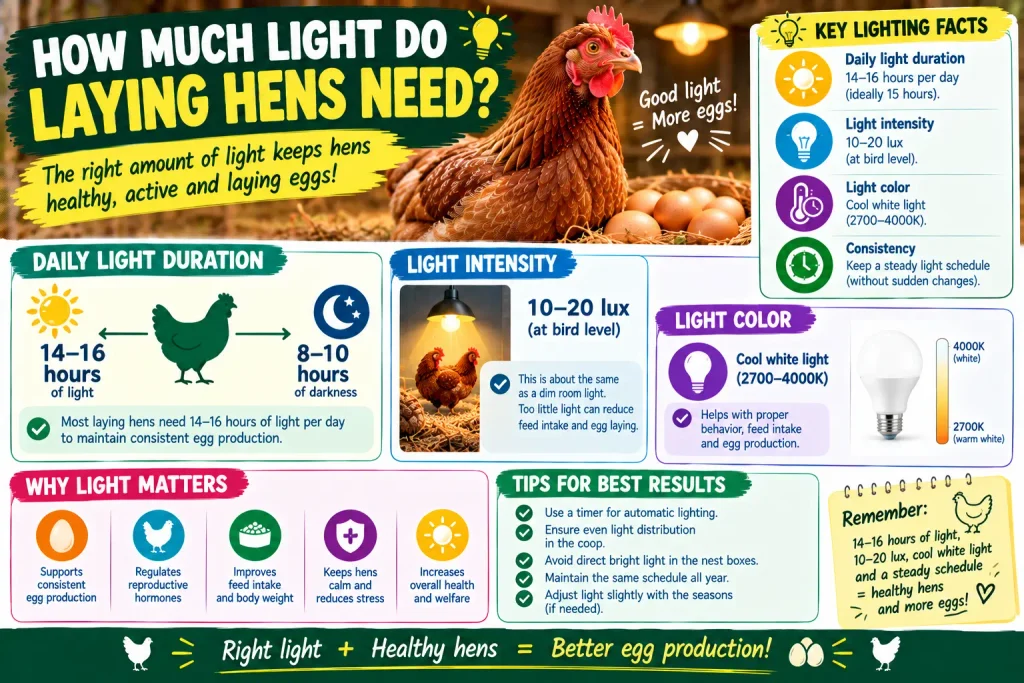
How much light do laying hens need comes down to one consistent figure: 14 to 16 hours per day. That’s the range most poultry science and extension resources point to for supporting steady, reliable egg production across breeds.
This page is built as a quick, numbers-first reference. For the full walkthrough on setting up timers, choosing bulbs, and introducing supplemental light gradually, the companion guide on lighting and chicken egg production covers that in depth; this page exists to answer the direct question fast.
Quick Answer: Laying hens need 14 to 16 hours of light daily for consistent egg production. Below about 12 hours, production typically declines; below 10 hours, many hens slow dramatically or stop laying. Natural summer daylight often meets this requirement on its own, while fall and winter usually fall short without supplemental lighting.
Table of Contents
Chicken Lighting Requirements at a Glance
| Situation | Light Needed | Notes |
| Peak summer, most regions | 14–16 hrs (often natural) | Supplemental light usually unnecessary |
| Spring/fall transition | 10–14 hrs natural | May benefit from partial supplementation |
| Winter, most regions | 8–10 hrs natural | Supplemental light needed to reach target |
| Young pullets, not yet laying | No forced extension needed | Avoid rushing light before physical maturity |
| Molting hens | Standard 14–16 hrs fine | Won’t override molt-driven pause |
Why This Range and Not More
Going beyond 16 hours doesn’t meaningfully improve production further and can reduce needed rest time, so more light isn’t simply better once the target range is reached.
Did You Know? This 14-to-16-hour figure is essentially standardized across commercial poultry operations worldwide, which is part of why backyard keepers can rely on the same number regardless of breed or region.
Daylight for Egg Production by Region and Season
How to Find Your Numbers
Check your local sunrise and sunset times for the current date, subtract to get total daylight hours, and compare against the 14–16 hour target to see your specific gap.
| Season | Typical Daylight (Temperate Regions) | Gap to Fill |
| Summer | 14–16 hrs | Little to none |
| Spring/Fall | 11–13 hrs | 1–5 hrs |
| Winter | 8–10 hrs | 4–8 hrs |
Regional Differences Matter
Keepers closer to the equator see far less seasonal daylight variation than those at higher latitudes, meaning chicken lighting requirements translate into very different real-world supplementation needs depending on where you live.
Read More: https://lashegg.com/lighting-and-chicken-egg-production/
Quick Guidance: Meeting the Requirement
- Calculate your current daylight hours. Use the method above for your specific location and date.
- Determine your gap to the 14–16 hour target. This tells you how much supplemental light, if any, is needed.
- Add light gradually, ideally in the morning. This preserves natural evening roosting behavior.
- Use a timer for consistency. Manual, inconsistent lighting is less effective than none at all.
- Reassess every few weeks through the season. Daylight hours shift gradually, so your supplementation needs will too.
Common Mistakes to Avoid
- Assuming more than 16 hours of light will further boost production
- Guessing at daylight hours instead of checking actual local sunrise/sunset data
- Applying the same lighting plan year-round without adjusting for seasonal changes
- Forcing full 14–16 hour lighting on young pullets before they’re physically ready to lay
- Ignoring regional daylight differences when following generic advice
Warning
Extending light meaningfully beyond 16 hours doesn’t provide additional production benefit and can interfere with a hen’s needed rest period, potentially increasing stress rather than helping.
When to Call a Vet
Contact a poultry veterinarian if egg production stays low despite meeting the full 14–16 hour lighting requirement consistently, particularly alongside other symptoms like poor appetite or weight loss. This pattern suggests a cause beyond daylight for egg production alone.
People Also Ask
How much light do laying hens need in winter specifically? The same 14–16 hour target applies year-round; winter simply requires more supplemental lighting to close the gap left by shorter natural daylight.
Do chicken lighting requirements change by breed? The core hormonal mechanism and general hour range apply across breeds, though production hybrids often respond more visibly to meeting the requirement than heritage breeds.
Is natural daylight for egg production ever enough on its own? Yes, during peak summer months in most temperate regions, natural daylight alone often meets or comes close to the 14–16 hour target without any supplementation needed.
What happens if hens get too much light? Excessive light beyond the recommended range offers no further production benefit and may reduce needed rest, potentially increasing stress rather than helping.
Do pullets need the same light hours as laying hens? No, forcing full laying-hen light levels onto young, not-yet-laying pullets isn’t recommended, since it can push egg production before their bodies are physically ready.
Final Thoughts
How much light do laying hens need comes down to a clear, well-established 14-to-16-hour target that applies across most breeds and regions. The real variable isn’t the number itself, but how much of a gap your local, seasonal daylight leaves for supplemental lighting to fill.
Check your numbers each season, adjust gradually, and reach out to a poultry veterinarian if production stays low despite meeting the full chicken lighting requirements consistently.
5. FAQ
Q: How much light do laying hens need to start laying as pullets? A: Young pullets don’t need forced extended light before reaching appropriate physical maturity; natural daylight is generally sufficient until they’re ready to begin laying on their own timeline.
Q: Can I meet chicken lighting requirements with natural light alone? A: In many regions, yes during summer, though fall and winter typically require supplemental lighting to consistently reach the 14–16 hour target.
Q: Is there a minimum daylight for egg production below which hens stop completely? A: There’s no single hard cutoff, but production typically declines significantly below 10 hours and may stop almost entirely in some hens during the shortest winter days.
Q: Does cloudy weather affect how much light laying hens actually receive? A: Yes, overcast days provide less effective light intensity even during the same daylight hours, which is one reason supplemental lighting can help even in seasons with technically adequate day length.
Q: How precisely do I need to hit the 14–16 hour target? A: Being within that general range is sufficient; there’s no meaningful difference between 14 and 16 hours specifically; consistency matters more than hitting an exact number.