How to Get Chickens Laying Eggs Again: Diagnose Before You Fix

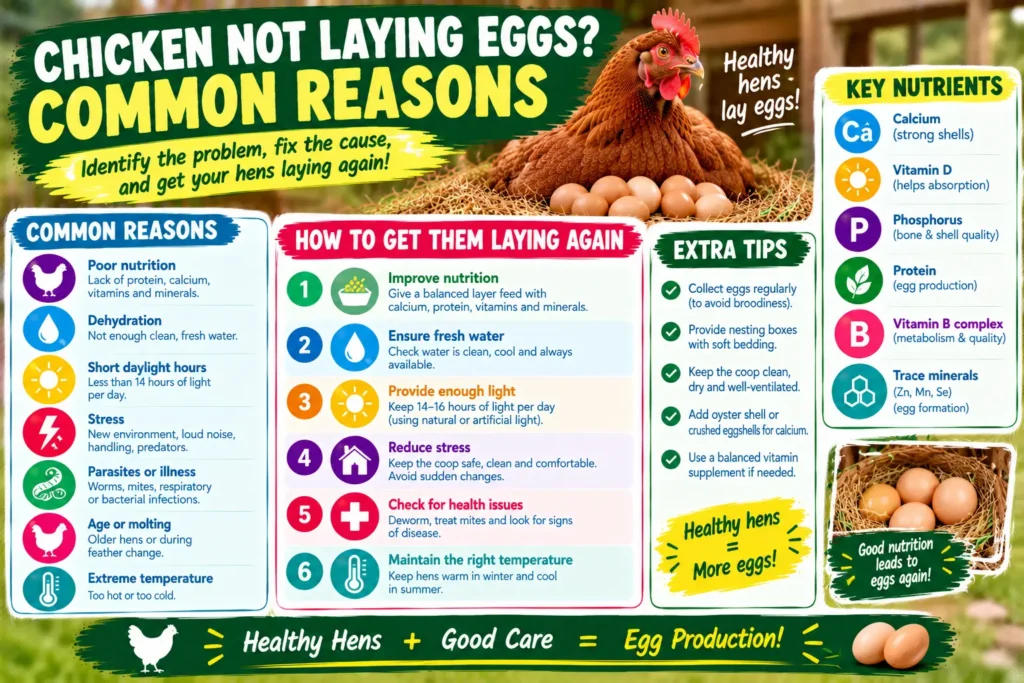
How to get chickens laying eggs again is a different question from wanting more eggs from a flock that’s already producing. A complete stop, zero eggs across days or weeks, almost always has one specific, identifiable cause, and figuring out which one matters more than jumping straight to general advice.
This guide works as a triage tool: a series of questions to narrow down exactly why your flock stopped, paired with the specific fix for each situation. If you’re instead looking to boost output from a flock that’s already laying reasonably well, the general guide on increasing egg production covers that broader optimization approach; this page is built specifically for the “we went from eggs to nothing” situation.
Quick Answer: To get chickens laying eggs again, first identify the specific cause: molting, broodiness, a recent stressful event, illness, seasonal daylight change, or age. Each has a different fix and a different expected timeline. Address the specific cause directly rather than applying general advice, and most flocks resume laying within one to three weeks once the actual issue is resolved.
Table of Contents
Step 1: Confirm It’s Actually a Complete Stop
Ruling Out the Obvious First
Before troubleshooting further, check for hidden nests if your flock free-ranges, and confirm you’re checking all nesting boxes regularly. A surprising number of “stopped laying” situations turn out to be eggs simply being missed or laid somewhere unexpected.
Step 2: Work Through the Likely Causes in Order
Is It Molting?
Check for feather loss following a head-to-tail pattern. If so, this explains a complete stop on its own, and hens generally resume gradually as new feathers finish growing in, typically over 8 to 12 weeks total.
Is a Hen Broody?
A broody hen stops laying and sits persistently in the nesting box, often growling or puffing up when approached. This resolves once broodiness breaks, either naturally or with intervention, typically within 1 to 3 weeks.
Did Something Stressful Happen Recently?
A predator scare, new bird introduction, coop move, or other disruption can cause a rapid, complete stop. Removing or resolving the stressor typically brings laying back within 1 to 2 weeks.
Is It Seasonal?
Shortening daylight in fall and winter can cause a significant slowdown or full stop, particularly in heritage breeds. Supplemental lighting can restart production, or you can wait for natural seasonal daylight increase.
Could It Be Illness?
Lethargy, pale comb, respiratory symptoms, or vent discharge alongside the stop point toward a health issue requiring diagnosis and treatment rather than simple management changes.
Read More: https://lashegg.com/chicken-laying-eggs-with-thin-shells/
Is Age a Factor?
Hens well past their peak laying years may show a permanent or near-permanent decline rather than a temporary stop, which changes the realistic expectation for “getting them laying again.”
| Likely Cause | Key Identifying Sign | Typical Recovery Time |
| Molting | Head-to-tail feather loss | 8–12 weeks (full cycle) |
| Broodiness | Persistent nest-sitting, puffing/growling | 1–3 weeks |
| Recent stress event | Clear timing link to an incident | 1–2 weeks |
| Seasonal daylight | Gradual decline in fall/winter | Weeks (with light) to months (without) |
| Illness | Lethargy, discharge, respiratory signs | Variable, needs treatment |
| Age | Gradual decline over years, older hens | Limited, natural decline |
Did You Know? More than one of these causes can overlap at once, such as a molt beginning right as daylight shortens in fall, which is part of why some flocks seem to take unusually long to restart egg production compared to a single isolated cause.
Step 3: Apply the Fix That Matches Your Actual Cause
For Molting
Increase dietary protein to support feather regrowth and simply allow time; this process can’t be significantly rushed.
For Broodiness
Remove the hen from the nest regularly, consider a wire-bottomed “broody breaker” pen temporarily, and ensure she’s still eating and drinking throughout.
For Stress
Identify and resolve the specific stressor: predator-proof housing, separate a bullying hen, or simply allow the flock to settle after a recent change without adding further disruption.
For Seasonal Decline
Decide whether to add supplemental lighting to restart production faster, or accept a natural winter pause and wait for spring daylight increases.
For Suspected Illness
Isolate the affected bird, monitor closely, and involve a veterinarian for diagnosis rather than guessing at home treatment.
For Age-Related Decline
Adjust expectations rather than searching for a fix; supporting good nutrition and low stress helps a hen lay closer to her remaining natural potential, but won’t restore youthful production levels.
Expert Tip
Write down the date your flock’s eggs stopped and any events from the days immediately before. This single habit makes the entire diagnostic process above dramatically faster, since timing is often the single biggest clue pointing toward the actual cause.
When Multiple Causes Might Be at Play
Recognizing Overlap
If your flock check doesn’t cleanly match just one cause, consider whether two factors are compounding each other, such as a stressed hen also approaching her expected molting season. Address the most clearly identifiable factor first and reassess.
| Combination | Why It Happens | Approach |
| Molt + seasonal decline | Both often occur in fall | Support nutrition, expect a longer combined recovery |
| Stress + illness | Stress can lower immune function | Address stress, monitor closely for illness signs |
| Age + seasonal decline | Older hens more sensitive to daylight changes | Consider supplemental light, adjust expectations |
Common Mistakes to Avoid
- Applying a single generic fix without first identifying the actual cause
- Assuming the worst (illness) before checking simpler explanations like molting or broodiness
- Giving up on a fix too early before the realistic recovery timeline has passed
- Overlooking hidden nests in free-range situations
- Ignoring the possibility that more than one cause is contributing simultaneously
Warning
If you can’t identify a clear cause after working through this list, or if any hen shows lethargy, weight loss, vent discharge, or labored breathing, don’t continue troubleshooting at home indefinitely. These signs warrant veterinary evaluation rather than continued guessing.
When to Call a Vet
Contact a poultry veterinarian if you can’t identify a clear cause for a complete laying stop after working through molting, broodiness, stress, season, and age, or if any bird shows signs of illness alongside the production halt. A vet can help identify a reproductive or systemic health issue that home troubleshooting alone won’t reveal.
People Also Ask
How long does it typically take to get chickens laying eggs again? This depends entirely on the cause: stress-related stops often resolve in 1 to 2 weeks, broodiness in 1 to 3 weeks, while molting and severe seasonal decline can take considerably longer.
Can all hens in a flock restart egg production at the same time? Yes, if the cause is flock-wide, like a shared stress event or seasonal daylight change, though individual hens may resume at slightly different times even from the same trigger.
What’s the fastest way to restart egg production after a known stressor? Removing the specific stressor and keeping the environment calm and consistent afterward is the most effective approach; there’s no way to meaningfully speed up the hormonal recovery beyond that.
Does hen laying again require any special treatment or supplement? Generally no; addressing the actual underlying cause, whether that’s diet, stress, or a health issue, is more effective than adding supplements without a clear identified problem.
Is it normal for chickens to completely stop laying for months? It can happen, particularly with a combination of molting and winter daylight decline in certain breeds, though a stop lasting many months without an identifiable seasonal or biological explanation deserves veterinary investigation.
Final Thoughts
How to get chickens laying eggs again comes down to identifying which specific cause, molting, broodiness, stress, season, illness, or age, actually explains your flock’s situation, then applying the fix matched to that cause rather than generic advice. Working through the possibilities in order usually reveals the answer faster than guessing.
Track timing and symptoms carefully as you work through this list, and reach out to a poultry veterinarian if the cause remains unclear or if illness signs appear alongside the production stop.
5. FAQ
Q: What’s the very first thing to check when trying to get chickens laying eggs again? A: Check for hidden nests if your flock free-ranges, then look for feather loss patterns that would indicate molting, since these are the two most common and easily identified explanations.
Q: How is restart egg production different from just increasing how many eggs I get? A: Restarting applies to a complete stop with an identifiable cause needing resolution, while increasing production applies to a flock already laying that you want to optimize further through lighting, nutrition, or management.
Q: Can hen laying again happen without me doing anything? A: Yes, for causes like molting or mild seasonal decline, most hens resume naturally over time even without specific intervention, though addressing the cause directly, when possible, often speeds recovery.
Q: Should I replace hens that won’t start laying again? A: Only after ruling out temporary, resolvable causes and confirming, ideally with veterinary input, that the hen has a permanent condition or has reached the natural end of her productive laying years.
Q: How many potential causes should I check before assuming it’s serious? A: Work through molting, broodiness, recent stress, and season first, since these explain the vast majority of complete stops; illness becomes the more likely explanation only once these are reasonably ruled out.