Can Chickens Recover From Lash Eggs? The Honest Answer

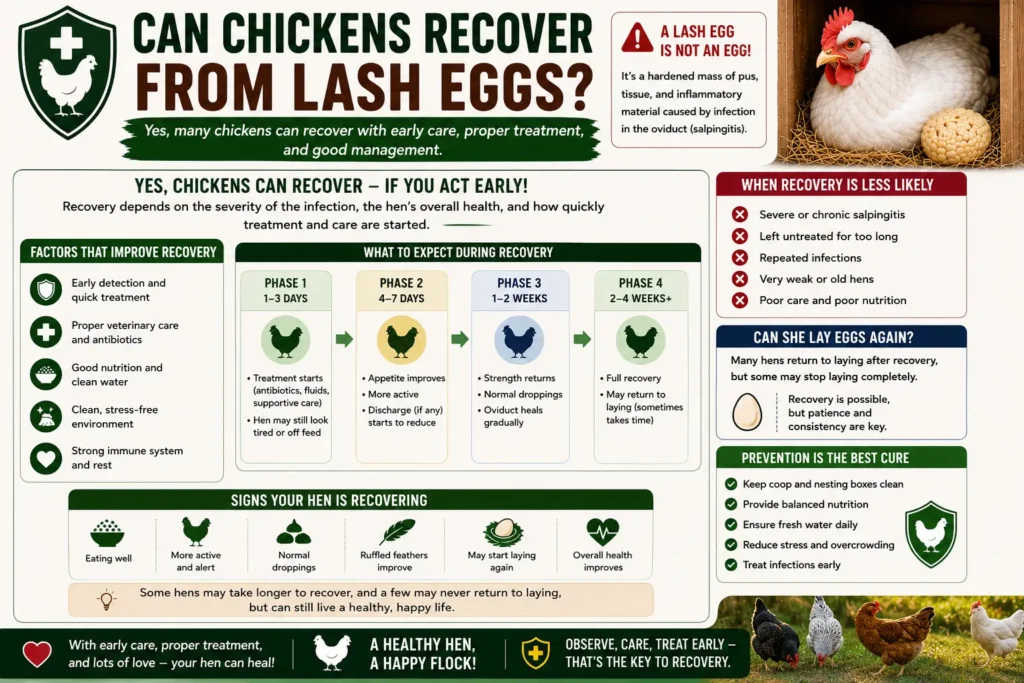
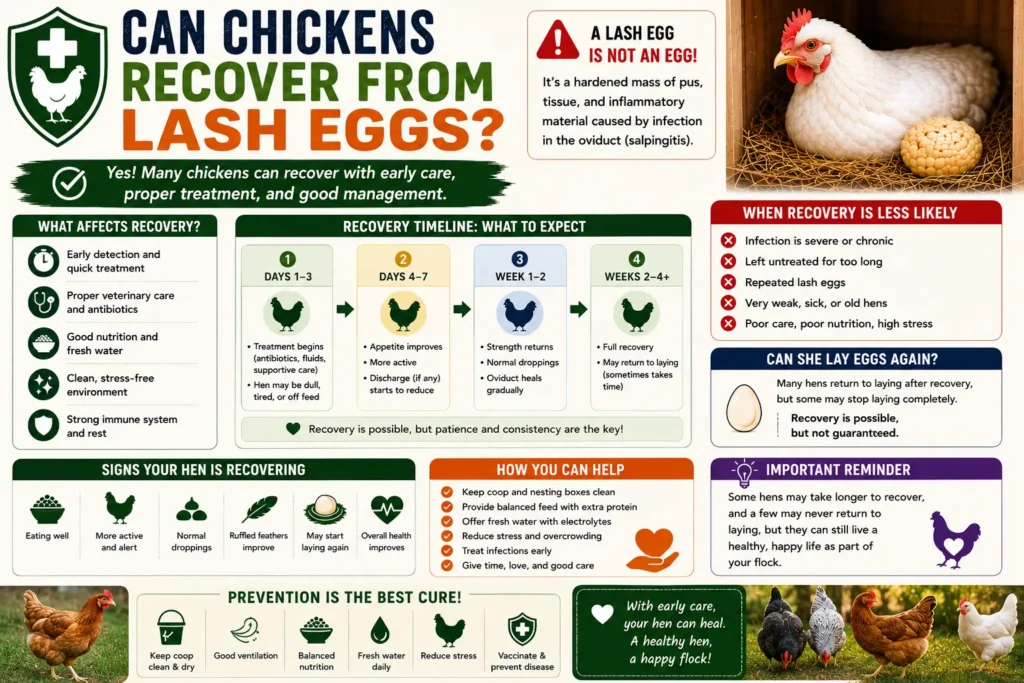
Can chickens recover from lash eggs? Yes, in most cases, especially when the underlying infection is caught early and treated properly. A lash egg isn’t a death sentence, but it also isn’t something to shrug off, since it signals salpingitis, a bacterial infection of the oviduct.
This guide gives you the real recovery picture, not just a yes-or-no answer, so you know what to expect at every stage.
Table of Contents
Quick Answer
Can chickens recover from lash eggs? Most do, particularly after a single, early-caught episode with proper rest, hydration, and veterinary support when needed. Chronic or repeated cases have a more guarded outlook, since scar tissue in the oviduct doesn’t fully reverse.
What a Lash Egg Really Tells You
A lash egg is made of pus, tissue debris, and sometimes leftover yolk material, all held together in a membrane. It’s passed the way an egg would be, but it isn’t a reproductive product. It’s a sign your hen’s oviduct is fighting off, or losing the fight against, a bacterial infection.
Knowing this reframes the whole recovery question. You’re not asking whether a weird egg will “heal.” You’re asking whether an internal infection will clear.
Read More:https://lashegg.com/caring-for-a-chicken-after-a-lash-egg/
Why Recovery Isn’t a Simple Yes or No
Can chickens recover from lash eggs fully, partially, or not really progress at all? All three outcomes happen, and the difference usually comes down to how early the infection was caught, how severe it became, and whether she received appropriate veterinary care.
Factors That Affect Recovery After a Lash Egg
- How early it was caught — hens treated at the first sign often do better than those left untreated for weeks.
- Number of episodes — a single lash egg has a better outlook than repeated ones.
- Overall health and age — younger, otherwise healthy hens tend to bounce back faster.
- Whether antibiotics were needed and given correctly — proper veterinary treatment improves odds significantly.
- Breed and laying pressure — high-output hybrid layers under heavy production stress may have a harder recovery.
- Presence of other symptoms — swelling, lethargy, or appetite loss alongside the lash egg point to a more serious case.
Did You Know?
Some hens pass a single lash egg, act completely normal within a day, and never have another issue. This happens often enough that one lash egg alone isn’t automatically a poor prognosis.
Recovery Outlook by Severity
| Case Type | Typical Outlook | What Influences This |
| Single, mild episode | Good, often full recovery | Early detection, no other symptoms |
| Recurring episodes | Fair, variable | Chronic inflammation, possible scar tissue |
| Advanced with swelling/fluid | Guarded | Delayed treatment, systemic involvement |
| Chronic, long-term salpingitis | Poor to fair | Permanent oviduct changes, repeated infections |
Signs Recovery Is Going Well
Can chickens recover from lash eggs without a vet visit? Sometimes, yes, particularly mild, single episodes. Watch for these positive signs in the days after:
- Appetite returns within 24–48 hours
- Normal, formed droppings
- Alert behavior, dust bathing, foraging
- No further discharge or additional lash egg material
- Comb color staying normal or returning to normal quickly
Signs Recovery Isn’t Going Well
| Symptom | Concern Level | Suggested Action |
| Lethargy past 48 hours | Moderate to high | Vet visit |
| Swollen or fluid-filled abdomen | High | Urgent vet care |
| Repeated lash eggs within weeks | Moderate to high | Vet visit for diagnostics |
| Ongoing appetite loss | Moderate to high | Vet visit |
| Straining with nothing produced | High | Urgent vet care |
Expert Tip
Track your hen’s recovery daily for the first week. Appetite, energy, and droppings tell you more about her actual prognosis than the appearance of the lash egg itself ever will.
Timeline: What Recovery Actually Looks Like
- Day 1–2: Rest, possible reduced appetite, close monitoring at home.
- Day 3–7: Appetite and energy typically improve if the case is mild and uncomplicated.
- Week 2–4: Laying may remain paused as her body prioritizes healing over egg production.
- Month 1 and beyond: Most uncomplicated cases return to normal laying; chronic cases may show reduced or irregular output long-term.
Does Recovery After a Lash Egg Require Antibiotics?
Not always, but often enough that a vet exam matters. Can chickens recover from lash eggs without antibiotics? Mild, single episodes sometimes resolve with rest and supportive care alone. But if the underlying salpingitis is active and progressing, antibiotics prescribed after a proper diagnosis give her a much stronger chance at full recovery.
Warning
Never give antibiotics without veterinary guidance, even if you’re confident it’s salpingitis. Wrong drug choice or dosing can fail to clear the infection and lead to resistant bacteria, which makes future recovery harder for this hen and others in your flock.
Home Support That Improves Recovery Odds
- Isolate her in a quiet, clean, low-stress space
- Keep fresh water available at all times
- Offer protein-rich, easily digestible food
- Monitor her vent area for further discharge without excessive handling
- Keep her warm, since sick birds lose body heat faster than healthy ones
- Log symptoms daily so a vet has clear information if needed
Recovery After Lash Egg vs. Recovery After Egg Binding
People sometimes assume these conditions carry the same recovery outlook, but they don’t. Recovery after lash egg centers on clearing infection, while recovery after egg binding centers on restoring normal muscle function and passing the stuck egg.
| Factor | Lash Egg Recovery | Egg Binding Recovery |
| Underlying problem | Bacterial infection (salpingitis) | Physical blockage |
| Recovery focus | Clearing infection, rebuilding strength | Passing the egg, muscle recovery |
| Typical timeline | Days to a few weeks | Often resolves within hours to a day |
| Vet involvement | Needed if symptoms persist or recur | Often same-day if the egg won’t pass |
Will Egg Production Return to Normal?
Can chickens recover from lash eggs and go back to laying like before? Often, yes, especially with a single, early-treated episode. Chronic or repeated salpingitis is more likely to leave lasting changes, including reduced laying frequency or a longer-than-expected pause in production.
Common Mistakes That Slow Recovery
- Returning her to the flock before she’s eating and moving normally
- Assuming she’s fully recovered right after passing the lash egg
- Skipping a vet visit when symptoms extend past 48 hours
- Overcorrecting her diet with excess calcium or treats instead of balanced nutrition
- Not watching for a second episode, which changes the whole prognosis
When Chronic Salpingitis Changes the Outlook
Some hens develop salpingitis more than once. Each episode can add scar tissue or fluid buildup in the oviduct, which lowers the odds of a full return to normal laying. This is where the answer to “can chickens recover from lash eggs” shifts from a confident yes toward a more cautious, case-by-case answer that depends on ongoing veterinary management.
When to Call a Vet
Call a vet if lethargy or appetite loss lasts beyond 48 hours, if you see abdominal swelling, if lash eggs recur, or if she strains without producing anything. The last two signs, in particular, call for prompt attention rather than a wait-and-see approach.
Supporting Long-Term Flock Health
Recovery after lash egg isn’t only about the individual hen. If a respiratory infection triggered the salpingitis, other birds could be at risk of the same root cause. Keep an eye on the rest of your flock for coughing, sneezing, or unexplained drops in egg output during and after her recovery period.
Prevention Lowers the Odds of a Repeat Episode
- Maintain clean, dry, well-ventilated housing
- Practice strong biosecurity when introducing new birds
- Address respiratory symptoms quickly across the flock
- Provide balanced, age-appropriate nutrition
- Watch high-output hybrid layers more closely for signs of reproductive strain
- Don’t delay a vet visit if something seems off, even subtly
FAQ
Can chickens recover from lash eggs on their own? Mild, single episodes sometimes resolve with rest, hydration, and supportive care alone, but a vet exam is still the safest way to confirm the infection has actually cleared.
How long does full recovery take after a lash egg? Uncomplicated cases often improve within a week, though egg-laying may stay paused for two to four weeks while her body prioritizes healing.
Is it likely a hen will have another lash egg? It’s possible, especially if the underlying salpingitis wasn’t fully resolved. A single treated episode has a lower recurrence risk than chronic, untreated cases.
Does a lash egg mean my hen is dying? No, not by itself. Many hens recover fully, especially when caught early. Ongoing lethargy, swelling, or repeated episodes are the signs that point to a more serious outlook.
Can chickens recover from lash eggs without seeing a vet? Some mild cases do, but any hen showing lethargy, swelling, appetite loss, or repeated lash eggs needs veterinary evaluation rather than home care alone.
Will she start laying again after recovery? Many hens return to normal laying, particularly after a single early-treated episode. Chronic salpingitis can lead to reduced or irregular laying long-term.
What’s the difference between recovery after lash egg and recovery after egg binding? Recovery after lash egg focuses on clearing infection over days to weeks, while recovery after egg binding usually resolves faster once the physical blockage is addressed.