
Giant Chicken Egg: What Causes Oversized Eggs

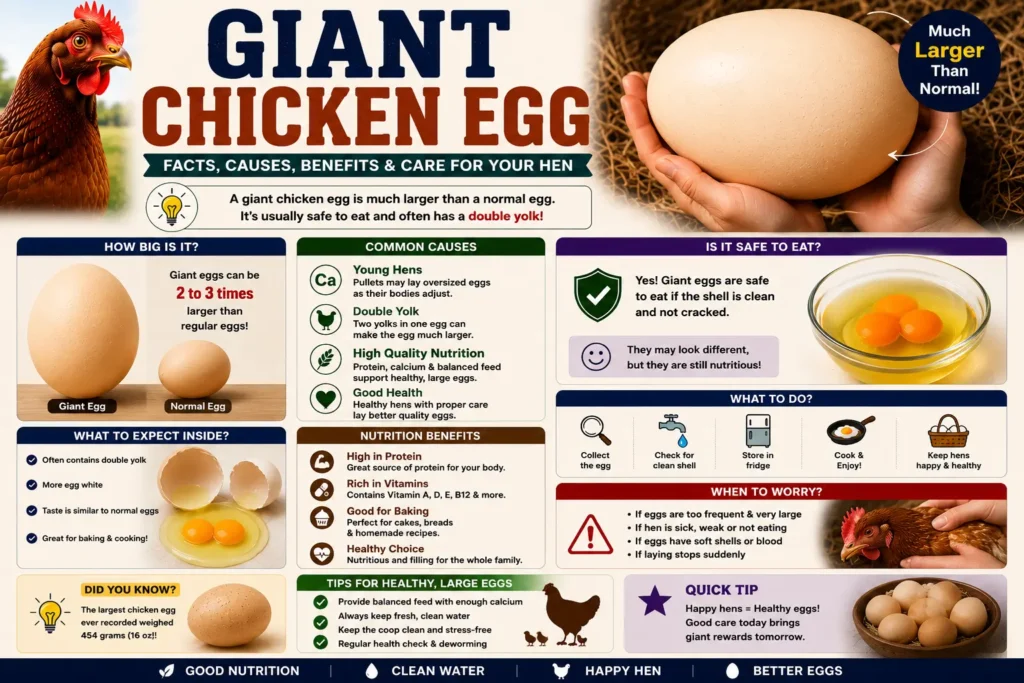
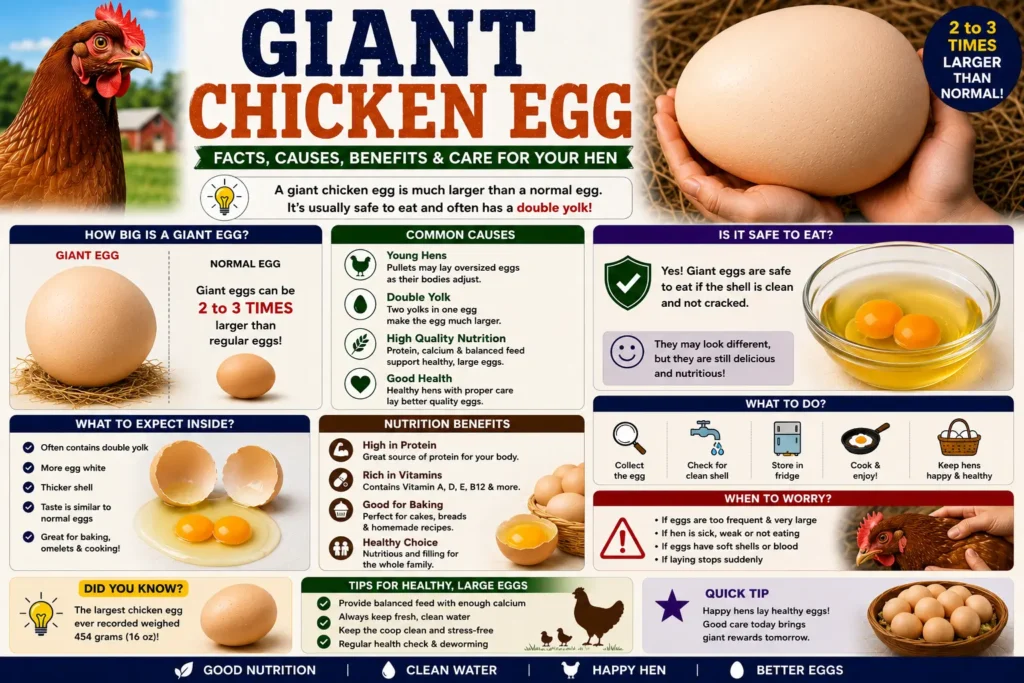
A giant chicken egg stands out the moment it lands in the nest box — noticeably bigger, heavier, and sometimes an odd shape compared to the rest of the clutch. Most flock owners’ first reaction is excitement, followed quickly by “is this normal?” This guide covers exactly why a giant chicken egg happens, what’s usually inside one, and the rare situations where an oversized egg is worth watching more closely.
Table of Contents
Quick Answer
A giant chicken egg is usually caused by a double yolk, an extra-large single yolk, or an egg that picked up extra egg white during formation. It’s most common in young hens just starting to lay and certain heavy breeds, and it’s rarely a health concern on its own.
What Counts as a Giant Chicken Egg?
Standard egg sizing runs from peewee to jumbo, and anything noticeably beyond jumbo — often 2.5 ounces or more, well above the roughly 2-ounce jumbo standard — gets called a giant chicken egg by most flock owners. There’s no strict industry cutoff for backyard flocks, but if an egg looks unmistakably oversized next to the rest of the clutch, it qualifies.
Read More:https://lashegg.com/yolkless-egg-causes-explained/
What’s usually inside a giant chicken egg:
- Two full yolks (the most common cause)
- One oversized single yolk
- A normal yolk with extra egg white added during formation
- Rarely, a double yolk plus extra albumen, making an especially large egg
How to Tell If an Egg Is Truly Giant
Weigh it if you want precision — a jumbo egg typically runs around 2.5 ounces (71 grams), so anything meaningfully heavier is genuinely oversized. Visually, a giant chicken egg often looks elongated or slightly lopsided compared to a normal oval, since the shell gland is stretching to accommodate more contents than usual.
Why Do Hens Lay a Giant Chicken Egg?
Double Ovulation
The leading cause of a giant chicken egg is double ovulation — two yolks released from the ovary close enough together that both end up traveling down the oviduct and getting wrapped in one shell. This is a normal reproductive event, not a disorder, and it’s especially common early in a hen’s laying life.
Young Hens Still Regulating Ovulation
Pullets in their first months of laying haven’t fully settled into a steady one-yolk-per-day rhythm yet. Their reproductive systems are still calibrating, which makes double yolks, and therefore a giant chicken egg, more likely during this period than later in life.
Breed and Genetics
Certain breeds are simply predisposed to laying larger eggs, including oversized ones, due to genetics. Heavy breeds and hybrid layers bred specifically for large egg size are more likely to produce a giant chicken egg than smaller heritage breeds.
Hormonal Fluctuations
Occasional hormonal shifts — from stress, lighting changes, or the natural rhythm of the laying cycle — can trigger a burst of extra activity in the ovary, occasionally releasing two yolks instead of one.
Expert Tip
If a young hen lays a giant chicken egg during her first few weeks of production, there’s usually nothing to change. Her system typically settles into consistent single-yolk eggs within a month or two.
Table: Common Causes of a Giant Chicken Egg
| Cause | Who It Affects Most | Action Needed |
| Double ovulation | Any hen, especially young layers | None — normal reproductive event |
| Point of lay irregularity | Pullets in first weeks of laying | None — resolves naturally |
| Breed predisposition | Heavy or hybrid layer breeds | None — expected trait |
| Hormonal fluctuation | Any hen during stress or lighting shifts | Monitor; reduce stress if frequent |
| Repeated giant eggs from one hen | Mature hens laying oversized eggs often | Monitor for prolapse risk; consult vet if frequent |
Is a Giant Chicken Egg Safe for the Hen?
Laying one giant chicken egg occasionally isn’t typically dangerous, but size does matter when it comes to the physical strain of laying. A significantly oversized egg has to pass through the same vent opening as a normal one, and that added size and pressure can occasionally lead to complications.
The Risk of Egg Binding and Prolapse
An unusually large egg increases the physical effort required to lay, which raises the risk of egg binding (a stuck egg) or vent prolapse, especially in hens that repeatedly lay oversized eggs. According to general poultry veterinary references, egg binding is a legitimate emergency, since a hen unable to pass an egg can become seriously ill within a day or two.
Signs of a struggling hen after laying a giant chicken egg:
- Straining or repeated trips to the nest box without producing an egg
- A visibly swollen or protruding vent area
- Lethargy, fluffed feathers, or reduced appetite
- Sitting hunched or reluctant to move
When to Call a Vet
Contact a poultry veterinarian immediately if a hen shows straining, a visible prolapse, or signs of distress after laying a giant chicken egg. A single large egg followed by normal behavior needs no action, but any sign of a hen struggling to lay is an urgent situation, not a wait-and-see one.
Giant Chicken Egg vs. Other Size and Yolk Abnormalities
| Egg Type | Key Feature | Most Likely Cause |
| Giant chicken egg | Noticeably oversized, heavier than jumbo | Double ovulation, breed, or point-of-lay irregularity |
| Double-yolked egg | Two yolks, often but not always oversized | Two ovulations released close together |
| Yolkless egg | Small, round, no yolk | Point of lay, older hens, occasional quirk |
| Egg inside an egg | A full egg encased inside another shell | Reverse muscle contraction in the oviduct |
| Peewee/small egg | Noticeably undersized | Young pullets, or older hens near end of cycle |
Warning
A hen that repeatedly lays a giant chicken egg, especially in combination with signs of straining, is at higher ongoing risk for egg binding and prolapse. This pattern is worth discussing with a vet before it becomes an emergency, rather than after.
Can a Giant Chicken Egg Have a Double Yolk?
Yes, and it’s the most common explanation. Cracking open a giant chicken egg to find two full yolks is common enough that most flock owners eventually see one. Both yolks are generally normal and edible, with no difference in safety compared to a standard single-yolk egg.
Are Double-Yolked Giant Eggs Fertile?
If the flock includes a rooster, both yolks in a double-yolked giant chicken egg can potentially be fertile, though incubating a double-yolked egg rarely results in successful hatching, since there isn’t enough room inside the shell for two chicks to develop and position themselves correctly for hatching.
What to Do If You Find a Giant Chicken Egg
- Weigh and inspect it — confirm it’s genuinely oversized rather than just visually unusual.
- Watch the hen afterward — normal behavior means no action needed.
- Check for straining or distress — this is the priority sign to catch early.
- Note the hen’s age — young pullets are the most common, lowest-risk source.
- Track repeat occurrences — one giant egg is common; frequent giant eggs from one hen deserve closer attention.
- Support overall reproductive health — balanced feed, stable routine, and healthy body weight all help.
Common Mistakes
- Assuming every giant chicken egg means a health emergency
- Ignoring repeated oversized eggs from the same hen without watching for straining
- Trying to incubate a double-yolked egg expecting two healthy chicks
- Overfeeding a young flock trying to “boost” egg size, which doesn’t work and can cause other health issues
Did You Know?
The largest chicken eggs on record have weighed several times a standard jumbo egg, occasionally containing not just a double yolk but a smaller egg trapped inside as well, combining two rare abnormalities in a single shell.
Can You Eat a Giant Chicken Egg?
Yes, a giant chicken egg is safe to eat, whether it contains one oversized yolk or two separate yolks, as long as it’s fresh and properly stored, following standard USDA egg safety guidance. Double-yolked eggs are commonly sold and eaten without any special handling beyond normal egg safety practices.
Prevention: Can You Stop Giant Chicken Eggs From Happening?
There’s no reliable way to prevent an occasional giant chicken egg, since it’s usually tied to normal ovulation timing or genetics rather than something in the environment. General flock health support reduces the odds of complications if oversized eggs do occur:
- Feed a complete, balanced layer ration appropriate to the hen’s age
- Maintain a healthy body weight across the flock
- Keep lighting and routines stable to support consistent ovulation
- Provide adequate calcium to support shell strength on larger eggs
- Watch closely during the pullet-to-layer transition, when giant eggs are most likely
Conclusion
A giant chicken egg is usually just an oversized reflection of a completely normal process — most often a double yolk or a young hen’s reproductive system still finding its rhythm. One large egg followed by normal hen behavior rarely needs any action. Keep watching for straining or distress after a hen lays a giant chicken egg, and don’t hesitate to involve a veterinarian if oversized eggs become frequent or come with any signs the hen is struggling.
5. FAQ
What causes a giant chicken egg? A giant chicken egg is most often caused by double ovulation, producing two yolks in one shell, though a single oversized yolk or extra egg white can also be responsible.
Is a giant chicken egg always a double yolk? Not always. Some giant chicken eggs contain just one large yolk with extra albumen, though double yolks are the most common cause.
Can a giant chicken egg hurt the hen? Occasionally, yes. Oversized eggs increase the risk of egg binding or vent prolapse, especially if a hen lays them repeatedly. Watch for straining or distress after laying.
Are giant chicken eggs safe to eat? Yes, a giant chicken egg is safe to eat, whether it has one or two yolks, following standard USDA egg safety guidance.
Do young hens lay bigger eggs? It’s the opposite for average size, but young hens are actually more likely to lay a giant chicken egg because their reproductive systems haven’t fully regulated ovulation yet.
Should I worry if my hen lays a giant chicken egg? Not from a single occurrence. Watch her behavior afterward, and consult a vet if she strains, shows a prolapse, or repeatedly lays oversized eggs.